

Islandia · Lugares pintorescos
Los mejores miradores de Islandia
Descubre miradores panorámicos, dramáticos acantilados costeros y paradas fotográficas inolvidables por toda Islandia.
Must-See
Los miradores más icónicos de Islandia
Desde el famoso mirador de Kirkjufellsfoss en Snæfellsnes hasta los remotos acantilados de Hornbjarg — estos son los miradores que definen el paisaje salvaje de Islandia.
 Snæfellsnes
Bárður Snæfellsás
En la península de Snæfellsnes, Islandia Occidental, Bárður Snæfellsás es una cautivadora escultura de piedra que encarna a un legendario protector. Esta obra de arte única invita a los visitantes a sumergirse en el rico folclore islandés y la dramática belleza natural.
Ver detalles North Iceland
Samkomubrúin
Samkomubrúin presenta un pintoresco paseo de madera que se extiende sobre las serenas aguas del norte de Islandia. Los visitantes pueden disfrutar de una auténtica experiencia de los paisajes de la región, donde el pueblo se encuentra con el tranquilo fiordo bajo un amplio cielo azul.
Ver detalles Snæfellsnes
Acantilados y Faro de Svörtuloft
Situados en el extremo occidental de la península de Snæfellsnes, los acantilados de Svörtuloft ofrecen un espectáculo impresionante donde acantilados negros y escarpados se precipitan en el salvaje Atlántico. El vibrante faro naranja se alza como un faro contra el dramático telón de fondo de olas rompiendo y un vasto paisaje cubierto de musgo, sintiéndose verdaderamente como el fin del mundo.
Ver detallesGuided Scenic Tours
See Iceland’s Best Views with a Guide
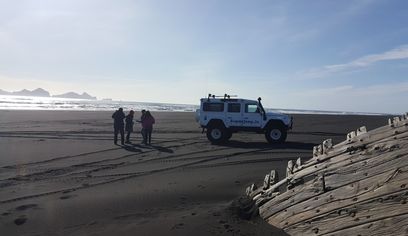
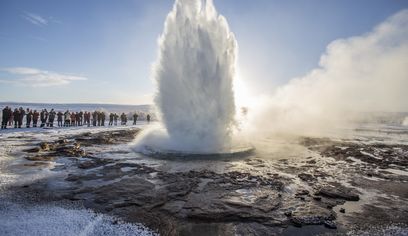
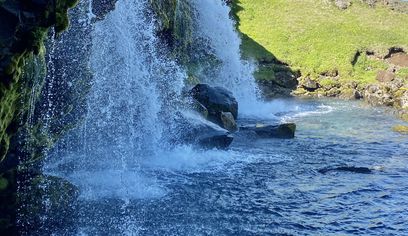
Prefer to leave the driving to someone else? These guided tours visit some of Iceland’s most dramatic viewpoints, coastlines, waterfalls and mountain landscapes.
Interactive Map
Explora los miradores de toda Islandia
Los 69 miradores en el mapa. Filtra por región para planificar tu ruta.
Practical Tips
Consejos de fotografía y prácticos
Golden Hour
Iceland's low sun angle creates golden light for extended periods around sunrise and sunset. In summer, the midnight sun means warm directional light from 10 pm to 2 am.
Weather Visibility
Clear days after storms offer the sharpest views. Fog and low cloud can completely obscure mountain viewpoints. Check en.vedur.is for forecast and webcams before driving far.
Winter Daylight
In December–January the sun rises after 11 am and sets before 4 pm. Plan viewpoint stops around midday. Roads can be icy — use winter tyres and check road.is.
Parking & Access
Many popular viewpoints have designated parking areas. Avoid parking on roadside shoulders of busy roads. Some viewpoints require a short walk from the nearest car park.
Elevation & Exposure
Higher viewpoints on mountain roads can be significantly colder and windier than at sea level. Bring layers even in summer. Check if road conditions match your vehicle type.
Coastal Safety
Atlantic waves at coastal viewpoints can be unpredictable. Never turn your back to the ocean. Stay behind safety barriers where they exist and give cliff edges a safe margin.
Safety at Viewpoints
Not all viewpoints are roadside-accessible. Some involve cliff edges, exposed ridges, mountain trails or Highland roads (F-roads). Always stay on marked paths at cliff-edge viewpoints, check F-road status before entering the Highlands, and tell someone your route if visiting remote areas. Download the 112 Iceland app and register your travel plan at safetravel.is.
Discover
Miradores por región
Explora los 69 miradores agrupados por región.
South Iceland7 viewpoints


North Iceland12 viewpoints


East Iceland11 viewpoints


West Iceland9 viewpoints


Snæfellsnes5 viewpoints


Westfjords6 viewpoints


Highlands4 viewpoints


Golden Circle4 viewpoints


Reykjanes7 viewpoints


Capital Region3 viewpoints


Reykjavík1 viewpoint

Preguntas frecuentes
What are the best viewpoints in Iceland?
Kirkjufellsfoss on Snæfellsnes, the Eyjafjallajökull viewpoint on the Ring Road, Hornbjarg in the Westfjords, Stórhöfði on Heimaey, and Þingvallavatn overlook in the Golden Circle are among the most iconic. Each offers a completely different landscape — waterfall, glacier, sea cliff, headland and rift valley.
Are Iceland viewpoints easy to reach?
It depends entirely on the location. Many Ring Road viewpoints are roadside and accessible by any car. Others require short walks of 10–30 minutes, while remote viewpoints in the Westfjords or Highlands may require a 4WD vehicle and several hours of hiking. Always check road conditions at road.is before driving.
What are the best viewpoints on the Ring Road?
The Ring Road (Route 1) passes several spectacular viewpoints: the Eyjafjallajökull glacier viewpoint near Selfoss, Ingólfshöfði promontory off the South Coast, and the Gerpir headland near Reyðarfjörður in East Iceland. Hafragilsfoss canyon viewpoint is a short detour off the Ring Road near Dettifoss.
Are Iceland viewpoints accessible in winter?
Many are, but conditions vary significantly. Roadside viewpoints along the Ring Road are generally accessible year-round, though ice and reduced daylight add complexity. Highland viewpoints are typically closed October–May. Always drive with proper winter tyres and check weather forecasts at en.vedur.is.
Do I need a 4x4 to reach Iceland viewpoints?
Most popular viewpoints are accessible in a standard 2WD car. However, some in the Westfjords, Highlands (F-roads) and remote East Iceland peninsulas require a 4WD or high-clearance vehicle. Never drive a rental vehicle on F-roads unless it is specifically authorised for that purpose.
When is the best time to photograph Iceland viewpoints?
The golden hour around sunrise and sunset produces dramatic light. In summer, the midnight sun means golden light lasts hours around 10pm–2am. In winter, the sun stays low all day creating soft directional light, and there is potential for Northern Lights after dark. Clear weather after storms often produces the sharpest visibility.