
关于
关于Kjósarrétt
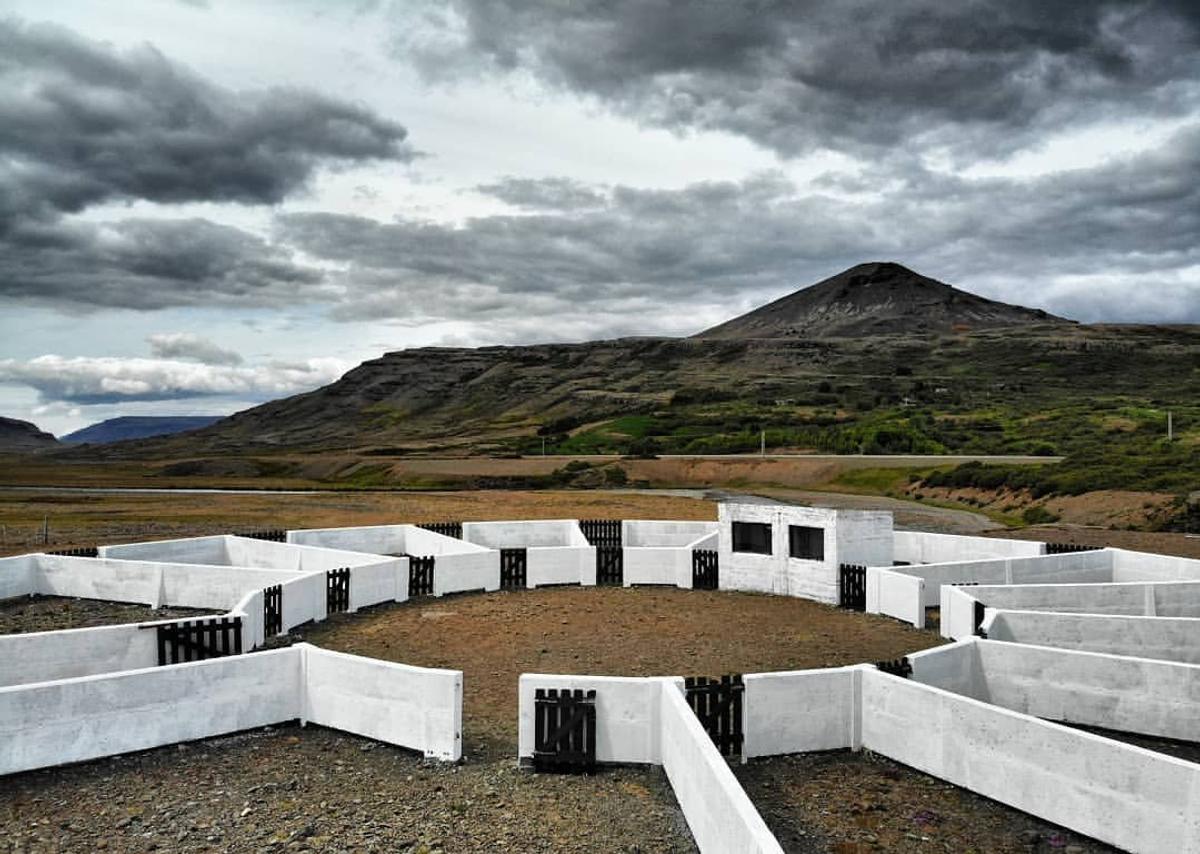
Kjósarrétt 位于Kjós的Möðruvellir地区,靠近Laxá河。这是当地社区的传统羊圈,也是反映冰岛农业生活方式的重要文化遗址。 该羊圈近年来按照原貌进行了重建,并于2012年秋季首次在“新”羊圈中举行了羊群分拣活动,使其重新恢复了原有的功能与传统意义。
Kjósarrétt附近的旅游
Private Reykjavik LGBTQ+ City Walk
Your Friend in Reykjavik · 3 hours
Private Reykjavik City Tour
Icelimo Luxurytravel · 4 hours
Private 3 hour Reykjavik Driving Tour
Your Friend in Reykjavik · 3 hours

Private 4 hour Reykjavik Driving Tour
Your Friend in Reykjavik · 4 hours
照片
图库
背景
历史与背景
Kjósarrétt has long been part of the agricultural life of the Kjós region, serving as the central sheep pen for local farms. Its design reflects a practical system developed over centuries to manage livestock efficiently in a communal setting. In recent years, the rétt was reconstructed to match its original form, ensuring the preservation of both its structure and its cultural role. The first roundup in the rebuilt rétt took place in 2012, reconnecting the community with a tradition that continues to this day. Today, Kjósarrétt stands as both a working site and a cultural heritage landmark, representing the continuity of Icelandic rural life.
Kjósarrétt is a traditional sheep pen located in the Kjós valley, within Iceland’s Capital Region. Set beside the Laxá river on the land of Möðruvellir, it is both a functional agricultural structure and a cultural landmark that reflects Iceland’s long-standing rural traditions. The rétt is designed as a circular enclosure with multiple smaller compartments radiating outward. This layout allows farmers to sort sheep efficiently during the annual autumn roundup, known as réttir. After roaming freely in the highlands during summer, sheep are gathered and brought to the rétt, where they are separated according to ownership. This system has been used in Iceland for centuries and remains an important part of the country’s farming culture. Kjósarrétt was recently rebuilt in its original form, carefully preserving its historical design. The first roundup in the restored structure took place in autumn 2012, marking the revival of a tradition that had nearly disappeared. Today, it continues to serve both as a working rétt and as a reminder of Iceland’s agricultural heritage. The surrounding landscape enhances the experience. The Kjós valley is known for its green fields, rivers, and mountain views, offering a softer and more pastoral contrast to Iceland’s more dramatic volcanic regions. Together, the natural setting and the cultural function of the rétt create a place where visitors can experience both the land and the traditions that have shaped it.
民间故事
故事与民间故事
By the banks of the Laxá river, Kjósarrétt stands as both a structure and a tradition brought back to life. For years, the original rétt had faded, but its importance to the community remained. When it was rebuilt, the goal was not just to recreate a physical space, but to revive a way of life. In the autumn of 2012, the rétt was used again for the first time in its restored form. Sheep were gathered, sorted, and returned to their owners—just as they had been for generations. The event was more than practical. It was a moment of continuity, where past and present met in the same place. Families, farmers, and visitors came together, reconnecting with a tradition that defines rural Iceland. Today, Kjósarrétt stands quietly for most of the year, but its purpose remains clear—waiting for the season when the valley fills with life once again.
文化
故事与传说
来自该地区的冰岛传奇和民间故事
位置
位置
探索更多