
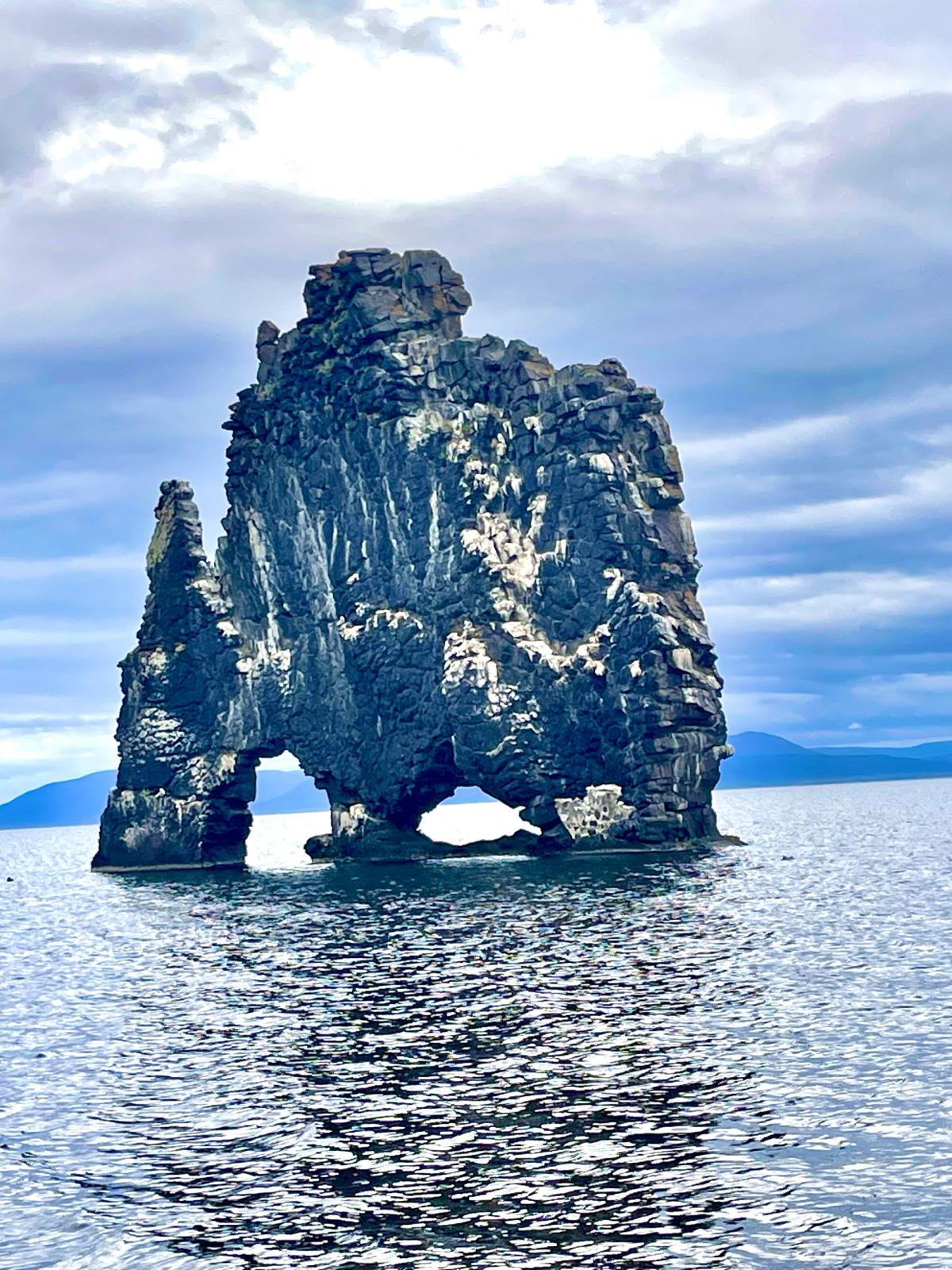
赫维茨库尔——大西洋犀牛岩
赫维茨库尔是瓦特内斯半岛15米高的壮观玄武岩海蚀柱,形似犀牛或龙饮海水。海鸟在其天然孔洞中筑巢。在附近的赫万斯唐吉岬角,可从海滩轻松看到海豹群落。
关于
关于赫维茨库尔——大西洋犀牛岩
赫维茨库尔是瓦特内斯半岛15米高的壮观玄武岩海蚀柱,形似犀牛或龙饮海水。海鸟在其天然孔洞中筑巢。在附近的赫万斯唐吉岬角,可从海滩轻松看到海豹群落。
One of Iceland's most photographed coastal rock formations
赫维茨库尔——大西洋犀牛岩附近的旅游
Lake Myvatn and Godafoss Waterfall Day Tour from Akureyri
Imagine Iceland Travel · 8 hours

Northern Lights Photography tour from Akureyri
Iceland Horizon - Saga Travel - GeoIceland · 3 hours
Dettifoss Waterfall, Ásbyrgi and Lake Mývatn - Shore Excursion from Húsavík
BusTravel Iceland · 5 hours 30 minutes
Akureyri Northern Light Tour
The Traveling Viking · 2 hours 30 minutes
照片
图库
背景
历史与背景
白衣岩(Hvítserkur)的形成可以追溯到远古时期的火山活动与长期海浪侵蚀作用。最初,这一地区由火山喷发形成的玄武岩构成,随后在数千年的时间里受到海浪、风力以及冰岛北大西洋严酷自然环境的持续侵蚀,逐渐形成今天所见的独立海蚀柱结构。 瓦茨内斯半岛长期以来是当地渔业和沿海生活的重要区域,白衣岩不仅作为显著的自然地标,也在航海时代为沿岸航行提供视觉参照点。 如今,白衣岩已成为冰岛西北地区重要的自然旅游景点之一,同时所在区域也是海豹栖息的重要海岸生态环境。随着旅游业的发展,当地逐步建设了停车区域与步行路径,以保护自然环境并方便游客安全参观这一独特的海岸地貌景观。
白衣岩(Hvítserkur)位于冰岛西北部瓦茨内斯半岛东侧海岸,是一座高约 15 米的玄武岩海蚀柱,由长期海浪侵蚀形成。由于其形态类似一只正在海中饮水的巨兽或史前动物,这一自然景观成为冰岛最具辨识度的海岸地标之一。 白衣岩的名称意为“白色的衣服”,来源于岩石表面覆盖的海鸟粪形成的浅色外观。该区域也是冰岛著名的海豹观察地点之一,常可在附近海域看到海豹活动。 除了自然地貌价值外,白衣岩还与冰岛民间传说密切相关。据传,这块岩石原本是一只夜间活动的巨魔,在试图破坏附近村庄时因太阳升起而化为石头。这一传说为景观增添了神秘色彩,也使其成为游客探索冰岛自然与文化结合的重要地点之一。 如今,游客可以从附近停车场沿步道前往观景点或海岸线观看白衣岩,并欣赏瓦茨内斯半岛宁静而原始的海岸风光。
民间故事
故事与民间故事
白衣岩(Hvítserkur)是一座由海浪长期侵蚀形成的玄武岩海蚀柱,位于瓦茨内斯半岛沿岸,是该地区最著名的自然景观之一。经过数千年的风浪冲刷,岩石逐渐形成如今独特而醒目的形态。 关于白衣岩的名字,在冰岛民间传说中也有不同解释。其中一个流传较广的故事认为,这块岩石原本是一只巨魔,它试图破坏附近的教堂,但在日出时被阳光照射而化为石头,最终变成今天看到的形状。 如今,这里不仅是摄影爱好者的重要目的地,也是观察海豹活动的理想地点之一。游客可以沿着步道前往海岸线观看岩石,并欣赏冰岛西北部宁静而壮丽的海岸风光。
你知道吗?
Legend says the rock formation is a troll turned to stone by sunrise
文化
故事与传说
来自该地区的冰岛传奇和民间故事
探索
附近的隐藏宝藏
Off-Peak Visit
Visit Hvítserkur during shoulder season (May or September) for a perfect balance of access and solitude.
You'll experience the site without summer crowds while still having good weather and daylight.
Local Flora
Look for the native Icelandic plants growing in the area — Arctic thyme, moss campion, and various lichens.
These resilient plants have adapted to survive harsh conditions and add subtle beauty to the landscape.
Changing Light
Hvítserkur looks dramatically different depending on the time of day and weather conditions.
Cloud shadows, rain showers, and low-angle sunlight can transform the landscape within minutes — Iceland's famous "four seasons in one day."
帮助
常见问题
位置
位置
Discover
Explore Nearby
Places from our database within 5.0 km — all data from Sanity
Loading nearby places…
0 places found within 5.0 km
Plan full itinerary →探索更多