Abandoned Farm · East Iceland, Iceland
Karlsskáli við Reyðarfjörð
Karlsskáli was a substantial farm on Reyðarfjörður in East Iceland that supported up to 50 people at its peak before being abandoned after a fire in 1961.
Photo: Beggih · CC BY-SA 4.0
More Photos
Overview
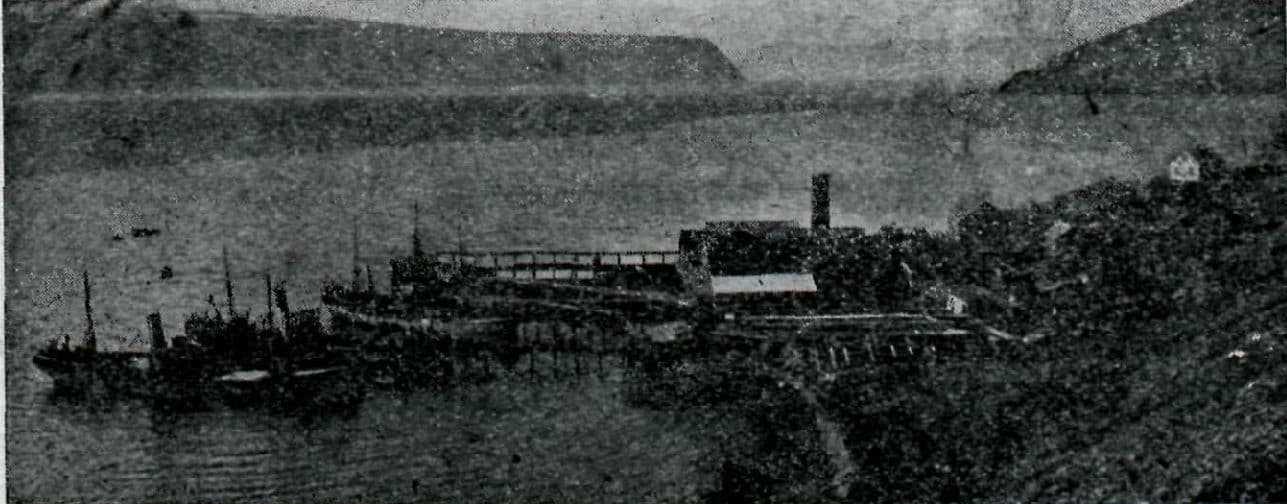
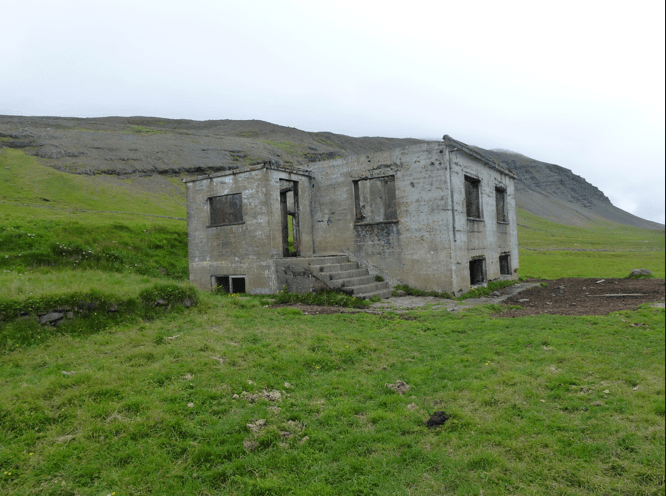
What remains today is a cluster of ruined farm structures beside Reyðarfjörður, including the collapsed remains of a small hydroelectric power station that was later crushed by a rockfall; historic photographs show the wooden farmhouse and outbuildings before abandonment.
History
Karlsskáli was first recorded in the 1703 census and, according to an 1847 land registry, belonged to Dvergasteinskirkja church before passing into private farming ownership in the late 19th century when Eiríkur Björnsson and his wife Sigríður Pálsdóttir bought it. Under them the farm grew to house as many as 50 people, ran a flock of 112–156 sheep, and operated its own rowboats alongside boats crewed by Faroese fishermen working out of Karlsskáli and the nearby island of Seley. Their sons Guðni and Björn Eiríksson later took over the farm. A small hydroelectric power station was built on the property in 1914 by Indriði Helgason. The farm was abandoned after a fire in 1961.
What Remains Today
Photographs from 2014 show the farm buildings as ruins beside the fjord, along with the wreckage of the 1914 power station, whose building was crushed by a rockfall.
Visiting & Preservation
Access Not Yet Verified
Karlsskáli is a remote, abandoned farm site by Reyðarfjörður with no indication of maintained visitor infrastructure. Public access to this site has not been independently verified. Do not assume a trail, parking, or landowner permission exists.
Preservation Notice
No formal archaeological protection status is recorded for this site in the dataset used.
Location
Why Visit
Karlsskáli's detailed 19th-century household record — down to family names, livestock numbers, and its own fishing fleet — combined with photographic documentation of its 1914 power station and its later destruction, gives an unusually complete before-and-after picture of one abandoned East Iceland farm.
Did You Know?
At its peak the farm's household numbered as many as 50 people, and among Eiríkur and Sigríður's daughters, two married Faroese men — one of them Jóannes Patursson, a royal tenant farmer (kóngsbóndi) at Kirkjubær in the Faroe Islands.