Háleyjabunga
Explore Háleyjabunga, an ancient lava shield volcano with a dramatic 25m deep crater overlooking the rugged Reykjanes coast.
At a Glance
Visit time
1-2 hours for exploration of the crater and coastal views.
Best season
Summer months (May-September) for best weather; daytime for visibility.
Access
Accessible via a short walk (less than 1 km) from Nesvegur road. Standard vehicles can reach the trailhead.
GPS
63.8167, -22.6653
About
About Háleyjabunga
Explore Háleyjabunga, an ancient lava shield volcano with a dramatic 25m deep crater overlooking the rugged Reykjanes coast.
Witness a dramatic 9,000-year-old volcanic crater meeting the wild Atlantic coast.
Photos
Photo Gallery
Background
History & Background
Háleyjabunga is a geologically significant lava shield volcano, formed during a highly effusive lava eruption at least 9,000 years ago. It stands as one of the oldest volcanic formations on the Reykjanes Peninsula, showcasing picrite lavas that emerged shortly after the last glacial period. Its age and unique composition make it a crucial site for understanding the early post-glacial volcanic activity in this region of Iceland. Recognized for its importance, Háleyjabunga is designated as a geosite within the Reykjanes UNESCO Global Geopark. This status underscores its value in illustrating the powerful geological forces that have shaped Iceland over millennia. The volcano's structure, particularly where it meets the sea, offers a rare opportunity to observe the internal layers of a lava shield and how subsequent, younger lava flows have interacted with this ancient landscape. The impressive circular crater, 20-25 meters deep, is a lasting testament to the intensity of its formation. The surrounding landscape, a testament to its volcanic origins, remains largely untouched, preserving the raw, rugged beauty of Iceland's volcanic heritage.
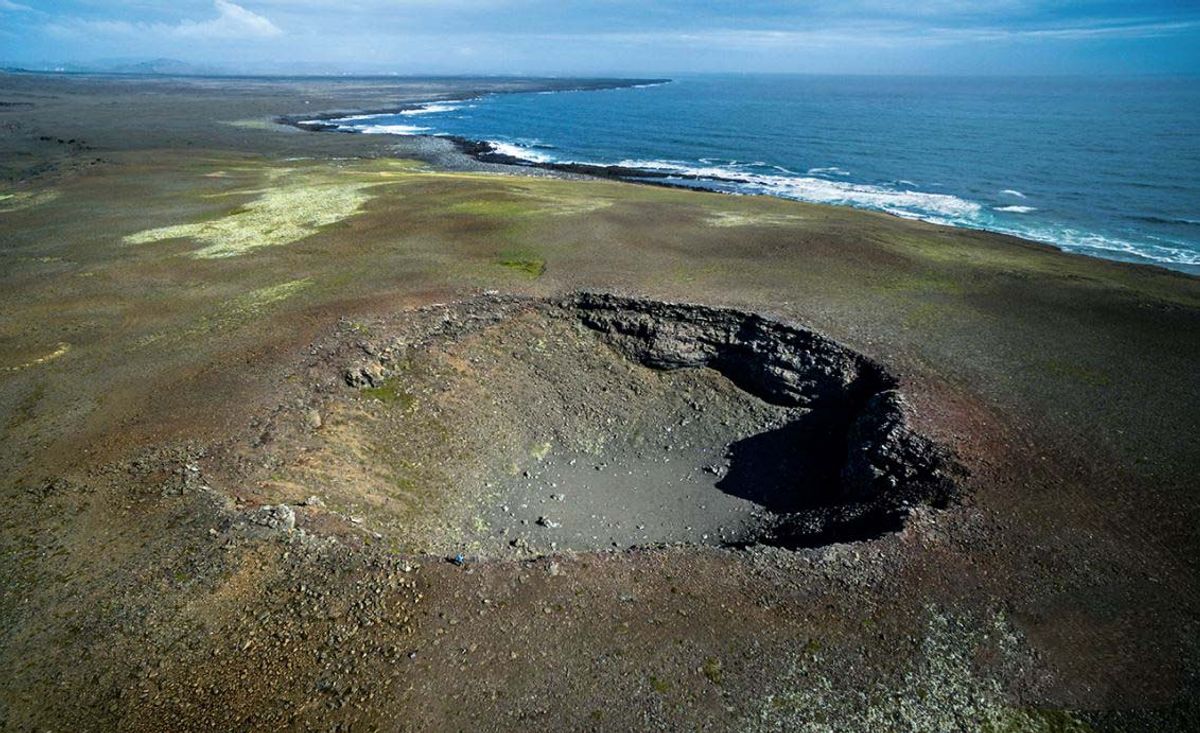
Háleyjabunga, a prominent geosite within the Reykjanes UNESCO Global Geopark, is a small yet significant lava shield volcano situated on the eastern part of the Reykjanes Peninsula, close to the iconic Reykjanes lighthouse. This ancient formation, at least 9,000 years old, represents some of the oldest picrite lavas found on the peninsula, dating back to shortly after the last ice age glaciers receded. The most striking feature of Háleyjabunga is its large, circular crater, which dominates the central part of the lava shield. As seen in the image, the crater is quite deep, plunging approximately 20 to 25 meters into the earth, with rugged, dark rock walls defining its impressive rim. The crater floor itself appears dark and relatively flat, scattered with smaller rocks. The volcano's unique location by the sea, particularly on its southeastern side, offers unparalleled geological insights. Along the dramatic sea cliffs, the internal structure of the lava shield is clearly visible, providing a natural cross-section of its formation. Visitors can also observe how younger lava flows have accumulated around the older shield. Accessing Háleyjabunga is relatively easy; a walk of less than 1 km from Nesvegur leads directly to the crater. From there, it's a short descent to the coast to explore the exposed lava formations. The surrounding landscape, visible in the image, is a mix of barren, rocky terrain with patches of green moss, contrasting beautifully with the deep blue of the Atlantic Ocean and the white crests of its waves. This site offers a tangible connection to Iceland's powerful volcanic heritage and its ongoing geological evolution.
Folklore
Story & Folklore
Imagine standing on the edge of time, where the raw power of Iceland's geological past unfolds before you. A short walk from Nesvegur leads you to Háleyjabunga, a quiet giant on the Reykjanes Peninsula. As you approach, the ground shifts from rugged terrain to the stark, dark rock of the lava shield. Then, the earth opens up: a perfectly circular crater, 20 to 25 meters deep, a silent testament to an ancient, effusive eruption. The wind whispers tales of fire and ice, carrying the scent of the sea. Beyond the crater, the landscape slopes gently towards the Atlantic, where waves crash against the dark lava cliffs. Here, the volcano's inner structure is laid bare by the relentless ocean, revealing layers of history. It's a place where you can truly feel the pulse of the earth, a serene yet powerful encounter with nature's artistry.
💡 Did You Know?
Háleyjabunga is a designated geosite within the Reykjanes UNESCO Global Geopark, showcasing some of the Reykjanes Peninsula's oldest picrite lavas, over 9,000 years old.
Local Legend
No known local legend
Information about local legends or myths specific to Háleyjabunga is not available in the provided research.
Culture
Stories & Legends
Icelandic sagas and folklore from this area
Explore
Hidden Gems Nearby
✦ Coastal Lava Cliffs
Descend from the crater to the rugged coastline where the relentless Atlantic waves have carved away sections of the Háleyjabunga lava shield. Here, you can clearly see the distinct geological layers and internal structure of this ancient volcano.
It offers a rare, exposed cross-section of the lava shield's formation.
Help
Frequently Asked Questions
Location
📍 Location
Discover
Explore Nearby
Places from our database within 1.0 km — all data from Sanity
Loading nearby places…
0 places found within 1.0 km
Plan full itinerary →Explore More