🚧 This site is under construction
GoIceTravel
Explore IcelandAttractions🧭 Trip Planner🌌 Live Aurora Forecast

🌐 Language

Iceland Heritage

Legends & Folklore

Trolls · Elves · Highland Outlaws · Viking History · Haunted Places

Iceland's Living Mythology

In Iceland, myths are not ancient history — they are present tense. Roads have been rerouted to avoid disturbing elf rocks. Volcanic eruptions are still described using words given to them by medieval storytellers. Trolls frozen mid-step in lava or surf are pointed out to children as fact, not fantasy.

Every legend on this page has a location. Many of those locations are among Iceland's most visited natural sites. The story changes how you see them.

🧝

Elves and the Hidden People

In Icelandic folklore the hidden people, known as Huldufólk, are mystical beings believed to live inside rocks, cliffs and lava fields. Many Icelanders treat these places with respect — some roads have even been rerouted to protect rocks believed to be elf homes.

Today, surveys suggest a significant number of Icelanders either believe in elves or are unwilling to rule out their existence.

Elf Rocks – Álfasteinar
📍 geopoint

Elf Rocks – Álfasteinar

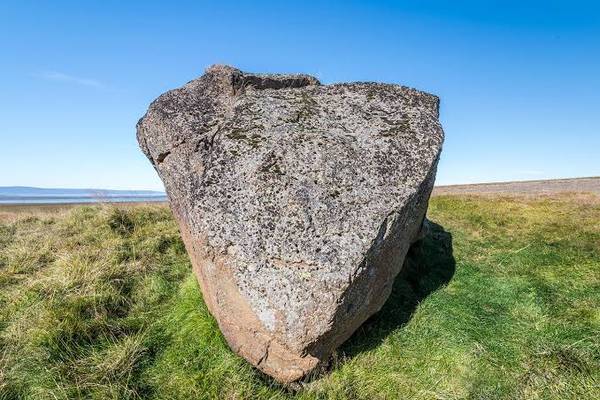
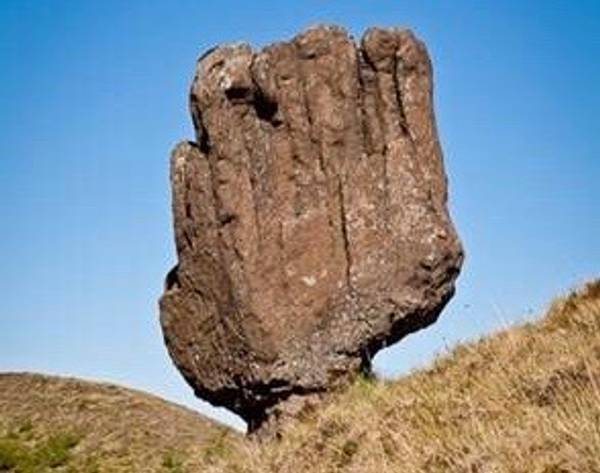
Certain prominent rocks and boulders across Iceland are believed to be homes of the Hidden People. Moving or destroying them is considered dangerous and unlucky.

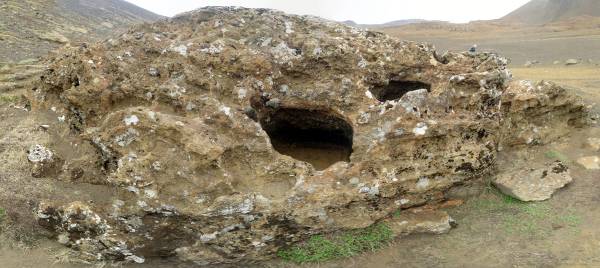
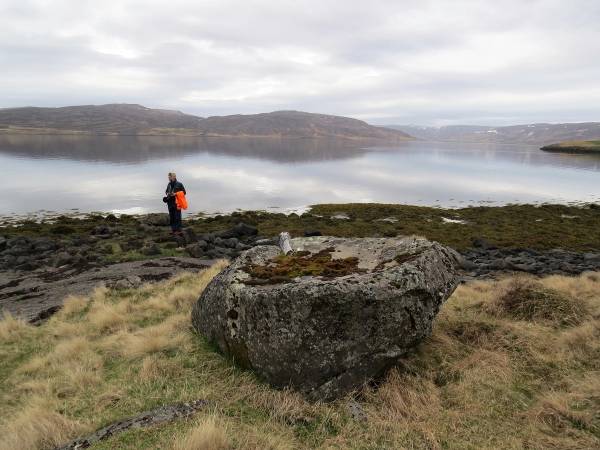
Scattered across Iceland — in lava fields, along roadsides, in the middle of farms — are rocks that locals know not to touch. These álfasteinar, or elf rocks, are identified through oral tradition passed down through generations: this boulder is an elf church. That hill is where the Hidden People hold their midsummer festival. This lava formation is the entrance to an elf village.

The Snæfellsnes peninsula is particularly dense with such sites. So is the Álftanes peninsula near Reykjavík, and the Reykjanes lava fields to the southwest of the capital. The best-known elf rock in the Capital Region is Grásteinn in Hafnarfjörður, a small seaside town just south of Reykjavík that bills itself as the 'Elf Capital of Iceland' and offers guided tours of its elf locations.

When road surveyor Viðir Reynisson published a map of elf locations in the 1990s, he noted that many of the marked sites also corresponded with areas where people had historically reported strange sounds, unexplained equipment failures, or recurring nightmares after disturbing certain ground. Whether these correlations are coincidences or cultural memory of genuinely unstable geology is left as an open question.

For visitors, the elf rock tradition offers something rare: a purely Icelandic supernatural geography that has no equivalent anywhere else in Europe.

elveself rockshidden peoplehafnarfjörðursnæfellsnessuperstitionsfolklore
Elves and the Hidden People (Huldufólk)
📍 Reykjavík

Elves and the Hidden People (Huldufólk)

Icelanders famously believe in — or at least refuse to disbelieve in — the Huldufólk: hidden people who live inside rocks and lava fields and should never be disturbed.

In no other country in the world is belief in supernatural beings as culturally embedded as it is in Iceland. The Huldufólk — Hidden People — are an invisible race said to live in the rocks, hills, and lava formations that cover much of the country. They look like humans, live in their own communities, have their own festivals and livestock, and generally leave people alone — as long as people leave them alone.

The belief is not considered superstition by most Icelanders. It is better understood as a deep cultural respect for the living landscape — a recognition that Iceland's geology is so wild and so active that human plans must bend around it. When road construction projects in Iceland have been stalled or rerouted, it has sometimes been reported — entirely seriously in the national press — that the route was changed to avoid disturbing known elf rocks or elf hills.

The most famous case involved a large lava boulder in a Reykjavík suburb. Construction crews reported equipment failures every time they attempted to move the boulder. An elf communicator (a recognized specialist in these matters) was consulted. The boulder was left in place.
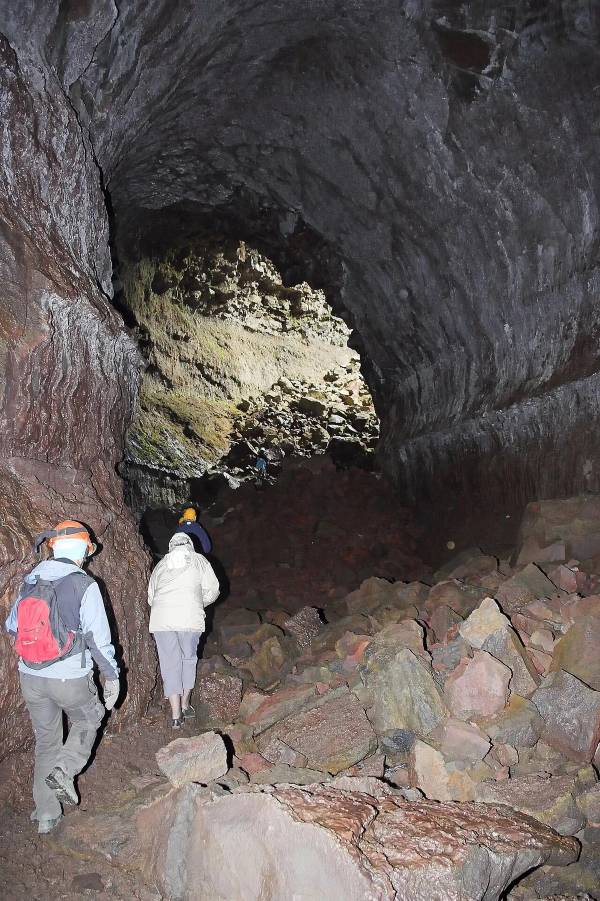
Many Icelanders keep a slightly divided consciousness about the Huldufólk — not quite believing, not quite disbelieving, but unwilling to risk the consequences of dismissing them entirely. In a country where the land itself can erupt, split open, flood, or bury a farmstead overnight, a degree of reverence for unseen forces seems entirely rational.

elveshidden peoplehuldufólkfolkloreicelandmythologyelf rocks
🪨

Trolls of Iceland

Trolls lived in caves and mountains, only came out at night, and turned to stone in sunlight. Many of Iceland's most dramatic rock formations are said to be trolls frozen at dawn — the landscape itself is a graveyard of frozen monsters.

Dimmuborgir – The Dark Fortress of North Iceland
📍 Mývatn

Dimmuborgir – The Dark Fortress of North Iceland

A nightmarish lava field of twisted rock formations where trolls and supernatural beings are said to dwell — and home of the fearsome Grýla and the Yule Lads.

Dimmuborgir — which translates as 'Dark Fortress' or 'Dark Castles' — is one of the most mysterious and visually striking locations in Iceland. Situated near Lake Mývatn in the north, the area consists of a field of bizarre lava formations created by a volcanic eruption approximately 2,300 years ago.

The strange pillars, arches, caves and tunnels of hardened lava create a landscape that looks like the ruins of a collapsed civilization — or the stronghold of something ancient and inhuman. Walking through Dimmuborgir at dusk, when long shadows fill the hollows between rocks, it is not difficult to understand why generations of Icelanders believed supernatural forces lived here.

According to Icelandic folklore, Dimmuborgir is inhabited by trolls and other creatures that retreat into the lava formations before daylight. The area is also deeply connected to the mythology of the Yule Lads — the thirteen mischievous Icelandic Christmas figures — and their terrifying mother Grýla, a giant troll-woman who is said to live somewhere within the dark lava caves.

Some legends also describe Dimmuborgir as a gate between the world of the living and the realm of the dead. Even today, the area has an atmosphere that many visitors find profoundly unsettling — particularly in October and November, when the days are shortening rapidly and the first hard frosts begin to grip the lava fields.

trollsnorth-icelandlavayule-ladsfolkloremývatn
Dimmuborgir – City of Trolls
📍 Dimmuborgir

Dimmuborgir – City of Trolls

A labyrinth of twisted lava pillars near Lake Mývatn, said to be the home of trolls and the place where the Yule Lads descend each Christmas.

Dimmuborgir — meaning 'Dark Castles' or 'Dark Cities' in Icelandic — is one of the most otherworldly landscapes in Iceland. The hulking lava formations were created about 2,300 years ago when a lava lake drained away, leaving behind a forest of hollow pillars, arches and towers carved in black rock. The shapes are so bizarre and cathedral-like that it is easy to understand why Icelanders came to believe the place was supernatural.

In Icelandic folklore, Dimmuborgir is the home of trolls — hulking stone creatures that roam the highlands by night and turn to rock if caught by sunlight. The Yule Lads, Iceland's mischievous Christmas figures (thirteen brothers who replace Santa Claus in Icelandic tradition), are said to descend from Dimmuborgir each December. Their mother is Grýla, a fearsome mountain giantess who hunts badly behaved children and boils them in her cauldron. Their father is the lazy Leppalúði, and their pet is the Yule Cat — a massive black cat that devours anyone who does not receive new clothes before Christmas Eve.

Walking the trails through Dimmuborgir today, especially at dusk when long shadows fall between the pillars, gives an immediate sense of why this landscape has fed centuries of Icelandic storytelling.

trollsyule ladschristmaslavamývatnnorth icelandfolklore
Kerlingarfjöll – The Petrified Troll Woman
📍 Kerlingarfjöll

Kerlingarfjöll – The Petrified Troll Woman

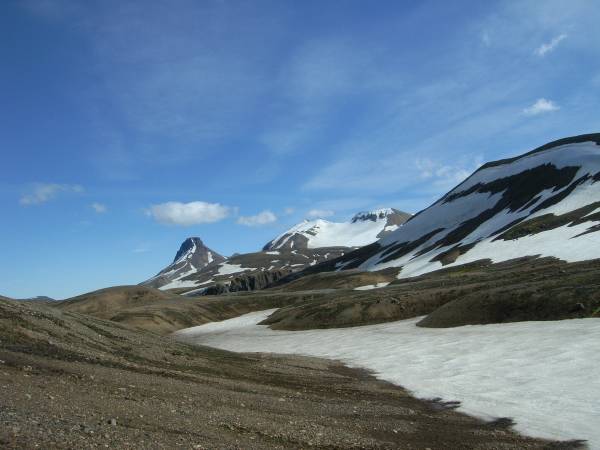
The geothermal Highland mountains named after a troll woman called Kerling — 'the old hag' — who was petrified at dawn while crossing the interior with her troll followers.

Kerlingarfjöll — 'The Mountains of the Troll Woman' — take their name directly from a figure in Highland folklore. According to the legend, a large troll woman called Kerling (simply 'the hag' or 'the crone') led a group of trolls across the volcanic interior of Iceland by night. Trolls, as all Icelanders know, cannot survive exposure to sunlight — when daylight touches them, they solidify instantly into stone.

Kerling and her followers were moving through the highlands, believed to be heading west toward the coast, when dawn broke faster than expected. The mountains caught them all mid-stride. The strange, towering peaks of the Kerlingarfjöll range — with their steaming fumaroles and shades of orange and red — are said to be the remains of Kerling and her companions, frozen in the moment of their petrification.

The landscape itself seems to support the myth. Steam vents rise continuously from the valley floors. The mountain ridges take on strange, anthropomorphic shapes in certain light. And the sheer remoteness of the area — accessible only in summer by 4x4 on the Kjölur highland road — gives it the feeling of a place that belongs to older forces than humans.

trollshighlandskerlingarfjölltroll womanfolkloregeothermal
Reynisdrangar – Trolls Turned to Stone

Reynisdrangar – Trolls Turned to Stone

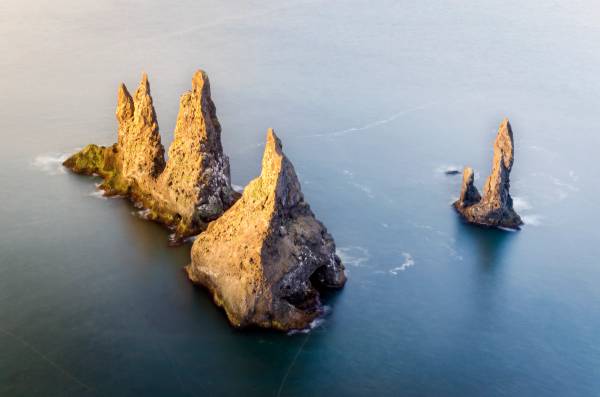
Three towering sea stacks rising from the black sand at Reynisfjara — according to legend, two trolls caught by dawn while dragging a ship ashore.

The basalt sea stacks of Reynisdrangar rise dramatically from the surf at Reynisfjara black sand beach, near the village of Vík. From a distance they look almost human — tall, crooked, frozen mid-gesture. That resemblance is the starting point of one of Iceland's most enduring troll legends.

According to the old story, two trolls were out at sea one night trying to drag a three-masted sailing ship to land. They pulled and worked through the darkness, but were so absorbed in their effort that they did not notice the sky beginning to lighten in the east. When the first rays of the sun struck them, they were instantly turned to stone — condemned to stand in the surf for eternity, forever reaching toward the shore they never reached.

The stacks are now a protected natural monument. The tallest rises to 66 meters above sea level. The beach below is famous not only for the stacks but for the enormous basalt column formations in the cliff face beside it — hexagonal pillars that look almost architectural, as if built by beings far larger than humans. The waves here are notoriously dangerous, with rogue waves claiming lives from unsuspecting visitors who stand too close to the water's edge.

trollssea stacksreynisfjarablack sand beachsouth icelandvíkfolklore
👻

Ghost Stories of Iceland

Icelandic ghosts — known as draugar — are not the transparent, ethereal spirits of European tradition. They are physical, violent, and nearly unstoppable. Many legends describe them as stronger in death than in life.

Djákninn á Myrká – The Deacon of Dark River
📍 geopoint

Djákninn á Myrká – The Deacon of Dark River

A haunting figure in Icelandic folklore, Djákninn á Myrká is said to be the restless spirit of a deacon who died tragically and returned to claim his promised bride. Often appearing as a seemingly normal man on horseback, he lures the unsuspecting into a fatal journey across dark rivers and desolate landscapes. The legend is deeply tied to themes of love, death, and deception, with the truth only revealed too late. Rooted in rural northern Iceland, the story remains one of the most chilling ghost tales in the country, blending real locations with supernatural terror.

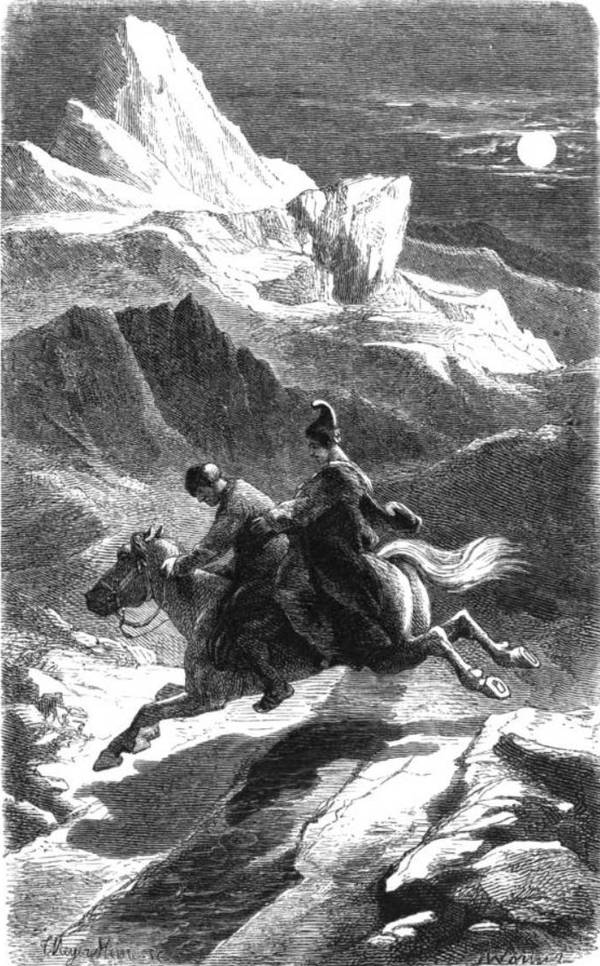
On Christmas Eve 1780, a young deacon named Jón rode through a snowstorm from Myrká farm to fetch his beloved Guðrún from Bægisá farm for midnight mass. The couple planned to announce their engagement at the service. But when Jón attempted to cross the Myrká River, his horse stumbled on the ice. Jón fell, struck his head on a rock, and drowned in the freezing water. His body was carried downstream beneath the ice.

Back at Bægisá, Guðrún waited. As night fell, she heard hoofbeats outside. A figure on horseback appeared at the window — a man in dark clothing, his face hidden by shadow. Guðrún, believing it to be Jón, climbed onto the horse behind him and rode through the night.

But as they crossed the Myrká River, moonlight struck the rider's face — and Guðrún saw not the face of the living, but the pale, bloated features of a drowned corpse. The deacon spoke a chilling verse: 'Tunglið lýsir, dauðinn ríður, Séður andlit á dauðum manni?' — 'The moon shines, death rides, do you see the face of a dead man?'

Guðrún tried to escape, but the revenant's grip was iron. They rode on through the night until reaching the graveyard at Hruni church. The deacon dismounted and began clawing at the frozen earth with his hands, attempting to drag Guðrún into the grave with him. She grabbed the cord of the church bell and rang it desperately. The sound broke the spell — the deacon released her and sank into the earth. Guðrún collapsed.

She was found the next morning by the sexton, still clutching the bell rope, her hair turned completely white. She never fully recovered her mind. The deacon's body was found weeks later, frozen in the river ice.

haunteddeaconmyrkághostdraugarsouth icelandchristmasfolklore
Ghost Ships of Reykjavík Harbor
📍 geopoint

Ghost Ships of Reykjavík Harbor
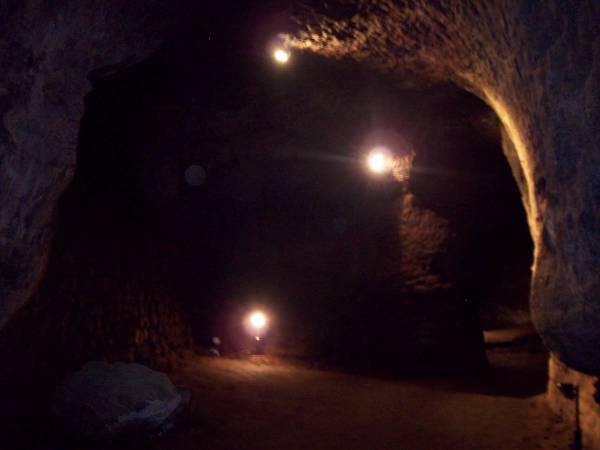
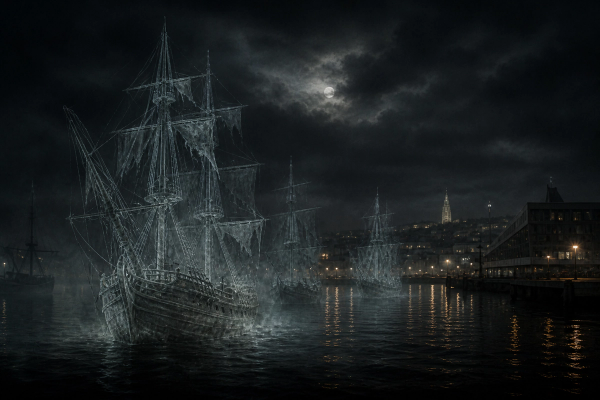
Phantom vessels seen drifting in Reykjavík harbor on foggy nights — drowned fishermen returning home, or ships lost at sea replaying their final voyage forever.
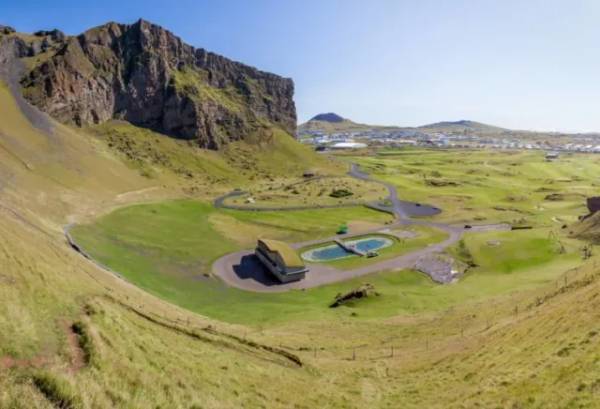
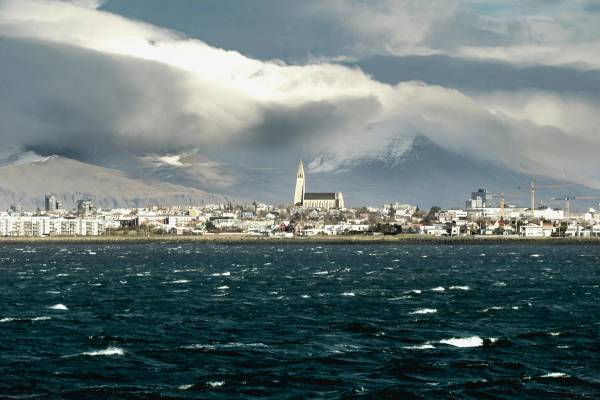
Iceland's relationship with the sea is written in loss. For centuries, fishing was the nation's lifeblood, and every coastal family has ancestors who went to sea and never returned. The old Reykjavík harbor — now a tourist district of restaurants and museums — was once the departure point for fishing fleets that faced the North Atlantic's killing storms.
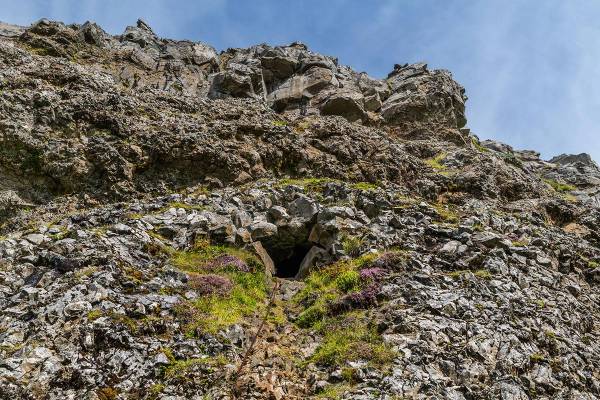
The ghost ship stories began in the 18th century. Fishermen returning at dawn would report seeing vessels anchored in the harbor that had not been there the night before — old-style six-oared boats with tattered sails, moving without wind, crewed by silent figures. When approached, these phantom ships would dissolve into fog.

The most famous account comes from 1891, when a harbor watchman named Jón Einarsson documented a three-masted schooner entering Reykjavík harbor during a dense fog. He observed it through a telescope, noting its archaic rigging and the figures on deck dressed in clothing decades out of fashion. He rang the harbor bell to alert the night crew, but by the time they reached the dock, the ship had vanished. There was no wake, no sound — it had simply ceased to exist.
Local tradition identifies these vessels as either the drowned returning to home port one last time, or ships caught in a kind of temporal loop, replaying their final voyage forever in the space between the living world and the next.

hauntedghost shipreykjavíkharbormaritimefolkloreseadrowned
Skuggabaldur – The Shadow Creature
📍 geopoint

Skuggabaldur – The Shadow Creature

A dark and mysterious presence in Icelandic folklore, Skuggabaldur is said to lurk in shadows, appearing as a shifting, unnatural creature that blends into its surroundings. Often described as a fusion of human and beast, it is associated with unease, illusion, and the unknown. Stories suggest it emerges in isolated places or at the edge of perception, where light fades and imagination takes hold. Encounters are rare but unsettling, leaving witnesses unsure of what they truly saw. Whether viewed as myth or psychological phenomenon, Skuggabaldur reflects deep-rooted fears of the unseen, making it one of the more eerie and lesser-known figures in Icelandic legend.

The Skuggabaldur is not a ghost of the dead, but something older and stranger: a shadow-being that exists in the liminal space between darkness and form. The name translates roughly to 'Shadow-Fellow' or 'Shadow-Ghost,' and it appears in Icelandic folk tradition as a thing that follows lone travelers on dark winter roads.

The Skuggabaldur begins as a faint shadow at the edge of vision — something moving just out of focus. Travelers who notice it often dismiss it as a trick of moonlight or their own shadow cast by distant firelight. But the Skuggabaldur grows. With each glance, it becomes more defined, more solid, more real. It draws closer, matching the traveler's pace exactly.

Those who break and run find the Skuggabaldur can move faster than any living thing. Those who stop and face it see it grow enormous — a towering humanoid silhouette with no features, no face, only mass and weight. Accounts describe a sensation of crushing pressure, of the air itself becoming heavy, of being pushed down into the earth by invisible hands.

The traditional defense against the Skuggabaldur is counterintuitive: you must not acknowledge it. Do not look at it directly. Do not run. Continue walking at a steady pace, reciting prayers or verses aloud, and reach the next farm or church before full darkness falls. The Skuggabaldur cannot cross a threshold uninvited, and it dissolves at dawn.

hauntedshadowcreaturefolkloresupernaturalghosticeland
🌋

Legends of the Icelandic Highlands

The Highlands were home to outlaws banished from society who lived in caves and survived by their wits. Their stories blurred the line between history and myth, with some gaining near-supernatural reputations for endurance and cunning.

Grettislaug – Where the Saga Hero Bathed
📍 geopoint

Grettislaug – Where the Saga Hero Bathed

Two small geothermal pools on the Skagi peninsula said to be the very spot where Grettir the Strong swam ashore and bathed after swimming across Skagafjörður.

The Grettis saga, written in the 14th century but set in the 10th and 11th, tells the story of Grettir Ásmundarson — the strongest man in Iceland, declared an outlaw after a string of killings, and condemned to nineteen years of solitary exile before his death on the island of Drangey. He is Iceland's most famous literary outlaw: immensely strong, unlucky, brave, and ultimately doomed.

The saga describes how Grettir swam across Skagafjörður from his refuge on the island of Drangey to the mainland at Reykjar — a distance of about seven kilometres in the cold North Atlantic. After reaching shore in the dead of winter, his hands had locked into claws from the cold. He found natural hot springs on the beach, plunged into them, and his hands slowly unfastened.

The two small pools known today as Grettislaug — Grettir's Pool — are still there. They sit on the shoreline in exactly the spot described in the saga. The outer pool is seawater at about 28°C; the inner pool is hotter geothermal water at around 39°C. A small changing room and a rusting sign mark the spot. You can sit in the same water Grettir's saga hero is said to have used to revive his frozen hands, looking out across Skagafjörður at the island of Drangey rising from the sea.

grettir sagagrettislaugnorth icelandhistorygeothermalhot poolssagas
Katla Volcano Legend
📍 geopoint

Katla Volcano Legend

The legend of Katla the cook, whose stolen stockings unleashed Iceland's most feared glacier volcano — a myth so embedded in culture that eruptions are still called 'Katla is waking'.

The Katla volcano lies beneath the Mýrdalsjökull ice cap in southern Iceland. It has erupted regularly throughout recorded Icelandic history — roughly every 40 to 80 years — and each eruption triggers catastrophic glacial floods (jökulhlaup) that have swept away farms, reshaped coastlines, and in one case transported icebergs bigger than houses out to sea.

The name 'Katla' comes from a legend set at the medieval farm of Þykkvabæjarklaustur monastery. Katla was a cook there — a bad-tempered woman with a pair of magical stockings that gave the wearer superhuman speed and endurance. When a young shepherd called Barði discovered and stole the stockings, Katla was furious. She threw herself into the volcano in rage, and the volcano erupted with so much power it swept Barði and everything around him away in a torrent of meltwater and ice.

Katla has not had a major eruption since 1918. Volcanologists consider it one of the most dangerous volcanoes in Iceland and monitor it closely. When Icelanders speak of Katla 'waking up,' there is a cultural weight in the phrase that goes far beyond seismology — it reaches back to the old story of a furious cook throwing herself into the fire.

katlavolcanohighlandslegendsouth icelandglacial floodfolklore
Outlaws of the Highland Interior

Outlaws of the Highland Interior

For centuries the Highlands served as refuge for outlaws banished from Icelandic society — real men whose desperate lives became woven into folklore.

The Icelandic legal term was útlegðarmaður — outlaw. A person declared an outlaw under the old Alþingi parliament was cast from all protection of law and society. Anyone could kill them without legal consequence. The only place to survive was the interior — the Highlands, which had no farms, no villages, and only minimal patrol. It was a death sentence dressed as exile.

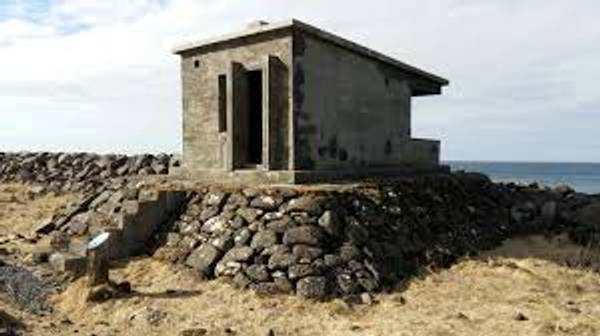
The most famous outlaw of the Highlands was Fjalla-Eyvindur — Eyvindur of the Mountains — who lived as a fugitive in the Highland interior for over twenty years in the 18th century. He and his wife Halla survived winters that would have killed most people, sheltering in caves and natural overhangs, hunting and living on the land. Their shelter near Hveravellir on the Kjölur route is still pointed out to visitors: a low stone enclosure tucked into a geothermal area where the ground stayed above freezing even in the depths of winter.

Fjalla-Eyvindur became a folk hero — a symbol of endurance, defiance and Highland survival. His story has been told in plays, films and novels. The shelter at Hveravellir is one of the oldest surviving man-made structures in the Highlands.

highlandsoutlawsfjalla-eyvindurhveravellirhistoryfolklore
🏚️

Haunted Places

Bessastaðir Presidential Estate
📍 geopoint

Bessastaðir Presidential Estate

One of Iceland's oldest building complexes, continuously occupied since the Viking Age. Seven centuries of history have left their mark — staff describe persistent unexplained activity in the older wings.

One of Iceland's oldest building complexes, continuously occupied since the Viking Age. Seven centuries of history have left their mark — staff describe persistent unexplained activity in the older wings. The estate has been the official residence of Iceland's president since 1944.

historicghostreykjanespresidentviking age
Drangey Island – Ghosts of the Sagas
📍 geopoint

Drangey Island – Ghosts of the Sagas

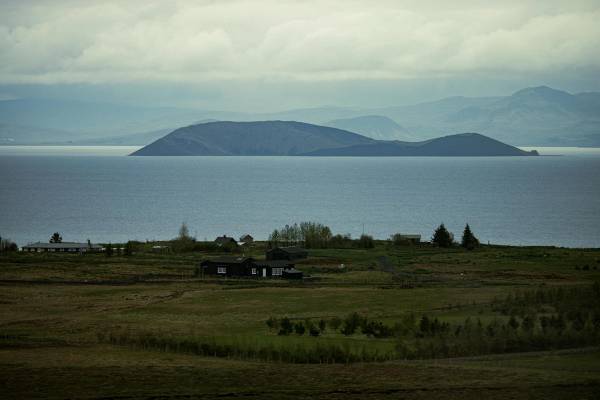
A dramatic and isolated island in Skagafjörður, Drangey is steeped in Icelandic saga lore, most famously linked to the outlaw Grettir the Strong, whose final days unfolded here. Surrounded by sheer cliffs and the cold North Atlantic, the island carries an eerie atmosphere where history and legend intertwine. Tales speak of restless spirits, lingering echoes of betrayal, and the weight of fate tied to the island’s past. Today, visitors experience both its striking natural beauty and its haunting connection to the sagas, making it one of Iceland’s most evocative and mysterious historic locations.

Drangey is a vertical-sided island fortress rising 180 meters from the cold waters of Skagafjörður. Seabirds nest on its cliffs in numbers that darken the sky. At its summit is a small plateau of grass where, in the year 1031, the outlaw Grettir Ásmundarson lived his final years before being murdered by his enemies.

Grettir was the hero of Grettis Saga — one of Iceland's greatest medieval narratives. A man of enormous strength and terrible luck, he was outlawed for twenty years after killing a man in a dispute. No law, no mercy, no protection: anyone could kill an outlaw without consequence. Grettir survived by strength and cunning, taking refuge on Drangey with his brother Illugi and a slave named Glaum.

For three years they held the island against all attacks. But magic succeeded where strength failed. A sorceress named Þuríður sent a curse-log drifting to Drangey's shore. When Grettir tried to chop it for firewood, he cut his leg with the axe. The wound festered, weakened him, and eventually his enemies climbed the cliffs at night and killed him in his sickbed.

The hauntings began immediately. Fishermen approaching Drangey reported seeing figures on the clifftops — three men standing in the mist, watching. Climbers reported hearing voices, the ring of weapons, and feeling invisible hands pushing them toward the cliff edge. The most detailed account comes from a priest who visited in 1643 to 'lay the ghosts' — he spent a night alone on the summit and described hearing footsteps circling his tent, voices speaking in Old Norse, and the unmistakable sound of an axe striking wood.

haunteddrangeygrettirsagaghostoutlawnorth icelandmedieval
Draugasetrid – Ghost Center
📍 geopoint

Draugasetrid – Ghost Center

Iceland's dedicated ghost story museum and haunted house experience on the South Coast. Themed rooms recreate famous Icelandic ghost legends, including the Deacon of Myrká.

Iceland's dedicated ghost story museum and haunted house experience on the South Coast. Themed rooms recreate famous Icelandic ghost legends, including the Deacon of Myrká and other famous stories. An essential stop for anyone interested in Icelandic supernatural folklore.

museumghostsouth-coastattractionstokkseyri
Gunnuhver – The Angry Ghost of Reykjanes
📍 geopoint

Gunnuhver – The Angry Ghost of Reykjanes

A boiling geothermal field named after a vengeful ghost trapped in the earth for eternity.

Gunnuhver is one of the most famous haunted places in Iceland. The geothermal area on the Reykjanes Peninsula is named after a ghost called Gunna — a woman who died after a bitter dispute with her landlord centuries ago.

According to Icelandic folklore, Gunna's spirit began haunting the Reykjanes peninsula after her death, terrorizing locals and refusing to rest. The priest Eiríkur of Vogsósar eventually trapped her spirit in the boiling geothermal springs through a series of rituals and exorcisms. The springs were named Gunnuhver — Gunna's pool — in her memory.

Today Gunnuhver is known for its massive mud pools, steaming vents and sulfur-scented air. The unearthly atmosphere that surrounds the area feels almost supernatural — the ground trembles beneath your feet, clouds of white steam obscure visibility, and the sounds of the boiling earth echo like something alive beneath the surface.

Visitors to Gunnuhver often report a strange feeling of unease, as if something is watching from within the steam. Whether that is Gunna's spirit still restless beneath the surface, or simply the volcanic power of Iceland at work, is a matter of belief.

ghostgeothermalreykjanesfolklorepriest-exorcism
Höfði House – Reykjavík's Haunted Mansion
📍 geopoint

Höfði House – Reykjavík's Haunted Mansion

The most famous haunted building in Iceland — site of the 1986 Reagan-Gorbachev Summit and home to a well-documented ghost.

Höfði House in Reykjavík is one of the most famous haunted buildings in Iceland. The elegant white mansion was built in 1909 near the harbour and became internationally famous when it hosted the 1986 Reykjavík Summit between Ronald Reagan and Mikhail Gorbachev — a meeting that helped end the Cold War.
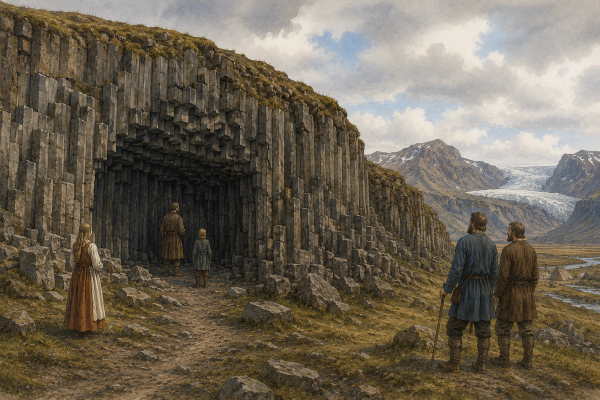
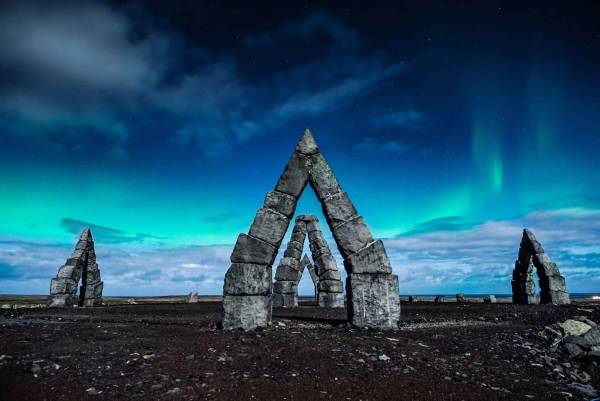
Long before the political summit, Höfði House had earned a dark reputation. People working in the building reported strange noises in empty rooms, unexplained movements of objects, and an oppressive presence that made overnight stays unbearable. The British ambassador who resided there in the mid-20th century reportedly found the haunting so disturbing that he formally requested to be moved to different accommodation.

The ghost is said to be a young woman, sometimes called the White Lady, who appears in the upper floors of the building. Her identity has been a matter of local debate for generations, with some connecting her to the original owner's family and others believing she predates the house itself.

Today Höfði House is used as an official reception venue by the City of Reykjavík. It is not open to regular visitors, but it can be viewed from outside — a striking white building overlooking the grey ocean, elegant and slightly strange, as if it knows something about the city it refuses to share.

ghostreykjavikmansionhistoricwhite-lady
Hólavallagarður Cemetery
📍 geopoint

Hólavallagarður Cemetery

Iceland's oldest cemetery (established 1838), where spirits are said to walk between mossy headstones at night. Many of Iceland's most prominent historical figures are buried here.

Iceland's oldest cemetery (established 1838), where spirits are said to walk between mossy headstones at night. Many of Iceland's most prominent historical figures are buried here.

cemeteryreykjavíkghosthistoric
Hvítárnes Hut
📍 geopoint

Hvítárnes Hut

A remote highland hut accessible only in summer where travelers have reported strange sounds, moving objects and apparitions that appear and vanish during overnight stays.

A remote highland hut accessible only in summer where travelers have reported strange sounds, moving objects and apparitions that appear and vanish during overnight stays. The hut is isolated enough that there is no obvious mundane explanation for the phenomena reported.

ghosthighlandshutremote
Laugar Junior College
📍 geopoint

Laugar Junior College

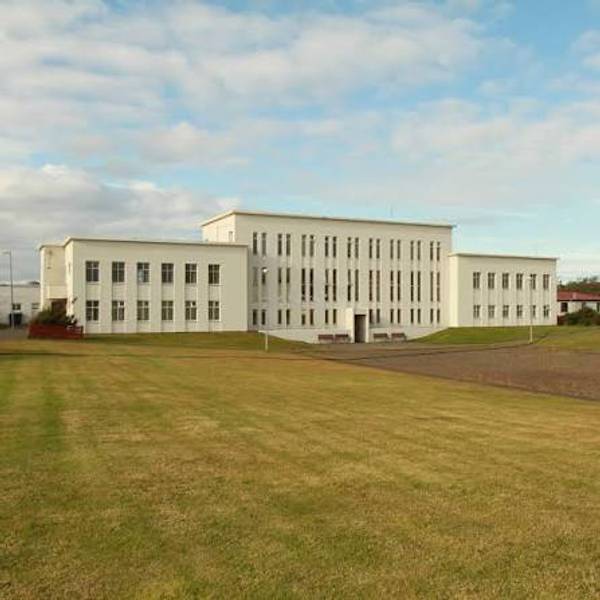
A boarding school with a long local reputation for hauntings, particularly in the oldest stone wing. Former students describe unexplained cold drafts, footsteps and doors that open and close on their own.

A boarding school with a long local reputation for hauntings, particularly in the oldest stone wing. Former students describe unexplained cold drafts, footsteps and doors that open and close on their own. The school has been operating for over a century, and the ghost stories have persisted through many generations of students.

ghostschoolnorth-icelandhaunted
Möðruvellir – The Haunted Farm
📍 geopoint

Möðruvellir – The Haunted Farm

One of Iceland's oldest continuously occupied farms, with a ghost legend involving a drowned farmhand whose spirit returned every night for years until ritually exorcised.

Möðruvellir in Hörgárdalur valley in North Iceland is one of the most historically significant farms in the country. It was the birthplace of the medieval bishop Jón Ögmundsson and features in several of the Sagas of Icelanders. The farm has been occupied almost continuously for over a thousand years.

The most famous legend attached to Möðruvellir concerns the afturganga — a revenant, a dead person who walks again. According to the story, a farmhand known as Þórólfur bægifótur (Twist-Foot) drowned crossing a river. His drowned and damaged body was found and buried, but his ghost returned to the farm that same night and every night after, walking through walls, overturning furniture, terrifying animals, and driving the household to the edge of madness.

This type of story — the draugar, or walking dead — is among the oldest in Icelandic literature. Unlike European vampires or ghosts, the Icelandic draug is solid and physical, possessed of its original strength and often greater. The only way to stop it is to dig up the body, physically restrain or dismember it, and rebury it face-down, often with its head between its knees so it cannot find its way back.

The Möðruvellir revenant was eventually stopped by a visiting priest who performed this ritual. The farm survived, and its occupants returned to their normal lives — though, as the story notes, they never again slept easily during autumn when the rivers ran high.

hauntedrevenantdraugarnorth icelandghostfolkloresagas
National Theatre of Iceland
📍 geopoint

National Theatre of Iceland

Staff and performers have reported unexplained sounds, flickering lights and ghostly presences in the backstage areas and upper floors of this early 20th century building.

Staff and performers have reported unexplained sounds, flickering lights and ghostly presences in the backstage areas and upper floors of this early 20th century building. The haunting is said to concentrate in the older dressing rooms and the fly tower above the stage.

ghostreykjavíktheatrehaunted
Seljavallalaug – The Mysterious Pool
📍 geopoint

Seljavallalaug – The Mysterious Pool

An isolated geothermal pool in a narrow valley. Hikers have reported hearing voices with no visible source in the valley, particularly at dusk in autumn when the light fades early.

An isolated geothermal pool in a narrow valley. Hikers have reported hearing voices with no visible source in the valley, particularly at dusk in autumn when the light fades early. The pool is one of Iceland's oldest swimming pools, built in 1923, and remains accessible by a 30-minute hike.

geothermalpoolsouth-icelandfolkloremysterious
Skálholt – Ghosts of Iceland's Ancient Cathedral
📍 geopoint

Skálholt – Ghosts of Iceland's Ancient Cathedral

For over 700 years Skálholt was Iceland's most powerful religious and political centre. Bishops were murdered here, executed here, and several are said to have never left.

Skálholt was the seat of one of Iceland's two medieval bishoprics from 1056 until 1785. At its height it was the most powerful institution in the country — a complex of buildings including a cathedral, a school, farm buildings, and the residences of bishops who wielded both religious and civil authority over the entire population.

The site has accumulated a long record of violent deaths. Bishop Jón Arason — Iceland's last Catholic bishop — was beheaded at Skálholt by Danish Protestant forces in 1550 along with two of his sons. The execution was essentially a political assassination designed to end Catholic resistance to the Reformation in Iceland. Jón Arason is buried under the current cathedral floor.

The older history of the site is recorded in the Biskupasögur — the sagas of the bishops — and several of these contain accounts of hauntings, strange apparitions, and encounters with the dead. A particularly persistent local legend holds that the ghost of a child bricked into the walls during medieval construction still cries at certain times of year.

Today the current cathedral (rebuilt in 1963) and the excavated ruins of the medieval buildings are open to visitors. The burial crypt beneath the altar, containing the sarcophagus of Bishop Páll Jónsson from around 1211, is one of the oldest surviving artefacts in Iceland.

hauntedskálholtbishophistorysouth icelandmedievalghost
Skriðuklaustur Monastery
📍 geopoint

Skriðuklaustur Monastery

A 16th century Catholic monastery dissolved during Iceland's Reformation. Archaeological excavations found human remains beneath the foundations, and workers have reported unexplained presences.

A 16th century Catholic monastery dissolved during Iceland's Reformation. Archaeological excavations found human remains beneath the foundations, and workers in the restored building have reported unexplained presences. The site is now a cultural centre and museum.

monasteryghosteast-icelandreformationhistoric
Snæfellsnes Abandoned Farms – Haunted Ruins of the West
📍 Snæfellsnes

Snæfellsnes Abandoned Farms – Haunted Ruins of the West

The mystical Snæfellsnes Peninsula is scattered with ruined farmhouses abandoned after disasters, plagues, and unexplained terrors — and many are said to be haunted still.

Snæfellsnes Peninsula projects into the North Atlantic like a long arm reaching toward Greenland. It is a landscape of extraordinary beauty and strangeness: black sand beaches, lava fields, the glacial volcano Snæfellsjökull, and dozens of abandoned farms slowly dissolving back into the moss and stone.

Many of these ruins have stories. Some farms were abandoned after volcanic eruptions or plagues. Others were left after economic collapse. But some — a few — were abandoned for darker reasons, and these are the farms that locals will not approach after dark.

Öndverðarnes, at the peninsula's western tip, was a prosperous farm until 1703, when every member of the household died in a single winter — cause unknown. Subsequent attempts to resettle the farm all ended in mysterious deaths or departures. The ruins stand now in the lava fields near the sea, and travelers report strange lights in the windows, the sound of voices calling from inside, and an overwhelming sense of dread when approaching the threshold.

At Saxhóll, near the Snæfellsjökull volcano, a farm was abandoned in 1891 after the farmer's wife reported seeing 'the hidden people' digging graves in the home field. Within a month, three children had died of fever. The family fled. Hikers climbing the nearby crater still report feeling watched, and camera equipment sometimes malfunctions near the site.

hauntedsnæfellsnesabandonedfarmsruinswest icelandghosthidden people
Þingvellir – The Drowning Pool
📍 geopoint

Þingvellir – The Drowning Pool

Iceland's ancient parliament site hides a dark history. The Drekkingarhylur pool here was the execution site where women accused of witchcraft and infanticide were drowned for centuries.

Iceland's ancient parliament site hides a dark history. The Drekkingarhylur pool here was the execution site where women accused of witchcraft and infanticide were drowned for centuries. The pool is still visible near the river, and swimmers have reported an uneasy feeling in the water.

historyexecutionþingvellirdrowningwitchcraft
Þórbergsstofa – Childhood Home of the Supernatural Writer
📍 geopoint

Þórbergsstofa – Childhood Home of the Supernatural Writer

The childhood home of writer Þórbergur Þórðarson, who documented encounters with elves, ghosts and supernatural beings. Guides tell stories of strange events that continue to occur at the farm.

The childhood home of writer Þórbergur Þórðarson, who documented encounters with elves, ghosts and supernatural beings throughout his life. Guides tell stories of strange events that continue to occur at the farm — unexplained lights, sounds out of season, and the persistent feeling that the writer's subjects are still nearby.

folklorewritersoutheast-icelandelvesghosts
⚔️

Viking History

Hjörleifshöfði – The First Viking Murder

Hjörleifshöfði – The First Viking Murder

A lonely volcanic headland rising from Iceland's black glacial plains — site of the first recorded murder in Iceland's settlement era.

Hjörleifshöfði is a volcanic headland rising abruptly from the flat glacial outwash plain of Iceland's south coast. Surrounded on three sides by black sand stretching to the horizon, it is an isolated and atmospheric place long before you know its history.

According to the Landnámabók — Iceland's Book of Settlements — Hjörleifr Hróðmarsson arrived here in approximately 874 AD and built a farm at the base of the headland. He is recorded as one of Iceland's earliest settlers, though his stay was short. His Irish slaves, chafing under brutal treatment, murdered him and fled by boat to the islands later named Vestmannaeyjar (the Westman Islands, literally 'Islands of the Irish Slaves').

Hjörleifr is buried in a burial mound on top of the headland. His sworn brother, Ingólfr Arnarson — the man traditionally credited as Iceland's very first settler — found the body and named the headland after him. Standing at the burial mound on a grey day, the black plains stretching in every direction, it is easy to feel the isolation that surrounded those first settlers.

Locals have long described unusual phenomena on the headland after dark — sounds without obvious source, lights that cannot be explained by lighthouse or vehicle, and an oppressive atmosphere that keeps most people away. The mound is never disturbed, and even archaeologists have historically been reluctant to excavate it.

vikingburial-moundsettlementsouth-icelandmurdersagalandnámabók
The Settlement of Iceland – Land of Fire and Freedom

The Settlement of Iceland – Land of Fire and Freedom

Between 870 and 930 AD, Norse settlers and Celtic slaves built a new society on an island at the edge of the known world.

The first permanent Norse settler in Iceland was Ingólfur Arnarson, who arrived in 874 AD and established his farm at what would become Reykjavík. Legend says he threw his high-seat pillars overboard as he approached the coast — a ritual act of trust that the Norse gods would guide him to the right landfall. His slaves found the pillars three years later at a bay of steaming hot springs. He named the place Reykjavík — 'Smoky Bay' — and built his home there.

The next sixty years saw Iceland settled rapidly by Norse chieftains fleeing the unifying ambitions of King Haraldr Fairhair of Norway. Iceland offered something rare: empty land with no king, no feudal obligation, and no prior inhabitants — or so the settlers thought. Irish monks and hermits had been living there before the Norse arrived; their memory is preserved in place names like Papey and Papos.

By 930 AD, Iceland was fully settled and the settlers had invented something remarkable: the Alþingi, a national parliament with no king, operating by law alone. It was the world's oldest parliament, meeting every summer for two weeks at Þingvellir — a dramatic rift valley where the North American and Eurasian tectonic plates pull apart at roughly two centimetres per year.

historysettlementingólfur arnarsonreykjavíknorsevikings870 AD

Superstitions

Lights in the Lava Fields
📍 geopoint

Lights in the Lava Fields

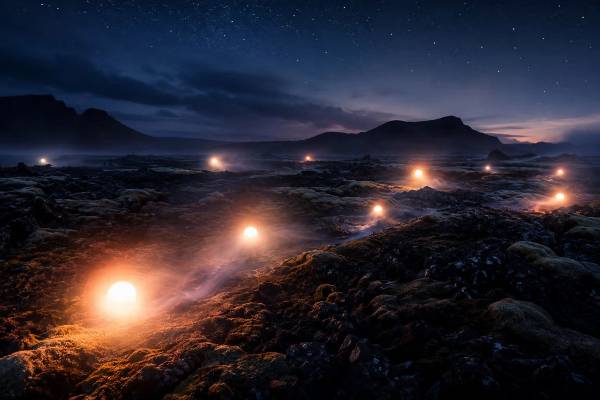
Strange lights seen moving through Icelandic lava fields at night — called ljósin á hrauni — have been reported for centuries and blamed on hidden people holding midnight festivals.

Iceland's vast lava fields — particularly the ancient flows of the Reykjanes peninsula and the younger fields around Mývatn — have a distinctive quality at night. Mist rises from geothermal vents. Moonlight reflects differently off sharp obsidian and dull pahoehoe lava. Gas emissions in old lava tubes create flickering, candle-like effects that move with air currents underground.

For centuries, Icelanders reported seeing moving lights in these fields after dark. The lights were not on paths — they moved across impassable terrain, through dense lava formations that no person could walk through. Sometimes they appeared in groups, moving together with a rhythm suggestive of a procession. Sometimes a single light would drift up a lava field hillside and vanish.

The explanation was consistent in the folklore tradition: the Hidden People were holding their festivals. The lights were the lanterns and fires of the Huldufólk celebrating midsummer, or Christmas, or a wedding in their own invisible community that occupied the same landscape as the human world but slightly offset from it.

lightslava fieldshidden peoplereykjanessuperstitionsfolklore
Grýla, the Yule Lads & the Yule Cat
📍 geopoint

Grýla, the Yule Lads & the Yule Cat

Iceland's thirteen Yule Lads descend from the mountains one by one in December — and their mother Grýla is a fearsome giantess who preys on children.

In Iceland, Christmas is not delivered by a single jolly figure but by thirteen brothers who arrive one by one, starting on December 12th, each leaving a small gift (or a rotting potato, for bad children) in shoes left on windowsills. They are gone by January 6th. Their names describe their particular mischief: Stekkjastaur steals milk from sheep. Giljagaur hides in gullies and steals foam from buckets. Þvörusleikir licks wooden spoons. Kertasníkir steals candle stubs.

The brothers are the sons of Grýla — a giantess described in medieval Icelandic sources as having fifteen tails, each tail with a hundred bags, each bag containing twenty children she has collected and will cook. She is genuinely terrifying in origin; the Icelandic authorities in the 18th century actually issued decrees forbidding parents from using Grýla to frighten children, because the psychological harm was considered real.

The Yule Cat — Jólakötturinn — is the family pet: an enormous black cat that prowls Iceland on Christmas Eve and devours anyone who has not received at least one new piece of clothing as a gift. The Yule Lad tradition was standardized in its current form by the poem Jólasveinavísur, written by Jóhannes úr Kötlum in 1932.

yule ladsgrýlachristmasjólakötturinnfolkloretraditioniceland
🐉

Famous Legendary Creatures

Iceland's folklore is filled with mystical beings — some protective, some dangerous, all deeply connected to the landscape.

🐉
Lagarfljótsormurinn

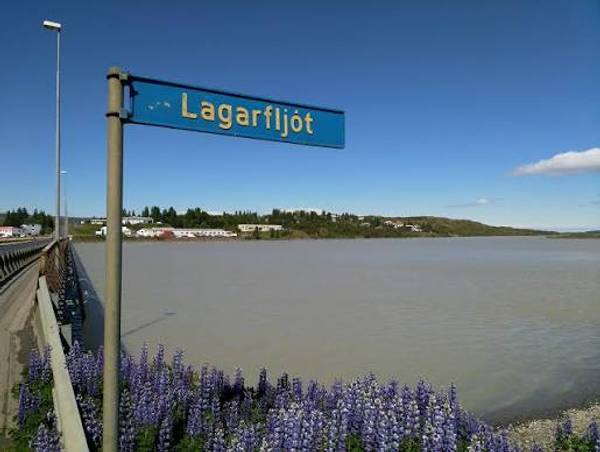
Iceland's lake monster — a giant serpent said to live in Lake Lagarfljót for over a thousand years.

🐴
Nykur

The water horse — a shape-shifting creature that appears as a beautiful horse near lakes and rivers, then drags riders to their death.

🧝
Huldufólk

The Hidden People — elves who live inside rocks and lava fields. Roads have been rerouted to avoid disturbing their homes.

🪨
Trolls

Giants who turn to stone in sunlight. Many of Iceland's most famous rock formations are said to be trolls frozen at dawn.

🛡️
Landvættir

Four guardian spirits — dragon, giant, bird, and bull — who protect Iceland from invasion. They appear on Iceland's coat of arms.

👻
Draugar

Icelandic revenants — physical, violent undead who return from the grave with superhuman strength.

🌊
Margygur

Icelandic mermaids — ominous harbingers of storms and shipwrecks, not the romantic figures of fairy tales.

🗺️

Interactive Legends Map

Every legend on this page has a location. Plot elves, trolls, ghost stories and haunted places across all of Iceland on one interactive map.

🪨

Troll rocks South Coast

🧝

Elf Capital Hafnarfjörður

🐉

Lake Monster Lagarfljót

👻

Haunted Valley Fjaðrárgljúfur

🗺️ Explore the Legends Map
👻

Iceland Ghost Stories & Haunted Places

Explore Iceland's most terrifying ghost stories, haunted farmhouses, shadow creatures, and supernatural encounters that have frightened Icelanders for centuries.

Read Ghost Stories →

Explore the Regions Behind the Legends