
Iceland's position on the edge of the North Atlantic, where cold arctic currents meet nutrient-rich upwellings, creates ideal feeding conditions for whales, dolphins and seabirds. The country ranks among the most accessible places in Europe to observe marine wildlife — tours operate out of the capital and the northern fishing town of Húsavík, offering different routes through waters that support a wide range of species.
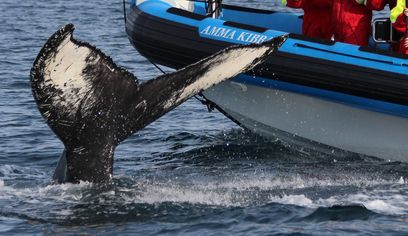
The most commonly encountered whale in Icelandic waters is the minke whale, present year-round in the bay of Faxaflói off Reykjavík. Humpbacks, known for their size and acrobatic behaviour, visit during the spring and summer months. White-beaked dolphins are the country's most abundant dolphin species and regularly ride the bow-wave of whale-watching vessels.
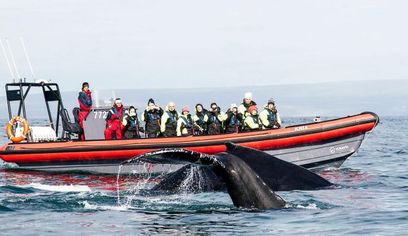
Tours typically last two to three hours. The sea temperature and conditions in Iceland are unlike tropical whale-watching destinations: even in summer, warm layered clothing and windproof outerwear are recommended. Most operators provide overalls or loan warm gear on request.
Practical note
Weather and sea conditions vary throughout the year. Operators reserve the right to cancel or modify tours for safety. Book with a licensed Icelandic operator and review their cancellation policy before departure.
Departure Points
Whale watching tours in Iceland leave from two main areas — each with its own character, fleet and surrounding scenery.
Reykjavík Old Harbour
The closest departure to most Iceland visitors. Boats leave from the historic fishing harbour right in the city centre, making it easy to combine with a day of sightseeing. The sheltered bay of Faxaflói hosts minke whales, white-beaked dolphins and harbour porpoises year-round.
- Year-round sailings
- Walking distance from downtown
- Minke whales & dolphins
Húsavík
A small fishing town on Skjálfandi bay, widely regarded as one of Europe's top destinations for whale watching. The nutrient-rich waters attract a high diversity of species across the season — including humpbacks, blue whales, minkes and dolphins. The wooden boats and intimate bay setting make for a scenic outing.
- Rich whale diversity
- Traditional oak vessels
- Scenic Skjálfandi bay
Marine Wildlife You May Encounter
The species present in Icelandic waters vary by season, location and ocean conditions. No tour can guarantee specific sightings, but the following are regularly observed.
Minke Whale
Balaenoptera acutorostrata
Typical length: 7–10 m
The most commonly seen whale in Icelandic waters. A fast, curious whale that often approaches boats. Minkes are present year-round in Faxaflói bay and throughout summer in North Iceland.
Humpback Whale
Megaptera novaeangliae
Typical length: 12–16 m
Known for dramatic breaching and distinctive long pectoral fins. Humpbacks migrate to Icelandic feeding grounds in spring and summer, appearing across both departure areas during the warmer months.
White-Beaked Dolphin
Lagenorhynchus albirostris
Typical length: 2–3 m
Iceland's most abundant dolphin, often seen in large pods. Highly acrobatic and frequently bow-rides alongside vessels. Common in Reykjavík's Faxaflói bay throughout the year.
Atlantic Puffin
Fratercula arctica
Typical length: ~30 cm
Iceland hosts roughly 60% of the world's Atlantic puffin population. Puffin colonies on offshore islands are accessible on combo tours from April to mid-August, when the birds nest before returning to sea.
Which Whale Watching Tour Is Right for You?
Choose the format that fits your trip
观鲸游览
与冰岛顶级运营商预订 — 全年从雷克雅未克和胡萨维克出发
 2 hours
Premium Whales & Midnight Sun
Whale Safari
起价
24,900 ISK
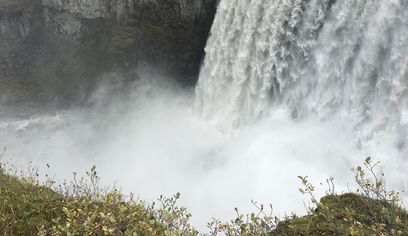 9 hours
Private Diamond Circle Tour
Imagine Iceland Travel
起价
265,000 ISK
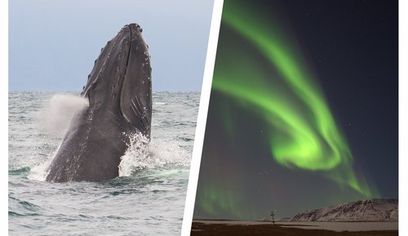 6 hours
Northern lights Combo
Star Travel
起价
32,500 ISK
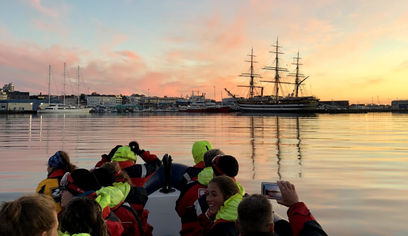 2 hours
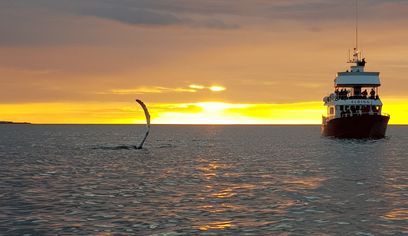
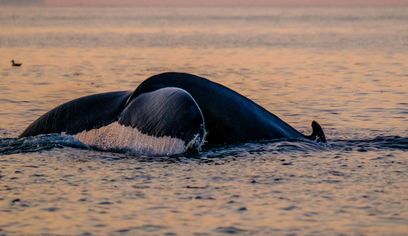
Reykjavík Premium Whales in the Midnight Sun
Elding Adventure at Sea
起价
24,900 ISK
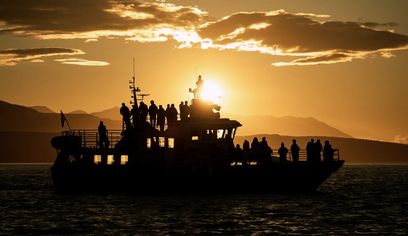 3 hours
Akureyri Classic Whales in the Midnight Sun
Elding Adventure at Sea
起价
14,500 ISK
 2 hours
Akureyri Express Whales in the Midnight Sun
Elding Adventure at Sea
起价
24,900 ISK
What to Wear
Dress in warm layers regardless of the season. A waterproof windproof shell on top is essential — conditions on the water are significantly colder than on land. Many operators provide thermal overalls.
Tour Duration
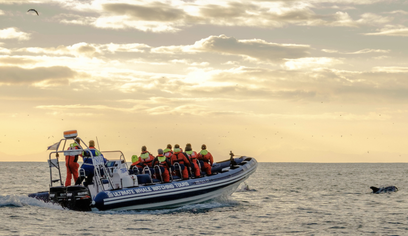
Standard whale watching tours run approximately 2–3 hours. Express RIB boats tend to be shorter (1–2 hours) and faster; classic boat tours are longer and calmer. Check individual tour details for exact timings.
Good to Know
Motion sickness can affect some passengers — consider medication if prone to seasickness. Most vessels have a warm cabin. Bring a camera with a telephoto lens for the best wildlife shots.