

Iceland Travel Guide
Iceland in
May
A complete guide to May weather, exceptionally long daylight, wildlife, road trips and planning your Iceland adventure.
Iceland in May
May is when Iceland begins to feel dramatically more like summer. Days become exceptionally long, migratory birds return, waterfalls surge with spring meltwater and road trips become easier to plan — while cold weather, snow in higher areas and closed Highland roads can still affect travel.
This makes May a genuine shoulder-season month rather than an early start to peak summer. Travellers gain very long daylight, increasing wildlife activity, greening lowlands and much more road-trip flexibility than April — but May is not automatically full summer. Cold spells, strong wind, rain and even occasional snow remain realistic, especially in the north, at elevation and in the Highlands.
A typical May trip may include Reykjavík, the Golden Circle, the South Coast, waterfalls, coastal wildlife, puffins, whale watching, geothermal bathing, road trips toward Snæfellsnes, West Iceland or North Iceland, and — for travellers with enough time and flexibility — a full Ring Road route.
May also marks a real shift away from winter tourism. Northern Lights viewing becomes impractical because Iceland's nights are already too bright for most of the month, and natural winter ice caves are not a normal May experience. In their place, May's real strengths are daylight, spring landscapes and a wildlife season that is visibly building toward summer.
The correct May planning mindset is: spring conditions with summer-like daylight, not guaranteed summer weather. This guide explains how to plan a realistic May trip around that combination.
May Quick Facts
Weather
Cool and changeable
Sun, rain, strong wind and cold spells can all occur — occasional snow remains possible at elevation or in northern/mountain regions. May is not reliably warm.
Daylight
Very long
Exceptionally long, increasing fast
Daylight increases significantly from early May to late May — use the date-aware daylight section below rather than one number for the whole month.
Wildlife
An increasingly important month
Puffins, whales, migratory birds and seabirds all become more relevant — sightings remain location, date and weather dependent, never guaranteed.
Road Trips
Increasingly practical on main roads
Mountain roads may retain winter conditions, and Highland/F-road access must always be checked separately from the main road network.
Highlands
❌
Not yet the normal self-drive season
May is generally too early to assume normal Highland/F-road access — current official road status always controls, not the calendar.
Crowds
A useful shoulder-season balance
May can sit ahead of peak summer traffic on some dates, but this is never a promise of low prices, empty attractions or easy last-minute booking.
Best Activities
Best For
Why Visit Iceland in May?
May sits between Iceland's spring transition and the start of its busiest summer season. That combination gives travellers very long daylight, a genuinely improving wildlife season, greening landscapes and meaningfully easier road-trip logistics than any winter or early-spring month — while still avoiding the heaviest peak-summer demand on some dates.
The most noticeable May advantage is daylight. Early May already has substantial daylight, and by late May Iceland approaches a near-Midnight-Sun experience — see the Daylight section below for exactly what that does and doesn't mean. This extra time supports longer road trips, more relaxed sightseeing and far more flexible photography than winter allows.
May is also an increasingly strong wildlife month. Puffins become substantially more relevant than in April, though exact arrival and activity still vary by year, location and weather. Whale watching can be a strong choice from Reykjavík, Húsavík, Akureyri and other departure points, and migratory birds and coastal seabirds become more active as spring progresses.
Spring meltwater can make Iceland's major waterfalls particularly powerful in May — Gullfoss, Skógafoss, Seljalandsfoss and Goðafoss are all realistic highlights, though access to some routes (Dettifoss in particular) still depends on current road conditions rather than the calendar.
Glaciers remain a strong year-round draw, and guided glacier hiking can be a realistic May activity around Skaftafell, Sólheimajökull and other Vatnajökull-region sites. Natural winter ice caves, however, are not a May experience — any valid ice-related product this time of year is a different, clearly-labelled thing (a glacier hike or a managed ice experience, not a natural seasonal cave).
May is generally too early to assume Highland/F-road access. Iceland's interior remains closed to ordinary rental-car self-drive until roads are officially assessed and opened, which typically happens later in the season — never assume otherwise just because daylight is long and lowland roads feel summer-ready.
May is also a genuine shoulder-season month for services — not every summer-only campsite, museum, restaurant or seasonal tour necessarily starts on May 1st. Checking current opening information matters more in May than in the middle of summer.
Featured May Attractions
Handpicked places worth visiting on a May trip.

Nesjavellir Geothermal Station
south iceland
ON Power geothermal station in the Hengill volcanic area near Þingvallavatn.

Botnlækjarfoss
north iceland
Seasonal waterfall above Botnstjörn at the inner end of Ásbyrgi.

south iceland
Local waterfall in the inland South Iceland countryside.

highlands
80-metre Highland waterfall on the F206 route toward Lakagígar.

Faxi Waterfall
south iceland
Faxi (Vatnsleysufoss) is a wide horseshoe waterfall on the Tungufljót river near Flúðir, just off the Golden Circle route, with a working salmon ladder.

south iceland
Major ON Power geothermal station and public geothermal exhibition at Hellisheiði.
Explore Iceland in May
Weather in Iceland in May
May weather is often milder than the winter and early-spring months, but Icelandic weather remains highly variable. Travellers may experience bright sun, cold rain, strong wind, calm conditions, rapid temperature changes and occasional sleet or snow — sometimes within the same trip.
The correct planning mindset is: spring conditions with summer-like daylight — not guaranteed summer weather.
Reykjavík right now
Average Temperatures
Avoid relying on one average temperature. Conditions vary by region, altitude, wind, time of day and weather system — coastal areas are moderated by the ocean, while inland and northern regions can stay noticeably colder.
| Region | Average Day | Average Night |
|---|---|---|
| Reykjavík / Southwest | 7 to 12°C (45–54°F) | 3 to 7°C (37–45°F) |
| South Coast | 6 to 11°C (43–52°F) | 2 to 6°C (36–43°F) |
| North Iceland | 5 to 10°C (41–50°F) | 0 to 4°C (32–39°F) |
| Highlands / Interior | 0 to 6°C (32–43°F) | -4 to 1°C (25–34°F) |
Wind chill can make actual conditions feel considerably colder than the air temperature alone — always check current wind forecasts alongside temperature.
Does It Snow in Iceland in May?
Yes, snow is still possible in May. It becomes less common in many lowland and coastal areas as spring progresses, but can remain relevant in North Iceland, mountain passes, high elevations, the Highlands and glacier regions during cold weather systems.
Don't promise snow, and don't promise snow-free conditions — both are realistic outcomes depending on the exact date and region.
Wind
Wind remains one of the most important practical weather factors in May, regardless of how long the daylight is. It affects driving, tours, hiking, coastal sightseeing, drone use and rental-car doors.
- Check wind forecasts before driving exposed coastal roads
- Hold vehicle doors carefully in strong gusts
- Expect tour cancellations in severe wind
- Dress in windproof layers, not just warm ones
Longer daylight doesn't reduce May's wind-related safety messaging — treat wind as seriously as temperature when planning each day.
Rain and Road Ice
Rain remains possible throughout May. Waterproof outerwear stays highly useful, and travellers should still prepare for rain, occasional wet snow, waterfall spray and wind-driven precipitation.
Cold nights and mountain conditions can still create icy surfaces, especially at elevation — don't assume May automatically means ice-free roads and paths.
What to pack:
Layering remains the most practical strategy — May can move between cool, wet, windy and genuinely pleasant conditions within the same day.
Fast Weather Changes
Icelandic weather systems can still change quickly in May, moving from calm and bright to windy and cold within hours. This isn't unusual — it's a normal feature of the spring-into-summer transition.
Plan around this variability:
- Check forecasts the morning of, not just the night before
- Build flexibility into multi-day routes
- Have an indoor backup plan for any outdoor day
- Never treat a clear morning as a guarantee for the afternoon
Fast-changing weather is a planning input, not a reason to avoid a May trip.
Regional Differences
Reykjavík
- Can move between rain, sun, wind and cool spells within a day
- Coastal moderation keeps extremes less severe than inland
South Coast
- Often exposed to strong wind and changing precipitation
- Waterfall spray can add wetness beyond the forecast
Southeast
- Glacier and mountain weather can remain highly variable
- Jökulsárlón-area conditions can shift quickly
Snæfellsnes
- Exposed coastal and mountain conditions
- Wind is a bigger factor here than temperature alone
North Iceland
- Can retain stronger spring/winter character than the southwest
- Snow cover may persist longer at elevation
Highlands / Interior
- Genuinely still winter-like in May
- Not a normal self-drive destination this early in the season
For current conditions and warnings, always check Veðurstofa Íslands (the Icelandic Meteorological Office) directly rather than relying on general seasonal guidance.
What Does May Weather Mean for Your Trip?
- Pack for cool, wet and windy conditions, not guaranteed warmth
- Build flexibility into multi-day routes
- Check current road and weather information before each major journey
- Treat forecasts as guidance for the day, not the whole trip
May's variability is real, but it doesn't prevent a strong trip — the exceptional daylight gives far more room to work around a difficult day than any winter month does.
Daylight in Iceland in May
Daylight is one of May's single biggest travel advantages. Days become exceptionally long and continue increasing throughout the month, which makes the exact travel date genuinely important — early May and late May are meaningfully different experiences.
This creates real flexibility for road trips, photography, sightseeing and wildlife watching. But longer daylight should never be read as permission to build an exhausting itinerary — it's extra flexibility, not an obligation to fill every hour.
Sunrise
~5:15 AM (early May) to ~3:30 AM (late May)
Sunset
~9:45 PM (early May) to ~11:15 PM (late May)
Hours of light
~17 to 21 hours
| Date | Sunrise | Sunset | Daylight |
|---|---|---|---|
| May 1 | 5:15 AM | 9:45 PM | ~16h 30m |
| May 10 | 4:45 AM | 10:15 PM | ~17h 30m |
| May 20 | 4:05 AM | 10:45 PM | ~18h 40m |
| May 31 | 3:30 AM | 11:15 PM | ~19h 45m |
These are reference points, not exact daily predictions — use the date-aware daylight tool above for your specific travel dates and location.
Why Extra Daylight Matters
Morning
- Very early starts become genuinely realistic
- Little to no need to wait for daylight before driving
- Golden Circle stops can begin as early as travellers want
Afternoon
- Much more time for longer South Coast or Ring Road days
- Realistic to combine multiple regions without rushing
- Extra buffer for weather delays
Evening
- Long, bright evenings well past normal dinner time
- Extended golden-hour photography
- No meaningful darkness for Northern Lights on most May nights
Don't simply fill every extra hour with another stop — use the time for a more relaxed pace, or simply longer, unhurried time at fewer places instead.
Is There Midnight Sun in Iceland in May?
May provides extremely long days and increasingly bright nights, and late May can deliver a strong near-Midnight-Sun experience — but it's worth being technically accurate about what that means. Very long daylight and bright twilight are not automatically the same thing as true Midnight Sun, where the sun stays visibly above the horizon through the night.
True 24-hour visible sun in Iceland is really a June phenomenon around the summer solstice. In May, most nights are better described as extremely long daylight fading into bright twilight rather than the sun never setting — don't claim every location and date in May has a true Midnight Sun experience.
Northern Lights in May
May's increasingly bright nights generally make normal Aurora viewing impractical for most of the month. This isn't a claim that Aurora activity itself stops — it's a simple daylight problem: Iceland's nights are already too bright for the kind of darkness Northern Lights viewing needs.
Travellers whose main priority is the Northern Lights should choose a darker season instead — see the Iceland in April guide for a month where Aurora viewing is still genuinely realistic, especially earlier in that month.
Photography and May Light
- Very long golden-hour windows at both ends of the day
- Flexible timing for waterfall and coastal shots
- Long, soft evening light well into the night
May's light changes quickly week to week — plan around your actual dates rather than a generic "May light" assumption.
Waterfalls, Glaciers & South Coast in Iceland in May
May is one of the strongest months for exploring Iceland's South Coast. The days are extremely long, road-trip timing becomes much more flexible and the landscape is transitioning rapidly toward summer — greening fields, snow remaining on higher ground, powerful waterfalls, glaciers, black-sand coastline, migratory birds and, in some coastal areas, puffins.
At the same time, May is not guaranteed summer. Cold weather, rain, strong wind, mountain snow and temporary access restrictions all remain possible, sometimes within the same trip.
The real advantage is flexibility. Very long daylight means travellers can spend more time at each location instead of rushing between stops — it is not permission to add a twelve-attraction day that also includes a glacier hike, a puffin stop, Jökulsárlón and a return to Reykjavík. Use the extra time for better pacing, not more stops.
Potential highlights include:
May Is Not Guaranteed Summer
Very long daylight does not mean all paths are dry, all viewpoints are open, mountain roads cannot still hold snow, Dyrhólaey access is always unrestricted, Fjaðrárgljúfur access is guaranteed, or waterfall paths are safe.
Current conditions must override evergreen itinerary content — always check before departure.
Waterfalls in Iceland in May
May can be an excellent waterfall month — spring snowmelt and rainfall may contribute to strong water flow. But exact conditions vary by snowpack, temperature, rainfall, region and recent weather.
Don't promise maximum flow, a specific frozen or melted appearance, or perfect access based only on the month.
Seljalandsfoss
May often provides better walking conditions than winter months, but current conditions still matter — waterfall spray, wet paths, mud and wind are all realistic. The path behind the waterfall may be accessible more often as spring progresses, but it's never described as simply "open in May" — use current access information.
Gljúfrabúi
A nearby waterfall worth surfacing contextually where it exists as a real Sanity destination — not treated as mandatory. May access can still involve water, wet rock and slippery surfaces.
Skógafoss
Remains one of the strongest South Coast stops in any season. May's very long daylight allows extended time here — spray, wet ground and strong wind are all still real possibilities, and the stairway/viewpoint should be treated according to current walking conditions, not assumed dry or mud-free for every visitor. A rainbow can appear when sunlight and spray align, but it's never promised.
Kvernufoss
An optional nearby stop where it exists in Sanity — not automatically added to every itinerary. Trail conditions may be wet or muddy; use current/local information where available.
Waterfall safety:
Gullfoss (Golden Circle) and Goðafoss (North Iceland) are both real May waterfall highlights outside the South Coast itself — spring melt can change their appearance, but exact flow is never promised. Dettifoss requires extra caution: don't assume every approach road is open in May — current official road/access information always controls, and a seasonally closed route is never routed around.
Waterfalls & Stops to See in May


Reykjavík to Vík in May
A classic route: Reykjavík → Seljalandsfoss → Skógafoss → optional Sólheimajökull → Dyrhólaey where appropriate → Reynisfjara → Vík.
Don't hardcode exact driving times — use current routing plus current road conditions rather than a fixed itinerary script. May's exceptional daylight gives far more time for this route than any winter month; use it for longer stops, photography, lunch and short walks rather than automatically adding every attraction available.
Glacier Hiking in Iceland in May
Yes — guided glacier hiking remains a strong May activity. The warmer season doesn't make glaciers irrelevant; it changes the surface conditions and, separately, the natural winter ice-cave picture. Potential visitor regions include Sólheimajökull, Skaftafell and Vatnajökull-region outlet glaciers, depending on actual current tour inventory and conditions.
The specific route used by any given guide may change through the season — no glacier trail should be described as permanently fixed.
Very Long Daylight
Far more time to combine a guided glacier experience with nearby South Coast or southeast sightseeing without rushing.
Flexible Routing
South Coast and southeast multi-day itineraries are easier to structure than in any winter month.
Changing Surface
Glacier surfaces in May can include exposed ice, meltwater and reduced snow cover compared with winter — a genuinely different look, not a worse one.
Potential regions depend on actual current tour inventory and conditions:
Sólheimajökull
Particularly useful for South Coast travellers — its location fits naturally between Skógafoss, Vík and other South Coast stops. May's very long daylight makes it easy to combine a guided glacier experience with the rest of the day.
Skaftafell
One of Iceland's most important glacier-tour areas. Travellers staying in southeast Iceland may combine glacier hiking, Skaftafell, Jökulsárlón and Diamond Beach in a multi-day itinerary — not a rushed Reykjavík side trip, even with May's long days.
Vatnajökull
A vast glacier system — different products may use different outlet glaciers, meeting points, routes and activity formats. Use real product information rather than assuming every "Vatnajökull glacier tour" goes to the same location.
Featured Glacier Hiking Regions

May Glacier Conditions
May glacier conditions may include exposed ice, meltwater, wet surfaces, reduced snow cover, changing crevasse visibility and rapid weather changes — the exact surface depends on location, recent weather, elevation and time of month.
Surface can include
Guides may adjust
Natural Ice Caves in May
Natural winter ice caves are generally far less relevant in May because warmer conditions and increasing meltwater change glacier cave access — this guide never markets natural caves as a core May experience.
If a real, accurately labelled managed ice experience or glacier-hike-plus-ice-feature product is currently available, it can be surfaced on its own terms — but it's never presented as a natural seasonal cave, and a strong May glacier hike doesn't require any ice-cave-style add-on to be worthwhile.
Glacier Safety
Very long daylight and warmer weather do not make glaciers safe for independent access.
- ! Crevasses
- ! Meltwater channels
- ! Unstable ice
- ! Rock/ice fall
- ! Rapid weather change
- ! Route-finding hazards
Ordinary visitors should not walk independently onto a glacier — always use a professional guide.
Equipment & What to Wear
Difficulty Varies
Glacier hikes range from short introductory walks to longer, more technical routes.
Compare products by duration, terrain, group size and minimum age rather than a single "difficulty" label.
Sólheimajökull + South Coast
A natural South Coast pairing:
May's very long daylight makes this a realistic single-day combination for many itineraries.
Skaftafell + Jökulsárlón
A natural southeast pairing:
Better suited to a multi-day southeast itinerary than a single long day from Reykjavík, even with May's long days.
May's very long daylight and bright nights make an evening Aurora chase impractical after a glacier day — see the Daylight section above for why. This isn't a claim that Aurora activity has stopped, only that Iceland's nights are already too bright for normal viewing.
Glacier Hiking Tours Available in May
Real current inventory for Sólheimajökull, Skaftafell and Vatnajökull-region glacier hikes.
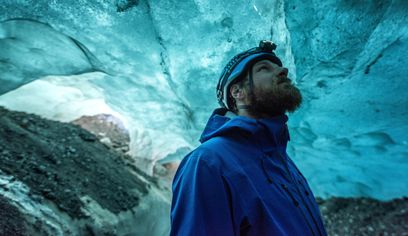 4 hours
Skaftafell Blue Ice Cave & Glacier Hike
Troll Expeditions
起价
19,137 ISK
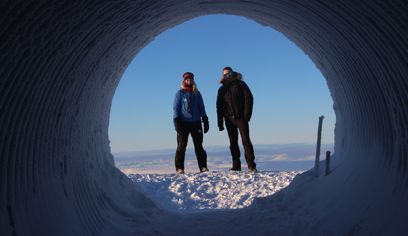 8 hours
DT 306 Private Superjeep Borgafjörður & Into The Glacier
Superjeep
起价
269,400 ISK
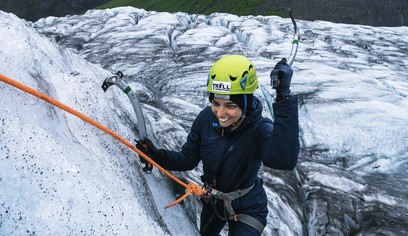 4 hours
Skaftafell Ice Climbing & Glacier Hike
Troll Expeditions
起价
31,811 ISK
 5 hours 30 minutes
Ice cave - Adventures dream
Glacier Trips
起价
36,900 ISK
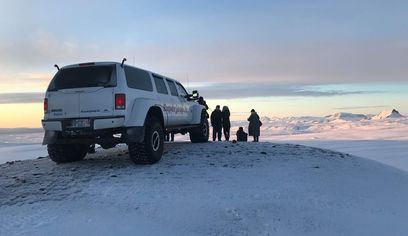 8 hours
DT 406 Private Monster Truck Borgafjörður & Into The Glacier
Superjeep
起价
416,100 ISK
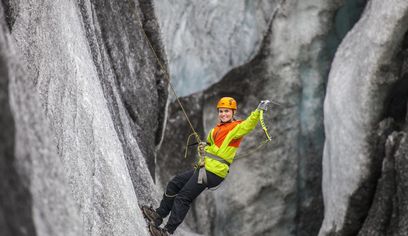 4 hours 30 minutes
Skaftafell Glacier Hike and Ice Climbing
Icelandic Mountain Guides by Icelandia
起价
32,999 ISK
Stay Near the Glaciers
Glacier hiking can remain relevant across most of the year, while natural winter ice-cave access is a separate, far more time-limited seasonal question — the two shouldn't be conflated, and May sits clearly on the glacier-hiking side of that line.
If a glacier hike is selected, treat Sólheimajökull as a route-relevant South Coast activity and reduce other stops that day — see the Glacier Hiking section above for the full activity details, not repeated here.
Dyrhólaey in May
Dyrhólaey becomes particularly important in May — coastal scenery, sea cliffs, mountain views and, in some areas, growing seabird and puffin activity as spring progresses. But access can be affected by weather, road conditions, seasonal wildlife protection and local restrictions — never bypass a closure, and never assume unrestricted access just because it's May.
May is strongly more relevant for puffins than April, but sightings remain unguaranteed, location-dependent and weather-dependent — see the Wildlife section above for the fuller picture; this isn't repeated in full here.
Reynisfjara in May
Reynisfjara remains one of Iceland's most dramatic coastal locations. It is also one of the places where safety messaging must be strongest — the ocean hazard exists regardless of season, weather appearance or how warm and bright the day feels.
Powerful sneaker waves can travel much farther up the beach than visitors expect — warm, bright weather does not make the beach safe.
- ✕ Never stand close to the water for photographs
- ✕ Never turn your back on the ocean
- ✕ Never allow children to play near the surf
- ✕ Never assume calm-looking waves mean the beach is safe
Current safety information overrides itinerary recommendations — check current warnings before visiting rather than relying on a generic risk level.
Vík in May
Vík is one of the most useful South Coast bases for May travellers — a lunch stop, fuel stop, overnight base, glacier-tour base, photography base, wildlife-adjacent stop, or starting point for continuing east.
Why stay in Vík?
Stay in Vík
Continuing East in May
May's very long daylight makes southeast Iceland easier than ever to integrate into a multi-day trip.
If Fjaðrárgljúfur is included, access must be condition-aware — spring growth can make trails and vegetation especially vulnerable, and if authorities close or restrict access to protect them, visitors should not be routed there. It is never described as simply "open in May."
Don't recommend this as a rushed extension to an already overloaded Reykjavík day trip, even with May's long days.
Jökulsárlón Glacier Lagoon in May
Jökulsárlón remains one of southeast Iceland's major attractions. May visitors may experience icebergs, glacier views, birdlife and much longer photography windows than in winter — the amount, position and appearance of ice change naturally, and no particular lagoon appearance is ever promised.
Diamond Beach in May
Ice from Jökulsárlón may wash onto the nearby black-sand coastline. The amount of ice visible on the beach varies — never promise a beach covered in ice, specific iceberg shapes, or perfect conditions.
This is still an active ocean coastline — visitors must remain aware of waves, and posing directly beside incoming surf is never encouraged.
May may see more Jökulsárlón boat-tour activity than April, but this guide never states that boat tours simply "operate in May" — availability is seasonal and operator-dependent. If current real products exist for your dates, they're worth checking directly; otherwise, availability should not be implied.
Day Trip or Stay Overnight?
Reykjavík Day Trip
Best for
- + Simple logistics
- + No hotel change
- − Less time farther east
Overnight South Coast
Best for
- + Less backtracking
- + More flexibility
Self-Drive South Coast
Self-drive offers flexibility, and May's long daylight helps — but it still requires real preparation, not just a rental car.
No-Car South Coast
For travellers without a car, use actual guided products rather than self-drive-only recommendations.
Not every May visitor requires a 4x4 — vehicle choice depends on route, current conditions, passenger/luggage needs, rental rules and driver comfort. A 4x4 can provide additional traction in some conditions, but it does not make closed roads open, remaining mountain snow harmless, or the Highlands accessible.
South Coast Photography in May
May waterfall and coastal photography benefits from very long daylight, extended golden hour, greening landscapes, water spray and changing spring light — meaningfully more usable time than any winter month.
- Bring a tripod for longer exposures
- Protect gear from spray and mist
- Use a polarising filter for waterfall glare
- Allow extra time — photography needs a slower pace than sightseeing alone
Tripods can tempt photographers to stand in wet areas, road shoulders or unsafe waterfall edges — never prioritise composition over safety, and at Reynisfjara specifically, photography advice must never conflict with beach safety (no standing close to waves, no turning back to the ocean, no long-exposure setups in an unsafe surf zone).
South Coast With Children
The South Coast can work very well for families in May — waterfalls, Vík, glacier viewpoints, wildlife-adjacent stops and age-compatible guided activities are all realistic, helped by very long daylight that removes the time pressure of winter.
Reynisfjara safety applies especially strongly with children — never assume every glacier activity accepts children without checking the real product data.
South Coast for Couples
Waterfalls, photography, a Vík overnight, a geothermal stop before or after the route, or a Jökulsárlón multi-day trip are all real May options for couples — without needing generic "romantic" framing on every stop.
South Coast on a Budget
A budget-conscious South Coast trip is realistic in May without cutting anything unsafe.
Never Cut:
Northern Lights aren't a realistic evening plan after a May South Coast day — see the Daylight section above for why. Spend the extra evening light on dinner, a short walk, or photography instead.
South Coast Tours Available for Your May Dates
A product mentioning "South Coast" doesn't automatically include Vík, Reynisfjara, a glacier hike or Jökulsárlón — check the real itinerary before booking.
 10 hours 30 minutes
South Coast Tour - Black Sand Beach, Plane wreck, Skogafoss, Seljalandsfoss guided in Chinese冰岛南岸黑沙滩飞机残骸中文一日团
Magic Iceland Travel
起价
18,480 ISK
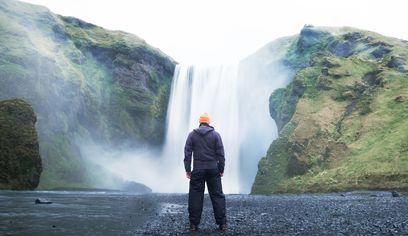 10 hours
South Coast Waterfalls, Glacier & Black Sand Beach Tour
BusTravel Iceland
起价
15,990 ISK
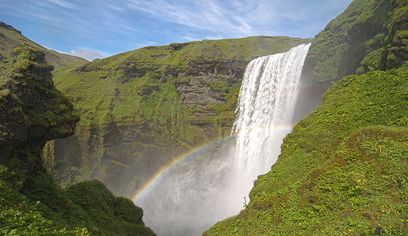 10 hours
South Coast Small Group Tour: Waterfalls, Glacier & Black Sand Beach
BusTravel Iceland
起价
17,990 ISK
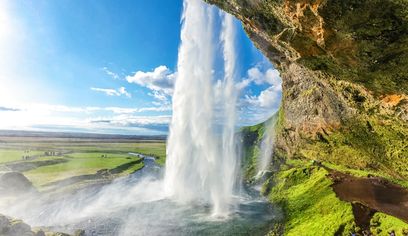 11 hours
Private Premium South Coast Small Group Tour
Iceland Horizon - Saga Travel - GeoIceland
起价
299,900 ISK
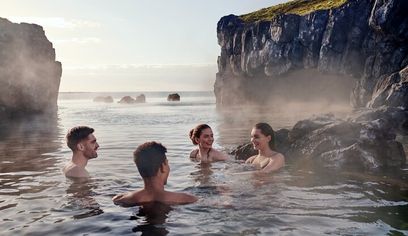 13 hours
South Coast & Sky Lagoon Saman Pass Tour
BusTravel Iceland
起价
29,990 ISK
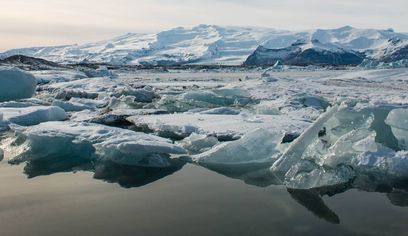 14 hours
Private South Coast and Glacier Lagoon Day Tour
David The Guide
起价
279,900 ISK
Add the South Coast to My May Trip
Add the South Coast to your May trip as a day trip, a one-night route, or a two-night southeast extension — based on real Sanity references, not a generic script.
Wildlife in Iceland in May
May establishes wildlife as one of the month's real strengths. Puffins become substantially more relevant than in April, migratory birds continue returning, coastal seabird activity increases, and whale watching can be a strong choice from several departure points around the country.
But exact wildlife timing still varies by location, year, weather and current observations — nature doesn't follow a booking calendar, and no species or sighting is ever guaranteed in May any more than in any other month.
This section is intentionally a preview — dedicated Puffins and Whale Watching sections with real tour availability, locations and safety guidance arrive later in this guide.

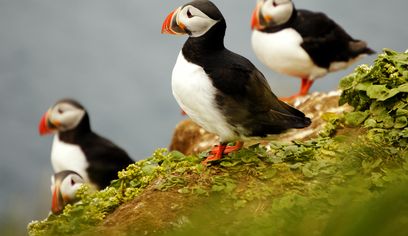 6 hours
Private Whale and puffin tour from Akureyri
Star Travel
起价
195,000 ISK
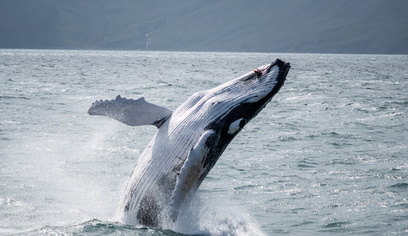 3 hours
Húsavík: Whale Watching Tour with Heated Indoor Seating
Friends of Moby Dick
起价
11,990 ISK
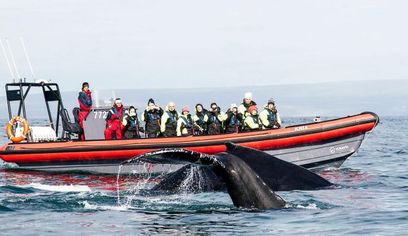 2 hours
Big Whales & Puffins RIB boat tour
Húsavík Adventures
起价
21,990 ISK
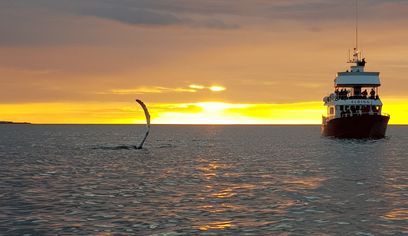 3 hours
Reykjavík Classic Whales in the Midnight Sun
Elding Adventure at Sea
起价
14,500 ISK
Whale Watching Tour from Reykjavík
A classic boat tour into Faxaflói Bay from Reykjavík's Old Harbour — sightings are never guaranteed.
Check Availability on Guide to IcelandPuffin Watching Boat Tour from Reykjavík
A short boat trip to Akurey or Lundey island to see nesting puffins — only relevant during their spring/summer nesting season.
Check Availability on Guide to IcelandHot Springs, Lagoons & Geothermal Baths in May
Geothermal bathing remains one of Iceland's strongest experiences in May. Long daylight, cool outdoor temperatures, road trips, hiking and wildlife all combine naturally with a geothermal stop — as a destination in its own right, a recovery activity after hiking or driving, an evening activity, a poor-weather alternative, or a simple route break.
Not every geothermal experience is the same thing. This guide distinguishes commercial geothermal lagoons, municipal swimming pools, developed geothermal baths, and natural bathing locations where legally and safely accessible — rather than calling all of them "hot springs."
Very Long Evenings
May's long daylight makes it easy to fit geothermal bathing after a full day of sightseeing without racing the sunset.
Strong Recovery & Bad-Weather Option
Excellent recovery after hiking or glacier activities, and a strong fallback whenever the day's weather turns.
Relevant Regardless of the Day
Geothermal bathing stays relevant whether a given May day feels more like winter or summer — don't let long daylight turn it into an excessively long travel day, though.
Geothermal Lagoons vs. Local Swimming Pools
Premium geothermal lagoons
- Scenic setting
- Spa-style atmosphere
- Timed admission
- Tourist facilities
- Premium packages
Local swimming pools
- Part of everyday Icelandic life
- Heated outdoor pools
- Hot tubs
- Steam rooms
- Cold tubs at some locations
- Children's facilities at some pools
Premium lagoons are not presented as the only authentic geothermal experience — local pools are a real, valuable alternative.
Natural bathing locations (like Reykjadalur, covered below) are a genuinely different category again — legal access, parking, private land, environmental impact, water temperature and quality, and current closures all matter before treating any natural spot as a casual bathing stop.
Blue Lagoon in May
The Blue Lagoon remains one of Iceland's best-known geothermal experiences. Its location on the Reykjanes Peninsula can make it convenient for arrival day, departure day, Reykjanes sightseeing or dedicated spa time.
However, Reykjanes is an active volcanic region — current access must always be verified rather than assumed from this evergreen content. This guide never hardcodes "open," "closed," "safe" or "normal access" — use the current-status source available to the site.
Arrival day
Works well when flight arrival, admission slot, baggage collection and transport all align — don't schedule admission too close to expected landing time. Build buffer.
Before departure
Can be efficient, but flight buffer is critical — never build an itinerary that risks an international departure because the lagoon visit runs late.
Current operator status, current road information and official Civil Protection warnings always override this static content — a closure is never hidden because an affiliate product exists, and no static May price is ever published; only current/live pricing where the booking flow actually provides it.
Sky Lagoon in May
Sky Lagoon is especially convenient for travellers staying in Reykjavík. It can fit naturally after city sightseeing, whale watching, a food tour, a museum day, a Golden Circle return, or a short travel day — May's long evenings make late-afternoon and evening visits especially attractive.
Particularly convenient after:
Best for Reykjavík-based travellers, no-car travellers where transport works, couples and short trips — never described as objectively better than the Blue Lagoon. Price, included ritual, age restrictions and transport are never fabricated — use current product/provider information.
Blue Lagoon vs. Sky Lagoon
Blue Lagoon
Best for
- Airport / Reykjanes routes
- Arrival or departure day
- Dedicated spa time
Sky Lagoon
Best for
- Reykjavík-based stays
- Short trips
- No-car travellers where transport works
Neither lagoon is declared a universal winner — the right choice depends on route and transport, not a fixed ranking.
Secret Lagoon in May
Secret Lagoon in Flúðir can fit naturally into a Golden Circle itinerary. May's long daylight means travellers can visit the main Golden Circle attractions and still enjoy geothermal bathing without any daylight pressure at all.
One of the strongest May combinations — but don't add horse riding, a Reykjadalur hike and every extra geothermal stop all to the same Golden Circle day. Choose one, even with the extra daylight available.
Forest Lagoon
Forest Lagoon near Akureyri is a strong option for North Iceland travellers. A geothermal evening can work particularly well after Akureyri sightseeing, Goðafoss, Mývatn or a North Iceland road trip.
GeoSea
GeoSea in Húsavík provides a distinctive North Iceland oceanfront geothermal experience, particularly relevant for travellers already visiting Húsavík for whale watching — a strong May combination is whale watching followed by GeoSea, then a Húsavík or North Iceland overnight.
A Reykjavík-based traveller should never be sent north solely to visit one lagoon — it should fit the actual route, and a whale-watching result is never implied to be guaranteed just because GeoSea is nearby.
The Mývatn area combines volcanic landscapes, geothermal activity and North Iceland scenery — using actual current Sanity/facility data, never outdated business names, opening status or amenities.
Local pools remain one of the best-value geothermal experiences — particularly useful for families, budget travellers, Reykjavík city days, bad-weather days and post-road-trip relaxation. Visitors often overlook them simply because they're less heavily marketed than major lagoons. Where real Sanity records exist, Vök Baths, Krauma, Laugarvatn Fontana and Hvammsvík are all real regional alternatives worth ranking by actual route fit rather than listed as one generic lagoon directory.
Reykjadalur in May
May can be relevant for hiking toward the Reykjadalur geothermal river, but conditions may include mud, wet trails, snow remnants, trail restrictions and cold wind — this is a real hike to a natural bathing location, not a commercial lagoon admission, and perfect hiking conditions are never assumed.
Check current trail access before setting out — stay on marked paths and respect any posted restrictions at the geothermal area itself.
Geothermal Safety
Never assume geothermal water is safe to touch because it looks calm. At geothermal fields: stay on marked paths, obey barriers, never touch unknown water, never walk on geothermal crust, and never enter an undeveloped geothermal pool unless it's explicitly safe and permitted.
Which Geothermal Experience Fits Your May Trip?
Blue Lagoon
Arrival or departure day, Reykjanes routes
Sky Lagoon
Reykjavík-based stays
Secret Lagoon
Golden Circle route
Forest Lagoon
Akureyri / North Iceland
GeoSea
Húsavík
Local pool
Budget, families, any region
What Should You Bring?
Don't assume a towel, robe, drink or private changing area is included — use real facility/package data.
Shower Etiquette
Visitors are expected to shower thoroughly without swimwear before entering the pool — standard Icelandic bathing culture, kept practical and respectful rather than overcomplicated here. Posted local rules, shoe/change-room practices and towel arrangements vary by facility.
Can You See the Northern Lights From a Lagoon?
Not realistically — May's bright nights make Northern Lights viewing from a lagoon impractical on most dates. See the Daylight section above for why.
This is a daylight limitation, not a claim that Aurora activity has stopped — a lagoon booking is never sold as an Aurora opportunity in May.
Book a Geothermal Experience for Your May Dates
Only products with genuine admission or transfer+admission inclusion are shown — never a generic tour that merely passes near a lagoon.
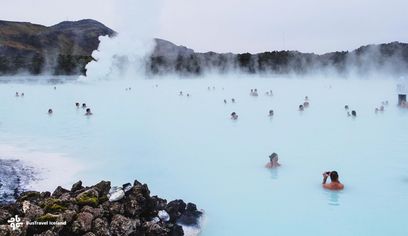 9 hours
Volcano Eruption Site & Blue Lagoon Admission Tour
BusTravel Iceland
起价
32,990 ISK
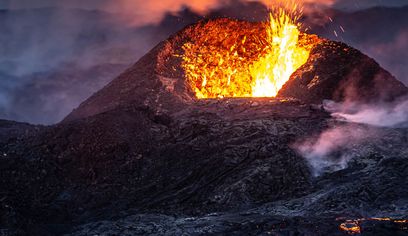 10 hours
Volcano Hike & Blue Lagoon - Private Eco Tour
EV Travel
起价
180,000 ISK
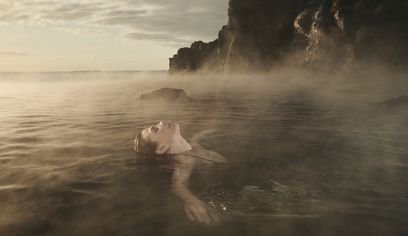 8 hours
Reykjanes Geothermal Tour & Sky Lagoon - Eco Tour
EV Travel
起价
180,000 ISK
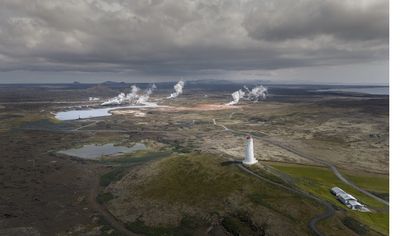 10 hours
Small group Tour Reykjanes Peninsula: Lighthouses, Hot Springs and The Sky Lagoon
Lilja Tours
起价
38,000 ISK
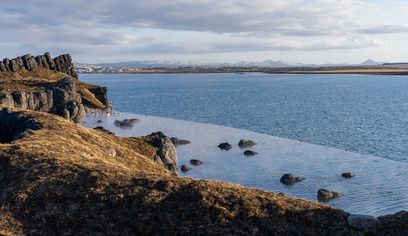 9 hours 30 minutes
Volcanic Wonders with Grindavik Visit & the Sky Lagoon
Reykjavik Excursions by Icelandia
起价
32,999 ISK
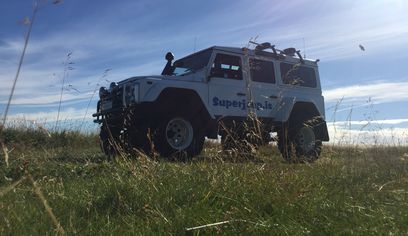 8 hours
DT 09 Reykjanes Peninsula & The Blue Lagoon
Superjeep
起价
70,800 ISK
Blue Lagoon Comfort Admission
Standard admission to Iceland's best-known geothermal spa, including a towel, drink and silica mud mask.
Check Availability on Guide to IcelandSky Lagoon Entry Ticket
Admission to Sky Lagoon's ocean-view infinity-edge lagoon near Reykjavík.
Check Availability on Guide to IcelandStay Near Your Geothermal Route
No rental car?
Prioritise Reykjavík-accessible options and actual confirmed transfers — a remote North Iceland lagoon is never ranked highly for a Reykjavík-based no-car visitor.
Travelling with family?
Facility age policies differ — this guide never infers "baby allowed," "young child allowed" or "family friendly" from the generic lagoon category alone.
On a budget?
Local pools are surfaced prominently in budget mode, not just affiliate-heavy premium facilities — travellers can compare a premium spa against a local pool directly.
Travelling as a couple?
Premium lagoons may rank more highly when they genuinely fit the route, without unsupported "most romantic" claims.
Add a Geothermal Stop to My May Trip
Add geothermal bathing to your May trip based on your actual route, transport mode and selected facility — never ranked simply because a lagoon is famous.
Both April and May are excellent for geothermal bathing — May's longer, brighter evenings make it easier to fit a lagoon visit after a full sightseeing day. Water quality or temperature is never claimed to be seasonally better in either month.
Events, Holidays & Culture in Iceland in May
May's cultural context isn't a static festival list. This section helps travellers understand public holidays, seasonal opening, local events, museums, concerts and cultural experiences — and the fact that May is a genuine transition month for opening hours and services, not a single fixed operating pattern from May 1 to May 31.
May can include real calendar events and public holidays that affect opening hours, transport, restaurants, shops, museums, tour schedules and events. Travellers should check their exact dates rather than relying only on generic monthly information.
Annual event dates are never hardcoded into this evergreen copy unless fixed by law/calendar and correctly resolved for the selected year — movable holidays and events use current calendar/event data instead. No event is ever invented because it sounds plausible — no fictional "Spring Festival," "Puffin Festival" or "May Food Festival."
Public Holidays in May
May 1 (Labour Day) is a fixed public holiday, and Ascension Day and Whit Sunday/Pentecost are movable holidays that can fall in May depending on the year — opening hours may differ around any of them. This guide never claims everything closes or everything stays open; current business data always takes priority.
May 1 — Labour Day
May 1 is a public holiday in Iceland. Expect potential changed opening hours, reduced services, events/marches, or different public transport schedules — but no specific business is ever claimed closed unless verified.
Ascension Day
Ascension Day (Uppstigningardagur) is a public holiday in Iceland, falling 39 days after Easter Sunday — depending on the year, this lands in April or May. This guide never hardcodes one fixed date into evergreen content.
If your trip dates overlap Ascension Day, expect the same kind of potential impact as other Icelandic public holidays: changed opening hours, reduced services, and different public transport or service schedules — never assumed to mean any specific business is closed unless verified.
Resolved from the current/selected year's actual calendar, never a permanent date written into this guide.
Whit Sunday / Pentecost
Whit Sunday (Pentecost) and Whit Monday fall 49 and 50 days after Easter Sunday — in many years this lands in May, though it can fall in early June depending on the year. This guide never hardcodes one fixed date into evergreen content.
As with other Icelandic public holidays, if your trip dates overlap Whit Sunday/Monday, some opening hours and services may differ — check current hours for the specific places you plan to visit.
Resolved from the current/selected year's actual calendar — if it falls outside May for a given year, it's never presented as a May event for that year.
Public Holiday During Your Trip
Shown only when trip dates actually overlap May 1 (Labour Day), Ascension Day, Whit Sunday/Monday, or another public holiday — and only reflects an actual major service impact rather than a generic warning banner.
Reykjavík in May
Reykjavík remains Iceland's main cultural hub in May, with exact schedules depending on the year and dates — and May's long daylight makes it easy to combine a full sightseeing day with an evening cultural activity.
Why Culture Works Well in May
May weather can still move between sun, rain and wind — a cultural activity gives travellers flexibility without wasting the trip, and it pairs naturally with the very long evenings.
- Wind increases
- Road conditions deteriorate
- A long excursion is cancelled
- The family needs an indoor break
- Travellers want a slower evening after a glacier or wildlife day
Harpa
Harpa remains one of Reykjavík's major cultural venues — concert names and schedules are never hardcoded, and current May events are surfaced dynamically from real data where available.
Museums
Museums are useful for more than bad weather — they can add context to settlement history, art, maritime culture, Icelandic identity, geology, nature and modern history, using actual Sanity records. Perlan is treated as a museum/exhibition experience here, not a natural glacier or ice-cave experience — the two are never conflated. The Lava Show, where a real current product exists, is a cultural/geological experience and a genuine poor-weather or family option (age rules permitting) — it never implies replacing seeing an active eruption.
Swimming Pools
Local swimming pools are part of everyday Icelandic culture, not just a budget alternative to commercial lagoons. They're especially attractive in May because evenings are very long — outdoor hot tubs remain enjoyable, and pools work well for families, budget travellers and Reykjavík-based visitors.
Icelandic Food in May
May is a good time to explore Icelandic food.
Food tours can work well for several kinds of travellers:
Useful for:
A Bad-Weather Day in Reykjavík
May weather can still move quickly between sun, rain and wind — a reusable Reykjavík fallback plan helps make the most of any day, and severe weather should never be used to justify unnecessary driving to reach an indoor attraction.
Northern Lights aren't a realistic evening plan after cultural activities in May — bright nights make normal viewing impractical on most dates. Use the long evening light for dinner, a walk or photography instead.
Recurring events
Recurring Icelandic cultural events continue into May — always resolved against current Sanity/event data rather than a fixed annual claim.
Easter?
Easter falls in March or April, not May — see the Iceland in April guide for Easter-specific travel context. It's never presented as a May consideration.
Family culture
Museums, pools, family events and current community programmes are prioritised for families — no specific municipality's programme is ever assumed without current data.
May vs April culture
May adds exceptionally long daylight and real movable-holiday context (Labour Day, Ascension Day, Whit Sunday/Pentecost) compared with April — but this doesn't mean May automatically has more events than April; use current data rather than a seasonal assumption.
Explore Reykjavík's Culture


Experience Reykjavík in May
Real food, walking and culture products only — Golden Circle, South Coast and glacier products never appear in this module.
No strong Reykjavík culture or food products were found for these dates — try the South Coast or geothermal sections instead.
Stay in Central Reykjavík
No rental car?
Reykjavík cultural activities are particularly useful for no-car visitors — prioritise walkable central places, the harbour, museums, food tours, pools and current events over distant cultural sites without transport.
On a budget?
Walking Reykjavík, public cultural spaces, local pools and current free events are all real lower-cost options — nothing is labelled free without current source data.
Travelling as a couple?
A food tour, concert, geothermal evening, museum or city walk are all real May options for couples — without automatically calling everything romantic.
Travelling with family?
Museums, pools, family events, science/nature attractions and food experiences all offer a useful May indoor/outdoor balance — using actual current programmes, not assumptions.
Add Reykjavík Culture to My Trip
Add Reykjavík culture to your May trip — a fixed-time event stays fixed and is never moved to another day by route optimisation.
Best Places to Visit in Iceland in May
May is one of the strongest months for exploring a wide range of Icelandic regions. Very long daylight makes road trips easier to pace, wildlife activity becomes increasingly important, and many classic routes become more practical than during winter or even April.
May should still not be treated as full summer everywhere. Current conditions remain especially important for mountain passes, North Iceland, the Westfjords, the Highlands, F-roads, remote hiking routes and seasonal services.
Don't publish one universal "Top May Places" ranking and use it for every traveller — rank destinations using travel dates, trip length, transport, current weather, current roads, wildlife priorities, activities, family context, budget and existing bookings. The order below is an editorial starting point, not a permanent algorithmic ranking.
Core regions for most trips
Reykjavík · Golden Circle · South Coast · Southeast Iceland
Extended regions with more time
Snæfellsnes · Westman Islands · North Iceland · West Iceland · East Iceland · Westfjords where route/weather support it
Where Should You Go in May?
By trip length:
3 Days
Don't attempt the whole country in three days.
5 Days
7 Days
Don't automatically recommend the full Ring Road solely because daylight is long.
10+ Days
Current road/weather conditions still apply regardless of trip length.
By traveller type:
First Visit
Puffins
Ranked by actual route and date — no sighting is ever guaranteed.
Whales
Waterfalls
Dettifoss only with verified current access.
Glaciers
Natural winter ice caves are never promoted as the core May experience.
Photography
Reduce stop density — photography needs time, not a longer list.
No Car
Never recommend remote self-drive-only destinations.
Family
Age-compatible activities only; reduce driving density despite the extra daylight.
Budget
Never compromise safety to reduce costs.
Current conditions and traveller priorities always override this framework — it is a starting point, not a rigid rule.
Reykjavík remains an excellent starting and finishing point for a May trip — very long daylight, a walkable city, museums, food, pools, whale watching, geothermal access, city tours and long evening walks are all real advantages here.
For 2–3 day trips, Reykjavík can function as a base for the Golden Circle, a South Coast day tour, whale watching, geothermal bathing and city experiences — don't push remote multi-day regions into every short trip just because May's daylight makes them theoretically reachable.
Why Reykjavík Works in May
Provides no-car flexibility and lets a traveller build a real trip from guided Golden Circle tours, South Coast tours, whale watching, food tours and geothermal transfers using actual current Viator availability.


The Golden Circle remains one of the most practical May routes, with Þingvellir, Geysir and Gullfoss as the core stops. May's long daylight allows a more relaxed route than any winter month.
Potential optional add-ons include geothermal bathing or horse riding — don't automatically add every optional activity just because the day feels long enough for all of them.
Why the Golden Circle Ranks Highly
A practical, self-contained route that works for first-time visitors, short trips, families and no-car guided tours alike.


The South Coast should rank extremely highly in May — Seljalandsfoss, Skógafoss, Sólheimajökull, Dyrhólaey, Reynisfjara and Vík combine waterfalls, glaciers, black-sand coastline, photography, increasing spring wildlife, guided activities and an easy continuation toward southeast Iceland. See the dedicated Waterfalls, Glaciers & South Coast section above for full detail — not duplicated here.
Vík itself is a useful overnight and route base — for South Coast road trips, photography, puffin/coastal context, glacier activities and continuation toward the Southeast. For trips continuing east, prefer a route-aware Vík overnight over an unnecessary return to Reykjavík.
Why South Coast Ranks Highly
Combines waterfalls, glaciers, black-sand coastline, photography, increasing wildlife and guided activities with an easy continuation toward southeast Iceland.
Vík Route Logic
Jökulsárlón & Southeast Iceland
May's long daylight makes southeast Iceland easier to integrate into a multi-day itinerary than ever — Skaftafell, glacier landscapes, Jökulsárlón, Diamond Beach, birdlife, photography and guided glacier activities are all real options.
A rushed Reykjavík → Jökulsárlón → Reykjavík day trip should not be the default May recommendation for most travellers — a multi-day South Coast/southeast route is preferred. Current boat tours at Jökulsárlón are seasonal and never assumed to simply "operate in May."
Glacier Context
See the Waterfalls, Glaciers & South Coast section above for real current glacier-hiking availability — this region's ranking never depends on a natural ice cave being available, which is far less relevant in May than in winter.


Snæfellsnes Peninsula
May can be excellent for Snæfellsnes — Kirkjufell, Arnarstapi, Búðir, Djúpalónssandur, fishing villages, coastal landscapes, Snæfellsjökull views, wildlife, photography and long evening light are all potential highlights.
Even in May, strong wind, rain, cold weather and mountain snow can occur — don't equate longer days with easy weather. Photography at Kirkjufell should stay safety-aware: no unsafe roadside stopping, no crossing barriers.
Snæfellsnes Overnight
For photographers or slower road trips, an overnight may be preferable — potential accommodation context includes Stykkishólmur or Grundarfjörður, using real route locations.
Strong wind
Rain
Cold weather
Mountain snow

Westman Islands
May makes the Westman Islands increasingly relevant because of puffins, seabirds, volcanic landscapes, coast, walking and photography. Puffin relevance is strong in May, but no sighting is ever guaranteed — see the Wildlife section above for the fuller picture.
Logistics matter here more than for most regions on this list — use actual ferry schedules, weather, accommodation and current access rather than treating the islands as an automatic day-trip recommendation without real transport context.
Why the Islands Rank Highly in May
Puffins and seabirds become genuinely relevant here as spring progresses — but this guide never makes the Westman Islands an automatic recommendation without confirming real ferry/transport context for the traveller's actual dates.
North Iceland
North Iceland becomes increasingly attractive in May — Akureyri, Goðafoss, Mývatn, Húsavík, whale watching, birdlife, geothermal bathing and road trips are all potential highlights.
May can still retain colder and more winter-like conditions in the north than southwest Iceland — allow more flexibility, weather buffer and road monitoring rather than treating North Iceland as automatically spring-like just because the south feels that way.
Akureyri
A useful northern base — culture, food, Forest Lagoon, Goðafoss, Mývatn and whale-watching access depending on current products.
Húsavík
Strong for whale watching, GeoSea and North Iceland road trips — whale sightings are never guaranteed.
Mývatn
Birdlife, volcanic landscapes, geothermal activity and photography — don't imply every trail or road is already summer-ready.


West Iceland can provide a quieter road-trip alternative to the busiest classic routes — Borgarnes, Hraunfossar, Barnafoss, Deildartunguhver and Krauma are potential real Sanity destinations, with a natural continuation toward Snæfellsnes.
West Iceland and Snæfellsnes can combine naturally for longer trips — don't add both to a short 3-day first-time itinerary unless the traveller explicitly prioritises the west.


East Iceland becomes more relevant in May for longer trips, Ring Road travellers and puffin interest — Borgarfjörður Eystri, fjords, photography and wildlife are all potential highlights.
Don't recommend East Iceland as a casual Reykjavík detour — it fits best as part of a longer itinerary or a Ring Road route, using current roads and access rather than a fixed seasonal assumption.
Borgarfjörður Eystri
Strong seasonal puffin context, best suited to East Iceland, Ring Road or longer itineraries — use current roads/access and seasonal wildlife data rather than a permanent claim.

The Westfjords can be spectacular in May — fjords, waterfalls, bird cliffs, Látrabjarg, Dynjandi where access permits, and remote landscapes are all potential highlights.
Route planning remains important — mountain roads, seasonal access, long distances and changing conditions mean this is better suited to travellers with more days, a flexible schedule and weather buffer, not a default recommendation for every visitor.
Dynjandi
Don't assume access is automatically available throughout May — use current road/status data.
Látrabjarg
Strong bird/puffin interest, but cliff safety, road conditions and distance must all be considered before recommending it casually.


What About the Icelandic Highlands in May?
For normal visitor self-driving, May is generally too early to assume the Highlands are open — F-roads typically remain outside the normal summer access season this early in the year, so rental-car travellers should never be routed onto closed Highland roads based on a map application alone. Specialised guided Highland experiences are different from ordinary self-drive access, and Þórsmörk/Landmannalaugar specifically require special vehicles, river crossings or professional transport rather than a standard May rental car following summer map data. Current official road status always controls.
Region Comparison
Reykjavík
- Best for
- First-time visitors, no-car travellers
- Advantage
- Maximum flexibility, very long daylight
Golden Circle
- Best for
- Short trips, first visit
- Advantage
- Easy, practical day route
South Coast
- Best for
- Waterfalls, glaciers, photography
- Advantage
- Combines multiple major experiences
Southeast Iceland
- Best for
- Glaciers, Jökulsárlón, photography
- Challenge
- Best avoided as a rushed single-day trip
Snæfellsnes
- Best for
- Photography, quieter road trip
- Challenge
- Exposed to strong wind and rapid weather change
Westman Islands
- Best for
- Puffins, seabirds, volcanic landscapes
- Challenge
- Ferry/transport logistics need real current context
North Iceland
- Best for
- Travellers with enough time, whales
- Challenge
- Can remain colder than the southwest
West Iceland
- Best for
- Quieter alternative route
- Advantage
- Less busy than classic routes
East Iceland
- Best for
- Longer trips, Ring Road, puffins
- Challenge
- Not a casual Reykjavík detour
Westfjords
- Best for
- Experienced drivers with flexible time
- Challenge
- Long distances, mountain roads, limited route redundancy
This comparison describes editorial/seasonal suitability, not real-time conditions — current road closures, weather warnings, site closures, safety restrictions and tour availability should always modify the actual travel decision without rewriting this permanent article.
Best Things to Do in Iceland in May
May gives travellers one of Iceland's broadest mixes of activities. Very long daylight is the biggest advantage — visitors have much more time for road trips, waterfalls, wildlife, glaciers, photography, city sightseeing and geothermal bathing, while spring wildlife activity keeps building toward summer.
The exact activity ranking should adapt to dates, region, weather, transport and current availability — the biggest May difference from earlier months is a much stronger case for wildlife, puffins and longer road trips, and a much weaker case for Northern Lights.
Bright May Evenings Instead of Northern Lights
May's very long daylight makes normal Aurora viewing impractical on most nights — this isn't a gap in the trip, it's a genuine trade for long, usable evenings.
Use the extra evening light for a walk, dinner, photography or a geothermal soak instead of planning around darkness.
What Should You Do in Iceland in May?
Filter by what matters most to your trip — every card below is real content, filtering only changes what's shown.
Showing all may experiences
Explore the South Coast
May's very long daylight makes the South Coast one of the strongest choices — Seljalandsfoss, Skógafoss, Dyrhólaey, Reynisfjara, Vík and Sólheimajökull, with Skaftafell, Jökulsárlón and Diamond Beach for longer trips.
See Iceland's Waterfalls
Spring meltwater can make waterfalls particularly powerful — Seljalandsfoss, Skógafoss, Gullfoss, Goðafoss and Hraunfossar among real Sanity waterfall records. Dettifoss only where current access is verified. Exact flow is never promised in advance.
Watch Puffins
May is a genuinely strong puffin month, especially as the month progresses — but this guide never says "guaranteed puffins." Uses your travel dates and current tour/access availability.
Go Whale Watching
Real May inventory from Reykjavík, Húsavík, Akureyri or West Iceland depending on actual product availability — no species is ever guaranteed.
Hike on a Glacier
May remains a strong month for guided glacier hiking around Sólheimajökull, Skaftafell and Vatnajökull-region glaciers — natural winter ice caves are far less relevant this time of year and are never treated as the core experience.
Visit Jökulsárlón & Diamond Beach
May's long days make southeast Iceland easier to include — not a casual Reykjavík half-day trip.
Drive the Golden Circle
Þingvellir, Geysir and Gullfoss, with an optional geothermal or horse-riding add-on — choose one rather than stacking every option.
Relax in Geothermal Water
Blue Lagoon, Sky Lagoon, Secret Lagoon, Forest Lagoon, GeoSea or a local swimming pool — the right choice depends on route, not affiliate commission.
Visit the Westman Islands
Strong for puffins, seabirds, volcanic landscapes and photography in May — using actual ferry/transport context rather than treating it as an automatic day trip.
Explore Snæfellsnes
Kirkjufell, coast, villages, lava fields and Snæfellsjökull views — don't assume long daylight means easy driving on the peninsula.
Visit North Iceland
Akureyri, Goðafoss, Mývatn and Húsavík — using current road/tour data rather than assuming the north feels as spring-like as the southwest.
Take a Long-Day Road Trip
May's exceptionally long daylight is a major advantage, but it's never permission for unsafe or exhausting driving — current roads and weather still override the calendar.
Photograph the Spring Landscape
Waterfalls, greening lowlands, snowy mountain backgrounds, puffins, whales, glaciers and very long evening light — a strong month for photography without the crowds of peak summer.
Experience Reykjavík
Museums, Harpa, food tours, pools, walking, whale watching, Sky Lagoon and current events all work well as a Reykjavík day, especially with May's long evenings.
Go Birdwatching
May is especially relevant for spring bird activity — Mývatn, coastal areas, puffin colonies and wetlands are all potential highlights, using actual current Sanity content.
Ride an Icelandic Horse
Real May inventory around Reykjavík, the Golden Circle or South Iceland depending on actual products — kept separate from wildlife/whale/puffin inventory.
Walk or Hike at Lower Elevations
May opens up more hiking possibilities than winter, but not every mountain trail is summer-ready — use current trail conditions where available rather than assuming full access.
Try Local Swimming Pools
Not every geothermal recommendation needs to be a premium lagoon — local pools are practical, lower cost, and part of everyday Icelandic life.
Take a Food or Culture Tour
A strong Reykjavík, no-car or bad-weather activity using actual current May inventory — never a static "top restaurants" list.
Experience the Bright May Evenings
This replaces Aurora-focused evening planning in May — a long evening walk, photography, late sightseeing, a geothermal soak, dinner or a safe coastal drive are all realistic ways to use the extra light. Northern Lights are never promoted as a normal May evening activity.
Find a May Experience
A balanced selection across May's most popular activities — see the dedicated sections above for the full South Coast, Wildlife, Geothermal and Culture tour listings.
Driving in Iceland in May
May is one of the months when Iceland road trips become much easier to plan. The biggest advantage is daylight — travellers have long days for driving, sightseeing, photography, meal stops, route changes, wildlife stops, glacier activities and reaching accommodation without the severe darkness pressure of winter.
But long daylight does not mean every road has entered summer conditions. May can still bring snow, ice, cold rain, strong wind, mountain weather, poor visibility, road closures and seasonal access restrictions. May is a strong road-trip month, but current road conditions still decide what is actually safe and accessible.
The correct approach: use the extra daylight for flexibility and buffer, not as proof that every road is open or every route is easy.
Before You Drive
Before every significant drive, check road status, closures, surface conditions, weather, wind and warnings using authoritative Icelandic sources — never a hardcoded status. Current official road information always overrides this evergreen guidance, and Google Maps is used for routing, distance and ETA only — never as proof that a road, F-road or mountain pass is actually open.
Always check current road and weather conditions before driving.
More Daylight Does Not Mean Easier Conditions
May weather can move quickly between dry pavement, rain, wind, fog, snow in colder systems and ice at elevation — check current weather before the Golden Circle, South Coast, Snæfellsnes, North Iceland, East Iceland, the Westfjords or any long rural drive.
Travellers should remain willing to:
Don't tell travellers "May is easy driving" — longer daylight is a real advantage, but it doesn't mean roads are snow-free, mountain passes are clear, every scenic road is open, or F-roads have opened.
2WD or 4x4 in May?
Not every May itinerary requires a 4x4. Many trips using paved/main roads — Reykjavík, the Golden Circle, the South Coast, many Route 1 itineraries — may work with a suitable 2WD vehicle when current conditions are good. A 4x4 can be useful depending on route, weather, surface, driver preference and passenger/luggage needs, but it is not automatically required.
4x4 does NOT:
A 4x4 is never sold as a guarantee against any of these, and it's never recommended solely because affiliate value is higher.
Winter Tyres
Rental vehicles should comply with current Icelandic legal/equipment requirements — studded-tyre dates and legal rules are never hardcoded here unless verified against current official information.
If legal details are shown to a traveller, they should come from authoritative current data, not this evergreen article.
Route 1 — The Ring Road
Route 1, the Ring Road, circles the country and connects most of Iceland's major regions — the same real road regardless of month.
May can be a very strong month for a Ring Road trip. Very long daylight makes a national road trip much easier to structure than during winter, with more wildlife opportunities, waterfalls, North Iceland, East Iceland, southeast glaciers and more seasonal services all realistic — but the Ring Road is not one single road condition. Route 1 crosses South Iceland, the Eastfjords, North Iceland and mountain passes, and conditions can differ substantially between them — "Ring Road open" is never treated as equivalent to "every section is easy."
Can You Drive the Ring Road in May?
It can be a genuinely strong choice in May, but there's no single rigid minimum day count — Trip Planner should weigh interests, weather buffer, stops, wildlife, glacier activities, hotels, driving tolerance and photography rather than one fixed number.
For many travellers, 7 days can feel rushed with long daily drives and reduced stop time — a focused South/North route may be a better first-visit choice. 10–14 days becomes particularly attractive in May, allowing South, Southeast, East, North, West and Snæfellsnes without automatically forcing every region into the route.
Travellers may have a better experience concentrating on:
Driving Notes by Region
Reykjavík
Usually the least complex part of the trip, but visitors may still encounter rain, wind or wet streets — city roads are never assumed completely dry in May.
Golden Circle
One of the strongest May self-drive routes — Þingvellir, Geysir, Gullfoss and an optional route-relevant stop, with long daylight allowing more relaxed sightseeing. Current conditions still matter, especially on smaller side roads.
South Coast
A strong road-trip choice toward Seljalandsfoss, Skógafoss, Dyrhólaey, Reynisfjara, Vík, Skaftafell and Jökulsárlón. Even with very long daylight, a Reykjavík → Jökulsárlón → Reykjavík single day is not the standard recommendation — the total drive is still significant, and multi-day travel is preferred.
Eastfjords
Increasingly suitable for East Iceland in May, but mountain weather, fog, road conditions and wildlife stops all need current data rather than a seasonal assumption.
North Iceland
Akureyri, Goðafoss, Mývatn and Húsavík are all realistic with long daylight helping, but northern spring can lag southwest Iceland — don't assume equal conditions. Dettifoss access specifically depends on current road status, not a fixed May assumption.
West Iceland
Fits naturally near the end or beginning of a Ring Road route — Borgarnes, Hraunfossar and onward to a Snæfellsnes extension, using current road conditions rather than attaching Snæfellsnes automatically to every route.
Westfjords
A transition month here too — long daylight, birdlife, waterfalls and remote scenery are real, but mountain roads, snow, seasonal roads, long distances and limited alternate routes remain genuinely relevant. Dynjandi access and Látrabjarg road/cliff safety both depend on current status, never assumed.
Westman Islands
Vehicle logistics may involve a ferry, parking and vehicle reservation — don't assume taking a rental car on the ferry is always the best option; use actual current ferry logistics.
The Highlands Are Not a Normal May Self-Drive Destination
For normal rental-car self-drive, May should generally be treated as too early for the Highlands unless current official access explicitly confirms otherwise — the default recommendation is to plan Highland travel for later summer.
Þórsmörk specifically often requires a special vehicle, river-crossing capability or professional transport, even as other roads improve — it's never treated as ordinary rental-car road travel. Landmannalaugar, Askja and Kerlingarfjöll are typically later-season destinations; if a specialised guided May product exists, it's labelled as guided/specialised access, never as proof that the roads are open for independent travel.
F-Roads
In many cases, no — May is generally too early to assume normal F-road access. Opening dates vary substantially by snowpack, thaw, ground saturation, road damage, region and annual conditions, and this guide never provides a generic "F-roads open in May" statement.
Use current official road status — if a route is closed, it's never routed through just because Google Maps displays it, and other remote roads not explicitly labelled F-roads may also carry seasonal snow, closures or poor surfaces.
May Driving Hazards
Freeze/Thaw
A road may be wet during the day and become icy when temperature drops — watch especially for morning ice, evening ice, shaded areas, bridges and mountain sections.
Black Ice
May be difficult to see — a surface that looks merely wet may be slippery. Drive smoothly and avoid sudden braking, acceleration or steering.
Rain & Aquaplaning
May can involve significant rain and wet roads — reduce speed when standing water or heavy rain affects traction or visibility.
Wind & Vehicle Doors
Strong wind remains one of Iceland's major driving hazards in May — relevant to cars, SUVs, campervans and high-sided vehicles. Hold vehicle doors securely in strong gusts.
Driving at Night
May's long daylight significantly reduces the need for night driving — whenever practical, complete unfamiliar rural driving in daylight instead. Bright evenings can also cause travellers to underestimate fatigue: daylight does not reduce driver tiredness, and long driving days shouldn't be built just because it remains bright outside.
Northern Lights and Driving
Northern Lights are not a realistic reason to drive long distances at night in May — the bright nights that make road trips easier also make normal Aurora viewing impractical on most dates. See the Daylight section above for why.
Not a May Night-Driving Reason — Save night driving for real trip logistics, not an Aurora chase — May's bright nights make that trade-off rarely worthwhile.
What to Keep in the Car
Fuel
Fuel prices are never hardcoded here — check current pricing directly, and keep enough fuel for rural travel between stations.
Electric Vehicles
Electric vehicles can work well on many May routes, but practical range can still be affected by wind, cold, heating use, route and vehicle — remote areas and the charging network still need real planning, and this guide never claims every remote route is easy with every EV.
Travellers should plan:
Campervans in May
May can be increasingly suitable for campervan travel, but not every campsite is necessarily open yet, cold nights remain possible, wind remains important, and heating/equipment matter — this guide never treats May as midsummer camping. Use current campsite opening data rather than assuming full national availability, and only use designated legal camping — never unpermitted wild camping.
Mobile Phone Coverage
Mobile coverage is generally reliable along main routes but can weaken in remote areas — a phone remains useful for maps, road conditions, weather, bookings and communication, so carry reliable charging.
Rental Car Insurance
Rental policies vary — understand what's actually included before signing.
No single insurance package is stated as universally required — compare the actual policy offered.
Renting a Car vs Guided Tours
Rental Car — Best For
- Flexible schedule
- Photography stops
- Multi-day routes
- Comfortable with spring driving
Guided Tour — Best For
- No-car travellers
- Uncomfortable with unfamiliar driving
- Want local guide knowledge
- Prefer a fixed schedule
Travellers can also combine both:
Many travellers use a rental car for the Golden Circle and South Coast while booking guided access for glacier hikes or whale watching that work better with local transport and expertise.
Compare Rental Cars for My May Road Trip
Preserve your travel dates when comparing options.
Prefer Not to Drive in May?
Real available products with confirmed transport — Golden Circle, South Coast, whale watching and geothermal transfers with transport included.
How Much Does a Trip to Iceland in May Cost?
The cost of an Iceland trip in May depends far more on travel style and exact dates than on the month alone. The biggest expenses are usually accommodation, transport, food, activities, flights, fuel and geothermal experiences.
May sits in a genuine shoulder season on the way toward Iceland's main summer travel period. It can offer useful opportunities, particularly earlier in the month, but accommodation, rental cars and popular activities can still become expensive as demand builds toward June. Don't assume May automatically means cheap.
A realistic May budget should be built around the actual trip rather than a single generic daily-cost figure.
The biggest variables in what a May trip costs:
Three Useful Travel Styles
Budget
- Hostel / simple guesthouse
- Local pools
- Supermarket food
- Free natural attractions
- Self-guided Reykjavík
- Efficient route
- One carefully selected premium activity
- Public transport / guided day tour where cheaper than a rental car
The goal isn't to remove everything worth doing — it's to spend intentionally.
Mid-Range
- Standard hotel
- Rental car
- Restaurant + supermarket mix
- Geothermal lagoon
- One or two guided activities
- South Coast road trip
- Wildlife or puffin experience
Likely to match many international May trips.
Comfort
- Higher-category accommodation
- Larger vehicle
- Private / small-group experiences
- Premium geothermal
- Frequent restaurant dining
- Flexible booking
- More route comfort on a longer Ring Road trip
Comfort isn't automatically the "best" way to travel — it's a style choice.
Does Demand Rise Through May?
May does not have a single fixed demand spike like a specific holiday, but demand and prices generally trend upward through the month as Iceland approaches peak summer travel.
Earlier May dates can sometimes offer more availability and better value than late May — but this varies by year, and no fixed discount or surcharge is claimed here without current data.
Accommodation
Accommodation can be one of the biggest May costs, and pricing varies by region, exact date, room type and rising demand as the month approaches summer.
The cheapest room isn't always the best value — a low rate far from the route can add fuel, driving, parking, time and fatigue. A better-located hotel can sometimes provide better overall value, and a central Reykjavík hotel can be worth the higher rate for no-car visitors by cutting transport, taxi and parking costs.
Book Accommodation Around the Route
Check Current May Prices
Compare accommodation for your actual dates and route — static May prices aren't stored here.
Food Costs
Food spending varies dramatically. A practical middle ground:
Supermarkets
Supermarkets are useful for:
May's very long days can encourage longer road trips — carrying water, snacks and simple food reduces dependence on reaching a specific restaurant at a specific time. Store opening hours aren't hardcoded here — check current information.
Restaurants
Seafood, lamb, fish soup, skyr, rye bread, bakery visits and modern Icelandic cuisine are all worth budgeting for without turning this into a restaurant ranking.
Rental Car Costs
Rental Car vs Tours — Cost Is Not the Only Factor
Compare the actual trip structure rather than assuming one option is always cheaper.
For a solo traveller, guided tours may sometimes provide strong value.
For a couple or family, shared car and fuel costs can change the economics.
Cost isn't the only factor — also weigh driving confidence, weather, convenience and route. Vehicle suitability is never sacrificed just to reduce a budget total, and a cheaper unsuitable vehicle is never recommended to save money.
Compare Rental Cars for May
Preserve your travel dates when comparing options.
Current fuel prices aren't hardcoded here — check current pricing directly, and budget with a clearly-labelled estimate rather than a fixed historical figure.
Electric Rental Cars
EV economics depend on rental rate, charging, route, temperature and vehicle — an EV is never assumed to be automatically cheaper.
Parking
Some attractions and towns involve parking charges — not all nature parking is free. Where current, maintained parking data exists, use it.
No-Car Budget
No-car budgets should exclude car, fuel and parking unless a mixed-transport plan is actually selected.
Compare: Guided tours, Airport transfer, Local transport, Walkable Reykjavík experiences
Campervan Budget
Where a campervan route is genuinely being considered, budget for rental, fuel, campsites, heating/equipment and food.
May campsite availability is seasonal and expanding but not yet complete nationwide — use current information rather than assuming every site is open.
Paid Activities
May offers several paid activities that can become significant parts of the budget:
Visitors don't need to book one premium activity every day.
Where It Is Worth Spending Money
Some May experiences require professional access or expertise, and trying to save money by doing them independently is not a sensible budget strategy:
Safety must always override cost.
Free and Low-Cost Experiences
Parking or admission may still apply at some locations — nothing is permanently labelled "free" without current data.
Geothermal Bathing on Different Budgets
Budget
A local swimming pool provides genuine geothermal bathing at a fraction of a premium lagoon's cost.
Mid-Range
A single premium lagoon visit mixed with local pools on other days.
Comfort
Blue Lagoon or another premium experience without needing to budget around it.
Both are worthwhile — a premium lagoon is never presented as the only authentic geothermal experience.
Wildlife on a Budget
For no-car visitors, Reykjavík harbour whale watching can avoid the cost of a rental car, fuel and long-distance transport — route-level value matters as much as the ticket price.
Puffin and whale sightings are never guaranteed, so wildlife viewing is never presented as a reliable free activity, and driving long distances toward a colony or harbour on the assumption of a sighting is never suggested as a cheaper substitute for a proper tour.
Example May Trip Styles
3-Day Trip
- Reykjavík
- Golden Circle
- South Coast
- One geothermal experience
5-Day Trip
- Reykjavík
- Golden Circle
- Vík
- Southeast
- One wildlife or glacier activity
7-Day Trip
- South + Southeast + Snæfellsnes, or another route from the Best Places section
These are illustrative structures, not fixed prices — build your actual route in the Trip Planner for a plan matched to your dates and choices.
Money-Saving Tips
Use an Efficient Route
Avoid unnecessary backtracking.
Mix Restaurants and Supermarkets
Restaurant meals don't need to happen three times a day.
Use Local Pools
An excellent geothermal experience at a lower cost.
Prioritise Paid Experiences
Choose one or two activities that genuinely matter.
Compare Car vs Tours
Party size can change which model provides better value.
Stay Near Tomorrow's Route
The cheapest room price isn't always the lowest trip cost.
Book Early as Demand Rises
May sits ahead of peak summer — accommodation and popular tours can fill up as the month progresses, so book earlier rather than assuming late availability.
Where Not to Cut Costs
Plan Your Actual May Budget
Build your real itinerary in the Trip Planner — real hotel, tour and car rental prices show up as you add them, rather than a generic estimate.
Iceland with Kids in May
May can be an excellent month for a family trip to Iceland. The major advantage is daylight — families have exceptionally long days to explore outdoors, take breaks, eat without rushing, adjust plans and still enjoy a full sightseeing day, alongside increasing wildlife activity, puffins, whale watching, waterfalls, pools, museums and geothermal experiences.
The most important factor is still not simply whether an activity is described as "family friendly." A child's age, fitness, confidence, cold tolerance and attention span — and the actual operator's rules — all matter more than a generic label.
May remains a spring month, not full summer, so families still need to prepare for cold weather, wind, rain, long driving distances, bright nights affecting sleep, age restrictions and safety at natural attractions. The best family itinerary needs flexibility, not a fixed plan.
May is good for families who want:
Families should still prepare for:
Family itineraries work best when they include:
Is May Good for Families?
Yes, for many families. May's daylight is a real practical advantage, and the building wildlife season adds real interest — but preparation still matters:
The key question is not simply "are you travelling with children?" — it is "how old are they, and what kind of travel are they comfortable with?" A May itinerary for a family with teenagers can look very different from one designed for a toddler.
Family Travel by Age
Toddlers
Prioritise shorter driving segments, pools, Reykjavík, easy-access viewpoints, frequent stops and flexible meals. Avoid overpacked itineraries.
Parents should consider nap schedule, feeding, warmth, car seat, changing facilities, weather and weather-exposed waiting before booking anything.
Young Children
Potentially suitable: waterfalls, pools, museums, short wildlife experiences, family-compatible whale tours and geothermal where age rules allow.
Do not assume every child enjoys several hours of outdoor sightseeing.
Older Children
May be able to participate in a broader set of activities — whale watching, puffins, horse riding, selected glacier activities where minimum age permits, longer road trips and interactive museums, depending on real minimum-age and fitness information.
Teenagers
Can often take part in glacier hiking, adventure activities, wildlife, photography, horse riding, longer road trips and geothermal, using actual age requirements.
Do not treat all teenagers as adults for every operator rule.
The actual Viator or operator minimum age always overrides these general age-band descriptions — check the specific product before booking.
Reykjavík as a Family Base
Reykjavík remains one of the easiest May family bases — families can switch between museums, pools, food, walking, whale watching, geothermal, guided tours and current events as weather changes, without needing to leave the city every day.
Family-Friendly Pools & Geothermal
Local pools can be especially strong for families in May — lower cost, local atmosphere, hot tubs, children's facilities at some locations, and full weather flexibility compared with an outdoor road-trip day.
Facility policies vary — not every geothermal lagoon suits every age group, so check the specific facility's rules before visiting.
Golden Circle With Children
The Golden Circle works well for many May families — Þingvellir, Geysir and Gullfoss are major, visually striking sights on a relatively compact route, and May's very long daylight makes the route easier to pace than any winter month.
Choose one major add-on rather than stacking geothermal, horse riding and extra sightseeing into the same family day.
South Coast With Children
The South Coast can be excellent for families, but driving becomes longer. For younger families, an overnight in Vík may be more realistic than a very long Reykjavík return day, even with May's extra daylight.
Vík Overnight for Families
For families continuing east toward Skaftafell or Jökulsárlón, an overnight in Vík can make the South Coast day meaningfully easier.
Reynisfjara With Children
Reynisfjara is not a normal play beach. Children must be kept well away from the surf at all times.
Do not allow playing at the waterline, running toward waves, or unsupervised beach exploration. Follow the current warning system and barriers, stay within safe visitor areas, and let current beach warnings override sightseeing plans.
Jökulsárlón & Diamond Beach With Children
Jökulsárlón can be visually impressive for families — icebergs, glacier scenery, photography and nearby Diamond Beach — but wind, cold, long driving and ocean safety all need to be considered before adding it to a family day.
Keep children well away from incoming surf at Diamond Beach — ice pieces near the waterline do not make the beach a safe play area.
Whale Watching, Horse Riding & Puffins With Children
Whale Watching
Whale watching can be a memorable May family activity, with growing wildlife activity as the season progresses. Before booking check:
- • Minimum age
- • Boat type
- • Tour duration
- • Indoor heated areas where available
- • Weather
- • Sea conditions
- • Protective clothing
- • Bathroom availability
Do not label every whale-watching product family friendly, and do not guarantee calm water or a sighting — use real product data.
Horse Riding
Horse riding may work well for some families. Use actual product data for minimum age, experience level, duration and weight restrictions where supplied — do not invent universal limits.
Puffins
May is a genuinely strong month for puffin interest, and family attention naturally rises with it — but no sighting is ever guaranteed, and children must be kept away from cliff edges, nesting ground and restricted areas at every puffin viewing location.
A "Puffin Family Tour" is never shown unless real current availability exists — whale watching, birdwatching and horse riding are offered instead when it doesn't.
Ice Caves, Glacier Hiking & Snowmobiling With Children
Ice Caves
Natural winter ice caves are not a normal May family activity — access is highly condition-dependent even outside May, and this guide never treats them as a realistic May option for families or otherwise.
Glacier Hiking
Some introductory glacier hikes accept older children; others have higher minimum ages or more demanding terrain. Use actual Viator/operator data rather than assuming a hike is suitable.
Snowmobiling
Snowmobiling is not a normal May activity and any current product should only be shown where real May availability genuinely exists. Where it does, passenger rules differ from driver rules — use actual product information rather than inferring that a child can drive based solely on age.
Geothermal With Children
Facility policies vary considerably between local pools and premium lagoons.
Local pools may be particularly useful for families — flexible, budget-friendly and part of everyday Icelandic life.
Premium lagoons may have a minimum age or specific child rules that differ from local pools — always check the real facility or product data before booking.
The Best Things to Do section above already includes a "Family" filter — use it to narrow the full activity list to family-relevant May experiences without leaving this page.
Family Packing
May families should carry extra spares — children often become wet faster than adults in mud, rain or spray, or while entering/exiting vehicles:
Family Self-Drive
If self-driving, reduce unrealistic daily mileage and plan around food, bathrooms, warm-up stops, child energy levels, weather and accommodation — May's extra daylight is not permission to optimise only for adult sightseeing efficiency.
No-Car Family Trip
Reykjavík can work well as a family base without a car — city attractions, pools, whale watching, guided Golden Circle and South Coast tours, geothermal experiences with transport, and age-compatible tours with confirmed pickup all work without a rental.
Use current Icelandic legal requirements for child restraints — this guide does not hardcode a specific age or height rule, since that information changes and must stay verified against authoritative current sources.
Rental companies may provide child seats — reserve appropriate equipment in advance where needed.
Family Accommodation
Family Food
Bad-Weather Family Day
Every May family itinerary should include a fallback plan. A possible bad-weather Reykjavík day: museum in the morning, lunch, swimming pool, an indoor attraction, then a relaxed evening using May's long light rather than a late-night outing.
If a Serious Warning Affects Your Route
If a serious weather warning affects the planned route, outdoor recommendations should be reduced or replaced rather than preserved purely because they were selected earlier.
Travelling Around a Public Holiday?
If a trip overlaps a public holiday such as Labour Day (1 May) or Ascension Day, current family events and opening-hours implications may apply.
No fixed programme is hardcoded here — check current information for the exact dates travelled.
Family Safety — Keep Children Close Around:
Family Itinerary Principle
For younger families, a useful guideline is "one major experience per day." Older children and teenagers may support a more active itinerary, but May's extra daylight is not an automatic reason to build a 12-hour family schedule:
Day 1
Reykjavík + pool
Day 2
Golden Circle
Day 3
South Coast, or whale watching + Reykjavík
This is a teaser, not the full itinerary — see the dedicated 3-day and 5-day itinerary sections for detail.
May has considerably more daylight and wildlife activity than April, which can make family sightseeing and puffin/whale interest easier — but that does not automatically mean warmer weather or safer roads, and the Highlands remain largely unavailable regardless of the extra light.
Summer offers even longer daylight, more settled weather on average and fuller wildlife/road access than May — the right season depends on the family's priorities, not a universal ranking.
Family costs can rise quickly because of larger rooms, rental vehicle size, meals and activity tickets — but shared transport and accommodation can also reduce per-person costs compared with solo travel. See the Budget section above for the three travel-style breakdown, which already supports adults, children and family accommodation preferences. Only use actual provider child pricing — never invented "kids free" or discount claims.
Build My May Family Trip
Plan your real route, dates and selected activities in the Trip Planner rather than relying on a generic itinerary.
Family-Friendly Places to Stay
Family rooms, kitchen access and a practical location matter more with children than they do for a couple.
Family Hotels in Reykjavík
Reykjavík
Family Hotels in South Iceland
Hotels in Reykjavík
Reykjavík
Luxury Hotels in Reykjavík
Reykjavík
Family Experiences in May
Check age requirements before booking — no dedicated family products are currently available to show here.
See All May Tours3 Days in Iceland in May
Three days is enough for a strong introduction to Iceland in May, but not enough to see the whole country. The itinerary below prioritises Reykjavík, the Golden Circle and the South Coast, with optional geothermal bathing, whale watching or glacier activity depending on flight times, weather, transport, travel dates and current availability.
This is a recommended starting route, not the only correct 3-day May itinerary — current weather, road conditions, warnings, tour availability and flight times should all be able to modify the plan. May's very long daylight makes this route more comfortable than any winter month, but it is not permission for a rushed full Ring Road, a North Iceland road trip, the Westfjords or a Highlands self-drive on a normal 3-day first visit.
This is a sample 3-day sightseeing itinerary, not built around a specific flight time. If Day 1 is an arrival day, don't automatically schedule a full sightseeing day — flight arrival, baggage collection, airport transfer, car pickup, hotel check-in and travel fatigue all come first. If you've added real arrival and departure details in the Trip Planner, adapt Day 1 and Day 3 around them rather than forcing this schedule.
Day 1
- Reykjavík
- Optional geothermal / whale watching
Day 2
- Golden Circle
- One optional add-on
Day 3
- South Coast
- Optional glacier hike
- Vík
For most first-time visitors: Day 1 Reykjavík + optional geothermal or whale watching, Day 2 Golden Circle + one optional add-on, Day 3 South Coast to Vík. May's exceptionally long daylight gives real flexibility across all three days without attempting excessive mileage — but current road and weather conditions should always take priority over the plan below.
Days 2 and 3 can be swapped where bookings, hotels and tour times allow — for example, if the South Coast has severe wind on Day 2 but conditions improve on Day 3, doing the Golden Circle first and the South Coast second is a reasonable adjustment. Fixed bookings are never moved silently.
Day 1
Reykjavík and Geothermal Relaxation

Keep the first day relatively easy. International travel can involve an early departure, jet lag, airport delays, rental-car collection and changing spring weather — don't send a tired traveller directly into a long drive. A late arrival should stay to airport → hotel → dinner where practical, without forcing the Blue Lagoon, Golden Circle or a whale-watching booking into the same day. A no-car arrival should use an airport transfer, a Reykjavík hotel and walkable activities rather than self-drive instructions.
Keflavík to Reykjavík
Airport bus, a private transfer or a rental car can all work — choose based on arrival time, group size and onward plans rather than one fixed transfer company.
Reykjavík Walking Route
Hallgrímskirkja, Harpa, the Old Harbour and Sun Voyager make a natural central walking route once you've checked in. May's long evening light means there's no real rush to finish before dinner. Save any of these to your own trip below.
Dinner
Icelandic, seafood, casual or family-friendly options are all realistic in central Reykjavík — choose based on your own preference rather than a single "best restaurant" claim.
Evening Geothermal
Sky Lagoon (Reykjavík-based), the Blue Lagoon (if current Reykjanes access and airport-route timing permit) or a local pool (budget/family/local experience) are all realistic — don't automatically rank the Blue Lagoon first. See the Hot Springs & Geothermal section above for current options.
Option A — Go Directly to Reykjavík
Best for late arrivals, tired travellers, no-car visitors or anyone who wants a relaxed first day. Check into accommodation and explore central Reykjavík.
Option B — Blue Lagoon on Arrival
Keflavík Airport → Blue Lagoon → Reykjavík can be efficient since the lagoon sits on the Reykjanes Peninsula — but admission availability, current access, flight timing and transport all need to work, and current Reykjanes access should always be checked directly rather than assumed.
Option C — Reykjavík Whale Watching
If arrival is early, May's building wildlife season makes Reykjavík harbour whale watching a genuinely strong option — but don't add whale watching, a large city itinerary and a lagoon visit all into the same arrival day.
Day 2
Golden Circle
Core route: Reykjavík → Þingvellir → Geysir → Gullfoss → one optional add-on → Reykjavík, or a route-compatible overnight farther south depending on the Day 3 plan. May's very long daylight gives far more flexibility than any winter month, but self-drive travellers should still check current weather, roads and warnings before departure — Google Maps provides routing, not proof that roads are safe.
Þingvellir
Spring conditions can still bring wind, rain or cold — not every walking path is guaranteed dry, so follow current signage and access.
Geysir
Allow time to watch Strokkur erupt, walk the geothermal area and take a food or warm-up break — stay within designated areas at all times.
Gullfoss
Spring meltwater can make Gullfoss especially powerful — respect any closures in place on the day.
A. Secret Lagoon
A relaxed geothermal add-on that fits naturally into the Golden Circle route — see the Hot Springs & Geothermal section above for current options.
B. Horse Riding
Use actual route-relevant inventory — don't force it in if it creates poor timing with the rest of the day.
C. Relaxed Golden Circle Only
Longer attraction stops, lunch, photography and an earlier return. This can be the best choice for many travellers — you don't need to add anything else.
Day 3
South Coast to Vík

Keep the South Coast realistic for a strict three-day trip: Reykjavík or a South Iceland base → Seljalandsfoss → Skógafoss → optional Sólheimajökull glacier hike → Dyrhólaey where current access supports it → Reynisfjara → Vík, then return or continue depending on onward plans. Jökulsárlón is deliberately not added to this day — for a standard first visit it adds too much distance on top of Reykjavík + Golden Circle + South Coast; see the Jökulsárlón alternative below if glaciers and photography are the trip's real priority.
Seljalandsfoss
Spring meltwater can make this an especially powerful stop — check current access to the path behind the waterfall rather than assuming it's open.
Skógafoss
Allow meaningful time here for the viewpoint, photography and changing weather rather than treating it as a five-minute photo stop.
Dyrhólaey
Use current access — seasonal restrictions may apply to protect nesting birds. May is a genuinely strong puffin month here as the season progresses, but no sighting is ever promised.

Reynisfjara
Use strong safety awareness: never approach dangerous waves, never turn your back on the ocean, and don't treat this as a normal play beach. Follow current warnings and stay within safe areas.

Vík
A good stop for food, fuel and a short village walk — or a genuine overnight if the trip continues past three days.
Optional — Sólheimajökull Glacier Hike
If selected, this becomes the day's major activity and should replace some sightseeing stops rather than being added on top of the full route — use real current glacier-hiking inventory (see the Glacier Hiking section above), validated against your selected date, minimum age, duration and meeting point.
Return to Reykjavík or Stay in Vík?
Depends on flight schedule, hotel booking, road conditions and driver fatigue. An early next-morning international departure usually favours a Reykjavík/Reykjanes overnight; a trip that continues favours staying in Vík. There isn't one universally correct answer.
Bad-Weather Alternative
If South Coast travel becomes inappropriate, a Reykjavík fallback can include a museum, whale watching only if marine conditions and the operator are actually running, food, a local pool, geothermal bathing where safe, or culture — not every alternative operates regardless of weather.
See the full route on the May map above— the map does not yet support focusing on a single day's stops, so all locations are shown together.
Adjust the Pace
No-Car Version
Day 1: Reykjavík + geothermal or whale watching. Day 2: guided Golden Circle. Day 3: guided South Coast. Use real Viator departures throughout rather than self-drive instructions — one of the strongest no-car May structures.
Family Version
Reduce activity density. Day 1: Reykjavík + pool. Day 2: Golden Circle. Day 3: South Coast with reduced stops. Use real age, weather and maximum-duration data rather than adding a long late-night activity automatically — see the Family Travel section above.
Adventure Version
Choose one premium adventure per day rather than stacking several — a Day 2 add-on or a Day 3 glacier hike, not horse riding plus glacier hike plus whale watching inside 48 hours.
Photography Version
Prioritise longer stops over attraction count — reduce the stop count on both the Golden Circle and South Coast days rather than rushing between more locations. May's long evening light gives real extra time for this.
Wildlife Version
Day 1: whale watching (using exact May dates and real product availability). Day 2: Golden Circle. Day 3: South Coast / coastal wildlife, with puffin interest at Dyrhólaey. No sighting of any species is ever guaranteed.
Relaxation Version
Day 1: Reykjavík + geothermal. Day 2: Golden Circle + Secret Lagoon or a local pool. Day 3: a shorter South Coast day. Don't schedule multiple expensive lagoon visits unless specifically requested.
Self-Drive vs Guided Golden Circle
Self Drive — Best For
- Flexible timing
- Own pace at each stop
- Ability to add spontaneous stops
- Requires checking road/weather conditions yourself
Guided Tour — Best For
- No spring driving concerns
- Local guide knowledge
- Fixed, predictable schedule
- Good for no-car or driving-confidence travellers
3-Day Itinerary Summary
Day 1
- Reykjavík walking route
- Sky Lagoon, Blue Lagoon or local pool
Day 2
- Þingvellir, Geysir, Gullfoss
- One chosen add-on
Day 3
- Seljalandsfoss, Skógafoss
- Optional glacier hike
- Dyrhólaey, Reynisfjara, Vík
Prioritising Glaciers & Jökulsárlón Instead?
If glaciers, photography and Jökulsárlón are genuinely the trip's top priority, an alternative 3-day route can be built around them instead — but it will not have the same relaxed pace as the default route above.
Day 1
- Reykjavík
- Reduced Golden Circle
Day 2
- South Coast
- Vík
Day 3
- Southeast
- Jökulsárlón
- Suitable overnight/flight constraints
This route trades sightseeing breadth for glacier and Southeast time — build it in the Trip Planner around your real flight times rather than assuming it fits every arrival/departure pattern.
If you've already booked fixed-time activities — a lagoon slot, a glacier hike, a whale-watching departure — keep those times fixed and build the rest of the day around them rather than reordering confirmed bookings.
Add This 3-Day May Itinerary to My Trip
Save individual stops above into your own Trip Planner route, then refine dates, transport and activities there.
Estimate the Cost of This 3-Day Trip
See the Budget section above for a real cost breakdown across Budget, Mid-Range and Comfort travel styles.
5 Days in Iceland in May
Five days gives travellers enough time to move beyond a Reykjavík-based short break and build a proper South Iceland road trip. For many first-time May visitors, a strong five-day route combines Reykjavík, the Golden Circle, the South Coast, Vík, Skaftafell, Jökulsárlón, Diamond Beach, one major guided glacier experience, geothermal bathing and whale watching or building spring wildlife where relevant.
The key is not to use May's exceptionally long daylight as an excuse to overfill every day. A good five-day route still needs a weather buffer, reasonable driving, flexible activity choices, route-aware hotels and enough time to actually experience the places being visited — not just pass through them.
Day 1
- Arrival
- Reykjavík
- Geothermal / whale watching option
Day 2
- Golden Circle
- South Iceland overnight
Day 3
- South Coast
- Vík
- Optional glacier hike
Day 4
- Skaftafell
- Glacier activity choice
- Jökulsárlón
- Diamond Beach
Day 5
- Flexible return west
- Airport buffer if flying
This route reduces unnecessary backtracking by moving accommodation east with the route, and gives multiple opportunities for photography, weather adjustment, wildlife and glacier experiences instead of depending on one exact day. May's very long daylight makes this more comfortable than any winter month, but it still requires spring safety planning — don't automatically extend this itinerary into the full Ring Road.
Day 1
Reykjavík and an Easy Start
Keep arrival day flexible: Keflavík Airport → optional Blue Lagoon → Reykjavík, or Keflavík Airport → Reykjavík → optional Sky Lagoon or local pool. Only recommend the Blue Lagoon on arrival if current access permits, booking availability exists, flight timing allows enough buffer and transport works — current Reykjanes access should always be checked directly rather than assumed. If arrival is early, May's building wildlife season makes whale watching a genuinely strong option, but don't stack whale watching, geothermal and a large city walk into the same day.
Reykjavík
Hallgrímskirkja, central Reykjavík, Harpa, the Old Harbour, Sun Voyager, food and a local swimming pool are all realistic first-day options — don't force every attraction into arrival day.
Option A — Blue Lagoon on Arrival
Efficient given the lagoon's Reykjanes Peninsula location, but only when current access, booking and flight timing genuinely allow it.
Option B — Sky Lagoon / Local Pool
A relaxed alternative that doesn't depend on Reykjanes access or airport-adjacent timing — see the Hot Springs & Geothermal section above for current options.
Option C — Reykjavík Whale Watching
If arrival is early, this can replace part of the city itinerary rather than being stacked on top of it — real May inventory, no guaranteed sighting.
Day 2
Golden Circle
Reykjavík → Þingvellir → Geysir → Gullfoss → one chosen major add-on → South Iceland accommodation. Choose one significant add-on rather than adding everything, and check current weather, roads and warnings before self-drive departure — Google Maps provides routing, not proof that conditions are safe.
Þingvellir
Allow meaningful time for landscape, history, walking and photography — current path conditions may still vary in May.
Geysir
Stay within marked geothermal visitor areas.
Gullfoss
Spring meltwater can make Gullfoss especially dramatic — not every viewing area is always accessible.
Secret Lagoon
A relaxed add-on after a day of sightseeing — see the Hot Springs & Geothermal section above for current, real options.
Horse Riding
Use actual route-relevant inventory — don't force it in if it creates poor timing with the rest of the route.
Relaxed Golden Circle Only
No add-on at all — more time at each Golden Circle stop instead.
Day 3
Waterfalls, Coast and Vík
South Iceland base → Seljalandsfoss → Skógafoss → optional Sólheimajökull → Dyrhólaey where currently accessible → Reynisfjara → Vík. Choose between a sightseeing-heavy day or a glacier-activity day — don't try to do both at full intensity. If the glacier hike is selected, reduce minor stops rather than requiring every waterfall, a long lunch and a Reynisfjara sunset on the same day.
Seljalandsfoss
Check current access to the path behind the waterfall rather than assuming it's open.
Skógafoss
Allow enough time for the main viewpoint, photography and, conditions permitting, other accessible viewpoints.
Dyrhólaey
Use current access — seasonal wildlife restrictions may apply, and May's building puffin season makes this a genuinely relevant stop, though never a guaranteed sighting.
Reynisfjara
The current warning system overrides itinerary timing — never approach the water for photographs.
Vík
A genuine overnight base: food, fuel, village, nearby viewpoints and rest.
Sólheimajökull Glacier Hike
If selected, this becomes the day's main adventure activity — use actual Viator product data for start time, duration, minimum age, meeting location and equipment. See the Glacier Hiking section above.
Day 4
Skaftafell, Jökulsárlón & Diamond Beach

Vík → Kirkjubæjarklaustur or another route stop → Skaftafell → one major guided glacier activity → Jökulsárlón → Diamond Beach → southeast accommodation. This is the major southeast day — prioritise one major activity plus Jökulsárlón plus Diamond Beach plus realistic travel over collecting every minor attraction. No technical activity at all is a valid choice.
Skaftafell
Glacier views, photography and spring/early-summer landscapes.

Jökulsárlón
Allow meaningful time — this is more than a photo stop between activities.

Diamond Beach
Visit according to available daylight, weather and safety — the amount of ice on the beach varies and is never promised in advance. Keep well back from incoming surf.
A. Glacier Hiking
Likely the strongest, most reliably available May glacier option — use actual Skaftafell/Vatnajökull inventory. See the Glacier Hiking section above.
B. No Technical Activity
Skaftafell, Jökulsárlón, Diamond Beach, photography and longer relaxed stops — this is a fully valid choice, not a fallback for travellers who couldn't book something else.
Day 5
Flexible Return West
Day 5 should remain intentionally flexible — the exact structure depends heavily on departure flight, the Night 4 hotel, road conditions, weather, stops already completed and driver fatigue. Spring weather can still disrupt earlier days, so this day can act as weather recovery, route catch-up, a relaxed return or flight buffer rather than a ten-stop sightseeing day.
Option A — Full Sightseeing Day
Suitable with another Reykjavík night or a late enough schedule. Revisit or add route-relevant stops skipped earlier — Vík, Dyrhólaey where currently accessible, South Coast viewpoints, or a geothermal stop farther west. Access is never assumed.
Option B — Airport / Departure Day
If flying Day 5, reduce sightseeing aggressively and build substantial flight buffer — don't build a schedule dependent on perfect roads, no traffic, no weather delays or perfect lagoon timing.
Option C — Return to Reykjavík
If the trip continues, return to Reykjavík for food, a local pool and an easy city activity. Don't automatically continue to North Iceland inside this 5-day itinerary.
See the full route on the May map above— the map does not yet support focusing on a single day's stops, so all locations are shown together.
Where to Stay Each Night
Early Departure?
If your Day 5 departure is early, you may need to return west on Day 4 instead — don't build a schedule dependent on perfect roads and a long southeast-to-airport drive on departure morning.
Have Real Flight Data?
If flight data exists in your Trip Planner, use it to adjust this route. Without exact flight information, treat this as a sample 5-day May sightseeing itinerary rather than a fixed schedule.
Adjust This Route
Self-Drive Version (Primary Route)
Day 1 Reykjavík. Day 2 Golden Circle → South Iceland. Day 3 South Coast → Vík. Day 4 Southeast → Jökulsárlón. Day 5 Return west. This is the route above.
No-Car Version
Day 1 Reykjavík + geothermal or whale watching. Day 2 guided Golden Circle. Days 3–4 a real multi-day South Coast / Jökulsárlón / glacier product — search current inventory for terms like "2 day South Coast Iceland" or "Jökulsárlón multi day Reykjavík" and validate pickup, accommodation, included activities, minimum ages and current date availability from the actual listing rather than inferring hotel or meals. Day 5 Reykjavík / departure.
Family Version
Day 1 Reykjavík + pool. Day 2 Golden Circle. Day 3 South Coast → Vík. Day 4 Jökulsárlón + an age-compatible activity. Day 5 return or relaxed geothermal. Reduce activity density rather than adding a long late activity automatically — see the Family Travel section above.
Adventure Version
Day 2 horse riding. Day 3 glacier hike. Day 4 a southeast glacier experience. Don't select multiple technical activities automatically — respect drive time, fixed bookings, weather and fitness rather than maximising activity count.
Photography Version
Prioritise longer stops at the South Coast, Vík, Jökulsárlón and Diamond Beach over attraction count — use actual daylight and May's long evening light for your dates, not one static value.
Wildlife Variant — Westman Islands or Extra Whale Watching
A wildlife-focused traveller can swap part of Day 5's flexible return for a Westman Islands ferry day (puffins, seabirds) or an additional Reykjavík/Akureyri-area whale-watching departure — but check real ferry schedules and route feasibility first, and don't simply add this on top of the full Southeast route without removing something else.
Relaxed Version
Reykjavík, Golden Circle, South Coast, Vík and geothermal bathing with more buffer throughout — no technical glacier activity required.
Budget Version
Simple accommodation, an efficient route, natural attractions, local pools, one major paid activity and mixed supermarket/restaurant food — safety is never reduced to save money.
5-Day Itinerary Summary
Day 1
- Reykjavík
- Geothermal / whale watching option
Day 2
- Þingvellir, Geysir, Gullfoss
- One chosen add-on
Day 3
- Seljalandsfoss, Skógafoss
- Optional glacier hike
- Dyrhólaey, Reynisfjara, Vík
Day 4
- Skaftafell
- Glacier activity choice
- Jökulsárlón, Diamond Beach
Day 5
- Flexible return
- Airport buffer if flying
If you've already booked fixed-time activities anywhere on the route — a lagoon slot, a glacier hike, a whale-watching departure — keep those times fixed and build the surrounding days around them rather than reordering confirmed reservations.
Add This 5-Day May Itinerary to My Trip
Save individual stops above into your own Trip Planner route, then refine dates, transport, hotels and activities there.
Estimate the Cost of This 5-Day Trip
See the Budget section above for a real cost breakdown across Budget, Mid-Range and Comfort travel styles.
7 Days in Iceland in May
Seven days gives travellers enough time to experience Iceland at a much more comfortable pace. For a first May trip, one week can combine Reykjavík, the Golden Circle, the South Coast, Vík, Skaftafell, Jökulsárlón, Diamond Beach, one or two carefully chosen guided activities, geothermal bathing, wildlife and an additional region such as Snæfellsnes.
The biggest advantage is May's exceptionally long daylight, which allows more exploring without the severe daylight pressure of winter — and, for travellers with enough time and flexibility, a genuinely realistic full Ring Road becomes possible in May in a way it isn't in deep winter. But seven days does not automatically mean the full Ring Road is the right choice for every traveller: for many first-time visitors, a focused route provides a better experience than spending large parts of the week driving. Either route still needs a weather buffer, road-condition awareness, flexible activities, route-aware accommodation and realistic driving.
Choose Your Route
Route A — South & Southeast + Snæfellsnes
Route B — The Ring Road in 7 Days
Route A — South, Southeast & Snæfellsnes
This route stays in the southwest and southeast through Day 5, then adds Snæfellsnes as the one extra region — a strong default for most first-time May visitors who want classic landscapes without complex logistics or long daily drives.
Day 1
- Arrival
- Reykjavík
- Geothermal option
Day 2
- Golden Circle
- South Iceland overnight
Day 3
- South Coast
- Vík
- Optional glacier hike
Day 4
- Skaftafell
- Glacier activity choice
- Jökulsárlón
- Diamond Beach
Day 5
- Return west
- Weather buffer
Day 6
- Snæfellsnes
Day 7
- Reykjavík / Reykjanes / departure
Day 1
Arrival & Reykjavík
Keep arrival day simple: Reykjavík city, the Blue Lagoon if timing and current Reykjanes access work, Sky Lagoon or a local pool, food and a short walk. If arrival is early, whale watching may replace part of city time rather than being stacked on top of it.
Day 2
Golden Circle
Þingvellir, Geysir and Gullfoss form the core, plus one chosen add-on — Secret Lagoon, horse riding, or relaxed sightseeing, not all of them. Route-aware accommodation in Selfoss, Hella, Hvolsvöllur or another suitable South Iceland base positions you for Day 3.
Day 3
South Coast to Vík
Seljalandsfoss, Skógafoss, an optional Sólheimajökull glacier hike, Dyrhólaey where currently accessible, Reynisfjara, then overnight around Vík. If the glacier hike is selected, reduce minor stops; in family mode, don't automatically include it; without a car, use a real guided or multi-day product instead.
Day 4
Skaftafell, Jökulsárlón & Diamond Beach
Vík → Skaftafell → one major guided glacier activity (or photography/sightseeing only) → Jökulsárlón → Diamond Beach → southeast accommodation. This is one of the major days of the trip — don't overload it further.
Day 5
Flexible Return Day
This day is intentionally flexible — a weather buffer, not a mandatory ten-stop itinerary. Spring weather may still bring wind warnings or road disruption; if earlier days were affected, use Day 5 to recover. If everything worked, use it as a relaxed return west toward a missed waterfall, Vík, a South Coast viewpoint, food, geothermal bathing or Reykjavík.
Day 6
Snæfellsnes Peninsula

Kirkjufell, Arnarstapi, coastal landscapes, fishing villages, Snæfellsjökull views and photography. If current weather or roads bring strong wind or poor visibility, replace Snæfellsnes with Reykjavík, Reykjanes, geothermal bathing, culture or another safe nearby alternative rather than forcing a fixed loop around the peninsula simply because it's Day 6.
Kirkjufell
One of Iceland's most photographed mountains — allow time for the viewpoint and surrounding coast.

Arnarstapi
Coastal cliffs, birdlife and a scenic short walk — current conditions should be checked before an exposed coastal stop.
Day 7
Reykjavík, Reykjanes or Departure
Build the day around your actual flight time — Reykjavík, the Blue Lagoon where current access and flight timing permit, Reykjanes only where safe and current, food, a museum or a local pool are all realistic options. Never create a schedule that risks the flight.
Route A — Where to Stay
Route B — The Ring Road in 7 Days
This is an optional, faster-paced full Ring Road route. May is one of the more realistic months to attempt it in seven days — but seven days on the full Ring Road still means longer drives, less flexibility, fewer side trips, less weather buffer and reduced photography time than Route A. This is not presented as the default best option — it's a real trade-off for travellers who prioritise regional breadth over depth.
The Ring Road is driven, not flown, in this route — but travellers should still know that a Reykjavík ↔ Akureyri domestic flight exists as a real alternative if road conditions, fatigue or weather make finishing the full loop unrealistic partway through. Build buffer into the schedule regardless of transport mode.
Day 1
- Reykjavík
- South Coast
- Vík
Day 2
- Skaftafell
- Jökulsárlón
- Southeast
Day 3
- Southeast
- East Iceland
Day 4
- East
- Mývatn
Day 5
- Mývatn
- Húsavík
- Akureyri
Day 6
- Akureyri
- West Iceland
Day 7
- West Iceland
- Reykjavík / airport
Day 1
Reykjavík → South Coast → Vík
Start the loop early. Seljalandsfoss, Skógafoss and Reynisfjara on the way to a Vík overnight — the same core South Coast stops as Route A, but with less time at each one. Fixed sightseeing time is the trade-off for covering more ground.
Day 2
Skaftafell → Jökulsárlón → Southeast
Skaftafell, one glacier activity if time allows, Jökulsárlón and Diamond Beach, then a southeast overnight. This remains one of the trip's major days regardless of route — don't reduce it purely to save driving time.
Day 3
Southeast → East Iceland

A genuinely long driving day through the Eastfjords — fjord roads are slower than they look on a map. Hengifoss and Seyðisfjörður are realistic stops if timing allows; don't force both if the day is already running late.
Hengifoss
A notable East Iceland waterfall — allow real walking time, not a two-minute stop.
Day 4
East Iceland → Mývatn
Continue toward North Iceland. Mývatn's volcanic landscapes and geothermal activity make a strong overnight base — this is also where the Ring Road route diverges most clearly from Route A's southwest focus.
Mývatn
Geothermal landscapes and lava formations — allow real time rather than treating it as a drive-through stop.
Day 5
Mývatn, Húsavík & Akureyri

Goðafoss, optional Húsavík whale watching (real May inventory, no guaranteed sighting) and Akureyri as the day's base. Don't force all three if timing becomes unrealistic — Akureyri food, culture and Forest Lagoon are a fully valid way to end the day instead.
Goðafoss
A major waterfall on the route between Mývatn and Akureyri — allow a real stop, not a drive-by glance.
Day 6
Akureyri → West Iceland

A long driving day back toward the southwest. Hraunfossar and Deildartunguhver in West Iceland are realistic late-afternoon stops if the day's pace allows — don't add them on top of an already-late arrival.
Hraunfossar
A distinctive lava-field waterfall — a worthwhile stop if timing allows, not a mandatory detour.
Day 7
West Iceland → Reykjavík / Airport
Finish the loop and build the day around your actual flight or Reykjavík plans — a full Ring Road on Day 7 with an evening international departure is a genuine risk if the week's driving has already run behind schedule. Build in a real buffer rather than assuming the final leg goes exactly to plan.
Route B — Where to Stay
See both routes on the May map above — the map does not yet support focusing on a single route's stops, so all locations are shown together.
A Week Gives You Room to Adjust
Seven days means road conditions, weather or fatigue on any single day don't have to derail the whole trip — Route A's built-in weather buffer (Day 5) and Route B's flexibility to end the loop early via an Akureyri–Reykjavík domestic flight both exist for exactly this reason. Neither route depends on one perfect day.
Adjust Either Route
Family Version
Avoid full adult adventure intensity. Day 1 Reykjavík + pool. Day 2 Golden Circle. Day 3 South Coast → Vík. Day 4 Jökulsárlón + an age-compatible activity. Day 5 an easy return day. Day 6 Snæfellsnes or a relaxed Reykjavík day. Day 7 departure or geothermal. Route B's full Ring Road pace is never used automatically for younger families.
Adventure Version
A Golden Circle activity, glacier hiking and a currently valid southeast glacier experience, plus horse riding — spread across the week rather than stacking technical activities every single day.
Photography Version
Route A generally ranks strongly here. Prioritise the South Coast, Vík, Jökulsárlón, Diamond Beach and Snæfellsnes with longer location stops timed to May's very long daylight — remove unnecessary low-priority stops.
Wildlife Version
Use exact dates and current inventory. Whale watching, Dyrhólaey puffin/bird context and — where Route B is chosen — Húsavík/Mývatn wildlife and geothermal are realistic. Wildlife is never guaranteed on any route.
Couples Version
Emphasise geothermal bathing, food, the South Coast, Jökulsárlón, Snæfellsnes and one or two activities — without turning every stop into a "romantic experience."
Budget Version
An efficient route, simple accommodation, local pools, natural attractions, one or two premium activities, self-drive cost sharing where suitable and mixed meals — safety is never reduced to save money.
No-Car Version
Neither self-drive route stays unchanged. Use a Reykjavík base with a guided Golden Circle, a real multi-day South Coast/Southeast product, then either a guided Snæfellsnes day tour or a domestic flight plus a real North Iceland/Mývatn tour for the final two days.
For travellers without a rental car, look for guided Golden Circle, multi-day South Coast/Southeast, glacier, whale watching with pickup, Blue Lagoon transfer, Snæfellsnes and Akureyri/Mývatn tours instead of either self-drive route above — validate actual dates, pickup, accommodation inclusion, activity inclusion and minimum ages from the real listing rather than inferring them.
Add This 7-Day May Itinerary to My Trip
Save individual stops from either route into your own Trip Planner route, then refine dates, transport, hotels and activities there.
Estimate the Cost of This 7-Day Trip
See the Budget section above for a real cost breakdown across Budget, Mid-Range and Comfort travel styles.
Build Your May Iceland Route
Use your travel dates, trip length and priorities to build a route around May's long daylight, wildlife and current road conditions.
Things to Do in May
A small, genuinely May-relevant selection — Golden Circle, South Coast, glacier hiking and whale watching. No Northern Lights or winter-only ice-cave products.
No strong May products were found for these dates — check back closer to your travel date.
April or May — Which Is Better?
April may suit travellers who prioritise:
- Still-possible Northern Lights, especially early in the month
- More winter-transition character
- Somewhat lower demand on many dates
May may suit travellers who prioritise:
- Exceptionally long daylight
- Stronger, clearer wildlife season
- Greening spring landscapes
- More road-trip flexibility
May isn't automatically warmer or calmer than April — both remain genuinely variable Icelandic transition months, and May trades Aurora potential for daylight and wildlife.
June moves further into Iceland's true Midnight Sun season, with even longer daylight and a stronger case for Highland access as roads open — a May-to-June comparison will link here once that guide is published.
Frequently Asked Questions About Iceland in May
Is May a good time to visit Iceland?
+
Yes. May is an excellent month for travellers who value very long daylight, road trips, waterfalls, wildlife, puffins, whale watching, glaciers, photography, geothermal bathing and spring landscapes. But May is not guaranteed summer — weather can still be cold, windy, rainy or occasionally snowy, especially in higher or northern regions.
What is the weather like in Iceland in May?
+
May is generally milder than winter and early spring, but still highly variable. Visitors should prepare for rain, wind, cold spells, sun and changing conditions within the same day, with possible snow at elevation. Don't reduce this to one average temperature — see the Weather section above for a fuller picture.
Does it snow in Iceland in May?
+
Yes, snow is still possible, most relevant in North Iceland, mountain passes, higher elevations, the Highlands and during cold weather systems. Neither snow nor snow-free conditions is ever guaranteed.
How much daylight is there in Iceland in May?
+
A lot, and it increases dramatically throughout the month. Use the date-aware daylight section above for sunrise, sunset, daylight duration and twilight rather than one static monthly value.
Is there midnight sun in Iceland in May?
+
Late May provides extremely long daylight and bright nights, approaching a near-Midnight-Sun experience — but not every May date or location experiences full 24-hour visible sun. See the Daylight section above for what very long daylight and bright twilight actually mean in practice.
Can you see the Northern Lights in Iceland in May?
+
For normal tourism purposes, May is not a good Northern Lights month. The main limitation isn't auroral activity itself — it's the lack of darkness. Most May nights are simply too bright for a normal viewing experience, which is why this guide doesn't build itineraries or major CTAs around Aurora chasing.
When does it get dark in Iceland in May?
+
This varies by exact date and location. Later in May, nights remain very bright with limited true darkness. Use dynamic daylight and twilight data for your specific travel dates rather than a single monthly rule.
Can you see puffins in Iceland in May?
+
Yes, May is generally a strong puffin month. But sightings remain seasonal, location-dependent, weather-dependent and never guaranteed — use current wildlife and tour context for your actual dates.
Is early May good for puffins?
+
Early May can already be relevant for puffin interest, but activity can vary by year and colony — conditions aren't identical throughout the month, and later May is generally the stronger window as the season builds.
Where can I see puffins in May?
+
Potential locations include the Westman Islands, Dyrhólaey, Borgarfjörður Eystri, Látrabjarg and other verified coastal colonies. Which one makes sense depends on your actual route, dates, access and weather — this guide never gives one guaranteed list.
Can you go whale watching in Iceland in May?
+
Yes, whale watching can be a strong May activity. Potential departure areas include Reykjavík, Húsavík, Akureyri/Eyjafjörður and West Iceland where current products exist. Wildlife sightings are never guaranteed.
Where is the best place for whale watching in May?
+
There's no single universal best location — it depends on your route. Reykjavík is convenient for short or no-car trips; Húsavík offers a strong North Iceland wildlife context; Akureyri/Eyjafjörður is useful for northern itineraries.
What whales can you see in Iceland in May?
+
Potential species may include minke whales, humpback whales, white-beaked dolphins, harbour porpoises and others occasionally — no specific species is ever guaranteed on a given tour.
Can you go glacier hiking in Iceland in May?
+
Yes. Guided glacier hiking can remain very relevant in May, with potential locations including Sólheimajökull, Skaftafell and Vatnajökull-region outlets. Always use actual current product availability and age requirements rather than assuming a specific hike is offered.
Are natural ice caves open in Iceland in May?
+
Natural winter ice caves should not be treated as a normal May activity — warmer temperatures and meltwater significantly change seasonal cave access. If a May ice experience is genuinely available, this guide identifies exactly what it is rather than labelling a managed or man-made tunnel as a natural winter cave.
Are Jökulsárlón boat tours open in May?
+
Possibly — operation depends on tour type, exact date, operator and current conditions. Use actual selected-date availability rather than assuming a fixed May season.
Can I drive in Iceland in May?
+
Yes. May is a strong self-drive month for many routes, but weather and road conditions remain important — always check current conditions before departure.
Do I need a 4x4 in Iceland in May?
+
Not for every May itinerary. Many main-road routes can be suitable for 2WD when conditions are appropriate. Whether you need a 4x4 depends on your actual route, current conditions and vehicle needs — it's never a universal requirement.
Can I drive the Ring Road in May?
+
Yes, May can be an excellent Ring Road month. Travellers should still plan enough days, a weather buffer, reasonable daily distances and current road checks — seven days can be fast-paced, while ten or more days often allow better flexibility. No single duration is universally correct.
Are F-roads open in Iceland in May?
+
Don't assume so. Many Highland and F-roads remain closed in May, and opening depends on annual conditions — always use current official road status rather than a fixed calendar date.
Can I visit the Highlands in Iceland in May?
+
For a normal rental-car self-drive trip, generally don't plan around normal Highland access in May unless current official status confirms it. Specialised guided access is a different situation.
Can I drive to Landmannalaugar in May?
+
Don't treat this as normal May self-drive access. Use current official road status, or a real specialised transport option, rather than assuming the route is open.
Can I visit Þórsmörk in May?
+
Potentially, with suitable transport — but don't treat it as ordinary rental-car access. River crossings and specialised vehicles may be involved; check current access before planning around it.
Can I visit the Westfjords in May?
+
Potentially, yes, but May remains transitional there — consider mountain roads, long distances, seasonal access and weather, and use current road status rather than assuming full access.
Can I visit Dynjandi in May?
+
Don't guarantee access — use current road information for the approach route before planning a visit.
Can I visit Dettifoss in May?
+
Potentially, but approach-road access may vary — use current official access information rather than assuming both approach roads are open.
Can I drive the South Coast in May?
+
Yes, often — it's one of the strongest May road-trip routes. Still check current weather, wind and road status before departure.
Can I walk behind Seljalandsfoss in May?
+
Possibly, but don't guarantee it — use the current trail and access status rather than assuming the path behind the waterfall is open.
Is Reynisfjara safe in May?
+
The ocean hazard at Reynisfjara is year-round. Visitors must stay well away from the surf, follow the current warning system, keep children close and never turn their back on the sea — bright May weather does not make the beach safe.
Is May good for campervans in Iceland?
+
May can be increasingly suitable for campervan travel, but cold nights, wind, weather and campsite opening still matter. Don't treat May as midsummer campervan season.
Are campsites open in Iceland in May?
+
Some are, but not all summer campsites necessarily operate from 1 May — use current campsite information rather than assuming full nationwide availability.
What should I wear in Iceland in May?
+
Use layers: a base layer, mid-layer, light insulation, a waterproof/windproof shell, weather-resistant trousers, good footwear and gloves or a hat where useful.
Do I need waterproof clothing in Iceland in May?
+
Yes, strongly recommended — May can bring rain, waterfall spray and wind even on an otherwise pleasant day.
Do I need hiking boots in Iceland in May?
+
For road trips, waterfalls, hiking and natural attractions, weather-resistant footwear with good grip is highly useful.
Should I bring an eye mask to Iceland in May?
+
Yes, it can be very useful — May nights become increasingly bright as the month progresses, which can affect sleep for many travellers.
Is May good for photography in Iceland?
+
Yes. Strong subjects include waterfalls, puffins, whales, glaciers, long evening light, spring landscapes and snowy mountain backgrounds.
Can I photograph puffins in Iceland in May?
+
Yes, where they are present and access permits — keep distance, never approach nests or burrows, and stay within designated viewing areas.
Can I fly a drone in Iceland in May?
+
Use current aviation rules, protected-area rules, wildlife restrictions, local signage and any temporary restrictions. May nesting-bird activity requires particular caution near cliffs and colonies.
Is Iceland expensive in May?
+
It can be. May is transitioning toward the summer season, and pricing depends on exact dates, accommodation, car rental, activities, flights and group size. May is never automatically labelled cheap.
Is May cheaper than summer in Iceland?
+
Some dates may be, but this varies considerably by year and booking timing — use real current pricing rather than a fixed seasonal discount.
Is May good for families visiting Iceland?
+
Yes, often — advantages include long daylight, wildlife, pools, waterfalls, museums and flexible sightseeing. Families should still plan around sleep, weather, road-trip length, age restrictions and safety at natural attractions.
Is May good for visiting Iceland without a car?
+
Yes. A strong no-car trip can combine Reykjavík, a guided Golden Circle tour, a guided South Coast tour, whale watching, puffin or wildlife products, geothermal bathing and museums.
How many days do I need in Iceland in May?
+
3 days: Reykjavík, the Golden Circle and the South Coast. 5 days: add Vík and the Southeast/Jökulsárlón. 7 days: South/Southeast plus Snæfellsnes, or a faster Ring Road variant. 10+ days: the full Ring Road becomes substantially more relaxed.
Is 7 days enough for the Ring Road in May?
+
It's possible, but often fast-paced. Seven days on the Ring Road generally means longer daily drives, less weather buffer, fewer side trips and less time for photography and wildlife compared with a longer trip or a more focused South/Southeast route.
What is the biggest mistake travellers make in Iceland in May?
+
Treating long daylight as proof that all of Iceland has entered full summer. Common mistakes include assuming the Highlands are open, overloading days, underestimating wind and cold, ignoring wildlife restrictions, planning around Aurora, ignoring seasonal campsite opening, and driving too long simply because it remains bright outside.
Popular Experiences for Your May Dates
A balanced selection across puffins, whale watching, glacier hiking, the South Coast, the Golden Circle and geothermal bathing — no Aurora or winter-only ice-cave products.
No strong May products were found for these dates — check back closer to your travel date.
Where to Stay in May
Route-aware places to stay, grouped by where a May itinerary actually goes — not a generic nationwide hotel list.
Southeast / Glacier Region
Near Geothermal Bathing
Ready to Plan Your May Trip to Iceland?
May gives you exceptionally long days, spring landscapes, powerful waterfalls, puffins, whale watching, glacier experiences and some of Iceland's best road-trip flexibility. Use your dates, transport and priorities to build a route that fits current roads, weather and seasonal activity availability.
Build Your May Trip
Choose Your Dates
Tell us when you're visiting.
Choose Your Priorities
Wildlife, glaciers, geothermal, photography, family or budget.
Select Your Route
Start from the 3-day, 5-day or 7-day itinerary above, or build your own.
Add Activities
Glacier hiking, whale watching, puffin tours, geothermal bathing and more — revalidated against your actual dates.
Add Accommodation
Route-aware hotels for the nights you'll actually need.
Review Transport
Self-drive, guided tours or a mix — see realistic driving routes and current conditions.
Save Your Trip
Keep everything in one place and pick up where you left off.