Brynjudalsvogur
Brynjudalsvogur is a serene, protected fjord inlet in West Iceland, famed for its rich mudflats, diverse birdlife, and dramatic mountain backdrop.
About
About Brynjudalsvogur
Brynjudalsvogur is a serene, protected fjord inlet in West Iceland, famed for its rich mudflats, diverse birdlife, and dramatic mountain backdrop.
Experience serene Icelandic nature, observe diverse birdlife on expansive mudflats, and witness dramatic fjord scenery.
Background
History & Background
Brynjudalsvogur and the surrounding Hvalfjörður have been an integral part of Icelandic life since the early Settlement Age. The fjord provided natural shelter, access to rich fishing grounds, and fertile land in nearby valleys for farming, enabling communities to thrive. Local communities in the area relied on both land and sea resources, developing sustainable traditions such as seasonal mussel gathering and careful coastal resource use. Over centuries, the region remained relatively quiet compared to larger Icelandic settlements, which significantly contributed to the preservation of its pristine natural environment. Today, Brynjudalsvogur is officially recognized as a protected natural area due to its exceptional ecological importance, particularly its vital birdlife and highly productive tidal flats. This protection ensures that its unique natural and cultural heritage continues to be safeguarded for future generations.
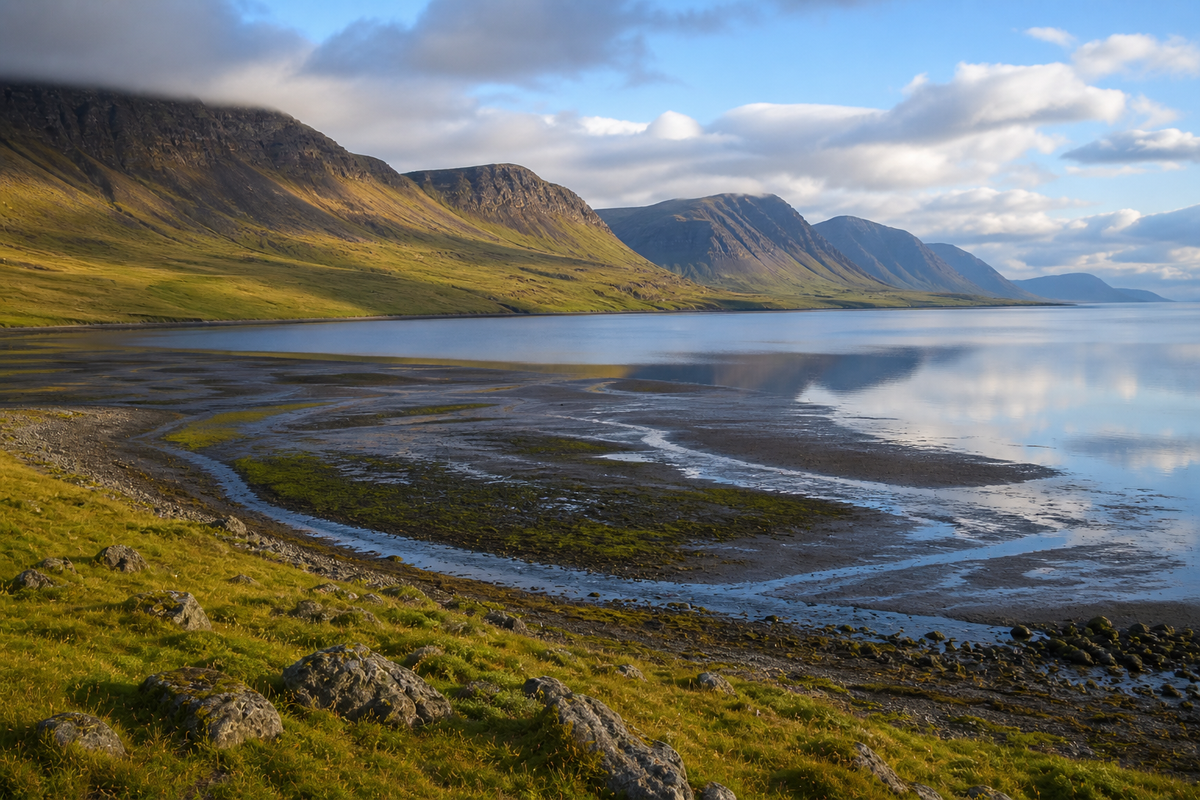
Brynjudalsvogur is a tranquil fjord inlet located within Hvalfjörður, just north of Reykjavík in West Iceland. It forms the coastal edge of the Brynjudalur valley, where steep, rugged mountains, as visible in the image, meet calm, reflective waters and wide tidal flats, creating a landscape that feels both expansive and intimate. The shoreline here is part of a protected natural area, recognized for its highly productive mudflats. These flats are dramatically exposed at low tide, revealing a rich ecosystem that supports a wide variety of bird species. During migration seasons, the area becomes a quiet hub of activity, with birds feeding and resting along the shore. This makes Brynjudalsvogur particularly appealing for birdwatchers and nature enthusiasts seeking a less crowded environment. The surrounding scenery reflects classic Icelandic coastal beauty—moss-covered rocks and grassy slopes in the foreground of the image, and still waters that mirror the blue sky and cloud formations. Weather plays a strong role in shaping the atmosphere: on clear days the fjord feels open and peaceful, while fog and shifting light can transform it into something more dramatic and mysterious. Seasonally, visitors may gather mussels along the shore, a tradition that has been practiced for generations. However, as a limited natural resource, it is important to harvest responsibly and respect the protected status of the area. Despite its proximity to the capital, Brynjudalsvogur remains relatively untouched by mass tourism. Its value lies not in dramatic landmarks, but in its balance—between land and sea, activity and stillness, and nature and tradition.
Folklore
Story & Folklore
At Brynjudalsvogur, the rhythm of the tide shapes everything. As depicted in the image, when the sea pulls back, it reveals a vast stretch of mudflats, shimmering under the sky and alive with subtle movement. Birds gather in quiet numbers, stepping lightly across the shore, while the distant, golden-lit mountains stand watch over the tranquil fjord. Visitors often arrive expecting a simple coastal view, but the stillness here feels different. Time seems to slow as the water retreats and returns, leaving behind intricate patterns in the sand and mud that vanish just as quickly. The air carries the sound of wings, water, and wind—nothing more. Locals have long understood this place as one to be respected rather than rushed. Gathering mussels has been part of life here for generations, but always with care, knowing the balance of the shore is delicate. Standing at the edge of Brynjudalsvogur, it becomes clear that this is not just a landscape to see, but one to observe quietly—a place where nature reveals itself only to those who take the time to notice.
💡 Did You Know?
At low tide, the mudflats of Brynjudalsvogur become a feeding ground for large numbers of migratory birds, making it a hidden hotspot for birdwatching.
Local Legend
Whispers of the Tides
In Brynjudalsvogur, it is said that the tide does more than rise and fall—it remembers. Long ago, people living along the fjord believed that the shoreline held echoes of those who had walked there before. When the tide recedes, revealing the wide mudflats, some claim the land briefly returns to an older time. Fishermen once spoke of seeing faint shapes moving across the exposed flats at dusk, figures that seemed to walk with purpose before dissolving into the mist. Others described hearing distant voices carried over the water, even on windless evenings. These moments were never loud or frightening—just subtle enough to leave a lasting impression. The legend suggests that the fjord is a place where memory lingers, rising with the mist and fading with the returning sea.
Experiences
Tours Near Brynjudalsvogur
Best-rated Iceland experiences — book with free cancellation


Culture
Stories & Legends
Icelandic sagas and folklore from this area
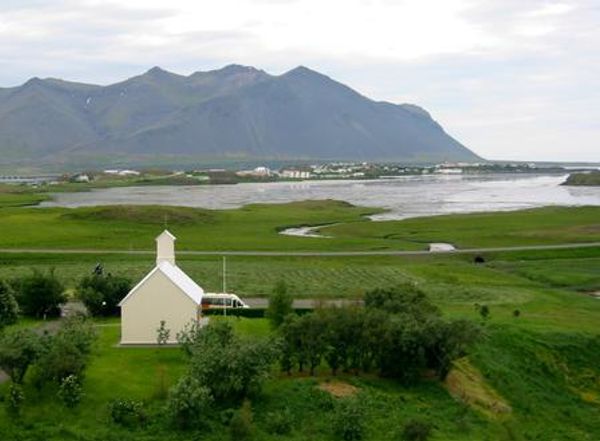
Bárðarhellir
Bárðarhellir is a historic location in Iceland mentioned in "Bárðar saga Snæfellsáss", one of the ancient Íslendingasögur (Sagas of Icelanders). These medieval narratives preserve the history of Iceland's Viking Age settlement.
Bláskeggsá
Bláskeggsá is a historic location in Iceland mentioned in "Harðar saga og Hólmverja", one of the ancient Íslendingasögur (Sagas of Icelanders). These medieval narratives preserve the history of Iceland's Viking Age settlement.
Bláskeggsárós
Bláskeggsárós is a historic location in Iceland mentioned in "Harðar saga og Hólmverja", one of the ancient Íslendingasögur (Sagas of Icelanders). These medieval narratives preserve the history of Iceland's Viking Age settlement.
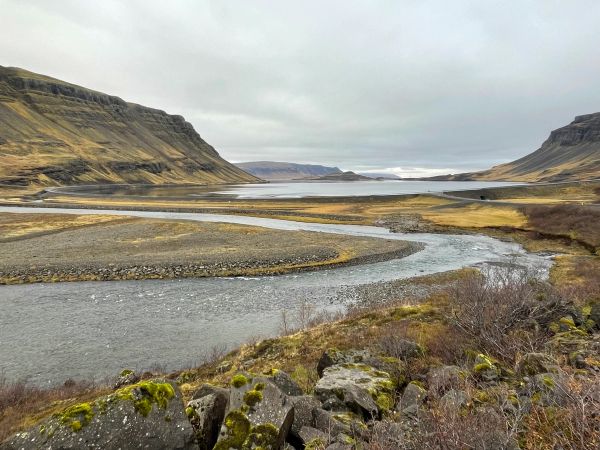
Botnsá
Botnsá is a historic location in Iceland mentioned in "Kjalnesinga saga", one of the ancient Íslendingasögur (Sagas of Icelanders). These medieval narratives preserve the history of Iceland's Viking Age settlement.
Explore
Hidden Gems Nearby
✦ The Tidal Mudflats
At low tide, the expansive mudflats reveal a dynamic ecosystem, crisscrossed by water channels and teeming with life. They are a crucial feeding ground for numerous bird species.
This ever-changing landscape offers unique photographic opportunities and a chance to observe nature's subtle rhythms.
✦ Birdwatching Hotspot
Brynjudalsvogur is a haven for diverse birdlife, especially during migratory seasons, with many species feeding and resting on the exposed mudflats.
It's a less crowded spot for bird enthusiasts to quietly observe a wide variety of coastal and migratory birds.
✦ Mussel Gathering Tradition
Seasonally, locals and respectful visitors can partake in the generations-old tradition of gathering mussels along the shore, a practice deeply connected to the area's heritage.
It offers a unique cultural experience and a taste of local life, emphasizing responsible interaction with nature.
Help
Frequently Asked Questions
Location
📍 Location
Discover
Explore Nearby
Places from our database within 1.0 km — all data from Sanity
Loading nearby places…
0 places found within 1.0 km
Plan full itinerary →Explore More