Brimilsvallakirkja
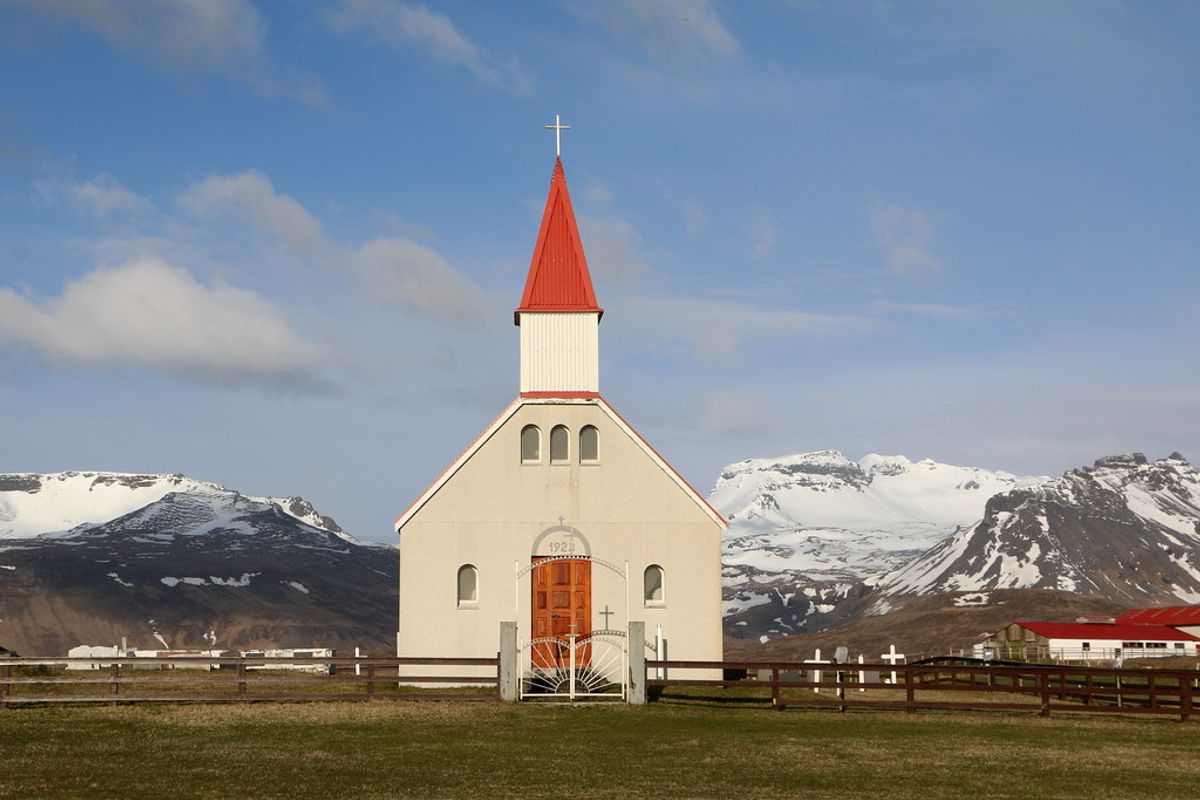
A charming 1923 church with a striking red roof, nestled amidst West Iceland's snowy peaks.
About
About Brimilsvallakirkja
A charming 1923 church with a striking red roof, nestled amidst West Iceland's snowy peaks.
Experience a picturesque piece of Icelandic history, art, and serene landscapes in one breathtaking spot.
Background
History & Background
Brimilsvallakirkja's history is a fascinating reflection of community resilience and faith in West Iceland. The church, consecrated on October 28th, 1923, was not the first in the broader area, as a church previously stood at Fróðá. However, the relocation of the Fróðá church to Ólafsvík sparked considerable disputes, leading to a significant division of the Fróðá parish in 1915. For several years following this split, the 140 members of the new Brimilsvellir parish held their services in a local community hall, patiently awaiting the construction of their own dedicated place of worship. The construction of Brimilsvallakirkja marked a new chapter for the community, providing them with a permanent spiritual home. Its distinctive architecture, featuring a vibrant red roof and a white steeple, quickly became a beloved local landmark. The church is also a repository of local art, featuring an altar painting created by Guðmundur Einarsson frá Miðdal, a renowned Icelandic artist. Furthermore, the church's exquisite textiles, including the chasuble (hökull), stoles, the cloth adorning the pulpit, and the altar trim, were all meticulously crafted by Sigrún Jónsdóttur, adding to its cultural and historical value. Brimilsvallakirkja stands today not only as a place of worship but also as a monument to the determination and artistic talent within the Icelandic community.
Nestled amidst the rugged, snow-capped mountains of West Iceland, Brimilsvallakirkja is a truly picturesque and historically significant church. Consecrated on October 28th, 1923, this charming structure, with its distinctive bright red corrugated iron roof and crisp white steeple crowned with a cross, stands as a testament to the enduring faith and community spirit of the region. The church's light-colored facade features three elegant arched windows on the upper level and two smaller ones flanking the main entrance, which is adorned with a beautiful reddish-brown wooden double door, inscribed with the year of its dedication. An ornate white metal gate welcomes visitors into the serene churchyard, where a few white crosses mark graves, adding to the sense of history. The story of Brimilsvallakirkja is deeply rooted in local history, emerging from a significant parish division in 1915, after an older church at Fróðá was moved to Ólafsvík. For eight years, the community of Brimilsvellir worshipped in a local community hall, demonstrating their resolve until their own sanctuary could be built. Inside, the church houses notable artistic treasures: an altar painting by the celebrated Icelandic artist Guðmundur Einarsson frá Miðdal, and exquisite textiles including the chasuble, stoles, pulpit cloth, and altar trim, all crafted by Sigrún Jónsdóttir. Surrounded by a simple wooden fence and expansive green fields, with the dramatic Icelandic landscape as its backdrop, Brimilsvallakirkja offers visitors a profound connection to Iceland's cultural, religious, and artistic heritage, making it a truly memorable stop on any West Iceland itinerary.
Folklore
Story & Folklore
Imagine the year 1923, a time when the echoes of a community's determination resonated through the Snæfellsnes Peninsula. Brimilsvallakirkja stands as a testament to this spirit, born from a parish dispute that saw the faithful of Brimilsvellir gather in a community hall until their own church could be built. With its striking red roof and white steeple, visible against the stark beauty of the snow-dusted mountains, it became a beacon of hope and unity. Picture the parishioners on October 28th, 1923, gathering for its consecration, their hearts filled with pride. Inside, the altar painting by Guðmundur Einarsson and textiles by Sigrún Jónsdóttir speak of local artistry, adding a layer of warmth to this remote sanctuary. This church isn't just stone and wood; it's a living narrative of resilience, faith, and the enduring Icelandic spirit.
💡 Did You Know?
Did you know Brimilsvallakirkja was built after a significant parish dispute, replacing an older church from Fróðá and consecrated in 1923 for a community of 140 people?
Local Legend
The Church Born of Community Resolve
Local lore tells of the Brimilsvellir community's unwavering spirit. After their original church was moved, they worshipped in a local hall for years, steadfast in their determination to build their own sanctuary, a testament to their deep faith and unity against all odds.
Experiences
Tours Near Brimilsvallakirkja
Best-rated Iceland experiences — book with free cancellation


Culture
Stories & Legends
Icelandic sagas and folklore from this area
Digrimúli (nú Fróðármúli)
Digrimúli (nú Fróðármúli) is a historic location in Iceland mentioned in "Eyrbyggja saga", one of the ancient Íslendingasögur (Sagas of Icelanders). These medieval narratives preserve the history of Iceland's Viking Age settlement.
Forna Fróðá
Forna Fróðá: The site of a notorious ghost story and ancient mysteries.
Fróðárós
Fróðárós is a historic location in Iceland mentioned in "Víglundar saga", one of the ancient Íslendingasögur (Sagas of Icelanders). These medieval narratives preserve the history of Iceland's Viking Age settlement.
Mávahlíð
Mávahlíð: Where Thor's hammer might have struck the earth.
Location
📍 Location
Discover
Explore Nearby
Places from our database within 1.0 km — all data from Sanity
Loading nearby places…
0 places found within 1.0 km
Plan full itinerary →Explore More