
Krýsuvíkurbjarg — Reykjanes Bird Cliffs
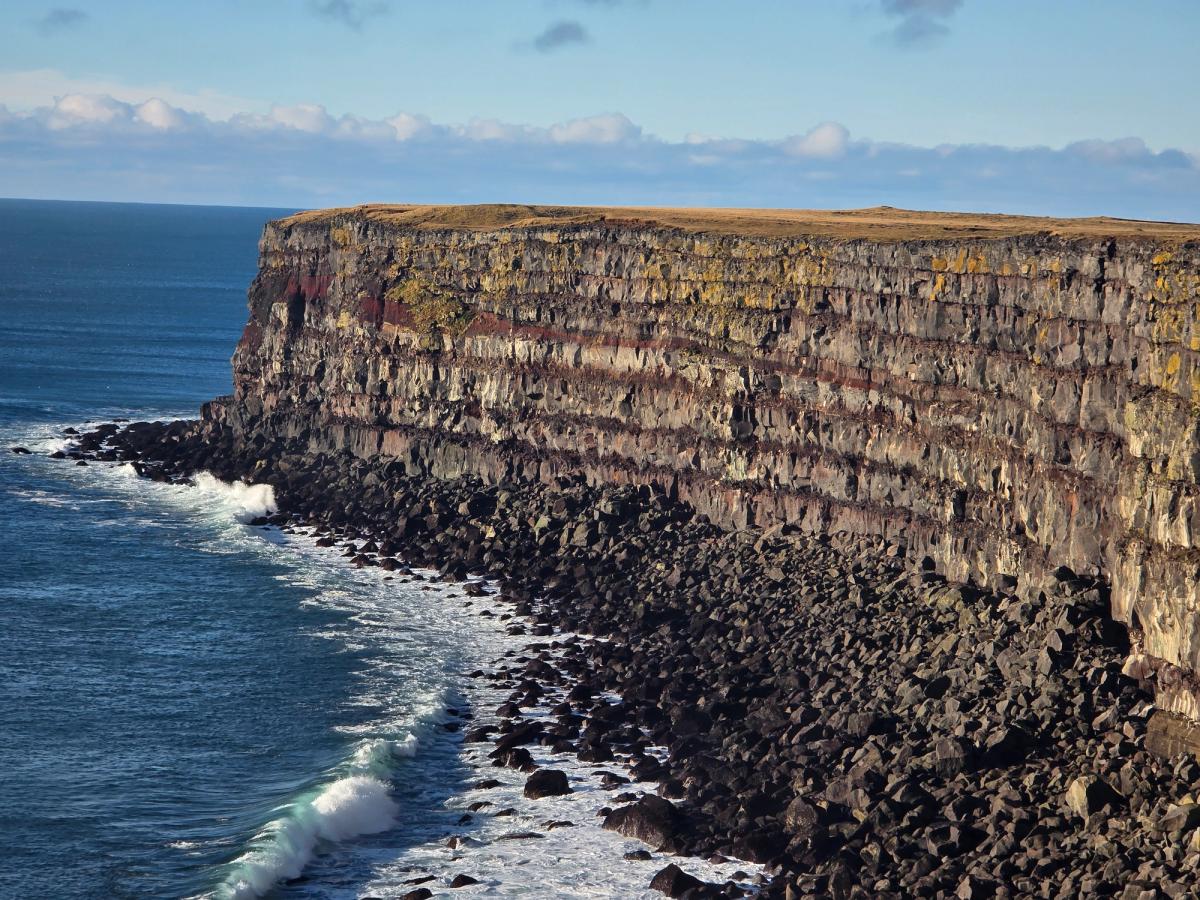
Krýsuvíkurbjarg er 4 km langur sjávarklettarammi á suðurströnd Reykjaness sem hýsir eina af stærstu sjófuglabyggðum Íslands. Að sumri til (maí–ágúst) er á klett…
Stuttlega
Heimsóknartími
Allow around 45–60 minutes; walking slowly along the main cliff area itself takes roughly 20–30 minutes.
Besta árstíð
Late spring and summer in calm, clear weather; April–July is strongest for nesting seabirds.
Leiðarvísir
From Route 427 on the south coast of Reykjanes. The final track toward the cliffs is rough and suited to a 4x4; otherwise park safely before the rough section and continue on foot. Conditions can change quickly.
GPS
63.8289, -22.0525
Um
Um Krýsuvíkurbjarg — Reykjanes Bird Cliffs
Krýsuvíkurbjarg er 4 km langur sjávarklettarammi á suðurströnd Reykjaness sem hýsir eina af stærstu sjófuglabyggðum Íslands. Að sumri til (maí–ágúst) er á klettunum þúsundir álka, langvía, rita, fýla og lunda. Verphverfarnir fuglar sjást oft mjög nærri á klettatoppunum. Aksturinn að klettunum meðfram suðurströndinni (þjóðvegur 427) liggur um dramatísk hraunsvæði og eldfjallalegt landslag.
Ferðir nálægt Krýsuvíkurbjarg — Reykjanes Bird Cliffs

South Coast Tour - Black Sand Beach, Plane wreck, Skogafoss, Seljalandsfoss guided in Chinese冰岛南岸黑沙滩飞机残骸中文一日团
Magic Iceland Travel · 10 hours 30 minutes
DT 402 Private Monster Truck South Coast & Eyjafjallajökull Volcano Sights
Superjeep · 8 hours
Private South Coast with Glacier Hike
Glaciers and Waterfalls · 10 hours
Private Ice Cave Katla, South Coast Waterfalls & Black Sand Beach
Glaciers and Waterfalls · 11 hours
Krýsuvíkurbjarg — Reykjanes Bird Cliffs – bílaleiga
Ætlarðu að keyra hingað? Berðu saman hentugar bílategundir fyrir svæðið og skoðaðu tilboð fyrir þínar dagsetningar.
Leitaðu að raunverulegu framboði hér
Bílategundirnar eru tillögur, ekki staðfest verð eða framboð. GoIceTravel kann að fá þóknun án aukakostnaðar fyrir þig.
Myndir
Myndavefur
Bakgrunnur
Saga og bakgrunnur
The cliffs have long been known locally under the names Krýsuvíkurbjarg and Krýsuvíkurberg. Their importance today is primarily natural: they form the largest seabird nesting cliff on Reykjanes and are a recognised birdwatching destination on the peninsula.
Krýsuvíkurbjarg, also widely known as Krýsuvíkurberg, is the largest seabird cliff on the Reykjanes Peninsula and one of the strongest wildlife stops on its south coast. The cliffs rise above the Atlantic east of Grindavík, where volcanic rock, ocean erosion and extensive bird colonies create a dramatic coastal landscape. Visit Reykjanes identifies the site as the peninsula’s largest bird cliff. During the breeding season, especially from late spring through summer, large numbers of black-legged kittiwakes, common guillemots, Brünnich’s guillemots and razorbills use the cliffs, along with smaller numbers of fulmars, shags, puffins, black guillemots and herring gulls. Snow buntings and purple sandpipers may also breed above the cliff edge. The final access from the main road is rough and is described locally as a poor 4x4 track. Visitors who do not have a suitable vehicle should not force the drive. The walk itself is relatively short, but the exposed coastline can be windy and slippery. Keep a generous distance from the cliff edge: ledges and turf can be unstable and there are no barriers protecting the full cliff line. Krýsuvíkurbjarg is free to visit and is best approached as a raw natural site rather than a developed attraction. Binoculars and a telephoto lens are useful during nesting season.
Þjóðsögur
Saga og þjóðsögur
On the south coast of Reykjanes, Krýsuvíkurbjarg — also known as Krýsuvíkurberg — forms a long wall between the volcanic peninsula and the open Atlantic. In summer, the cliffs become one of the region’s most intense wildlife spectacles. Thousands of seabirds occupy narrow ledges while kittiwakes and fulmars wheel above the surf and guillemots and razorbills move between the rock face and the sea. The landscape is as striking as the birdlife: dark basalt, volcanic layers and weathered coastal rock meet the ocean below, with almost no shelter from wind or weather. The site feels remote despite being relatively close to Grindavík. Reaching the cliff area requires care because the final track is rough, and visitors should never approach unstable cliff edges. For birdwatchers and photographers, the breeding season from late spring into summer is the most rewarding time to visit.
Staðbundin þjóðsaga
Ræningjastígur — The Bandits’ Path
Krýsuvíkurbjarg is known mainly for its seabirds and dramatic geology, but the coast is also connected with a darker chapter of Icelandic history. Visit Reykjanes notes that in the 17th century foreign raiders associated with the so-called Turkish Abductions attempted to come ashore in this area. A route connected with the episode became known as Ræningjastígur — the Bandits’ Path. The name reflects the fear created by the 1627 raids, when corsairs attacked several Icelandic coastal communities and carried hundreds of people into captivity. The exposed cliffs and difficult landing conditions around southern Reykjanes show why this coast was a formidable place to approach from the sea. Today there is little at the site itself to dramatise the story; the landscape remains raw and quiet. Knowing the history adds another layer to a visit that is otherwise dominated by nesting seabirds, volcanic rock and the Atlantic.
Staðsetning
Staðsetning
Discover
Explore Nearby
Places within 5.0 km
Loading nearby places…
0 places found within 5.0 km
Plan full itinerary →Kanna meira