
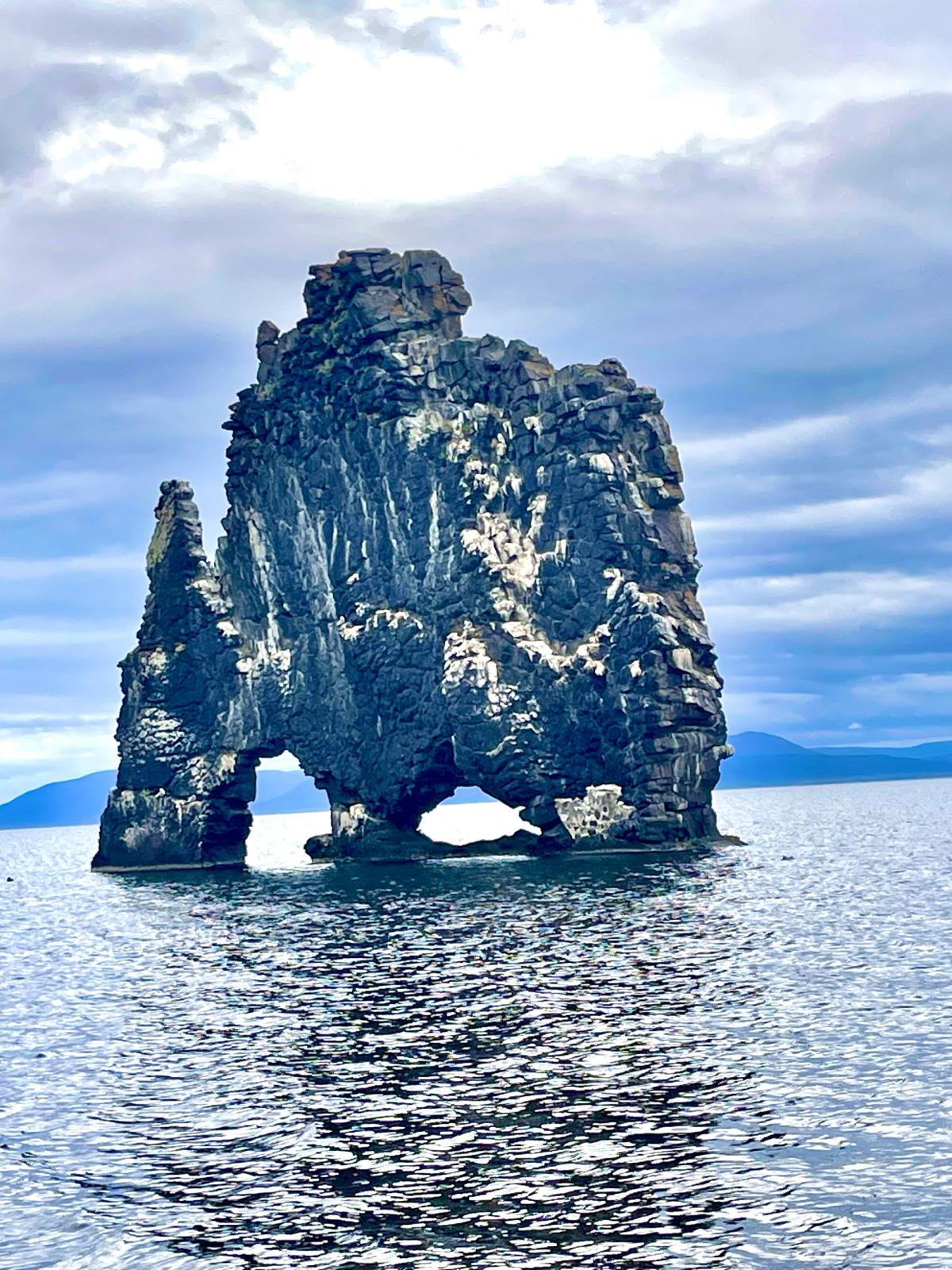
Hvítserkur
Formación de roca basáltica de 15 metros con forma de dragón o elefante bebiendo del mar.
De un vistazo
Tiempo de visita
1-2 hours
Mejor temporada
Summer (June-August) offers 24-hour daylight; winter for Northern Lights
Cómo llegar
Accessible by car on paved or gravel roads. Some require short hikes.
GPS
65.6064, -20.6352
Acerca de
Sobre Hvítserkur
Formación de roca basáltica de 15 metros con forma de dragón o elefante bebiendo del mar.
One of Iceland's most photographed coastal rock formations
Tours cerca de Hvítserkur
Lake Myvatn and Godafoss Waterfall Day Tour from Akureyri
Imagine Iceland Travel · 8 hours

Northern Lights Photography tour from Akureyri
Iceland Horizon - Saga Travel - GeoIceland · 3 hours
Dettifoss Waterfall, Ásbyrgi and Lake Mývatn - Shore Excursion from Húsavík
BusTravel Iceland · 5 hours 30 minutes
Akureyri Northern Light Tour
The Traveling Viking · 2 hours 30 minutes
Fotos
Galería
Antecedentes
Historia y Antecedentes
Hvítserkur ha sido un sitio importante en el paisaje de Islandia. A lo largo de los años, este lugar ha desempeñado un papel importante en la cultura y la historia natural de Islandia.
Hvítserkur es una maravilla natural extraordinaria en Islandia. Hvítserkur - 'Camisa Blanca' - es un farol de basalto de 15 metros en la costa este de la bahía de Húnaflói, que se parece (dependiendo de tu imaginación)... Hvítserkur - 'Camisa Blanca' - es un farol de basalto de 15 metros en la costa este de la bahía de Húnaflói, que se parece (dependiendo de tu imaginación) a un dinosaurio, un elefante o un dragón bebiendo. Dos arcos naturales en la base han sido perforados por la acción de las olas. Esta ubicación ofrece a los visitantes una oportunidad única de experimentar la belleza natural y el patrimonio cultural de Islandia.
Folclore
Historia y Folclore
Hvítserkur es una roca basáltica espectacular que se eleva 15 metros sobre el mar. El nombre significa 'camisa blanca' debido a las deposiciones de aves. La leyenda dice que es un troll que fue atrapado por el sol del amanecer y convertido en piedra.
¿Sabías que?
Legend says the rock formation is a troll turned to stone by sunrise
Cultura
Historias y Leyendas
Sagas islandesas y folclore de esta área
Explorar
Joyas ocultas cercanas
Off-Peak Visit
Visit Hvítserkur during shoulder season (May or September) for a perfect balance of access and solitude.
You'll experience the site without summer crowds while still having good weather and daylight.
Local Flora
Look for the native Icelandic plants growing in the area — Arctic thyme, moss campion, and various lichens.
These resilient plants have adapted to survive harsh conditions and add subtle beauty to the landscape.
Changing Light
Hvítserkur looks dramatically different depending on the time of day and weather conditions.
Cloud shadows, rain showers, and low-angle sunlight can transform the landscape within minutes — Iceland's famous "four seasons in one day."
Ayuda
Preguntas frecuentes
Ubicación
Ubicación
Discover
Explore Nearby
Places from our database within 5.0 km — all data from Sanity
Loading nearby places…
0 places found within 5.0 km
Plan full itinerary →Explorar más