Islandia · Guía de seguridad de las Tierras Altas · 2026
Conducir en invierno
por las Tierras Altas de Islandia
Carreteras F, Super Jeeps, vados de ríos glaciares y tormentas de nieve cegadoras: la guía de seguridad definitiva para la conducción más extrema de Islandia.
Las Tierras Altas islandesas —Hálendið— son el vasto interior deshabitado de Islandia: cerca del 40% del país, una meseta agreste de glaciares, campos de lava, valles geotérmicos y puertos de montaña que solo cruzan ásperas carreteras F. En verano son uno de los últimos grandes espacios salvajes de Europa. En invierno se convierten en uno de los entornos de conducción más serios que existen.
Lo que hace únicas a las Tierras Altas es la exposición total. No hay pueblos, ni combustible, ni cobertura móvil, ni rescate rápido. Un tiempo que sería una molestia en la costa se vuelve mortal en la meseta, y las únicas vías de entrada son pistas de montaña sin asfaltar que vadean ríos glaciares.
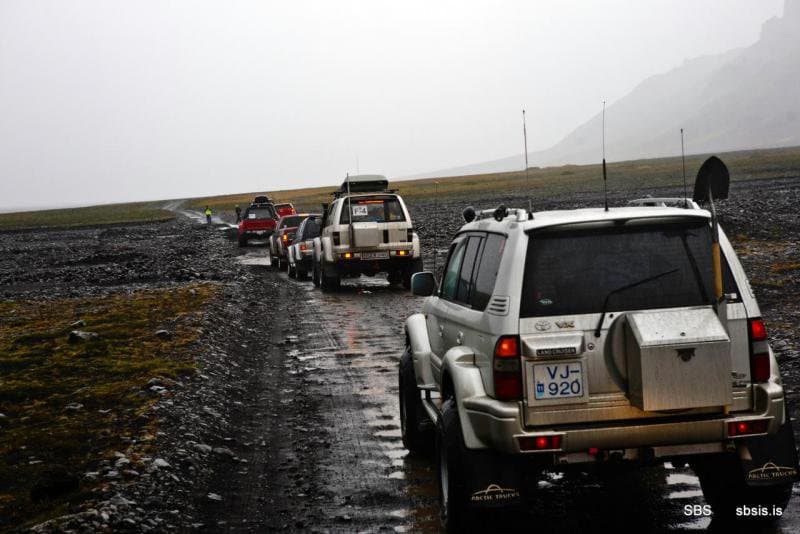
Esta guía es para viajeros que quieren conocer las Tierras Altas de forma responsable, ya sea conduciendo un 4×4 adecuado en verano o uniéndose a una expedición guiada en Super Jeep en invierno. Si eres un conductor inexperto, viajas solo o intentas carreteras cerradas en un coche 2WD, las Tierras Altas no son para ti: cada año esa decisión cuesta vidas y provoca costosos rescates voluntarios.
Guía de carreteras F
Todas las rutas de montaña, fechas de apertura y normas 4×4
Guía de seguridad vial
Cierres, condiciones y consejos en tiempo real
Guía del clima
Pronósticos, viento y avisos de tormenta
Guía de acampada
Refugios y campings de montaña
Guía de auroras
Los cielos oscuros de las Tierras Altas son perfectos para la aurora
Las Tierras Altas de un vistazo
Altitud
400–1.000 m
Temporada de apertura
Fin jun – sep
4×4 obligatorio
Siempre
Vados de ríos
Frecuentes
Temp. media invierno
−10 a −25°C
Desde Reikiavik
2–4 h al borde
Tiempo de ruta
Un día completo+
Estado del camino
Carreteras F sin asfaltar
Cuándo visitar — estación por estación
Verano (jun–ago)
+
🛣️ Roads
La mayoría de las carreteras F abren a finales de junio o julio al fundirse la nieve. Acceso máximo.
🌡️ Weather
Lo más suave del año (5–15°C) con casi 24 h de luz, aunque pueden darse olas de frío y tormentas repentinas.
⚠️ Safety
La ventana más segura para conducir por libre, pero los ríos crecen las tardes cálidas: vadea por la mañana.
🚗 Access
Posible conducir por libre en 4×4 apto, tours guiados, senderismo y acampada.
Otoño (sep–oct)
+
🛣️ Roads
Las carreteras F empiezan a cerrar desde finales de septiembre; las rutas altas primero. Consulta road.is a diario.
🌡️ Weather
Enfría rápido con las primeras nieves en altura. Días más cortos y primeras auroras.
⚠️ Safety
Las condiciones cambian deprisa: lleva equipo de invierno y un plan de escape.
🚗 Access
Aún posible por libre en rutas bajas; los tours guiados son lo más seguro.
Invierno (nov–mar)
+
🛣️ Roads
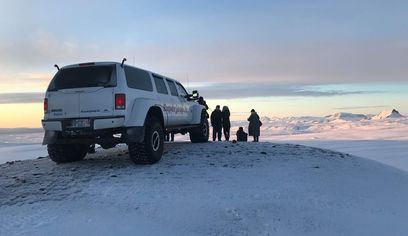
Casi todas las carreteras F están legalmente cerradas. El acceso es solo con Super Jeep guiado, en rutas selectas.
🌡️ Weather
Extremo: −10 a −25°C, vientos huracanados, ventiscas y oscuridad casi total.
⚠️ Safety
Conducir por libre es prácticamente imposible y a menudo ilegal. Ve con guía.
🚗 Access
Expediciones guiadas en Super Jeep a Þórsmörk, Kaldidalur y a veces Kjölur.
Primavera (abr–may)
+
🛣️ Roads
Las carreteras siguen cerradas mientras se inspeccionan y reparan tras las heladas. Las aperturas empiezan a fin de mayo.
🌡️ Weather
Engañosa: días luminosos pero gran capa de nieve y, más tarde, peligrosas crecidas por deshielo.
⚠️ Safety
La primavera es la temporada de rescates más ajetreada por lo imprevisibles que son los vados.
🚗 Access
Solo tours guiados hasta que reabran; luz magnífica para fotografía.
El clima en las Tierras Altas
Las Tierras Altas están por encima de la capa marina que modera la costa, así que el clima es más frío, seco y mucho más violento. El tiempo puede pasar de la calma a una ventisca total en menos de dos horas, y no hay ningún refugio.
Viento
Cada invierno se registran rachas de 40–50+ m/s (150–180 km/h) capaces de volcar un vehículo. Consulta el viento en vedur.is antes de salir.
Nieve y ventisca
La nieve en suspensión borra el horizonte en minutos. Conducir en una ventisca cegadora es mortal: puedes caer por una ladera sin verla.
Niebla
La niebla de montaña se forma rápido, sobre todo cerca de zonas geotérmicas, reduciendo la visibilidad por debajo de 10 metros.
Vados y cierres
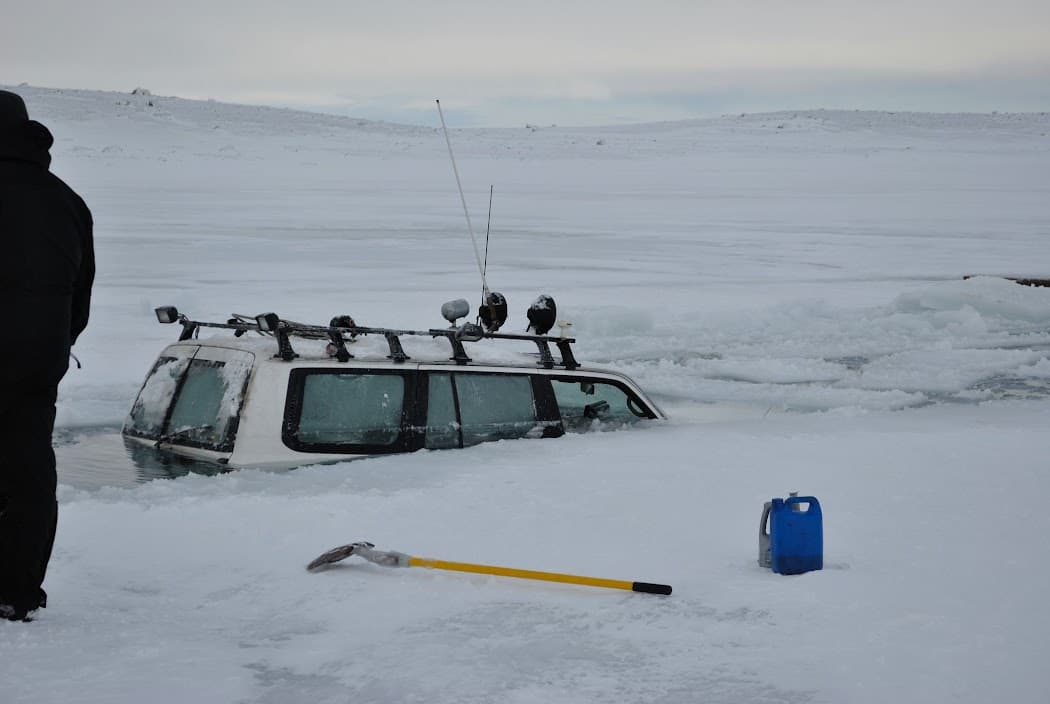
Los ríos glaciares crecen en las tardes cálidas y se congelan de forma imprevisible en invierno. Las carreteras cierran por peligros reales: nunca rodees una señal de cierre.
Consejos de conducción
Haz
- Consulta road.is y vedur.is cada mañana
- Registra tu plan de viaje en safetravel.is antes de salir
- Mantén el depósito por encima de la mitad siempre
- Camina cada vado a pie antes de cruzarlo
- Viaja en convoy de al menos dos vehículos
- Lleva un comunicador por satélite y mapas de papel
No hagas
- Nunca conduzcas un 2WD por una carretera F: es ilegal y anula el seguro
- Nunca rodees ni cruces una señal de cierre
- Nunca dependas solo del GPS del móvil: no hay cobertura
- Nunca cruces un río más profundo que tus rodillas con corriente
- Nunca conduzcas pistas de montaña de noche en invierno
- Nunca sigas ante un empeoramiento del tiempo: da la vuelta pronto
Rent a winter-ready 4x4 for highland roads
Winter highland driving demands a robust 4x4. Browse provider 4x4/AWD vehicle types, then search your dates on DiscoverCars. Confirm your rental explicitly permits winter and F-road driving — an AWD badge alone is not permission.
- SUV
Busca para ver los coches disponibles
Mayor altura libre y una conducción más segura.
Buscar coches - 4x4 / AWD
Busca para ver los coches disponibles
Para carreteras F de las tierras altas y condiciones invernales más duras.
Buscar coches
Importante: un 4x4/AWD no garantiza permiso para circular por carreteras F. Confirma la ruta, el vehículo y el contrato de alquiler con el proveedor; las carreteras cerradas y los vadeos de ríos pueden estar prohibidos incluso con un 4x4.
Las imágenes de categoría antes de buscar son ejemplos ilustrativos de DiscoverCars, no disponibilidad en directo. Los coches y precios reales proceden de tu propia búsqueda con fechas. GoIceTravel puede recibir una comisión sin coste adicional.
Lista de equipaje
Marca esto antes de salir. En invierno, varios de estos elementos marcan la diferencia entre un contratiempo y una emergencia.
🎒 Lista de equipaje
La seguridad primero
Los cierres son ley
Conducir una carretera F cerrada es un delito en Islandia. Te expones a multas, plena responsabilidad por los costes de rescate y anulación del seguro.
Los vados matan
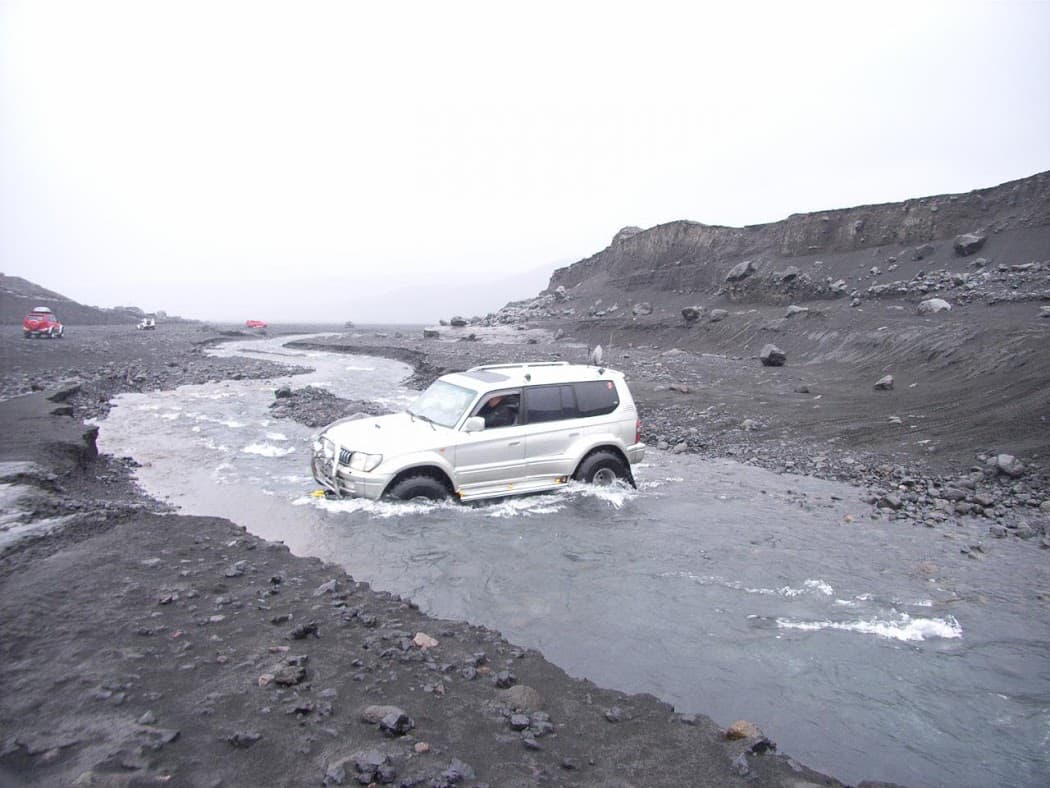
Camina cada vado primero, entra con un ligero ángulo hacia aguas arriba, conduce lento y constante, y nunca cruces solo.
Avisos meteorológicos
Los avisos amarillo/naranja/rojo en vedur.is son serios. Si hay aviso rojo para tu zona, no viajes.
Número de emergencia 112
El 112 conecta con policía, bomberos, ambulancia y el rescate de montaña ICE-SAR. Quédate con tu vehículo: es mucho más fácil de localizar que una persona.
Emergency: 112 · Road status: road.is · Weather: vedur.is · Register: safetravel.is
Principales zonas de las Tierras Altas

Landmannalaugar
Difícil · cerrado en inviernoMontañas de riolita de colores, campos de lava de obsidiana y una fuente termal natural. La joya de las Tierras Altas del sur.

Askja
Muy difícil · solo julioUna remota caldera volcánica en el interior norte con el lago de cráter Víti, azul lechoso, y vastos desiertos de ceniza.
Kerlingarfjöll
Moderada · veranoUna cordillera geotérmica de valles humeantes, crestas rojas y senderos junto a la ruta Kjölur.

Þórsmörk
Difícil · Super JeepUn valle verde acunado entre tres glaciares y surcado por ríos: el final del trek Laugavegur.
Sprengisandur
Muy difícil · solo veranoLa ruta de montaña más larga y desolada, cruzando el desierto de grava negra entre los dos grandes glaciares de Islandia.
.jpg&w=1920&q=75&dpl=dpl_7VQrFBFvBfsCH7ear8yKXx7FK6Pm)
Lakagígar (Laki)
Difícil · solo veranoUna hilera de 25 km de cráteres volcánicos cubiertos de musgo de la catastrófica erupción de 1783: de una belleza inquietante.
Mapa de las Tierras Altas
winterHighlandsPage.mapSubtitle
Galería de las Tierras Altas
Alojamiento
Dónde alojarse
Hoteles, casas de huéspedes y apartamentos en Tierras altas
Hotels.com
Mejores precios · Cancelación gratuita · 10 % de descuento con precios secretos
Enlaces de afiliado: podemos recibir una comisión sin coste adicional para ti.
Preguntas frecuentes
¿Se puede conducir por las Tierras Altas en invierno?
+
En la mayoría de casos, no por libre. Casi todas las carreteras F están cerradas por ley de octubre a junio. El acceso invernal solo es realista mediante tours guiados en Super Jeep en rutas selectas.
¿Necesito un 4×4 para las Tierras Altas?
+
Sí, siempre. Las carreteras F exigen por ley un 4×4 de gran altura libre, y los coches de alquiler estándar están prohibidos en ellas en cualquier estación.
¿Cuándo abren las carreteras F?
+
Normalmente a finales de junio o julio, al fundirse la nieve e inspeccionarse los ríos. Kjölur (F35) suele ser la primera; la F88 a Askja, a menudo la última.
¿Es ilegal conducir por carreteras F cerradas?
+
Sí. Es un delito, eres plenamente responsable de los costes de rescate, tu seguro queda anulado y salir de la pista daña la naturaleza protegida.
¿Qué es un Super Jeep?
+
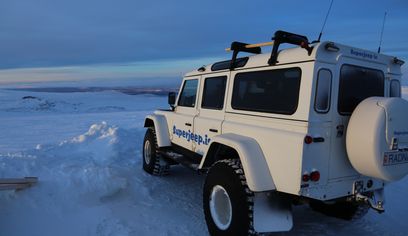
Un 4×4 muy modificado (Land Cruiser, Defender, Wrangler) con suspensión elevada, ejes portal y neumáticos de 38–44 pulgadas a muy baja presión, capaz de cruzar nieve y ríos que un 4×4 normal no puede.
¿Cuánto frío hace en las Tierras Altas en invierno?
+
Con frecuencia de −10 a −25°C, y mucho más con la sensación térmica. Incluso las noches de verano pueden bajar de cero.
¿Hay cobertura móvil en las Tierras Altas?
+
Prácticamente ninguna. No hay antenas en el interior. Lleva un comunicador por satélite como un Garmin inReach.
¿Puedo cruzar ríos glaciares con un coche de alquiler?
+
La mayoría de los seguros excluyen expresamente los daños por agua al vadear, incluso en 4×4 aprobados. Lee tu contrato: un solo vado puede costarte el vehículo entero.
¿Qué diferencia hay entre un 4×4 y un Super Jeep?
+
Un 4×4 normal maneja grava y carreteras F abiertas. Un Super Jeep está hecho para nieve profunda, ríos grandes y glaciares, con mucha más altura libre y flotación.
¿Qué presión de neumáticos uso en la nieve?
+
Baja la presión de forma notable: unos 12–18 PSI en nieve profunda para un 4×4 normal, y vuelve a inflar siempre antes de volver al asfalto.
¿Merecen la pena los tours guiados en Super Jeep?
+
En invierno, sí: son la única forma responsable de entrar para la mayoría, y los guías locales aportan seguridad y conocimiento que ninguna guía iguala.
¿Se puede visitar Landmannalaugar en invierno?
+
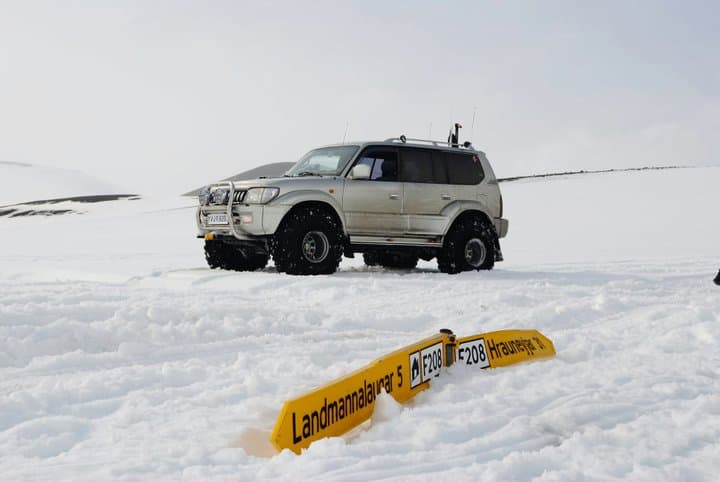
Solo en un tour guiado especializado en Super Jeep y con buenas condiciones. La F208 está cerrada por ley desde finales de octubre y no hay acceso por libre.
¿Qué hago si me quedo atascado?
+
Quédate con tu vehículo, llama al 112 y usa el comunicador por satélite si no hay señal. Un vehículo se ve mucho mejor desde el aire que una persona a pie.
¿Debo registrar mi plan de viaje?
+
Sí, regístralo gratis en safetravel.is antes de salir. ICE-SAR lo usa para localizarte si no regresas.
¿Cuánto combustible extra debo llevar?
+
Al menos 20 litros. No hay gasolineras en el interior y las distancias entre estaciones pueden superar los 200 km.
¿Cuál es la ruta más accesible de las Tierras Altas?
+
Kjölur (F35) en verano es la ruta principal más fácil, sin grandes vados. Kaldidalur (F550) es la que con más probabilidad se abre brevemente en inviernos suaves.
¿Se puede acampar en las Tierras Altas?
+
Sí, en verano, en refugios y campings designados (Landmannalaugar, Þórsmörk, Kerlingarfjöll). Reserva los refugios con mucha antelación; la acampada libre está restringida.
¿Son buenas las Tierras Altas para las auroras?
+
Excelentes: la contaminación lumínica casi nula da auroras extraordinarias, pero visítalas solo en invierno con guía por los peligros de conducción.
¿Qué es Sprengisandur?
+
La larga ruta central del desierto (F26) entre Hofsjökull y Vatnajökull: la travesía más remota de las Tierras Altas, solo en verano.
¿Cuánto se tarda en cruzar las Tierras Altas?
+
Cuenta con un día completo o más para cualquier travesía. Las distancias son largas, la velocidad baja (30–50 km/h en pistas ásperas) y nunca hay que ir con prisa.
¿Es más difícil Kjölur o Sprengisandur?
+
Sprengisandur es más largo, áspero y remoto. Kjölur está nivelado y sin ríos, siendo la más suave de las dos grandes travesías.
¿A qué número de emergencia llamo en Islandia?
+
Al 112 para todo: policía, ambulancia, bomberos y rescate de montaña ICE-SAR. Funciona en cualquier red con señal parcial.
¿Puedo conducir las Tierras Altas solo?
+
Se desaconseja firmemente. Viaja en convoy de al menos dos vehículos; una avería o quedarse atascado puede volverse mortal a solas.
¿Necesito cadenas para nieve?
+
Lleva al menos un juego en condiciones invernales: son prácticamente obligatorias en carreteras de montaña y pueden liberar un vehículo atascado.
¿Cuál es la mejor época para visitar las Tierras Altas?
+
De mediados de julio a mediados de agosto para conducir por libre: máximo acceso, clima más suave y luz larga. Elige un tour guiado para la experiencia invernal.
Planifica tu aventura por las Tierras Altas
Todo lo que necesitas para explorar el interior de Islandia con seguridad: rutas, tours, hoteles y herramientas en vivo.
Ve la aurora boreal
Sigue la actividad de las auroras en tiempo real y planifica tu viaje para ver la aurora boreal con AuroraVision.
Tours y experiencias
Explora actividades en Islandia
Tours y actividades
Reserva los mejores tours de Islandia, excursiones de un día y experiencias — auroras boreales, glaciares, avistamiento de ballenas y más.
Ver actividades →Explora los tours de Islandia
Círculo Dorado, Costa Sur, cuevas de hielo, senderismo volcánico — descubre la colección de tours de GoIceTravel.
Ver tours →