
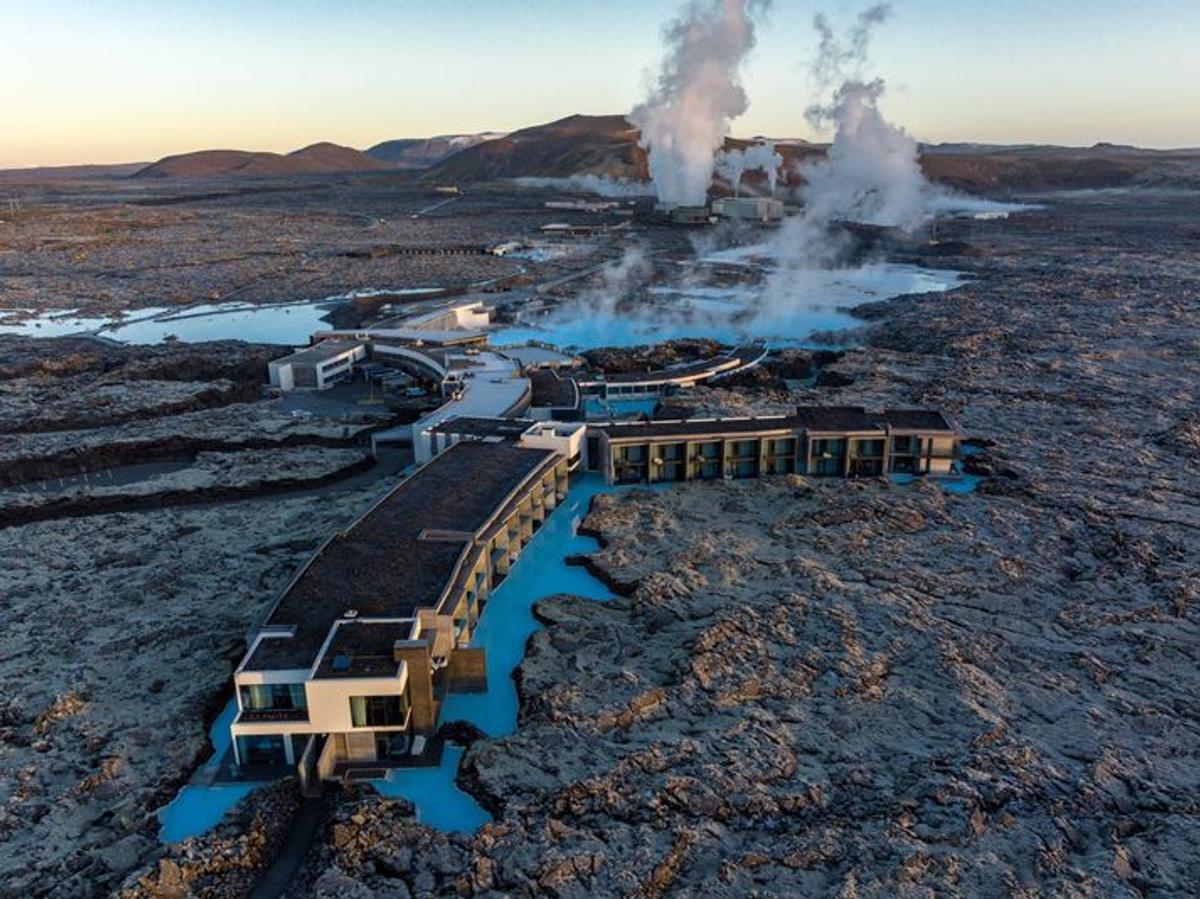
Svartsengi
A major high-temperature geothermal field north of Grindavík, home to Iceland's first combined geothermal power plant and the system that gave rise to the Blue …
At a Glance
Visit time
Allow about 20–40 minutes as part of a wider Reykjanes route; Svartsengi itself is primarily an interpretive landscape rather than a conventional walk-in attraction.
Best Season
The landscape can be seen year-round when roads and official safety guidance allow access. Clear daylight is best for understanding the lava-field and power-plant setting.
Getting There
The geothermal field lies north of Grindavík beside the Blue Lagoon and Svartsengi Power Plant area. The power plant is operational infrastructure; stay on public roads and outside fenced or restricted areas.
GPS
63.8860, -22.4154
About
About Svartsengi
A major high-temperature geothermal field north of Grindavík, home to Iceland's first combined geothermal power plant and the system that gave rise to the Blue Lagoon.
Understand how one Reykjanes geothermal field connects Iceland's volcanic geology, district heating, electricity production, the origin of the Blue Lagoon and today's active volcanic monitoring.
Tours Near Svartsengi
Private Luxury Jeep Tour - Reykjanes Peninsula, Continental Rift & Bridge Between Continents + eruption(!)
Iceland Premium Tours · 10 hours
Private Luxury Jeep Tour - Reykjanes Peninsula and Northern Lights with Blue Lagoon and Lava Tunnel
Iceland Premium Tours · 12 hours
Reykjanes + Lava fields Private Tour
Friend In Iceland · 8 hours
Reykjanes Geothermal Tour & Sky Lagoon - Eco Tour
EV Travel · 8 hours
Photos
Gallery
Background
History & Background
Svartsengi's modern energy history began in 1969 when Grindavík municipality decided to investigate the area's geothermal potential for heating homes. Drilling in 1971 and 1972 confirmed a powerful high-temperature resource, but the geothermal water was too saline for direct use. This challenge led Icelandic engineers to develop a heat-exchange system in which geothermal steam and brine heat clean freshwater for distribution. Hitaveita Suðurnesja was established by law at the end of 1974. A heat-exchange plant was built at Svartsengi in 1975, and geothermal utilisation began in 1976. Grindavík received the first hot water on 6 November 1976, with the system reaching Njarðvík the following year. Electricity generation started in 1978, making Svartsengi Iceland's first combined geothermal power plant producing both hot water and electricity. The plant was expanded repeatedly over the following decades. A seventh development stage began in 2023 and was formally commissioned on 1 December 2025, increasing the operating licence to 85 MW of electricity; thermal production capacity is about 200 MW. The geothermal operation also gave rise to the Blue Lagoon. Mineral-rich separated brine collected in a discharge pond beside the plant, eventually creating the distinctive silica-rich water environment that developed into the internationally known spa. Long before industrial development, however, the name Svartsengi referred to an old stopping place for horsemen in the area.
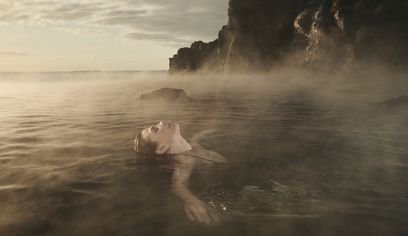
Svartsengi is one of the five major high-temperature geothermal areas on the Reykjanes Peninsula and one of the most important places in the history of Icelandic geothermal energy. The field lies north of Grindavík, between the town and the lava-covered landscape around Svartsengisfell and Þorbjörn. Serious exploration of the geothermal resource began after Grindavík municipality decided in 1969 to investigate whether Svartsengi could provide heat for local homes. Boreholes drilled in 1971–1972 confirmed a high-temperature system exceeding 200°C at depth. The geothermal fluid was unusually saline — around two-thirds the salinity of seawater — so it could not simply be piped directly into homes. Engineers instead developed heat-exchange systems that use geothermal steam and brine to heat clean freshwater. Geothermal utilisation began in 1976. On 6 November that year, the first hot water from Svartsengi was delivered to buildings in Grindavík, and the district-heating network later expanded across Reykjanes. Electricity generation began in 1978. The Svartsengi Power Plant became Iceland's first combined geothermal power plant, producing both electricity and hot water. After seven development stages, the plant's current generation licence allows up to 85 MW of electricity, while thermal production capacity is about 200 MW. One of Svartsengi's most famous consequences was initially an industrial by-product. When geothermal wells were put into operation, separated mineral-rich brine collected in a lava-field discharge pond. The water interacted with silica-rich lava and gradually formed the milky-blue lagoon that later developed into the Blue Lagoon. HS Orka's Resource Park model grew around the idea of using multiple resource streams from geothermal production rather than treating them as waste. The name Svartsengi predates the power plant. HS Orka records that it comes from an old stopping place used by horsemen east of the present Grindavíkurvegur. The modern power plant itself stands on Illahraun, lava that flowed in 1226. Since late 2023, Svartsengi has also become central to the renewed volcanic unrest on the Reykjanes Peninsula. Ground uplift and magma accumulation beneath the area are continuously monitored by the Icelandic Meteorological Office, with magma intrusions capable of propagating toward the Sundhnúkur crater row. Conditions and access can therefore change quickly. The operational power-plant site is not a conventional visitor attraction: remain on legal public roads and viewpoints, respect barriers and closures, and always check the latest official hazard information before travelling in the area.
Folklore
Story & Folklore
For centuries, Svartsengi was simply part of the rough travel landscape north of Grindavík, remembered in its name as an old stopping place for horsemen crossing Reykjanes. In the twentieth century, the same ground became the site of an energy experiment that changed life across the peninsula. When drilling began in the early 1970s, engineers discovered a powerful but difficult resource: extremely hot geothermal fluid that was too salty to send directly into houses. The solution was to use the geothermal heat indirectly, warming clean freshwater through heat exchangers. In 1976, hot water from Svartsengi reached Grindavík, and two years later the site also began generating electricity. A by-product of that process would become even more famous than the power plant. Mineral-rich brine pooled in the dark lava beside the facility, creating an unusual blue-white lagoon. What began as geothermal discharge eventually became the Blue Lagoon and a model for HS Orka's wider Resource Park philosophy. Today Svartsengi tells another chapter of Reykjanes history. Since late 2023, ground uplift and magma accumulation beneath the area have made it one of Iceland's most closely watched volcanic systems. The same underground heat that powers homes and businesses is part of a landscape that is still actively being reshaped.
Did You Know?
Svartsengi's name comes from an old stopping place used by horsemen, while the modern power plant stands on Illahraun — lava that flowed in 1226.
Help
Frequently Asked Questions
Location
Location
Discover
Explore Nearby
Places from our database within 5.0 km — all data from Sanity
Loading nearby places…
0 places found within 5.0 km
Plan full itinerary →Explore More