
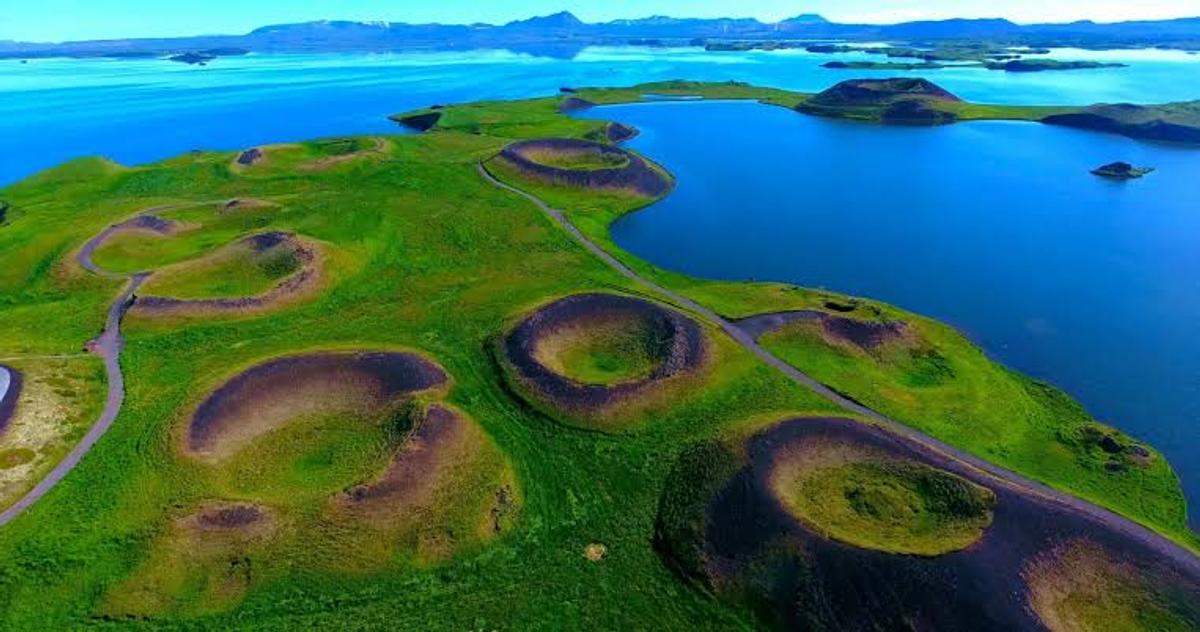
Skútustaðagígar Pseudocraters
The striking pseudocrater field on the shores of Lake Mývatn — formed not by volcanic eruption, but by steam explosions as lava flowed over a wetland.
About
About Skútustaðagígar Pseudocraters
The striking pseudocrater field on the shores of Lake Mývatn — formed not by volcanic eruption, but by steam explosions as lava flowed over a wetland.
Witness unique pseudocraters, diverse birdlife, and stunning lakeside views in a protected natural monument.
Tours Near Skútustaðagígar Pseudocraters
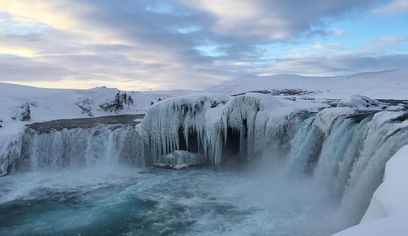
Lake Myvatn and Godafoss Waterfall Day Tour from Akureyri
Imagine Iceland Travel · 8 hours
Lake Mývatn Shore Excursion from Akureyri Port - German
Iceland Horizon - Saga Travel - GeoIceland · 6 hours
Lake Mývatn Shore Excursion from Akureyri Port - Spanish
Iceland Horizon - Saga Travel - GeoIceland · 6 hours
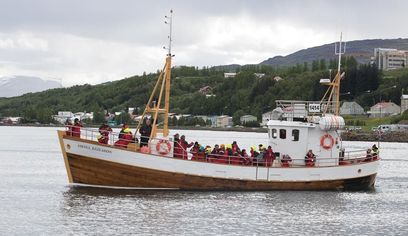
Whale Watching Tour w/ Transfer from Akureyri
Keli sea tours ehf · 4 hours
Photos
Gallery
Background
History & Background
The history of Skútustaðagígar is deeply rooted in Iceland's volcanic activity. These unique geological formations are not true volcanic craters, but rather pseudocraters or rootless cones. They were formed approximately 2,300 years ago during a massive eruption from the Þrengslaborgir and Lúdentarborgir crater rows. When incandescent lava flowed over the waterlogged ground and wetlands of Lake Mývatn, the trapped water rapidly turned to steam, causing explosive eruptions that blasted through the lava and formed these distinctive, perfectly circular mounds. Recognizing their exceptional beauty and scientific value, Skútustaðagígar was officially declared a protected natural monument in 1973. The protected area spans nearly 70 hectares, ensuring the preservation of these largely untouched and visually stunning pseudocraters. This designation highlights their significance not only as a geological marvel but also as a crucial habitat. Today, Skútustaðagígar stands as a testament to the dynamic forces that shaped Iceland. Its protection underscores its importance as a site for both geological study and ecological conservation, providing a sanctuary for diverse bird species and plant life within the unique Mývatn ecosystem.
Skútustaðagígar, nestled on the picturesque southern shore of Lake Mývatn in North Iceland, is a captivating natural wonder. This impressive group of pseudocraters offers a unique glimpse into Iceland's powerful geological past. Unlike traditional volcanic craters, pseudocraters are formed by steam explosions that occur when hot lava flows over wetlands, trapping water beneath. The resulting steam blasts create these distinct, circular mounds, which are beautifully preserved and covered in lush green grass, contrasting with the darker volcanic soil. The area was designated a protected natural monument in 1973, encompassing nearly 70 hectares. It is renowned for its exceptional beauty and largely untouched natural state. Skútustaðagígar is not only a geological marvel but also a haven for birdwatchers. The diverse habitats within the natural monument attract a wide array of bird species, including the Red-throated Diver (Himbrimi), Slavonian Grebe (Flórgoði), Tufted Duck (Skúfönd), Greater Scaup (Duggönd), Mallard (Stokkönd), Gadwall (Gargönd), Common Redshank (Stelk), Red-necked Phalarope (Óðinshani), and Arctic Tern (Kría). Additionally, the Skipalækur stream is home to abundant sticklebacks. The rich biodiversity extends to plant life, with a great variety of species thriving in the area. Visitors can enjoy leisurely walks around the pseudocraters, with two distinct paths available from Skútustaðir — one short and one longer — offering stunning views of the formations, the serene Lake Mývatn, and the surrounding volcanic landscape. The paths wind around the craters, allowing for intimate exploration and excellent photo opportunities, especially with the dramatic backdrop of distant mountains and the expansive sky.
Folklore
Story & Folklore
The Skútustaðagígar pseudocrater field on Lake Mývatn's southern shore is one of Iceland's most distinctive geological features. Whereas real craters are formed by magma exploding outward, pseudocraters form when lava overruns water-saturated ground — the steam beneath cannot escape and eventually bursts upward through the cooling lava crust, creating circular depressions that look exactly like volcanic craters but are actually inversion structures. The Skútustaðagígar formed about 2,300 years ago, when lava from the Krafla system flowed into what was then a shallow lake. Walking the 1-kilometre trail through the craters, with Lake Mývatn reflecting the surrounding volcanic hills, is one of the best short walks in the Mývatn area.
Did You Know?
Skútustaðagígar boasts one of Earth's largest pseudocrater groups, with similar formations found in Hawaii and even on Mars!
Culture
Stories & Legends
Icelandic sagas and folklore from this area
Geirastaðir
Geirastaðir is a historic location in Iceland mentioned in "Reykdæla saga og Víga-Skútu", one of the ancient Íslendingasögur (Sagas of Icelanders). These medieval narratives preserve the history of Iceland's Viking Age settlement.
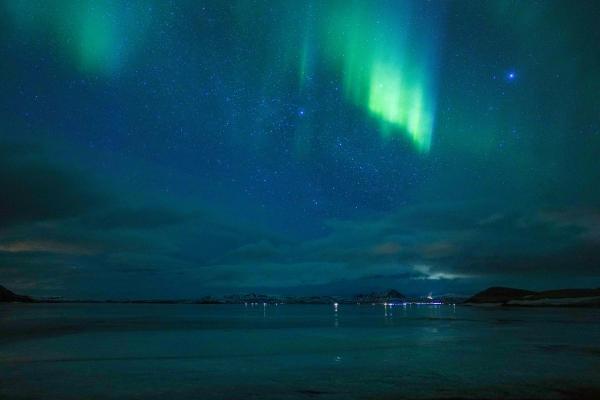
Mývatn
Mývatn: A lake of fire, ice, and mythical beings.
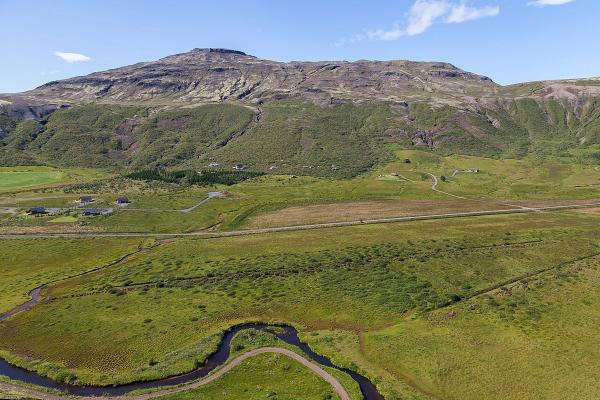
Sandfell (óviss staðsetning)
Sandfell, a place of uncertain location, is a whispered tale of a hidden valley or perhaps a haunting presence in Iceland's wild landscapes.
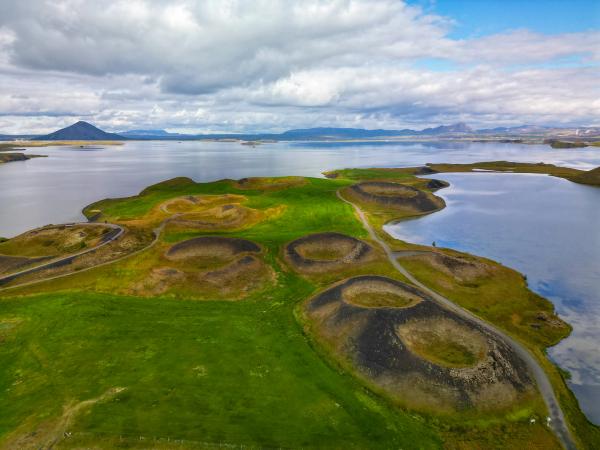
Skútustaðir
Skútustaðir is a historic location in Iceland mentioned in "Reykdæla saga og Víga-Skútu", one of the ancient Íslendingasögur (Sagas of Icelanders). These medieval narratives preserve the history of Iceland's Viking Age settlement.
Explore
Hidden Gems Nearby
Birdwatching Hotspots
The diverse habitats within the protected area, especially near the lake and wetlands, are ideal for spotting species like the Red-throated Diver, Tufted Duck, and Arctic Tern.
It's a prime location for observing a rich variety of Icelandic birdlife.
Skipalækur Stream
This small stream, flowing through the area, is notably home to abundant sticklebacks (hornsíli), offering a glimpse into the local aquatic ecosystem.
It's a unique chance to see a specific local fish species in its natural habitat.
Named Pseudocraters
Explore individual pseudocraters like Ytri-Kleifarhóll and Rófugerðishóll, each offering slightly different perspectives and photographic opportunities.
These named formations provide distinct points of interest within the larger crater field.
Help
Frequently Asked Questions
Location
Location
Discover
Explore Nearby
Places from our database within 5.0 km — all data from Sanity
Loading nearby places…
0 places found within 5.0 km
Plan full itinerary →Explore More