
Salthöfði og Salthöfðamýrar
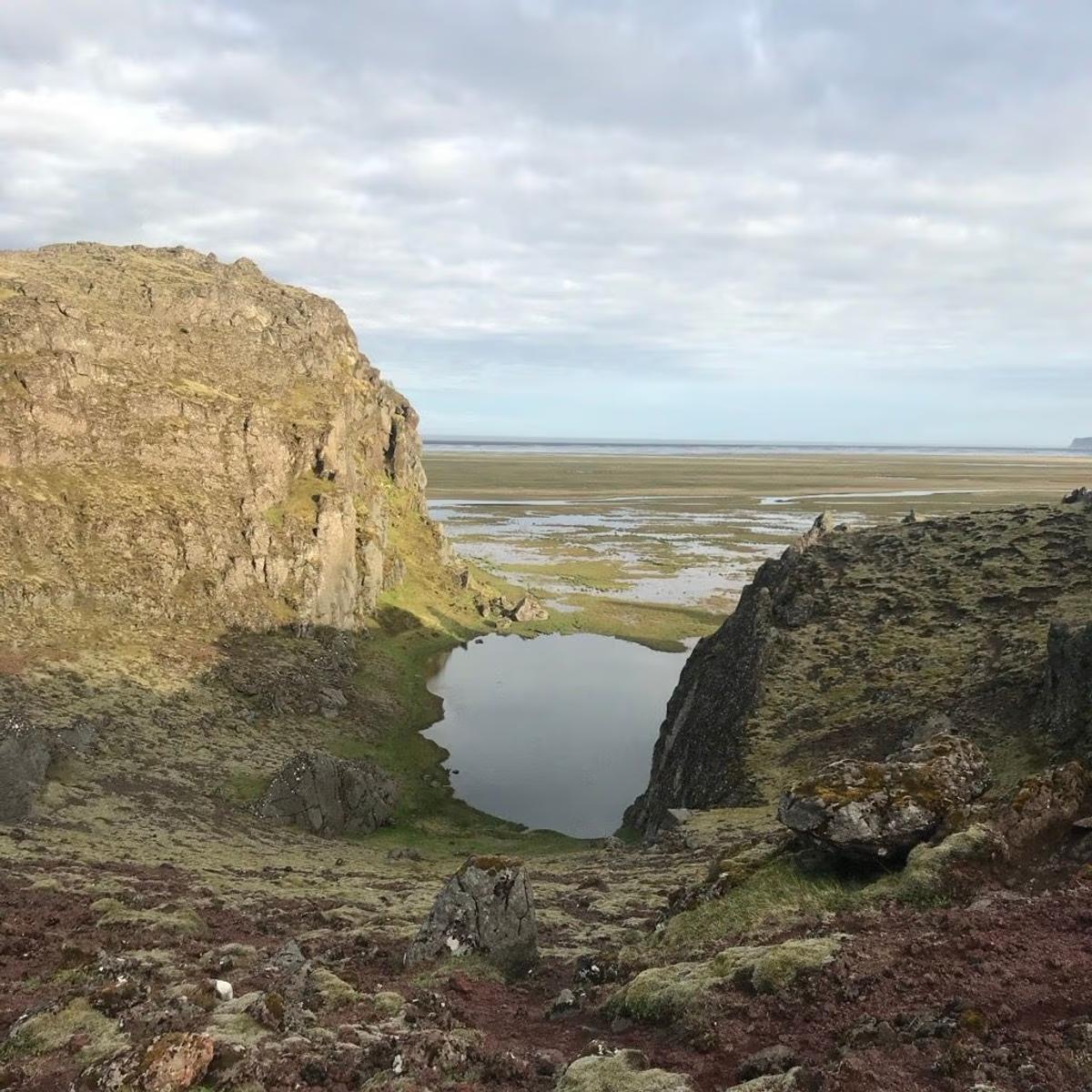
Dramatic basalt cliffs cradle a serene lake, opening to vast marshlands in East Iceland.
About
About Salthöfði og Salthöfðamýrar
Dramatic basalt cliffs cradle a serene lake, opening to vast marshlands in East Iceland.
Experience Iceland's raw geological power, historical intrigue, and serene natural beauty in one stunning location.
Tours Near Salthöfði og Salthöfðamýrar

South Coast Tour - Black Sand Beach, Plane wreck, Skogafoss, Seljalandsfoss guided in Chinese冰岛南岸黑沙滩飞机残骸中文一日团
Magic Iceland Travel · 10 hours 30 minutes
DT 322 Private Superjeep South Coast & Eyjafjallajökull Volcano Sights
Superjeep · 8 hours
South Coast Waterfalls, Glacier & Black Sand Beach Tour
BusTravel Iceland · 10 hours
DT 402 Private Monster Truck South Coast & Eyjafjallajökull Volcano Sights
Superjeep · 8 hours
Photos
Gallery
Background
History & Background
Salthöfði is a striking geological formation, a sheer basalt cliff stretching 800 meters long and rising 60 meters high. It forms part of a highland ridge descending from the immense Öræfajökull, a testament to the powerful volcanic and tectonic forces that have shaped Iceland over millions of years. The area is characterized by its dramatic rock walls, dikes, or crater plugs, with cinder cones visible to the north, all contributing to a landscape born of fire and ice. Beyond its geological significance, Salthöfði holds a place in local history. East of the main headland, three prominent rock pillars, or 'drangar,' stand. The largest, Gimluklettur, is associated with a legend recounting the discovery of sheep there after the catastrophic 1362 eruption of Öræfajökull, symbolizing resilience in the face of natural disaster. Another pillar, Loddudrangur, is notably slender and deemed unclimbable. The area also served a practical purpose in centuries past. Before the mid-19th century, the 'vikurskaflar' (pumice drifts) found beneath Salthöfði were ingeniously used as natural cold storage, providing a cool, stable environment for preserving barrels of salted meat throughout the long Icelandic winters. This fascinating historical detail highlights the resourcefulness of early Icelandic settlers in adapting to their challenging environment. Salthöfði and the surrounding Salthöfðamýrar marshlands were officially designated as a protected area in 1977, preserving its 230.7 hectares for future generations to explore and appreciate.
Salthöfði og Salthöfðamýrar presents a magnificent tableau of East Iceland's geological prowess. Salthöfði itself is an impressive 800-meter-long, 60-meter-high basalt cliff, a sheer rock face that is part of a highland ridge extending from the mighty Öræfajökull. Visually, the image captures the dramatic scale, with the dark, calm lake nestled deep within the gorge, framed by the steep, textured cliffs adorned with patches of vibrant green moss. Beyond this intimate scene, the landscape opens up to the expansive, flat Salthöfðamýrar marshlands, a unique ecosystem stretching towards the distant horizon and the sea, all under a vast, often cloudy, sky. This protected area, established in 1977 and spanning 230.7 hectares, is not just a geological wonder but also a site of historical interest. East of the main headland, three distinct rock pillars stand sentinel, with Gimluklettur being the most prominent. Legend has it that lambs were found there after the devastating 1362 eruption, a testament to life enduring even the most cataclysmic events. Loddudrangur, another pillar, is notably slender and said to be unclimbable. Furthermore, a fascinating historical tidbit reveals that pumice drifts beneath Salthöfði were utilized before the mid-19th century as natural cold storage for barrels of salted meat during the harsh Icelandic winters. Visiting Salthöfði og Salthöfðamýrar offers a profound connection to Iceland's volcanic origins, its rich history, and its unique, untamed natural beauty.
Folklore
Story & Folklore
Imagine standing at the edge of Salthöfði, the wind whispering tales of ancient eruptions. Below, the dark, still waters of the lake reflect the towering basalt cliffs, their moss-covered faces hinting at millennia of geological drama. Beyond, the vast, green-brown marshlands stretch out like a tapestry woven by nature, eventually meeting the distant, calm sea. Sunlight breaks through the clouds, illuminating patches of the rugged landscape, making the greens of the moss and the reds of the volcanic soil glow. It's a place where time feels suspended, where you can almost hear the echoes of past volcanic roars and envision the resilience of those who once stored their winter provisions in its natural ice cellars, a testament to enduring life in a land of fire and ice.
Did You Know?
The pumice drifts under Salthöfði were once used as natural cold storage for salted meat barrels during winter, showcasing early Icelandic ingenuity.
Culture
Stories & Legends
Icelandic sagas and folklore from this area
Location
Location
Discover
Explore Nearby
Places within 5.0 km
Loading nearby places…
0 places found within 5.0 km
Plan full itinerary →Explore More