
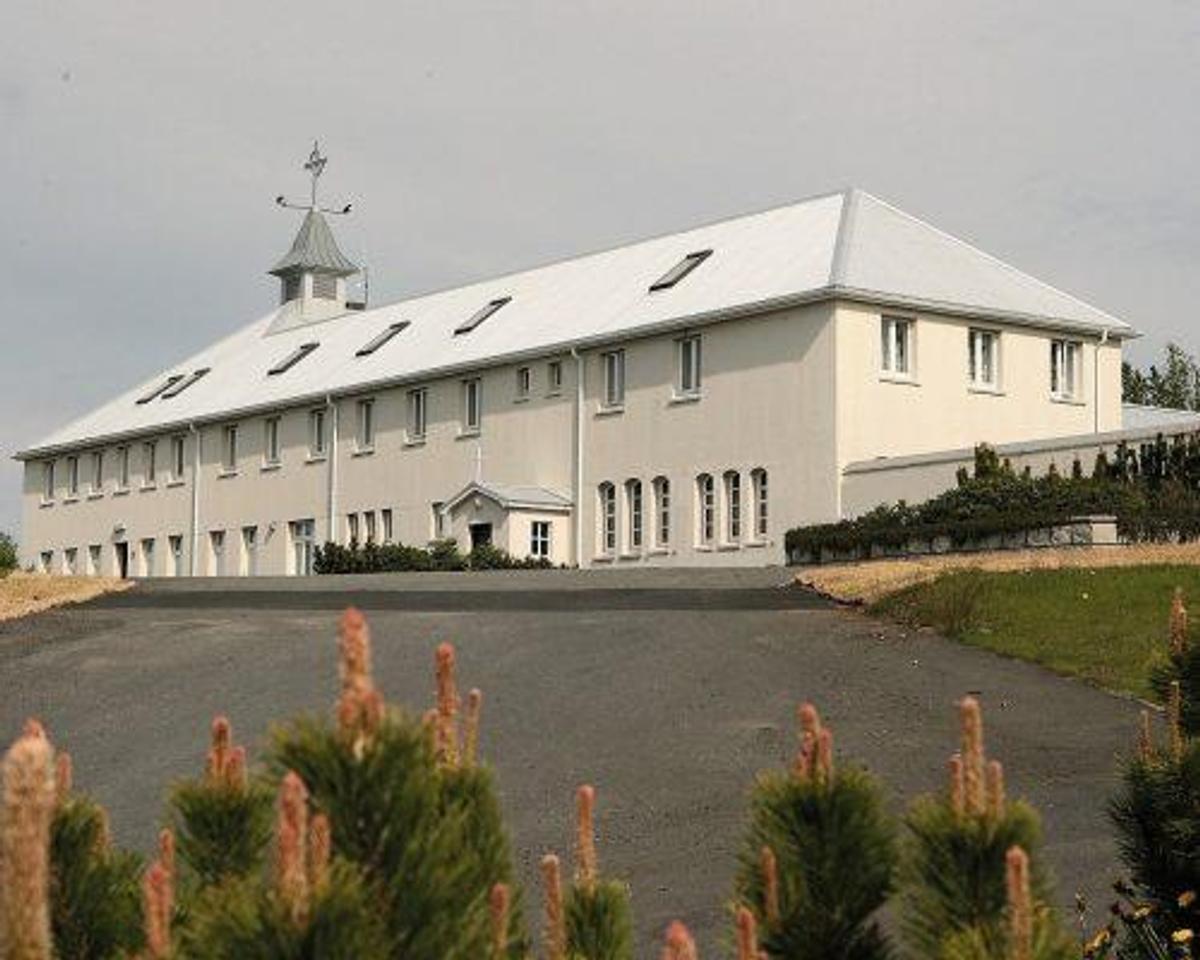
Kapella Karmelklaustursins
Kapella Karmelklaustursins is a historic Carmelite chapel in Hafnarfjörður, reflecting Iceland’s unique monastic heritage.
About
About Kapella Karmelklaustursins
Kapella Karmelklaustursins is a historic Carmelite chapel in Hafnarfjörður, reflecting Iceland’s unique monastic heritage.
A historic and spiritual site that reflects Iceland’s connection to international monastic traditions.
Tours Near Kapella Karmelklaustursins
Private Reykjavik LGBTQ+ City Walk
Your Friend in Reykjavik · 3 hours
Private Reykjavik City Tour
Icelimo Luxurytravel · 4 hours

Private 3 hour Reykjavik Driving Tour
Your Friend in Reykjavik · 3 hours
Private Reykjavik Shopping & Sightseeing Walking Tour
Your Friend in Reykjavik · 3 hours
Photos
Gallery
Background
History & Background
Kapella Karmelklaustursins is part of the Carmelite monastery established in Hafnarfjörður in 1939 by nuns from the Netherlands. After being displaced during World War II, the community returned in 1945, and the chapel was consecrated in 1946. In 1983, the Dutch Carmelite nuns left Iceland due to declining membership. The Diocese of Reykjavík assumed responsibility for the site until 1985, when a new group of Carmelite sisters from Poland took over. The community grew steadily, later contributing to the establishment of new Carmelite monasteries in Tromsø (1990) and Hannover (1998). Today, the chapel remains an active part of a contemplative religious community and an important example of Iceland’s religious heritage.
Kapella Karmelklaustursins is a historic chapel located in Hafnarfjörður, within Iceland’s Capital Region. It forms part of a Carmelite monastery and represents a unique connection between Iceland and the wider European tradition of contemplative monastic life. The chapel is closely tied to the arrival of Carmelite nuns from the Netherlands in 1939, who came to establish a religious community in Iceland. Their work was interrupted by World War II, forcing them to leave shortly after their arrival. They returned in 1945, and the monastery along with the chapel was formally consecrated in 1946. This marked the beginning of a continuous spiritual presence in the area. Architecturally, the chapel reflects simplicity and purpose rather than grandeur. Its design aligns with Carmelite values—minimal decoration, calm interior space, and an emphasis on quiet reflection. The building is integrated into the monastery complex, creating a cohesive environment centered around prayer and daily ritual. Over time, the community evolved. In 1983, the original Dutch nuns left due to a lack of new members, and responsibility for the building was transferred to the Diocese of Reykjavík. Two years later, a new group of Carmelite sisters from Poland revitalized the monastery, continuing its traditions and expanding its influence. Today, Kapella Karmelklaustursins stands as both a place of worship and a cultural landmark, reflecting resilience, continuity, and the blending of international religious traditions within Iceland.
Folklore
Story & Folklore
The story of Kapella Karmelklaustursins is one of movement, resilience, and continuity. When the first Carmelite nuns arrived in Iceland in 1939, their goal was to establish a quiet life of prayer in a new land. But history intervened, and the outbreak of war forced them to leave almost immediately. Years later, they returned and rebuilt what they had started. The chapel was blessed, and life within the monastery began to take shape again—structured, quiet, and deeply rooted in tradition. Decades passed, and the community changed. When the original group could no longer continue, another arrived from Poland, bringing new energy and continuation to the same place. Over time, the monastery became more than a single community—it became a link in a wider network of Carmelite life across Europe. Today, the chapel stands as a symbol of that continuity, where different generations and cultures have shared the same purpose within the same walls.
Did You Know?
The Carmelite monastery in Hafnarfjörður became a starting point for new monastic communities in both Norway and Germany.
Culture
Stories & Legends
Icelandic sagas and folklore from this area
Location
Location
Discover
Explore Nearby
Places within 5.0 km
Loading nearby places…
0 places found within 5.0 km
Plan full itinerary →Explore More