
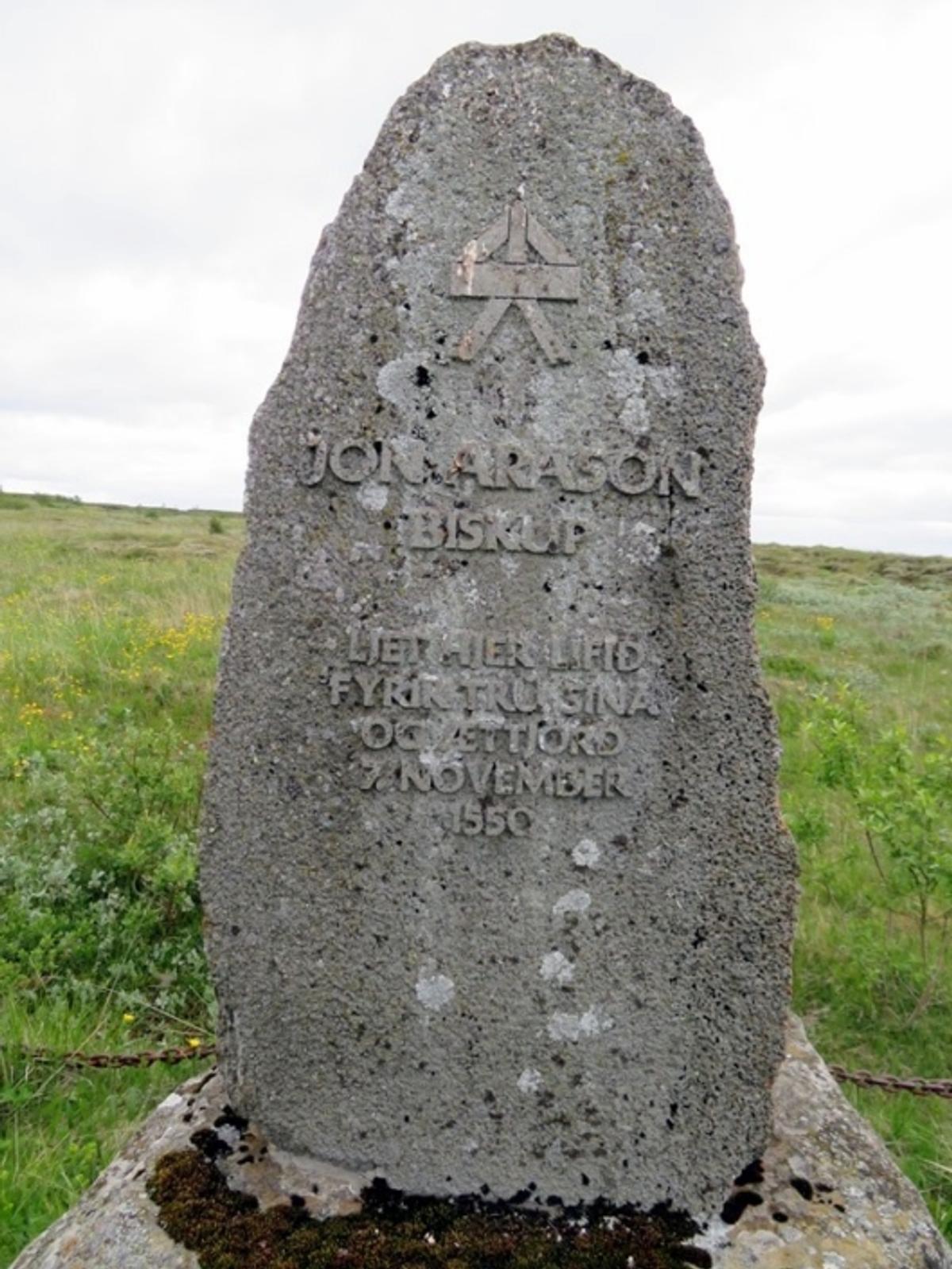
Jón Arason memorial
Memorial to Bishop Jón Arason, executed with two of his sons at Skálholt in 1550.
About
About Jón Arason memorial
Memorial to Bishop Jón Arason, executed with two of his sons at Skálholt in 1550.
Reflect on Iceland's turbulent Reformation era and honor a key figure who fought for his faith.
Tours Near Jón Arason memorial

South Coast Tour - Black Sand Beach, Plane wreck, Skogafoss, Seljalandsfoss guided in Chinese冰岛南岸黑沙滩飞机残骸中文一日团
Magic Iceland Travel · 10 hours 30 minutes
DT 322 Private Superjeep South Coast & Eyjafjallajökull Volcano Sights
Superjeep · 8 hours

South Coast Waterfalls, Glacier & Black Sand Beach Tour
BusTravel Iceland · 10 hours
South Coast Small Group Tour: Waterfalls, Glacier & Black Sand Beach
BusTravel Iceland · 10 hours
Photos
Gallery
Background
History & Background
The Jón Arason memorial stands as a testament to one of the most dramatic and consequential periods in Icelandic history: the Reformation. Jón Arason, born in 1484, became the Catholic Bishop of Hólar in 1522. He was a formidable figure, known not only for his religious leadership but also for his political acumen, literary talents, and even as a military leader. When King Christian III of Denmark began to impose the Lutheran Reformation on his territories, including Iceland, Jón Arason became the leading voice of resistance, fighting to preserve the Catholic faith and, by extension, Icelandic autonomy from Danish influence. Arason's resistance culminated in an armed struggle. He managed to maintain Catholic control over parts of Iceland for several years, even capturing his Protestant rival, Bishop Marteinn Einarsson. However, his fortunes turned when he was ambushed and captured along with his two sons, Björn and Ari, in October 1550. Despite widespread appeals for clemency, they were executed by beheading at Skálholt on November 7, 1550. The execution of Jón Arason and his sons marked the definitive end of Catholicism as the state religion in Iceland and the full establishment of Lutheranism. This event is considered a pivotal moment, not just religiously, but also politically, as it solidified Danish control over the island. The memorial, a simple yet powerful stone, stands to honor Arason's sacrifice and to remember the turbulent struggle for faith and independence that shaped the nation.
Jón Arason was bishop of Hólar and one of the principal opponents of the Lutheran Reformation in Iceland. He and his sons Ari and Björn were captured and executed at Skálholt on 7 November 1550. The memorial marks this major turning point in Icelandic religious and political history. It is a commemorative site rather than a developed attraction, so a short respectful visit is appropriate.
Folklore
Story & Folklore
Amidst the windswept grasslands of South Iceland stands a solitary stone, a silent sentinel to a tumultuous past. This memorial marks the tragic end of Jón Arason, Iceland's last Catholic bishop, who met his fate on November 7, 1550. His story is one of unwavering faith and fierce resistance against the Danish Crown's imposition of the Lutheran Reformation. As the inscription "LIEP HIER LÍFIÐ FYRIR TRÚ SÍNA" (Gave his life for his faith) attests, Arason chose defiance over conversion, leading a final, desperate stand. His execution, alongside his two sons, solidified the shift to Protestantism but also cemented his place as a martyr and a symbol of Icelandic autonomy against foreign rule. Visiting this simple yet profound monument offers a moment to connect with the echoes of a defining struggle that shaped the spiritual and political landscape of a nation.
Did You Know?
Jón Arason was not only a bishop but also a poet and skilled politician, whose execution marked the definitive end of Catholicism as the state religion in Iceland.
Culture
Stories & Legends
Icelandic sagas and folklore from this area
Mosfell
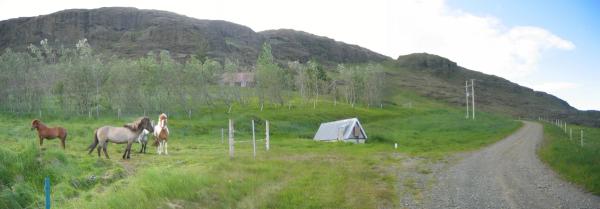
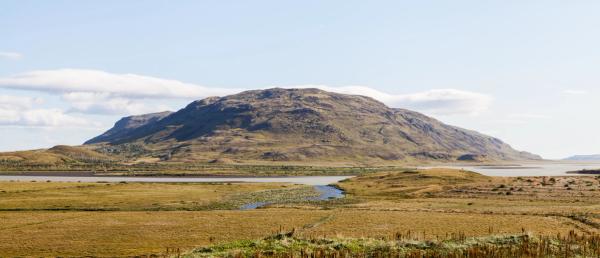
Mosfell is a historic location in Iceland mentioned in "Flóamanna saga", one of the ancient Íslendingasögur (Sagas of Icelanders). These medieval narratives preserve the history of Iceland's Viking Age settlement.
Skálholt
Skálholt is a historic location in Iceland mentioned in "Eyrbyggja saga", one of the ancient Íslendingasögur (Sagas of Icelanders). These medieval narratives preserve the history of Iceland's Viking Age settlement.
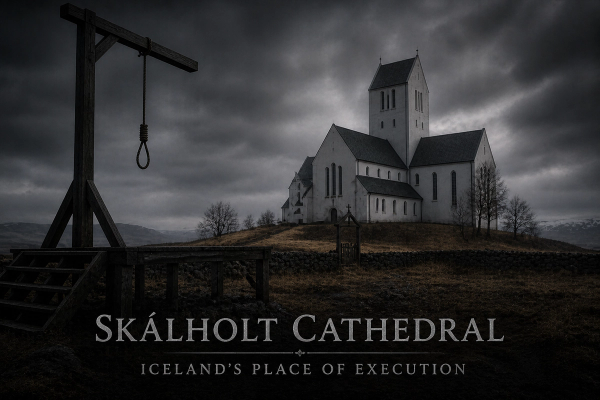
Skálholt – Ghosts of Iceland's Ancient Cathedral
For nearly eight centuries, Skálholt stood at the heart of Icelandic religious life, witnessing fires, earthquakes, political struggles and the bloody execution of Bishop Jón Arason and his sons, and with centuries of bishops, clergy and the dead buried beneath and around the cathedral grounds, it is perhaps unsurprising that Icelandic folklore has wrapped the ancient site in tales of shadowy figures, unexplained footsteps and restless spirits that seem reluctant to leave one of the country's most sacred and historically powerful places.
Explore
Hidden Gems Nearby
Skálholt Cathedral
Just a short drive from the memorial, Skálholt was one of Iceland's two historic bishoprics and the site of Jón Arason's execution. Today, a beautiful modern cathedral stands there.
It offers a profound historical context to Arason's story and the Icelandic Reformation.
Help
Frequently Asked Questions
Location
Location
Discover
Explore Nearby
Places within 5.0 km
Loading nearby places…
0 places found within 5.0 km
Plan full itinerary →Explore More