
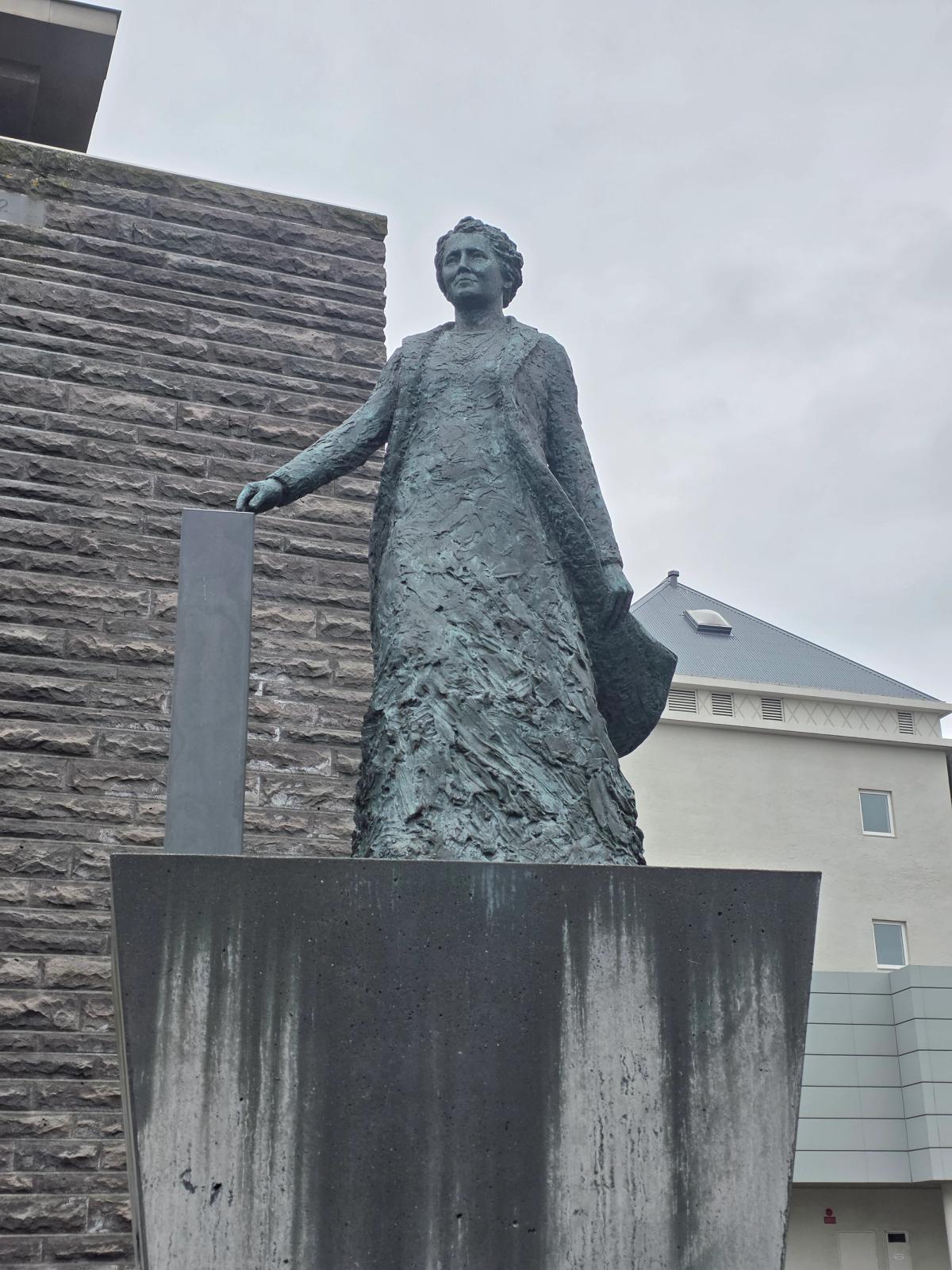
Ingibjörg H. Bjarnason
A striking bronze statue honoring Ingibjörg H. Bjarnason, Iceland's first female parliamentarian.
About
About Ingibjörg H. Bjarnason
A striking bronze statue honoring Ingibjörg H. Bjarnason, Iceland's first female parliamentarian.
Discover the powerful story of Iceland's first female parliamentarian, a symbol of progress and equality.
Tours Near Ingibjörg H. Bjarnason
Private Reykjavik LGBTQ+ City Walk
Your Friend in Reykjavik · 3 hours
Private Reykjavik City Tour
Icelimo Luxurytravel · 4 hours

Private 3 hour Reykjavik Driving Tour
Your Friend in Reykjavik · 3 hours
Private Reykjavik Shopping & Sightseeing Walking Tour
Your Friend in Reykjavik · 3 hours
Photos
Gallery
Background
History & Background
Ingibjörg H. Bjarnason (1867–1941) was a formidable Icelandic educator, suffragist, and politician. Her early life was dedicated to education, founding and leading the Kvennaskólinn í Reykjavík (Women's College in Reykjavík), which became a crucial institution for female empowerment. She was a prominent figure in the Icelandic women's suffrage movement, advocating tirelessly for women's right to vote and hold public office. Her efforts culminated in a historic achievement when, in 1922, she became the first woman ever elected to the Althing, the Icelandic Parliament. This moment marked a significant turning point for gender equality in Iceland, solidifying the nation's progressive stance on women's political participation. Bjarnason served as a Member of Parliament for four years, during which she continued to champion social reforms and educational advancements. The statue, unveiled in 2011, ensures her enduring legacy is visibly celebrated, inspiring future generations with her commitment to justice and progress.
The statue of Ingibjörg H. Bjarnason is a significant public artwork located in the heart of Reykjavík, commemorating a pivotal figure in Icelandic history. Crafted by the renowned Icelandic sculptor Ragnar Kjartansson and unveiled in 2011, the bronze statue depicts Bjarnason in a long, flowing dress, her left hand resting gently on a dark, minimalist pillar that forms part of the plinth. The statue's surface is intentionally textured, giving it a weathered, almost organic feel that contrasts with the smooth, modern lines of the surrounding architecture and the rough-hewn stone wall behind it. This artistic choice imbues the figure with a sense of timelessness and resilience. Visitors are invited to reflect on Ingibjörg H. Bjarnason's extraordinary life and contributions. As Iceland's first female member of parliament, elected in 1922, she was a fierce advocate for women's rights and education. Her presence here, near the Althing building, serves as a powerful reminder of the nation's journey towards gender equality and its commitment to recognizing its trailblazers. The statue stands on a dark, geometric pedestal, grounding her firmly in the urban landscape while elevating her status. It's a contemplative spot, offering a chance to connect with a vital piece of Icelandic heritage amidst the bustling capital.
Folklore
Story & Folklore
Standing tall against the often-dramatic Icelandic sky, the statue of Ingibjörg H. Bjarnason embodies the quiet strength of a true pioneer. Her bronze form, rich with texture, seems to ripple with the very fabric of history she helped weave. Imagine the year 1922, when this remarkable woman stepped into the male-dominated halls of the Althing, not just as a representative, but as a beacon of hope for women across the nation. Her gaze, captured in the metal, looks forward, a testament to her vision for a more equitable society. This artwork isn't merely a likeness; it's a tangible connection to a pivotal moment, inviting contemplation on the journey of progress and the individuals who bravely forged the path. As you stand before her, you can almost feel the echoes of her speeches and the weight of the change she inspired, making this more than just a statue—it's a silent storyteller.
Did You Know?
Ingibjörg H. Bjarnason was the first woman ever elected to the Althing (Icelandic Parliament) in 1922, a monumental step for women's suffrage.
Culture
Stories & Legends
Icelandic sagas and folklore from this area
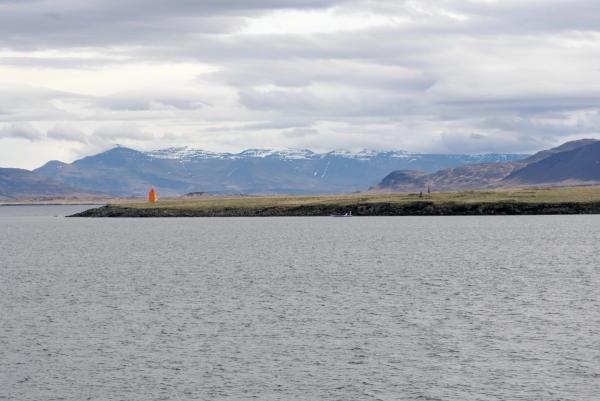
Engey
Engey is a historic location in Iceland mentioned in "Njáls saga", one of the ancient Íslendingasögur (Sagas of Icelanders). These medieval narratives preserve the history of Iceland's Viking Age settlement.
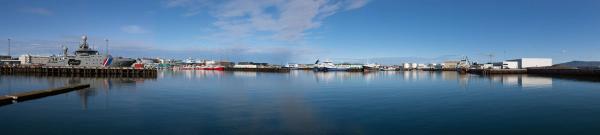
Reykjavík
Reykjavík is a historic location in Iceland mentioned in "Harðar saga og Hólmverja", one of the ancient Íslendingasögur (Sagas of Icelanders). These medieval narratives preserve the history of Iceland's Viking Age settlement.
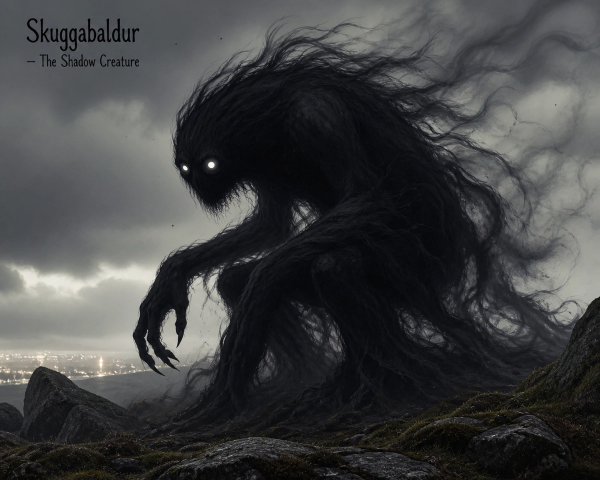
Skuggabaldur – The Shadow Creature
Skuggabaldur: A phantom dog guarding forgotten paths.
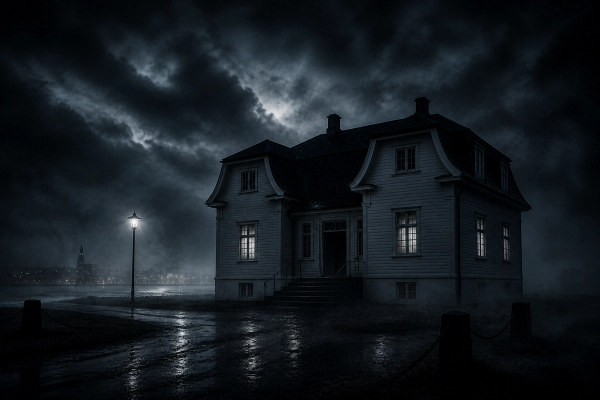
Höfði House – Reykjavík's Haunted Mansion
Höfði House: Reykjavík's historic mansion with a chilling paranormal past.
Explore
Hidden Gems Nearby
Alþingishúsið (Parliament House)
Located just a short walk from the statue, the historic Alþingishúsið is where Ingibjörg H. Bjarnason made history. Its architecture and political significance make it a powerful complement to her story.
Understand the context of her groundbreaking achievement by seeing the building she served in.
Dómkirkjan (Reykjavík Cathedral)
Adjacent to the Parliament, this beautiful cathedral is one of Iceland's oldest churches and a hub of national events. Its proximity highlights the historical heart of Reykjavík.
Experience the spiritual and historical core of the city near where key political decisions were made.
Help
Frequently Asked Questions
Location
Location
Discover
Explore Nearby
Places from our database within 5.0 km — all data from Sanity
Loading nearby places…
0 places found within 5.0 km
Plan full itinerary →Explore More