
Hjaltastaðakirkja
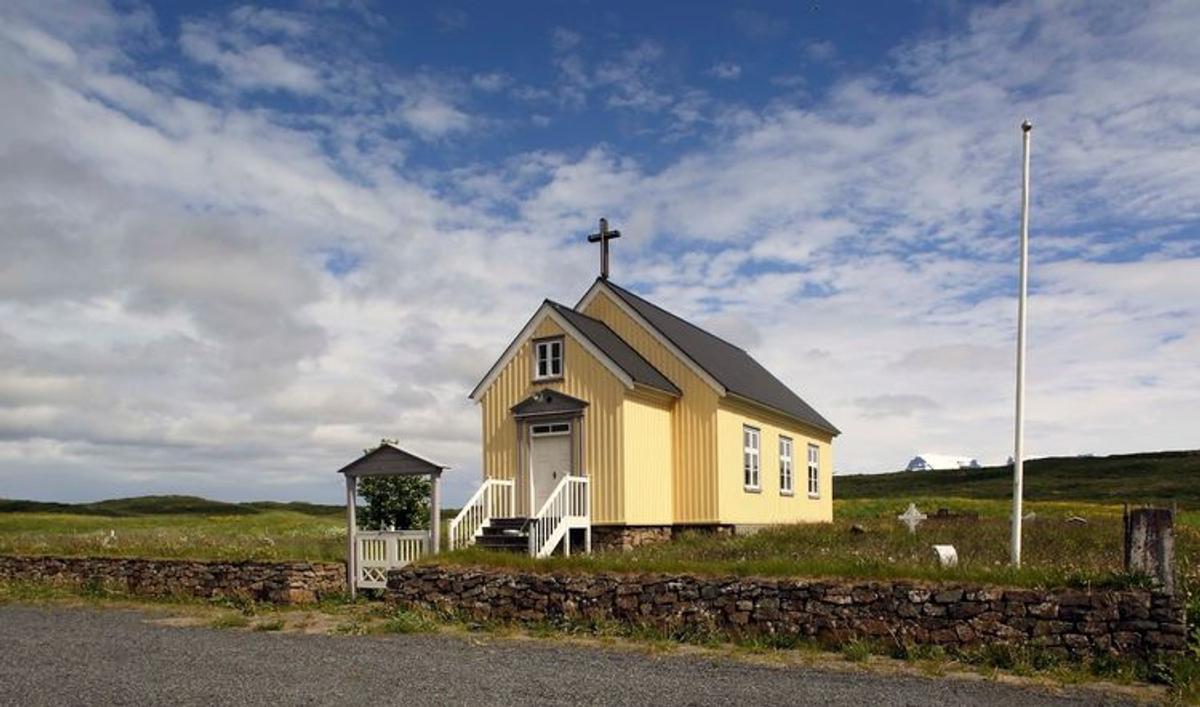
A charming yellow timber church, Hjaltastaðakirkja offers a glimpse into Iceland's spiritual past.
About
About Hjaltastaðakirkja
A charming yellow timber church, Hjaltastaðakirkja offers a glimpse into Iceland's spiritual past.
Discover a charming, historic Icelandic timber church with fascinating stories and serene surroundings.
Photos
Gallery
Background
History & Background
The site of Hjaltastaðir has a long ecclesiastical history, serving as a parsonage (prestssetur) until 1919 when the parish merged with Kirkjubær. In Catholic times, a church dedicated to Mary, the Mother of God, stood here. The current Hjaltastaðakirkja, a distinctive iron-clad timber church, was consecrated in 1881. It features an altarpiece from the early 19th century depicting Christ in Gethsemane, a significant piece within its modest interior. Hjaltastaðakirkja holds a protected status and has undergone extensive renovations over the last decade, with architects Hjörleifur Stefánsson and landscape architect Guðmundur Rafn Sigurðsson overseeing the preservation of both the church and its surrounding cemetery. The church is also famously associated with Jón lærði Guðmundsson (1574-1658), a renowned Icelandic scholar and magician, and his wife Sigríður, who are believed to be buried outside the church doors. Their son, Guðmundur, also served as a priest at Hjaltastaðir. Another intriguing historical detail is that Jón lærði's beautifully decorated pulpit resided in Hjaltastaðakirkja for a remarkable 200 years before it was eventually removed and sold, adding to the church's rich tapestry of stories.
Hjaltastaðakirkja is a beautifully preserved yellow timber church located in the scenic East Iceland region, offering a serene glimpse into the country's rich religious and architectural heritage. Consecrated in 1881, the current structure replaced earlier churches on a site that served as a parsonage until 1919. The church, with its distinctive dark roof, white trim, and a simple cross, stands gracefully on a gentle rise, surrounded by a stone wall and a green churchyard dotted with gravestones and wildflowers. Inside, visitors can admire a notable 19th-century altarpiece portraying Christ in Gethsemane, a poignant piece of art that has inspired worshippers for generations. The church holds a special place in Icelandic history, being a protected site that has undergone careful renovations to preserve its charm. It's also linked to the legendary scholar Jón lærði Guðmundsson and his family, adding a layer of historical intrigue. A visit here offers not just architectural appreciation but a moment of quiet reflection amidst Iceland's stunning natural beauty.
Folklore
Story & Folklore
Imagine a crisp Icelandic morning, the air fresh and the only sounds the rustle of grass and distant birdsong. You approach Hjaltastaðakirkja, its bright yellow facade a beacon against the rolling green landscape and dramatic cloudy sky. The white steps invite you up to the modest entrance, hinting at centuries of quiet devotion within. This is not just a building; it's a living echo of history, where generations have gathered for solace and community. Picture the famed scholar Jón lærði Guðmundsson, perhaps walking these very grounds, his spirit still lingering near the ancient graveyard where he and his wife are said to rest. The church, with its simple cross reaching towards the heavens, stands as a resilient guardian of faith and folklore in the heart of East Iceland.
Did You Know?
The current Hjaltastaðakirkja, built in 1881, houses a 19th-century altarpiece depicting Christ in Gethsemane, a testament to its enduring spiritual legacy.
Culture
Stories & Legends
Icelandic sagas and folklore from this area
Explore
Hidden Gems Nearby
The Altar Piece
Inside the Hjaltastaðakirkja, discover a poignant 19th-century altarpiece depicting Christ in Gethsemane. Its artistic detail and spiritual significance offer a moment of quiet reflection.
It's a beautiful example of religious art from the period and a central feature of the church's interior.
Jón lærði Guðmundsson's Burial Site
Explore the churchyard to find the supposed burial spot of the famous scholar Jón lærði Guðmundsson and his wife, located just outside the main church doors. This historical detail connects you directly to Icelandic folklore and history.
It offers a unique historical connection to a legendary figure and a glimpse into past burial customs.
The Old Pulpit's Legacy
While no longer present, reflect on the fact that Jón lærði's beautifully decorated pulpit stood in Hjaltastaðakirkja for 200 years before being sold. Imagine its intricate carvings and the sermons delivered from it.
It highlights a fascinating piece of the church's history and the changing fortunes of its artifacts.
Help
Frequently Asked Questions
Location
Location
Discover
Explore Nearby
Places within 5.0 km
Loading nearby places…
0 places found within 5.0 km
Plan full itinerary →Explore More