
Garðakirkja
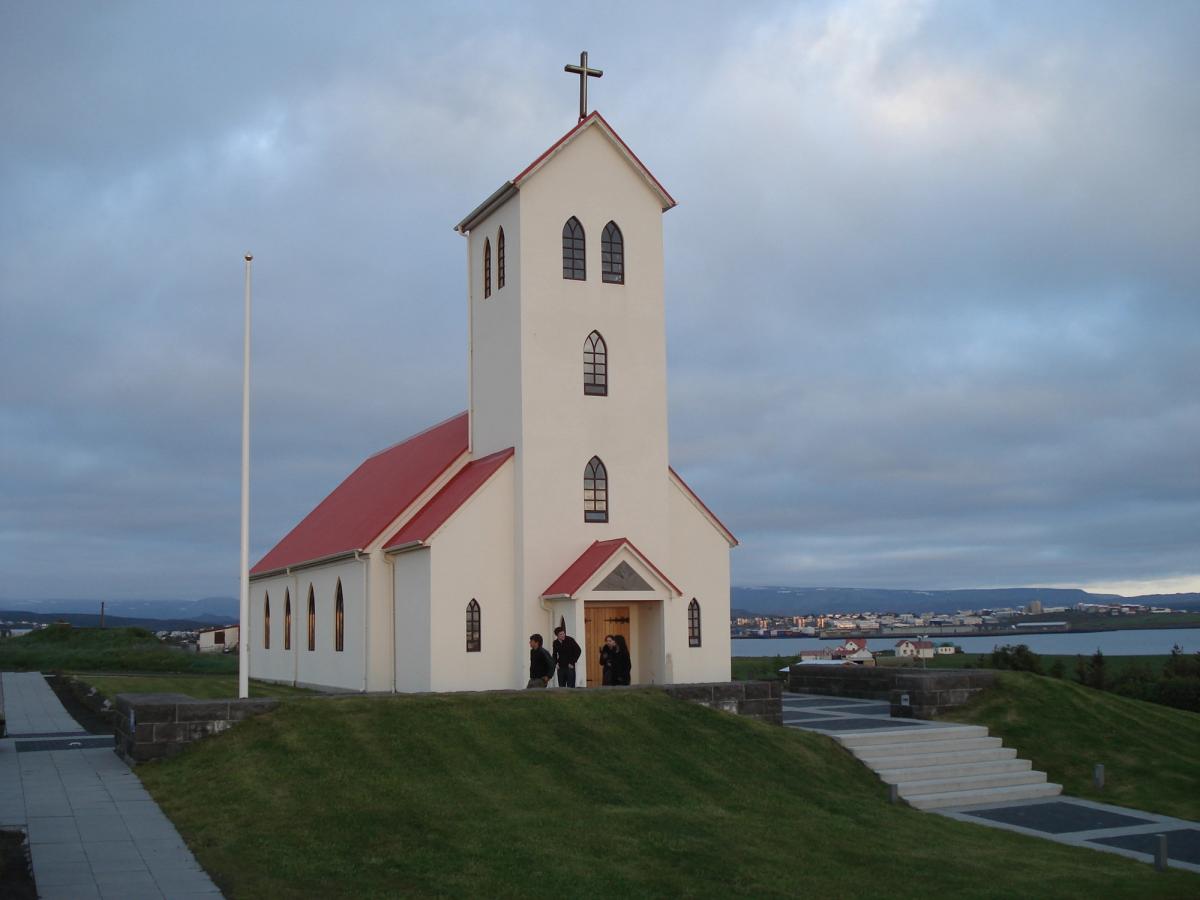
Iconic white church with a striking red roof, perched on a green hill overlooking the sea.
About
About Garðakirkja
Iconic white church with a striking red roof, perched on a green hill overlooking the sea.
Discover a resilient piece of Icelandic heritage with stunning views and a compelling story of community restoration.
Tours Near Garðakirkja
Private Reykjavik LGBTQ+ City Walk
Your Friend in Reykjavik · 3 hours
Private Reykjavik City Tour
Icelimo Luxurytravel · 4 hours

Private 3 hour Reykjavik Driving Tour
Your Friend in Reykjavik · 3 hours
Private Reykjavik Shopping & Sightseeing Walking Tour
Your Friend in Reykjavik · 3 hours
Photos
Gallery
Background
History & Background
Garðakirkja's history is a compelling narrative of construction, decline, and inspiring resurrection. The church was originally built between 1879 and 1880, a testament to the local community's faith and craftsmanship, using stacked stone quarried from the very hill it now adorns. Bishop Pétur Sigurgeirsson formally consecrated the church on the second day of Whitsun, establishing it as a spiritual cornerstone for the Garðar parish within the Kjalarnes deanery. However, its active service was relatively short-lived. On December 20, 1914, with the consecration of a new, larger church in nearby Hafnarfjörður, Garðakirkja was officially decommissioned. Over the subsequent decades, the church fell into disrepair, eventually becoming little more than ruins. This period of neglect lasted for nearly a quarter of a century, leaving the once proud structure exposed to the harsh Icelandic elements. The turning point came in early 1953, when a determined group of women from the Garðahreppur district took the initiative to restore the dilapidated church. Their unwavering commitment and tireless efforts led to a complete rebuilding of Garðakirkja. The painstaking restoration culminated in its re-consecration by the bishop on March 20, 1966. This significant date also marked the 300th anniversary of the birth of Jón Vídalín, a prominent Icelandic bishop and scholar, adding another layer of historical resonance to the church's revival.
Garðakirkja, a picturesque white church crowned with a vibrant red roof and a prominent cross, stands proudly on a gentle green hill in the Reykjanes region. Its elegant arched windows and sturdy stone base evoke a sense of timeless charm. Originally constructed between 1879 and 1880, the church was consecrated by Bishop Pétur Sigurgeirsson. Uniquely, its walls were fashioned from stacked stone gathered directly from the very hill it now occupies, grounding it deeply to the Icelandic landscape. However, its journey was not without challenge. Following the consecration of a new church in nearby Hafnarfjörður in 1914, Garðakirkja was officially decommissioned. For nearly a quarter of a century, it lay in ruins, a desolate shell against the dramatic Icelandic sky. It wasn't until 1953 that a remarkable initiative began: women from the local Garðahreppur community took it upon themselves to restore their cherished landmark. Their dedication led to a complete reconstruction, culminating in its re-consecration by the bishop on March 20, 1966, marking 300 years since the birth of the revered Icelandic bishop and scholar Jón Vídalín. Today, visitors can admire the church's simple yet striking architecture, enjoy the tranquil atmosphere, and take in the panoramic views over the adjacent water and the distant town, which appears as a cluster of buildings and industrial structures across the bay under the often dramatic Icelandic sky. The paved walkways and steps leading up to the church invite a contemplative stroll, making it a perfect spot for reflection and appreciating local history and community spirit.
Folklore
Story & Folklore
Perched atop a verdant knoll, Garðakirkja stands as a beacon of enduring faith and community resolve. Imagine the parishioners in the late 19th century, meticulously stacking local stone to erect this charming white edifice with its vibrant red roof. For decades, it served as a spiritual heart. Yet, fate intervened in 1914, and the church was formally decommissioned, slowly succumbing to the elements, becoming little more than ruins. But the story doesn't end there. In the early 1950s, a group of determined women from Garðahreppur refused to let their beloved church fade into history. Their tireless efforts breathed new life into the crumbling structure. Rebuilt and re-consecrated in 1966, Garðakirkja today is more than just a building; it's a monument to perseverance, a quiet testament to the power of a community united in purpose, offering solace and breathtaking views across the water.
Did You Know?
Garðakirkja, once decommissioned and left in ruins for a quarter-century, was lovingly rebuilt by local women in the 1950s and re-consecrated in 1966.
Culture
Stories & Legends
Icelandic sagas and folklore from this area
Explore
Hidden Gems Nearby
Panoramic Coastal Views
From the church grounds, enjoy sweeping vistas over the adjacent water, likely the Faxaflói bay, and the distant urban landscape of Hafnarfjörður. The interplay of green hills, blue water, and distant town creates a quintessential Icelandic scene.
It offers a serene and picturesque backdrop, perfect for photography and quiet contemplation.
Architectural Details
Take a moment to appreciate the church's simple yet elegant architecture, from its distinctive arched windows with their grid patterns to the robust stacked stone walls that form its foundation, sourced directly from the local hill.
These details highlight the craftsmanship and local materials used in its construction and restoration.
The Flagpole's Quiet Presence
To the left of the church, a tall, slender flagpole stands sentinel. While seemingly minor, its stark white form against the often dramatic Icelandic sky adds to the serene, contemplative atmosphere of the church grounds, symbolizing national pride and endurance.
It adds to the solemn and reflective ambiance of the church's setting.
Help
Frequently Asked Questions
Location
Location
Discover
Explore Nearby
Places from our database within 5.0 km — all data from Sanity
Loading nearby places…
0 places found within 5.0 km
Plan full itinerary →Explore More