east-iceland · Iceland
Fnjóskárbrú
About Fnjóskárbrú
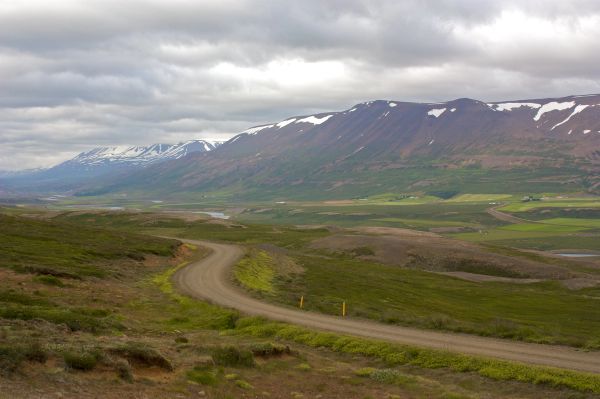
Spanning the swift Fnjóská river, Fnjóskárbrú is an elegant concrete arch bridge, a picturesque landmark on a scenic drive through North Iceland. Its gentle curve complements the rolling, verdant hills and the lively river below, offering a tranquil stop for photographers and nature lovers.
History & Background
The Fnjóská river has long been a significant natural barrier in North Iceland, necessitating reliable crossings for local communities and travelers. The first notable bridge over Fnjóská, a suspension bridge, was constructed in 1908, a considerable feat of engineering for its time, dramatically improving connectivity in the region. Over the decades, as traffic and engineering capabilities evolved, the need for more robust and modern structures became apparent. The current Fnjóskárbrú, a distinctive concrete arch bridge, represents a later phase of infrastructure development. Its construction was a testament to Iceland's ongoing commitment to building durable and aesthetically pleasing links across its challenging terrain, ensuring safe and efficient passage through the picturesque Fnjóskadalur valley.
Did You Know?
- ✔Fnjóskárbrú is one of many interesting sites in east-iceland
- ✔Iceland's diverse landscape makes every region unique and worth exploring
- ✔The best way to experience Iceland is to venture off the beaten path
Tours Near Fnjóskárbrú
Best-rated Iceland experiences — book with free cancellation


Why Visit
Experience the harmonious blend of modern engineering and untouched nature, perfect for a memorable photo stop.
Did You Know?
The Fnjóskárbrú bridge, with its distinctive concrete arch, stands as a testament to Icelandic engineering, providing a vital link across the Fnjóská river in a valley known for its unique forested areas.
The Whispering Waters of Fnjóská
Locals say that on quiet, misty mornings, if you listen closely while standing on Fnjóskárbrú, you can hear the Fnjóská river whispering ancient sagas and forgotten tales. Some believe these are the voices of hidden folk, protecting the valley's precious forests and ensuring safe passage for those who respect the land.
📖 Stories & Legends
Icelandic sagas and folklore from this area
Hidden Gems Nearby
Vaglaskógur Forest
Just a short drive from Fnjóskárbrú, Vaglaskógur is one of Iceland's largest and most beautiful forests, offering marked hiking trails and picnic spots. It's a rare treat to find such dense woodland in Iceland.
Explore a unique Icelandic forest, perfect for a peaceful walk or picnic amidst diverse flora.
Goðafoss Waterfall
A bit further east along the Ring Road, Goðafoss is a spectacular horseshoe-shaped waterfall known as the "Waterfall of the Gods," where lawspeaker Þorgeir Ljósvetningagoði famously cast his pagan idols into the falls.
Witness one of Iceland's most iconic and historically significant waterfalls, a powerful natural wonder.
Practical Information
Best Time
Late Spring to Early Autumn (May-September)
Duration
15-30 minutes
Access
Paved road (part of Route 84, connecting to Ring Road 1), easily accessible by all vehicle types.
Frequently Asked Questions
Is there an entry fee to visit Fnjóskárbrú?▾
No, there is no entry fee to visit Fnjóskárbrú. It is a public bridge and part of the road network in North Iceland.
Is parking available at Fnjóskárbrú?▾
Yes, there are small pull-off areas near the bridge where visitors can safely park their vehicles for a short stop and to take photos.
Can I walk across Fnjóskárbrú?▾
Yes, the bridge has sidewalks or shoulders suitable for pedestrians, allowing you to walk across and enjoy the views of the Fnjóská river and the surrounding valley.
What is the best time of year to visit Fnjóskárbrú for photography?▾
Late spring to early autumn (May to September) offers the best conditions for photography, with lush green landscapes and often dramatic skies. Early mornings or late afternoons can provide beautiful light.
Are there any facilities near Fnjóskárbrú, like restrooms or food?▾
Fnjóskárbrú is in a rural area, so there are no dedicated facilities like restrooms or restaurants directly at the bridge. The nearest services would be in larger towns like Akureyri or settlements along Route 1.