
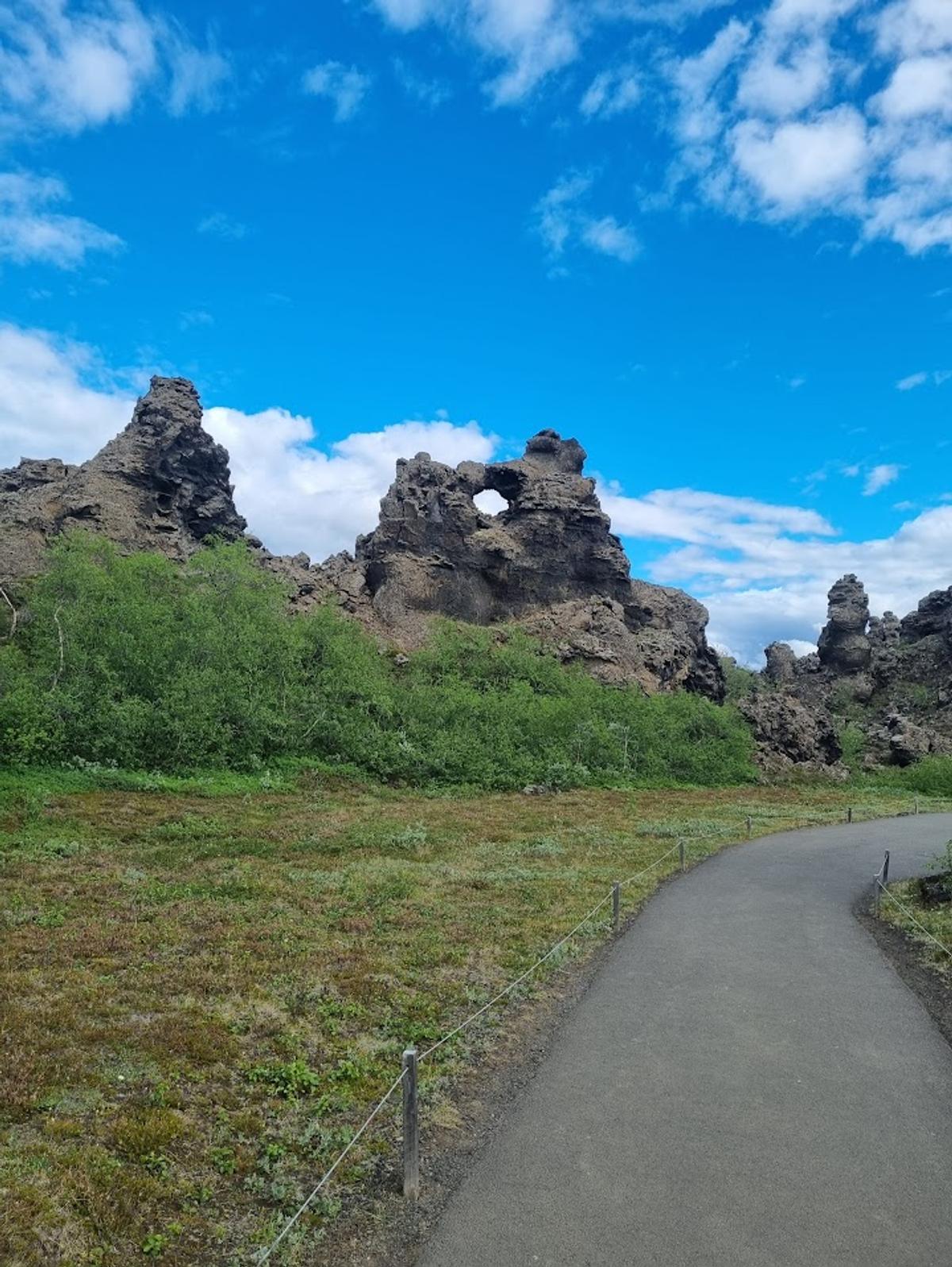
Dimmuborgir
Dimmuborgir — 'Dark Castles' — is an otherworldly landscape of twisted, cave-like lava formations near Lake Mývatn, created when a lava lake overflowed and cool…
About
About Dimmuborgir
Dimmuborgir — 'Dark Castles' — is an otherworldly landscape of twisted, cave-like lava formations near Lake Mývatn, created when a lava lake overflowed and cooled in bizarre shapes around water-filled earth.
Witness the otherworldly, intricate lava sculptures of Dimmuborgir, a geological marvel unlike any other.
Tours Near Dimmuborgir
Lake Myvatn and Godafoss Waterfall Day Tour from Akureyri
Imagine Iceland Travel · 8 hours
Diamond Circle Day Tour from Akureyri or Lake Myvatn
Imagine Iceland Travel · 9 hours
Lake Mývatn Shore Excursion from Akureyri Port - Spanish
Iceland Horizon - Saga Travel - GeoIceland · 6 hours
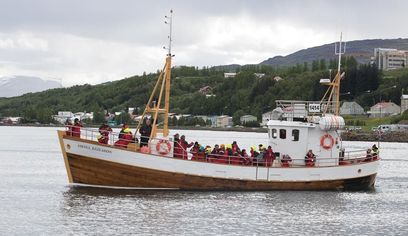
Whale Watching Tour w/ Transfer from Akureyri
Keli sea tours ehf · 4 hours
Photos
Gallery
Background
History & Background
The lava formations at Dimmuborgir were created approximately 2,300 years ago when flowing lava encased water and tree trunks. As steam escaped from below, it created the hollow columns and gothic arch formations. In Icelandic folklore, Dimmuborgir is said to be where the Yule Lads — the 13 mischievous Icelandic Christmas characters — live with their scary mother Grýla and the Yule Cat.
Dimmuborgir, aptly named "Dark Castles" or "Dark Cities" in Icelandic, presents one of Iceland's most unique and dramatic landscapes. Situated majestically to the east of the serene Lake Mývatn in North Iceland, this striking area is renowned for its unusually shaped lava formations. These ancient geological structures create a truly otherworldly environment, often described as resembling a collapsed dark citadel under the vast, ever-changing Icelandic sky. Visitors to Dimmuborgir can embark on several well-marked trails that wind through this natural labyrinth. As you explore, you'll encounter a fascinating array of lava pillars, arches, and caves, each sculpted by the forces of a powerful volcanic eruption millennia ago. The formations are the result of a lava lake that cooled unevenly, leaving behind these hollow structures when the surface crust collapsed. This process created the unique "castles" and "cities" that give Dimmuborgir its evocative name. It's a place where imagination takes flight, as you identify shapes and figures within the natural rock. Beyond its geological marvels, Dimmuborgir invites contemplation on the immense power of nature. It's a photographer's paradise, offering stunning contrasts between the dark lava, green moss, and the sky above. Dress in layers and wear sturdy footwear, as trails can be uneven. Allow ample time to wander and absorb the profound beauty and geological significance of this remarkable Icelandic treasure.
Folklore
Story & Folklore
Under the expansive Icelandic sky, Dimmuborgir whispers tales of ancient fire and earth. As you step into this labyrinth, towering lava pillars and grottoes rise around you, forming an intricate, silent city of stone. The air hums with geological history, each twisted formation a testament to nature's raw, creative power. It feels as if a colossal fortress, forged from the earth's molten heart, has crumbled here, leaving behind majestic, dark ruins. The 'Dark Castles' stand defiantly, their shadows stretching long as the sun dips, painting the unique landscape in hues of mystery and wonder. Visitors wander through this petrified kingdom, exploring hidden passages and dramatic arches, awe-struck by the sheer scale and artistry of these natural sculptures. It’s a profound journey into Iceland's volcanic soul, where the earth itself tells its epic story.
Did You Know?
Dimmuborgir translates to "Dark Castles" or "Dark Cities" in Icelandic, perfectly capturing its imposing, ancient appearance.
Culture
Stories & Legends
Icelandic sagas and folklore from this area
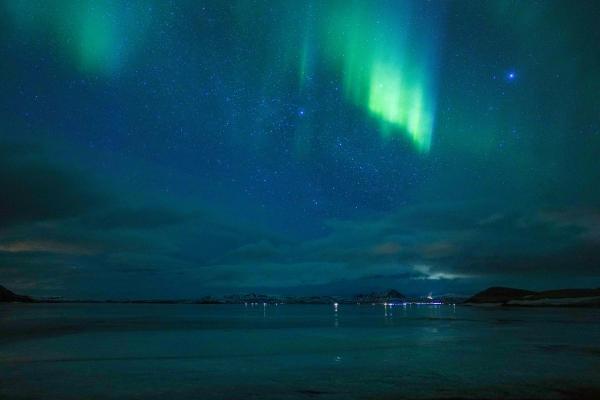
Mývatn
Mývatn: A lake of fire, ice, and mythical beings.
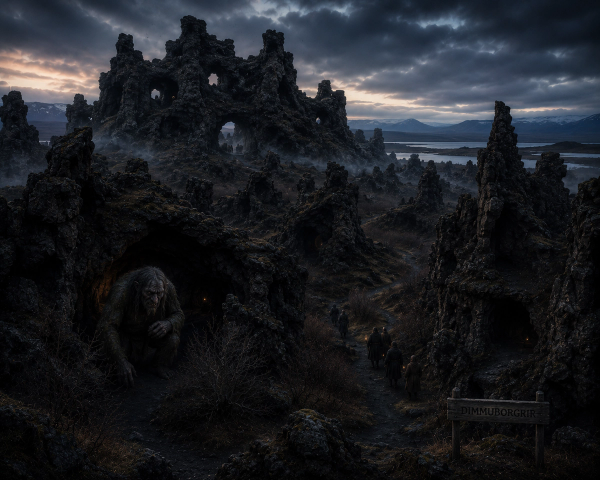
Dimmuborgir – The Dark Fortress of North Iceland
Discover Dimmuborgir, a volcanic wonderland where legends of trolls and the devil still echo.
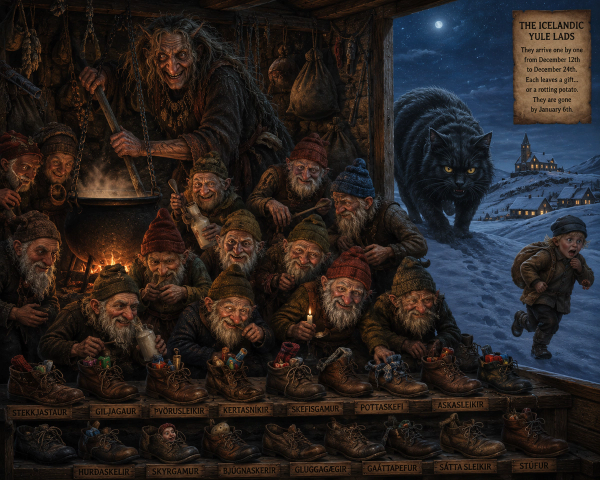
Grýla, the Yule Lads & the Yule Cat
Beware Grýla! The Yule Lads & their terrifying feline nemesis.
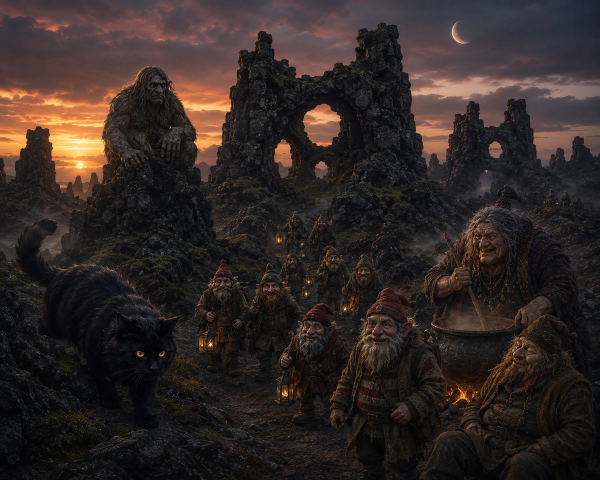
Dimmuborgir – City of Trolls
Explore Dimmuborgir, where volcanic rock formations become a mystical city for trolls.
Explore
Hidden Gems Nearby
Lava Formations Close-Up
Look carefully at the lava formations near Dimmuborgir — each tells a story of how it cooled.
Rope lava, pillow lava, and columnar basalt each formed under different conditions, creating a geological textbook in stone.
Moss & Lichens
The moss and lichen growing on the volcanic rock are some of the first life to colonize new lava fields.
Some of these organisms grow less than 1cm per year, meaning the patches you see may be decades or centuries old.
Sunset Colors
The volcanic rock takes on incredible red and gold hues during sunset.
The iron-rich minerals in the lava glow in warm light, creating a photographer's paradise.
Help
Frequently Asked Questions
Location
Location
Discover
Explore Nearby
Places from our database within 5.0 km — all data from Sanity
Loading nearby places…
0 places found within 5.0 km
Plan full itinerary →Explore More