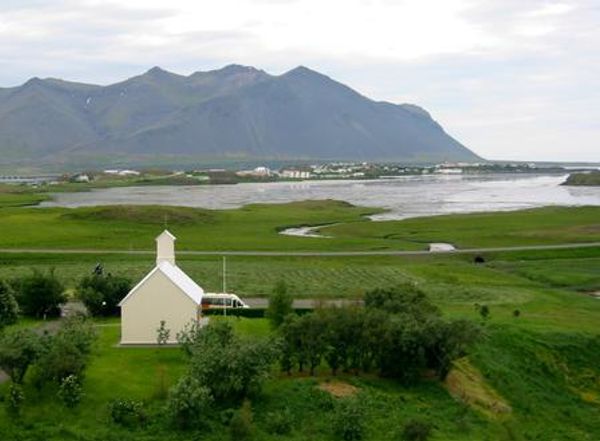
south-iceland · Iceland
Kirkjubæjarklaustur
About Kirkjubæjarklaustur
Nestled amidst dramatic lava fields and vibrant greenery, Kirkjubæjarklaustur offers a captivating blend of ancient history and stunning natural wonders. This small village, steeped in monastic tales and geological marvels, serves as a vital hub for adventurers exploring South Iceland.
History & Background
The area around Kirkjubæjarklaustur boasts a rich and ancient history, with some evidence suggesting that Irish monks, known as 'Papar,' may have settled here even before the Norsemen. According to the Landnámabók (Book of Settlement), the site was considered sacred, and it was believed that no pagan could reside there; a pagan named Hildir Eysteinsson reportedly died instantly upon attempting to settle in the 10th century, becoming interred in Hildishaugur. A pivotal moment in the village's history was the establishment of a Benedictine convent at Kirkjubær in 1186. This was Iceland's first female monastery, operating as a significant cultural and literary center until the Reformation in 1550. The convent's legacy is deeply embedded in the local landscape, inspiring names such as Systrafoss (Sisters' Falls), Systravatn (Sisters' Lake), and Systrastapi (Sisters' Rock). Kirkjubæjarklaustur also holds a remarkable place in the annals of Icelandic resilience. During the catastrophic Lakagígar eruption of 1783, a massive lava flow threatened to engulf the village. It was miraculously spared when the lava stopped just short of the local church, an event widely attributed to the powerful 'Fire Sermon' delivered by Reverend Jón Steingrímsson, a story that continues to resonate with visitors.
Did You Know?
- It was home to Iceland's first female Benedictine convent, established in 1186.
- The village miraculously survived the 1783 Lakagígar eruption due to the 'Fire Sermon'.
- Features Kirkjugólfið ('The Church Floor'), a natural basalt column formation resembling a tiled floor.
- Its name means 'church farm convent', reflecting its deep monastic history.
- The area may have been settled by Irish monks, known as 'Papar', before the Norsemen.
Tours Near Kirkjubæjarklaustur
Best-rated Iceland experiences — book with free cancellation


Why Visit
Explore a historic village famed for its monastic past and unique geological wonders, including basalt columns.
Did You Know?
During the catastrophic 1783 Lakagígar eruption, a lava flow miraculously stopped just short of the village church, an event attributed to the 'Fire Sermon' by Reverend Jón Steingrímsson.
Las Hermanas de Kirkjubæjarklaustur: Leyendas de Systrafoss y Systrastapi
Folklore tells of two nuns from the ancient convent, executed for sinful behavior, buried at Systrastapi; flowers bloom on the grave of the vindicated nun, while the other's remains barren. Another legend speaks of nuns drowning in Systravatn while attempting to retrieve a golden comb from its depths.
Stories & Legends
Icelandic sagas and folklore from this area
Hidden Gems Nearby
Best Time of Day
Visit Kirkjubæjarklaustur during golden hour (the hour after sunrise or before sunset) for the most beautiful light.
Iceland's low-angle sunlight creates long shadows and warm colors that transform ordinary scenes into extraordinary ones.
Local Knowledge
Ask locals for their favorite nearby spots — Icelanders are friendly and love sharing recommendations.
The best experiences often come from local tips about lesser-known viewpoints, cafés, or hidden natural features.
Weather Changes
Don't leave if the weather is bad — wait 15 minutes and it often changes dramatically.
Iceland's rapidly changing weather can transform a gray scene into a spectacular display of light and clouds in minutes.
Practical Information
Best Time
Late spring to early autumn (May–September) for best weather and access to outdoor sights. Mornings are often quieter.
Duration
Allocate 2-3 hours to explore the main sights like Kirkjugólfið, Systrafoss, and Systrastapi, plus time for refreshments. A half-day allows for a more relaxed visit.
Access
Located directly on Ring Road 1 (Route 1) in South Iceland, approximately halfway between Vík í Mýrdal and Skaftafell Nature Reserve. Easily accessible by car.
Frequently Asked Questions
What does Kirkjubæjarklaustur mean?
The name Kirkjubæjarklaustur translates to 'church farm convent,' reflecting the village's significant history as the site of Iceland's first female monastery.
What are the main attractions in Kirkjubæjarklaustur?
Key attractions include Kirkjugólfið ('The Church Floor' basalt columns), Systrafoss (Sisters' Falls), Systrastapi (Sisters' Rock), Systravatn (Sisters' Lake), and the vast Eldhraun lava field.
What is the 'Fire Sermon'?
The 'Fire Sermon' was delivered by Reverend Jón Steingrímsson during the 1783 Lakagígar eruption. It's believed his sermon miraculously caused the lava flow to stop just short of the village church, saving Kirkjubæjarklaustur from destruction.
Is Kirkjubæjarklaustur a good place to stay?
Yes, Kirkjubæjarklaustur is a vital service center in South Iceland, offering various accommodations, restaurants, a supermarket, and fuel, making it an excellent base for exploring the surrounding natural wonders and Vatnajökull National Park.