north-iceland · Iceland
Þverárkirkja
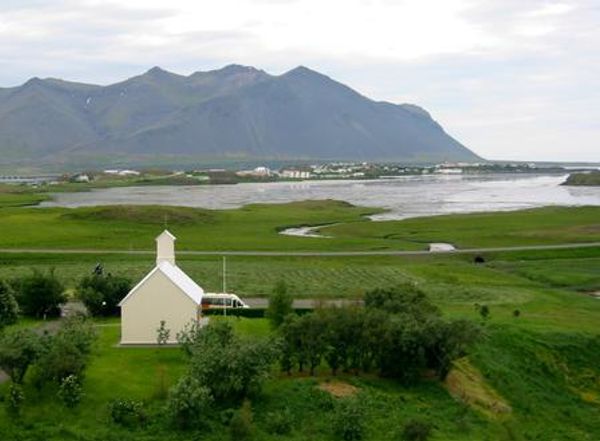
Nestled in the tranquil Laxárdalur valley, Þverárkirkja is a captivating white church built in 1878 from local tuff stone. Its simple elegance, dark roof, and distinct belfry stand out against the verdant Icelandic countryside, offering a glimpse into rural life and faith.
About Þverárkirkja
Nestled in the tranquil Laxárdalur valley, Þverárkirkja is a captivating white church built in 1878 from local tuff stone. Its simple elegance, dark roof, and distinct belfry stand out against the verdant Icelandic countryside, offering a glimpse into rural life and faith.
History & Background
Þverárkirkja, standing proudly in the Laxárdalur valley, embodies a significant chapter in Icelandic rural history. The current church, built in 1878, replaced earlier structures on this ancient church site. Its construction was a remarkable feat, spearheaded by farmer Jón Jóakimsson. The material chosen was durable tuff stone, quarried from the distant eastern moors. The challenge of transporting these heavy stones was overcome during winter when the Laxá river froze over, allowing for their arduous journey across the ice. This unique method of construction speaks volumes about the community's dedication and resilience. The church's design, with its white-painted tuff stone walls, dark roof, and belfry, reflects the architectural styles prevalent in rural Iceland during the late 19th century. The surrounding churchyard, also constructed from quarried tuff stone, further establishes the site's historical integrity. Beyond its architectural significance, Þverárkirkja is part of Iceland's broader Christian heritage, which dates back to the year 1000 AD when Christianity was adopted by democratic decision at the Alþingi. The National Museum's plans to develop Þverá into a heritage farm underscore its importance as one of the most complete examples of traditional Icelandic settlement remains, ensuring its cultural legacy for generations to come.
Did You Know?
- ✔Þverárkirkja is part of Iceland's rich religious and cultural heritage
- ✔Iceland became Christian in the year 1000 AD by a democratic decision at Alþingi
- ✔Many Icelandic churches date back centuries and feature distinctive architecture
Tours Near Þverárkirkja
Best-rated Iceland experiences — book with free cancellation
No specific tours found for this attraction.
Browse Iceland Tours →About Þverárkirkja
Perched gracefully in the scenic Laxárdalur valley of North Iceland, Þverárkirkja is more than just a church; it's a living testament to Icelandic resourcefulness and enduring faith. This charming white structure, with its striking dark roof and a small, elegant belfry, was meticulously constructed in 1878 by local farmer Jón Jóakimsson. The building material itself tells a story: sturdy tuff stone quarried from the eastern moors and painstakingly transported across the frozen Laxá river during winter. The church's exterior, as seen in the image, is a pristine white, contrasted by the deep blue accents around its arched door and windows. The surrounding churchyard, also crafted from quarried tuff stone, encloses the sacred ground where simple white crosses mark graves, blending seamlessly into the lush green landscape. Inside, the church is said to feature a blue vaulted ceiling adorned with stars, providing a serene space for its 60 congregants. Þverá is not only a church site but also a potential hub for cultural preservation. The National Museum has envisioned operating a heritage farm here, demonstrating traditional Icelandic farming methods to visitors and future generations. The site's remarkably intact settlement remains make it an ideal location for such an endeavor. A visit to Þverárkirkja offers a unique opportunity to connect with Iceland's rich religious and architectural heritage, set against a backdrop of breathtaking natural beauty and a sense of timeless tranquility.
History & Background
Þverárkirkja, standing proudly in the Laxárdalur valley, embodies a significant chapter in Icelandic rural history. The current church, built in 1878, replaced earlier structures on this ancient church site. Its construction was a remarkable feat, spearheaded by farmer Jón Jóakimsson. The material chosen was durable tuff stone, quarried from the distant eastern moors. The challenge of transporting these heavy stones was overcome during winter when the Laxá river froze over, allowing for their arduous journey across the ice. This unique method of construction speaks volumes about the community's dedication and resilience. The church's design, with its white-painted tuff stone walls, dark roof, and belfry, reflects the architectural styles prevalent in rural Iceland during the late 19th century. The surrounding churchyard, also constructed from quarried tuff stone, further establishes the site's historical integrity. Beyond its architectural significance, Þverárkirkja is part of Iceland's broader Christian heritage, which dates back to the year 1000 AD when Christianity was adopted by democratic decision at the Alþingi. The National Museum's plans to develop Þverá into a heritage farm underscore its importance as one of the most complete examples of traditional Icelandic settlement remains, ensuring its cultural legacy for generations to come.
Why Visit
Visit an iconic 19th-century tuff stone church, an architectural gem in a breathtaking Icelandic valley.
Did You Know?
Did you know Þverárkirkja was built from tuff stone quarried across the frozen Laxá river and features a blue, star-decorated vault inside?
The Builder's Resolve and the Frozen River Stones
Local lore tells of Jón Jóakimsson's unwavering determination to build the church. He saw the frozen Laxá river as a divine sign, rallying the community to haul the massive tuff stones across its icy surface, believing that only through such arduous effort could a truly blessed sanctuary be created. The church stands as a testament to his faith and the community's collective spirit.
📖 Stories & Legends
Icelandic sagas and folklore from this area
Practical Information
Best Time
Summer, late morning or early afternoon for best light.
Duration
30-60 minutes
Access
Paved road to Þverá, short walk to the church.