west-iceland · Iceland
Miklabæjarkirkja
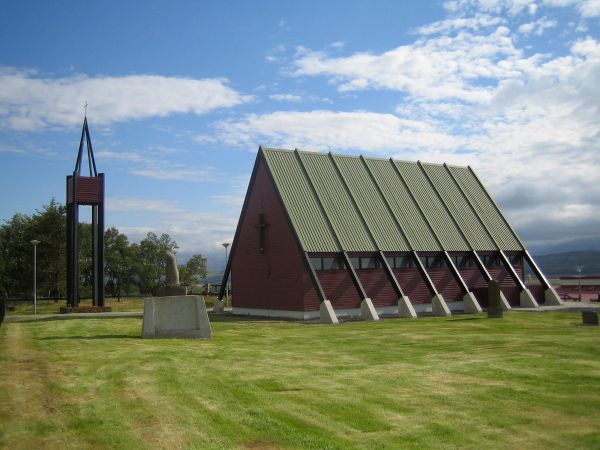
Standing proudly in a verdant field under a vast sky, Miklabæjarkirkja is a striking modern church built in 1973, featuring a distinctive red facade and a deep green, corrugated roof. This unique architectural gem in West Iceland holds a history stretching back to the dramatic Sturlunga Age, offering a poignant blend of past and present.
About Miklabæjarkirkja
Standing proudly in a verdant field under a vast sky, Miklabæjarkirkja is a striking modern church built in 1973, featuring a distinctive red facade and a deep green, corrugated roof. This unique architectural gem in West Iceland holds a history stretching back to the dramatic Sturlunga Age, offering a poignant blend of past and present.
History & Background
The history of Miklabæjarkirkja is deeply intertwined with the turbulent medieval period of Iceland, particularly the Sturlunga Age. The earliest records mention a church and a priest at Miklabær as far back as 1234. This was a time of intense power struggles among leading Icelandic clans, and Miklabær itself became a stage for these dramatic events. In 1234, Kolbeinn ungi, a prominent chieftain, notably ordered the killing of Kálfur Guttormsson and his son, Guttorm djákni, on these very grounds, marking it as a site of significant historical conflict. The church's role as a sanctuary is highlighted by events following the Battle of Örlygsstaðir in 1238, one of the largest and bloodiest battles in Icelandic history. After the defeat of Sighvatur Sturluson and his son Sturla Sighvatsson by Kolbeinn ungi and Gissur Þorvaldsson, many warriors who were fleeing sought refuge within the Miklabæjarkirkja. Most of them were granted sanctuary, which underscores the church's ancient and enduring role as a place of peace and protection amidst societal upheaval. The current Miklabæjarkirkja, a striking modern structure, was built in 1973. It holds the distinction of being the youngest Lutheran church in Skagafjörður. This contemporary edifice stands as a testament to the continuous spiritual life of the community, honoring centuries of tradition while embracing a distinct, modern architectural identity. It symbolizes the enduring presence of faith in Iceland, a nation that democratically adopted Christianity in 1000 AD at Alþingi.
Did You Know?
- ✔Miklabæjarkirkja is part of Iceland's rich religious and cultural heritage
- ✔Iceland became Christian in the year 1000 AD by a democratic decision at Alþingi
- ✔Many Icelandic churches date back centuries and feature distinctive architecture
Tours Near Miklabæjarkirkja
Best-rated Iceland experiences — book with free cancellation


Why Visit
Experience a unique modern church with a dramatic medieval history from the Sturlunga Age.
Did You Know?
Did you know the current Miklabæjarkirkja, built in 1973, is the youngest Lutheran church in Skagafjörður, yet stands on ground steeped in 13th-century Sturlunga saga history?
The Sanctuary of Miklabær
While not a myth, a powerful historical legend surrounds Miklabæjarkirkja. Following the brutal Battle of Örlygsstaðir in 1238, many defeated warriors fled to the original church for sanctuary. The church's sacred ground provided them protection from their pursuers, highlighting its ancient role as a place of refuge and peace amidst the chaos of the Sturlunga Age.
📖 Stories & Legends
Icelandic sagas and folklore from this area
Hidden Gems Nearby
Örlygsstaðir Battlefield Site
Just a short distance from Miklabæjarkirkja lies the historical site of the Battle of Örlygsstaðir, a pivotal and bloody conflict of the Sturlunga Age in 1238.
It offers a direct connection to the dramatic events that led warriors to seek refuge at Miklabær.
The Modern Bell Tower
Take a moment to appreciate the minimalist design of the separate bell tower. Its stark, angular form and simple cross perfectly complement the main church building.
It's a beautiful example of contemporary Icelandic ecclesiastical architecture, distinct from the main church.
Skagafjörður Valley Views
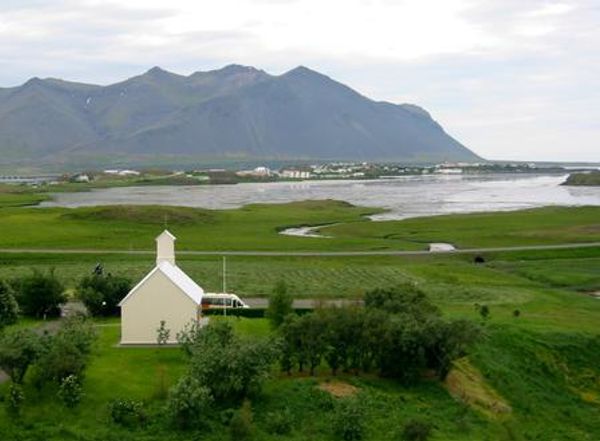
From the church grounds, enjoy sweeping panoramic views of the surrounding Skagafjörður valley, with its rolling hills and distant mountains.
The serene natural beauty provides a striking contrast to the church's turbulent historical past.
Practical Information
Best Time
Daytime, Summer (May-September)
Duration
30-45 minutes
Access
Paved road, easily accessible by car. Parking available on site.
Frequently Asked Questions
Is there an entry fee to visit Miklabæjarkirkja?▾
No, there is no entry fee to visit Miklabæjarkirkja.
Is Miklabæjarkirkja wheelchair accessible?▾
The church grounds are grassy and uneven in places, and there might be a small step at the entrance. While the area around the church is generally flat, specific accessibility for the interior may vary. It's best to verify locally for specific accessibility needs.
Can I go inside the church?▾
Access to the interior of the church depends on opening hours, which can vary. It's often open during daylight hours in summer, but as a working church, visitors should be mindful of any services or events.
Is parking available at Miklabæjarkirkja?▾
Yes, there is ample parking space available on the grassy area near the church, making it convenient for visitors arriving by car.
What facilities are available at Miklabæjarkirkja?▾
Miklabæjarkirkja is a historic site in a rural area, so facilities are limited. There are no public restrooms or shops directly on site.