north-iceland · Iceland
Grenivíkurkirkja
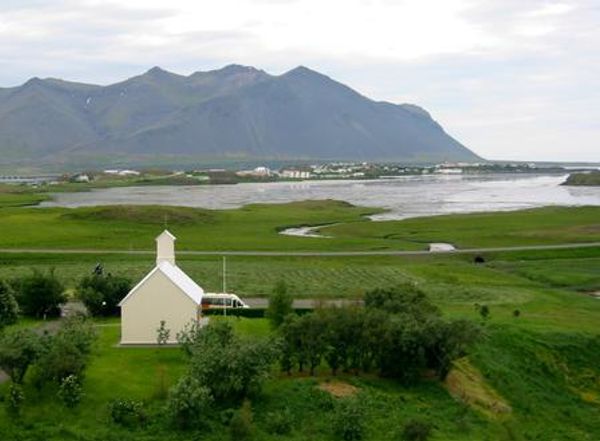
Grenivíkurkirkja is a beautifully preserved timber church in North Iceland, notable for its striking white siding and vibrant red roof and steeple. Built in 1887, this picturesque church offers a glimpse into Iceland's architectural and religious past, set against a backdrop of rolling green hills.
About Grenivíkurkirkja
Grenivíkurkirkja is a beautifully preserved timber church in North Iceland, notable for its striking white siding and vibrant red roof and steeple. Built in 1887, this picturesque church offers a glimpse into Iceland's architectural and religious past, set against a backdrop of rolling green hills.
History & Background
Grenivíkurkirkja's history begins with its construction in 1887, replacing an earlier church and marking a significant moment for the local community. It was at this time that the parishes of Höfði and Grýtubakki were united, and Snorri Jónsson, a respected foreman from Akureyri, was commissioned as its designer. The initial structure was a timber house, a common and practical building material in Iceland. For nearly four decades, from 1890 to 1927, Grenivík hosted resident pastors, serving as a vital spiritual hub for the surrounding area. Over the years, the church underwent several key modifications that shaped its present appearance. A distinctive vestry tower, visible today with its prominent white facade and red-capped steeple, was added in 1912, enhancing the church's verticality and providing a formal entrance. Later, in 1994, a choir section was incorporated, extending the church's eastern end. These structural changes reflect the ongoing care and adaptation of the building to meet the needs and aesthetics of its congregation. Since 1927, the Grenivík parish has been served from Laufás, signifying a shift in pastoral administration but maintaining the church's role as a place of worship. Its historical significance and architectural integrity were officially recognized on January 1, 1990, when Grenivíkurkirkja was declared a protected site. Today, it stands as a testament to generations of faith and community, its charming design and serene setting continuing to draw visitors to appreciate its enduring legacy in North Iceland.
Did You Know?
- ✔Grenivíkurkirkja is part of Iceland's rich religious and cultural heritage
- ✔Iceland became Christian in the year 1000 AD by a democratic decision at Alþingi
- ✔Many Icelandic churches date back centuries and feature distinctive architecture
Tours Near Grenivíkurkirkja
Best-rated Iceland experiences — book with free cancellation
No specific tours found for this attraction.
Browse Iceland Tours →About Grenivíkurkirkja
Nestled in the scenic landscape of North Iceland, Grenivíkurkirkja is a charming and historically significant timber church that captivates with its distinctive architecture and serene setting. The church, a pristine white structure with horizontal wooden siding, is immediately recognizable by its vibrant red corrugated iron roof and a tall, pointed red steeple crowned with a cross. Built in 1887 and designed by the notable foreman Snorri Jónsson of Akureyri, it replaced an older church and served the newly combined Höfði and Grýtubakki parishes. The church's evolution saw the addition of a prominent vestry tower in 1912, which houses the main entrance with its classic double white doors and arched windows. A choir was later added in 1994, further enhancing its structure. Measuring 10.15 meters long and 6.43 meters wide, with a smaller choir and a square tower, Grenivíkurkirkja is a fine example of traditional Icelandic church design. Its cross-gabled roofs and timber construction reflect a heritage deeply rooted in local craftsmanship and readily available materials. Protected as a historical site since January 1, 1990, Grenivíkurkirkja is not just a place of worship but a cultural landmark. Visitors can appreciate the simple elegance of its exterior, the meticulous detailing of its arched and rectangular windows, and the peaceful graveyard surrounding it, which includes some unique stone monuments. Set against a backdrop of undulating green hills, often capped with a dusting of snow, and under a dramatic Icelandic sky, the church offers a tranquil spot for contemplation and a deeper understanding of Iceland's enduring religious and architectural legacy. It continues to be served from Laufás, maintaining its spiritual connection to the region.
History & Background
Grenivíkurkirkja's history begins with its construction in 1887, replacing an earlier church and marking a significant moment for the local community. It was at this time that the parishes of Höfði and Grýtubakki were united, and Snorri Jónsson, a respected foreman from Akureyri, was commissioned as its designer. The initial structure was a timber house, a common and practical building material in Iceland. For nearly four decades, from 1890 to 1927, Grenivík hosted resident pastors, serving as a vital spiritual hub for the surrounding area. Over the years, the church underwent several key modifications that shaped its present appearance. A distinctive vestry tower, visible today with its prominent white facade and red-capped steeple, was added in 1912, enhancing the church's verticality and providing a formal entrance. Later, in 1994, a choir section was incorporated, extending the church's eastern end. These structural changes reflect the ongoing care and adaptation of the building to meet the needs and aesthetics of its congregation. Since 1927, the Grenivík parish has been served from Laufás, signifying a shift in pastoral administration but maintaining the church's role as a place of worship. Its historical significance and architectural integrity were officially recognized on January 1, 1990, when Grenivíkurkirkja was declared a protected site. Today, it stands as a testament to generations of faith and community, its charming design and serene setting continuing to draw visitors to appreciate its enduring legacy in North Iceland.
Why Visit
Discover a historic Icelandic timber church with unique architecture and a serene atmosphere amidst stunning northern landscapes.
Did You Know?
Grenivíkurkirkja, with its distinctive red corrugated iron roof, was designed by Snorri Jónsson from Akureyri and had its vestry tower added in 1912.
The Enduring Spirit of Grenivík
While no specific local legend is widely known about Grenivíkurkirkja, its enduring presence for over a century, weathering harsh Icelandic elements and societal changes, speaks to the resilient spirit of the Grenivík community. Locals often share stories of family gatherings and significant life events that have unfolded within its hallowed walls, weaving a rich tapestry of personal histories into the church's legacy.
📖 Stories & Legends
Icelandic sagas and folklore from this area
Hidden Gems Nearby
The Churchyard Monuments
Explore the peaceful churchyard surrounding Grenivíkurkirkja, where several unique stone monuments and grave markers offer a quiet reflection on local history and lives lived in this remote community.
These markers provide a tangible connection to the generations who have called Grenivík home.
Coastal Views from Grenivík
Take a short walk from the church to the nearby coastline of Grenivík. From here, you can often enjoy stunning views across Eyjafjörður, with mountains rising dramatically from the water.
The contrasting beauty of the historic church against the vast fjord landscape is truly breathtaking.
Local Art at the Community Center
Check if the nearby Grenivík Community Center (Félagsheimilið) hosts any local art exhibitions or craft displays. Often, small Icelandic villages showcase the talents of their residents.
It's a great way to engage with the contemporary culture and creativity of the area.
Practical Information
Best Time
Late Spring to Early Autumn (May-September) for milder weather and longer daylight hours.
Duration
30-45 minutes
Access
Paved road access, located directly in the village of Grenivík. Parking is available nearby.
Frequently Asked Questions
Is there an entry fee to visit Grenivíkurkirkja?▾
No, there is typically no entry fee to visit the exterior of Grenivíkurkirkja and its churchyard. If you wish to see the interior, it's best to check locally for opening hours or contact the parish beforehand, as it may not always be open.
Is Grenivíkurkirkja wheelchair accessible?▾
The exterior grounds and approach to the church are generally accessible, but there are a few steps leading up to the main entrance of the church itself. Interior access might be limited for wheelchairs.
Can I take photos inside and outside the church?▾
Yes, photography is generally permitted outside the church. If you are able to enter the church, it is polite to ask for permission before taking photos inside, especially during services or events.
What is the best time of year to visit Grenivíkurkirkja?▾
The best time to visit is typically from late spring to early autumn (May to September) when the weather is milder, and daylight hours are longer, making it more pleasant to explore the area. The green hills provide a beautiful contrast to the church's red roof.
Are there any facilities near the church?▾
Grenivíkurkirkja is located within the small village of Grenivík, so there are limited facilities such as a guesthouse, a small store, and possibly a café during tourist season. Public restrooms might be available at the community center or guesthouse.