Eiðisdrangar
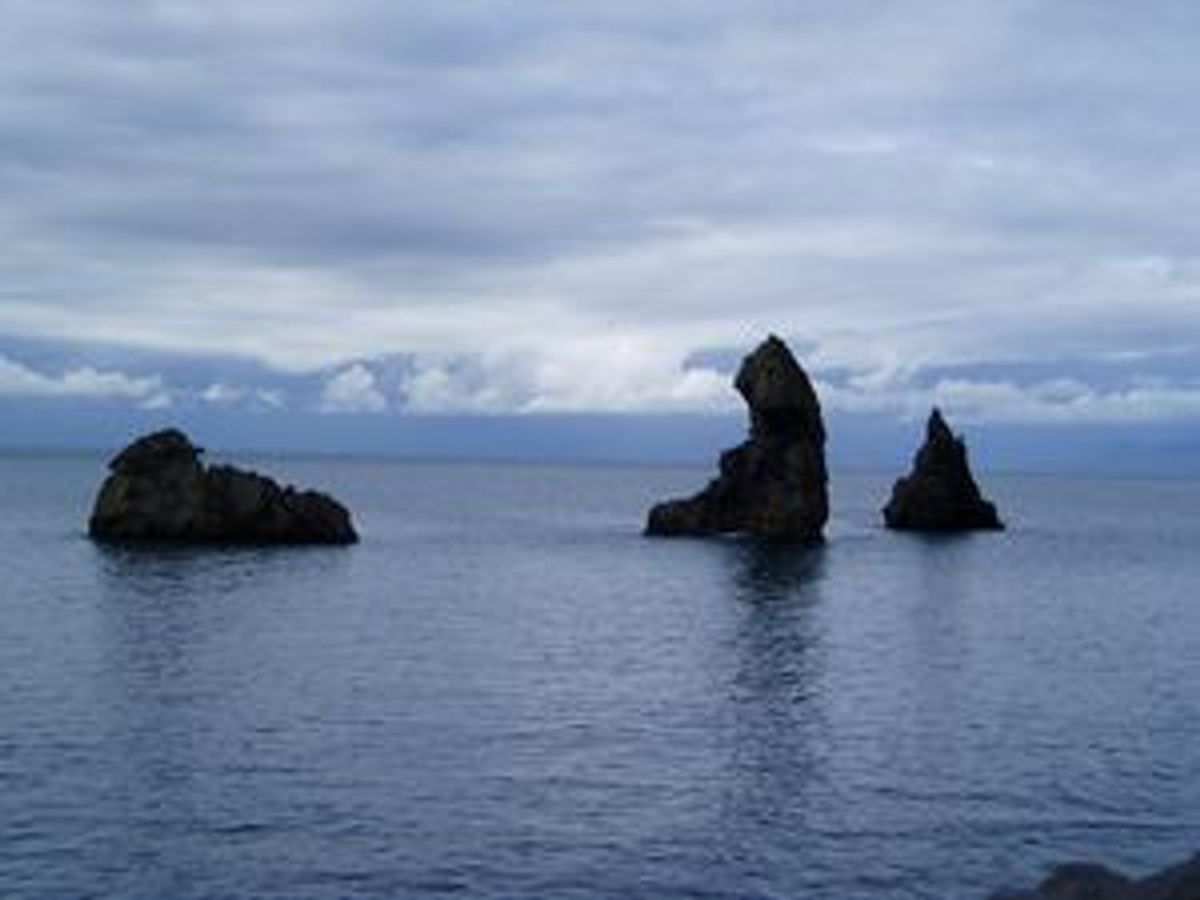
Witness the dramatic beauty of Eiðisdrangar, where three imposing sea stacks pierce the North Atlantic. These dark, rugged formations stand sentinel over Þrælae…
At a Glance
Visit time
30-60 minutes
Best season
All year, though summer offers milder weather and longer daylight hours for exploration.
Access
Accessible by ferry to Heimaey island (Vestmannaeyjar), followed by a short drive or walk from the town of Vestmannaeyjabær. The path to the viewpoint may involve uneven terrain.
GPS
63.4502, -20.2702
About
About Eiðisdrangar
Witness the dramatic beauty of Eiðisdrangar, where three imposing sea stacks pierce the North Atlantic. These dark, rugged formations stand sentinel over Þrælaeiði, a historically significant sandy flat linked to Iceland's earliest sagas.
To experience Iceland's raw coastal drama and ponder ancient Viking tales at a historically charged site.
Background
History & Background
The history of Eiðisdrangar is intrinsically linked to one of the most foundational tales of Iceland's settlement: the arrival of Ingólfur Arnarson and his foster-brother Hjörleifur. According to the Landnámabók (Book of Settlements), Hjörleifur brought Irish slaves with him to Iceland. It is believed that these slaves landed at Þrælaeiði, the sandy flat adjacent to where the Eiðisdrangar sea stacks now stand. Tragically, these slaves, seeking their freedom, later murdered Hjörleifur. Ingólfur Arnarson, upon discovering his foster-brother's death, pursued the slaves. The saga recounts a dramatic confrontation where Ingólfur and his men tracked down and killed the slaves, thus avenging Hjörleifur. The area around Eiðisdrangar and Þrælaeiði is therefore a place steeped in early Icelandic saga, representing a harsh and pivotal moment in the island's initial colonization. The very name Þrælaeiði, meaning "Slave's Isthmus," serves as a stark reminder of this ancient, violent chapter.
Nestled along the rugged coastline of South Iceland, Eiðisdrangar offers a captivating blend of natural drama and ancient history. The most striking feature, as seen in the accompanying image, are the three formidable sea stacks that stand defiantly against the North Atlantic's expanse. These dark, craggy pillars, sculpted by centuries of wind and waves, create a powerful visual spectacle, especially under a dramatic, cloudy sky. They are the namesake 'Eiðisdrangar,' meaning the 'Isthmus Stacks.' Located just north of Þrælaeiði, a sandy flat between the prominent landforms of Heimaklettur and Stóri-Klíf, this area is steeped in the sagas of Iceland's settlement. Þrælaeiði, or "Slave's Isthmus," draws its name from the legendary landing of Hjörleifur's slaves. Visiting Eiðisdrangar is an opportunity to not only witness Iceland's characteristic coastal beauty but also to step back in time and connect with the raw, foundational stories of the island's earliest inhabitants. The calm, deep blue-grey waters surrounding the stacks add to the serene yet powerful atmosphere, making it a perfect spot for photography and quiet reflection. While the sea might appear tranquil, always exercise caution near the Icelandic coast due to unpredictable waves.
Folklore
Story & Folklore
Imagine the scene centuries ago, under a sky much like this one, heavy with possibility and peril. It was here, at Þrælaeiði, the sandy stretch nestled between Heimaklettur and Stóri-Klíf, that the Irish slaves of Hjörleifur, Ingólfur Arnarson's foster-brother, are believed to have made landfall. Seeking freedom, they tragically encountered Ingólfur's men, leading to a violent confrontation that would echo through the sagas. Today, the three mighty sea stacks of Eiðisdrangar rise stoically from the ocean, silent witnesses to that ancient drama. Their dark forms, weathered by countless storms, stand as enduring monuments to a pivotal moment in Iceland's settlement history, inviting contemplation of the harsh realities and heroic sagas of the past.
Local Legend
The Saga of the Slave's Isthmus
Local lore, rooted in the Landnámabók, tells of Hjörleifur's Irish slaves landing at Þrælaeiði, the sandy flat near these stacks. Seeking freedom, they tragically murdered Hjörleifur, only to be pursued and killed by Ingólfur Arnarson, Iceland's first permanent settler, in a dramatic act of vengeance.
Experiences
Tours Near Eiðisdrangar
Best-rated Iceland experiences — book with free cancellation


Location
📍 Location
Discover
Explore Nearby
Places from our database within 1.0 km — all data from Sanity
Loading nearby places…
0 places found within 1.0 km
Plan full itinerary →Explore More