Búðahraun
Explore Búðahraun in the Westfjords, where ancient lava flows meet a charming turf house and stunning natural vistas.
About
About Búðahraun
Explore Búðahraun in the Westfjords, where ancient lava flows meet a charming turf house and stunning natural vistas.
Experience the serene solitude of the Westfjords, exploring a unique volcanic landscape and historical turf house off the beaten path.
Background
History & Background
The geological history of Búðahraun is a testament to Iceland's volcanic origins. This specific 'hraun' or lava field was formed by ancient eruptions, where molten rock flowed across the landscape, cooling and solidifying into the rugged, contorted formations visible today. While specific dates for this particular Búðahraun in the Westfjords are not widely documented, lava fields across Iceland are typically thousands of years old, showcasing the island's continuous geological evolution and its powerful subterranean forces. The Westfjords, though geologically older than many parts of Iceland, still bear the marks of these ancient fiery creations in various pockets. Culturally, the presence of a turf house at Búðahraun speaks volumes about the enduring human presence in Iceland's challenging environment. Turf houses were the predominant form of housing in Iceland for over a thousand years, from the Viking Age settlement until the early 20th century. Their design, utilizing local stone for foundations and walls, and thick layers of turf for roofs and insulation, was perfectly adapted to the island's cold, wet climate and scarcity of timber. These structures represent an ingenious solution to survival, offering warmth and protection against the harsh Icelandic weather. The turf house at Búðahraun serves as a tangible link to the past, illustrating the daily lives and architectural ingenuity of the people who settled and thrived in these remote regions of Iceland.
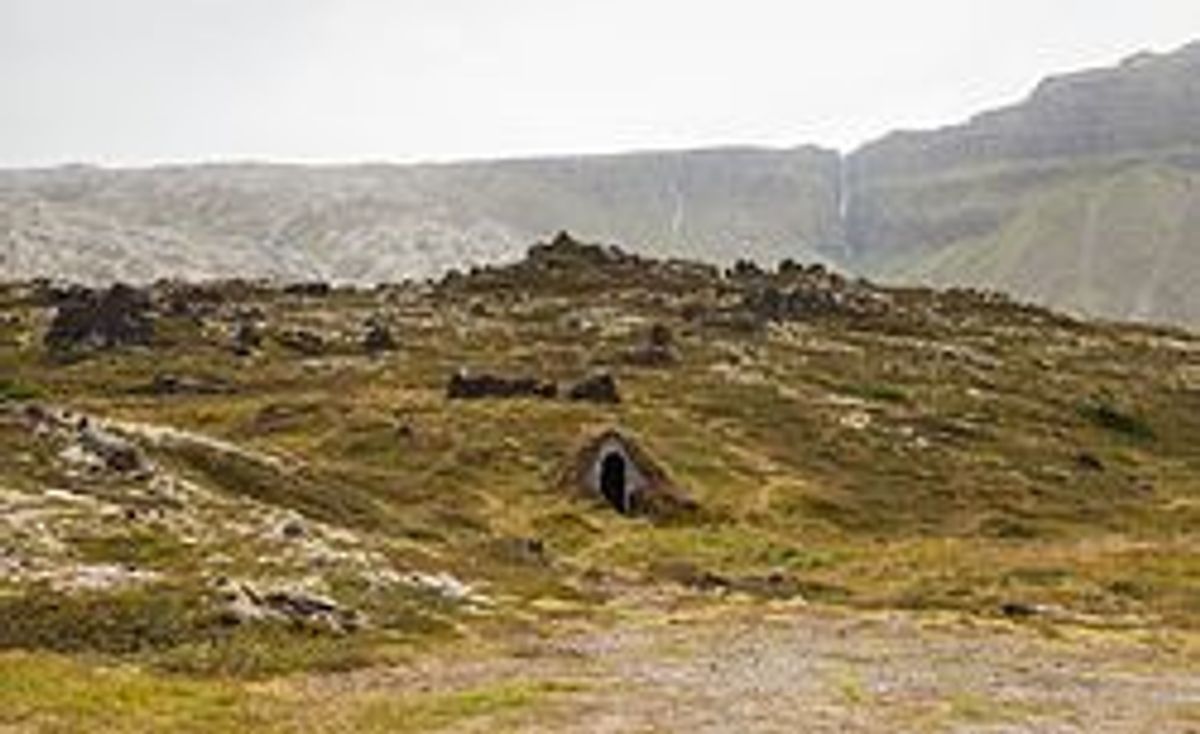
Búðahraun presents a remarkable synthesis of Iceland’s raw natural power and its deep-rooted cultural history, nestled within the dramatic landscapes of the Westfjords. This expansive lava field, born from ancient volcanic eruptions, offers a unique opportunity to traverse a terrain shaped by fire and ice. Visitors can explore the rugged, moss-covered rock formations that characterize the 'hraun' (lava field), witnessing firsthand the slow, persistent reclamation of land by nature. At its heart lies a beautifully preserved turf-roofed dwelling, a poignant reminder of traditional Icelandic life. These ingenious structures, built from local stone and turf, provided essential shelter against the elements for centuries, embodying the resilience and resourcefulness of early settlers. The scene is further enhanced by the sight of a distant waterfall, gracefully descending from the formidable cliffs that define the region's majestic backdrop. Búðahraun is an ideal destination for those seeking to venture off the well-trodden paths, offering a tranquil yet profound encounter with Iceland's untamed beauty and its cultural heritage. It invites contemplation on the forces that shaped this land and the lives lived upon it, providing a unique insight into the intricate relationship between humanity and nature in the Westfjords.
Folklore
Story & Folklore
The wind whispered ancient tales across the Búðahraun lava field as I approached the solitary turf house. Its grassy roof, a part of the earth itself, seemed to breathe with the land. Here, in the heart of the Westfjords, time stretched thin, connecting the distant rumble of the waterfall to the silent resilience of those who once sheltered within these walls. I imagined the warmth of a peat fire, the murmur of stories, the stark beauty of survival in this rugged landscape. The air, crisp and clean, carried the scent of damp earth and distant moss, a testament to Iceland's enduring spirit. Each step on the hardened lava told a story of fiery creation, while the turf house spoke of human perseverance, a poignant dialogue between nature's power and mankind's adaptability.
💡 Did You Know?
Icelandic turf houses, like the one at Búðahraun, are an ingenious architectural marvel, providing natural insulation against the island's harsh climate for centuries.
Local Legend
Þögla bústaður Búðahrauns
Sagt er að verndarandi búi í torfbænum og gæti forna hraunsins. Gestir sem nálgast með virðingu geta fundið djúpa tilfinningu fyrir friði, en þeir sem trufla landið eiga á hættu að týnast á vafningsstígum hraunsins þar til andinn telur þá verðuga til að snúa aftur.
Experiences
Tours Near Búðahraun
Best-rated Iceland experiences — book with free cancellation


Location
📍 Location
Discover
Explore Nearby
Places from our database within 1.0 km — all data from Sanity
Loading nearby places…
0 places found within 1.0 km
Plan full itinerary →Explore More