Bruni
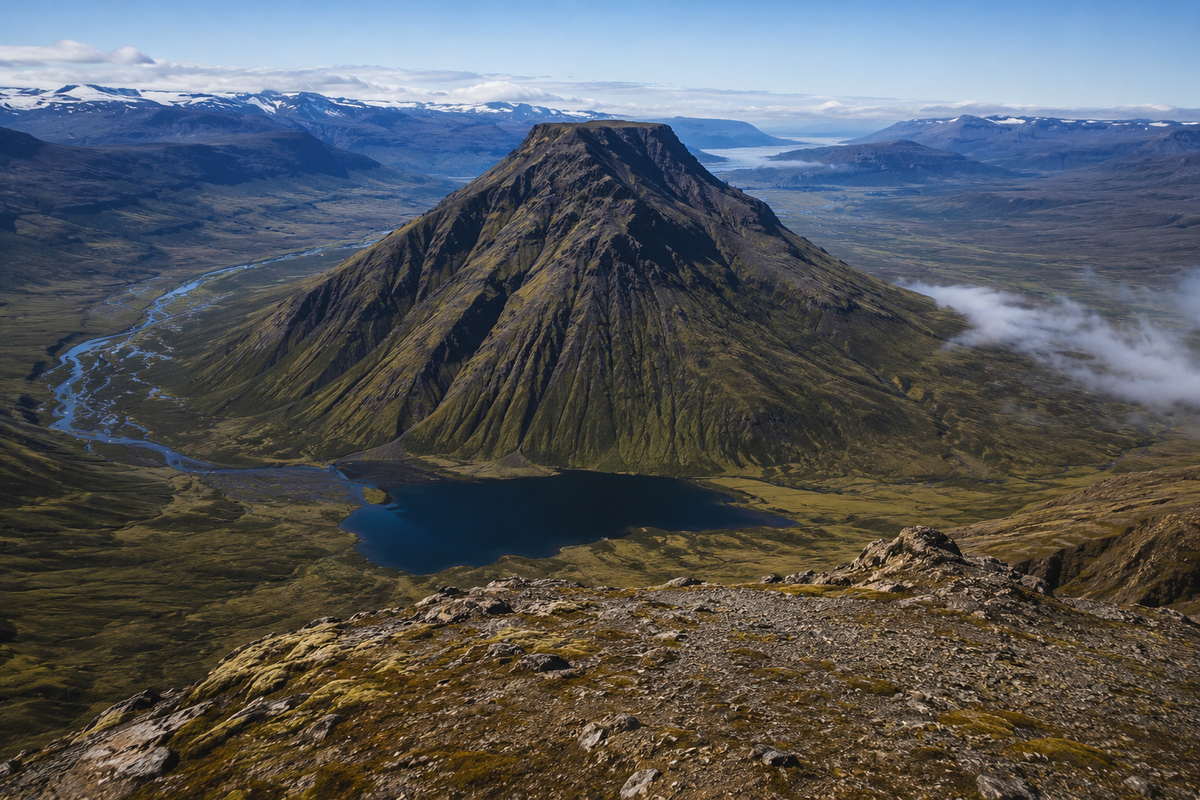
Bruni, a magnificent peak in the Westfjords, offers fiery sunsets and unparalleled wilderness views.
About
About Bruni
Bruni, a magnificent peak in the Westfjords, offers fiery sunsets and unparalleled wilderness views.
Experience raw Westfjords wilderness and witness spectacular, "fiery" sunsets over the dramatic landscape.
Background
History & Background
Bruni's history is deeply etched in its geological formation, a testament to millions of years of volcanic activity and glacial sculpting that shaped the Westfjords. Unlike the younger, more active volcanic zones in Iceland, Bruni belongs to an older basaltic plateau, its layers revealing ancient lava flows and sedimentary deposits. Early Norse settlers navigating these formidable fjords would have used Bruni as a crucial landmark, its distinctive "fiery" appearance at certain times of day making it easily identifiable amidst the complex coastline. While no major historical events are directly tied to Bruni itself, its presence has silently overseen centuries of human endeavor in the Westfjords, from the struggles of early farmers and fishermen to the modern-day quest for sustainable living in this remote region. It stands as a symbol of the enduring natural forces that have always dictated life in this corner of the world, a silent witness to generations.
Perched majestically in the remote and awe-inspiring Westfjords, Bruni is more than just a mountain; it's a geological masterpiece and a beacon for those seeking true Icelandic solitude. Its distinctive reddish-brown strata, particularly visible during the golden hours of sunrise and sunset, give rise to its evocative name, "Bruni," meaning "burn" or "fire." This mountain offers a challenging yet rewarding hiking experience for seasoned trekkers, with trails leading to panoramic viewpoints that stretch across dramatic fjords and the vast, untamed interior. For photographers, Bruni is a dream canvas, especially when the low sun ignites its slopes in a symphony of warm colors. Beyond its visual allure, Bruni represents the enduring spirit of the Westfjords – rugged, beautiful, and profoundly peaceful. Visitors should prepare for changeable weather and the remote nature of the region. Bring sturdy hiking boots, layers of clothing, and plenty of water. While specific marked trails might be limited, the opportunity for exploration is boundless, offering a genuine connection to Iceland's pristine wilderness.
Folklore
Story & Folklore
The old fisherman, Bjorn, often spoke of Bruni. Not just as a landmark guiding his return to the fjord, but as a living entity. He remembered one particular autumn evening, the sky a canvas of angry purples and oranges, when Bruni truly earned its name. As the sun dipped below the horizon, the mountain's ancient rock face ignited, glowing with an internal fire that seemed to pulse with the dying light. It wasn't volcanic; it was the sheer intensity of the minerals, reflecting the sun's last fiery kiss. Bjorn had anchored his boat, mesmerized, feeling a profound connection to the land and the elemental forces that shaped it. He imagined the first settlers, seeing this spectacle, naming it Bruni, forever linking it to that primal, burning beauty that defined the Westfjords' soul. Every visit since, he sought that moment, that fleeting glimpse of Bruni aflame.
💡 Did You Know?
The name "Bruni" (meaning "burn" or "fire") is thought to derive from the mountain's vivid reddish-brown rock formations, especially striking in low light.
Local Legend
Bruni's Fiery Heart: The Sun's Last Kiss
Local lore whispers that Bruni holds the last embers of an ancient sun, which fell to earth here during creation. Each sunset, the mountain rekindles these fiery remnants, painting its slopes in brilliant reds and oranges as a final farewell to the day. It's said that those who witness Bruni's full fiery display are blessed with inner warmth and resilience.
Culture
Stories & Legends
Icelandic sagas and folklore from this area
Location
📍 Location
Discover
Explore Nearby
Places from our database within 1.0 km — all data from Sanity
Loading nearby places…
0 places found within 1.0 km
Plan full itinerary →Explore More