Reykjavík may be one of the safest capitals on earth, but beneath its colourful roofs runs a deep current of folklore. For centuries Icelanders lived through long, dark winters in isolated farms and a small, close-knit town — and out of that darkness grew some of Europe's most persistent ghost traditions.
Icelandic folklore is unusually specific. Rather than vague hauntings, its stories are tied to exact houses, graves and stretches of shoreline. The restless dead here are draugar — physical revenants from Old Norse belief, not gentle spirits. Alongside them live the Huldufólk, the hidden people or elves said to dwell in rocks and lava, plus trolls turned to stone at sunrise.
Why did these beliefs endure? Long dark winters, geographic isolation and a powerful medieval storytelling tradition kept them alive as living folklore rather than distant myth.
The stories below are Icelandic folklore and reported experiences, not documented historical fact. Where a building's real history is known, it is described separately from its legend.
Explore
Haunted Reykjavík Map
40 haunted locations mapped — filter by type and tap a pin for the story.
The Legends
Featured Haunted Places
Reykjavík's most storied buildings and locations — with their history and the folklore they inspired, kept clearly apart.
Haunted House
Höfði House – Reykjavík's Haunted Mansion
Höfði House: Reykjavík's historic mansion with a chilling paranormal past.
Höfði House, a distinguished building in Reykjavík, is renowned not only for its historical significance as the site of the 1986 Reagan-Gorbachev summit but also for its eerie reputation as one of the city's most haunted locations.
Numerous tales circulate about spectral apparitions, unexplained noises, and a pervasive sense of unease within its walls. Visitors and staff have reported chilling encounters with unseen presences, contributing to its legend as a place where the past refuses to stay buried.
Whether you believe in ghosts or not, Höfði House stands as a testament to both Iceland's modern history and its enduring fascination with the supernatural.
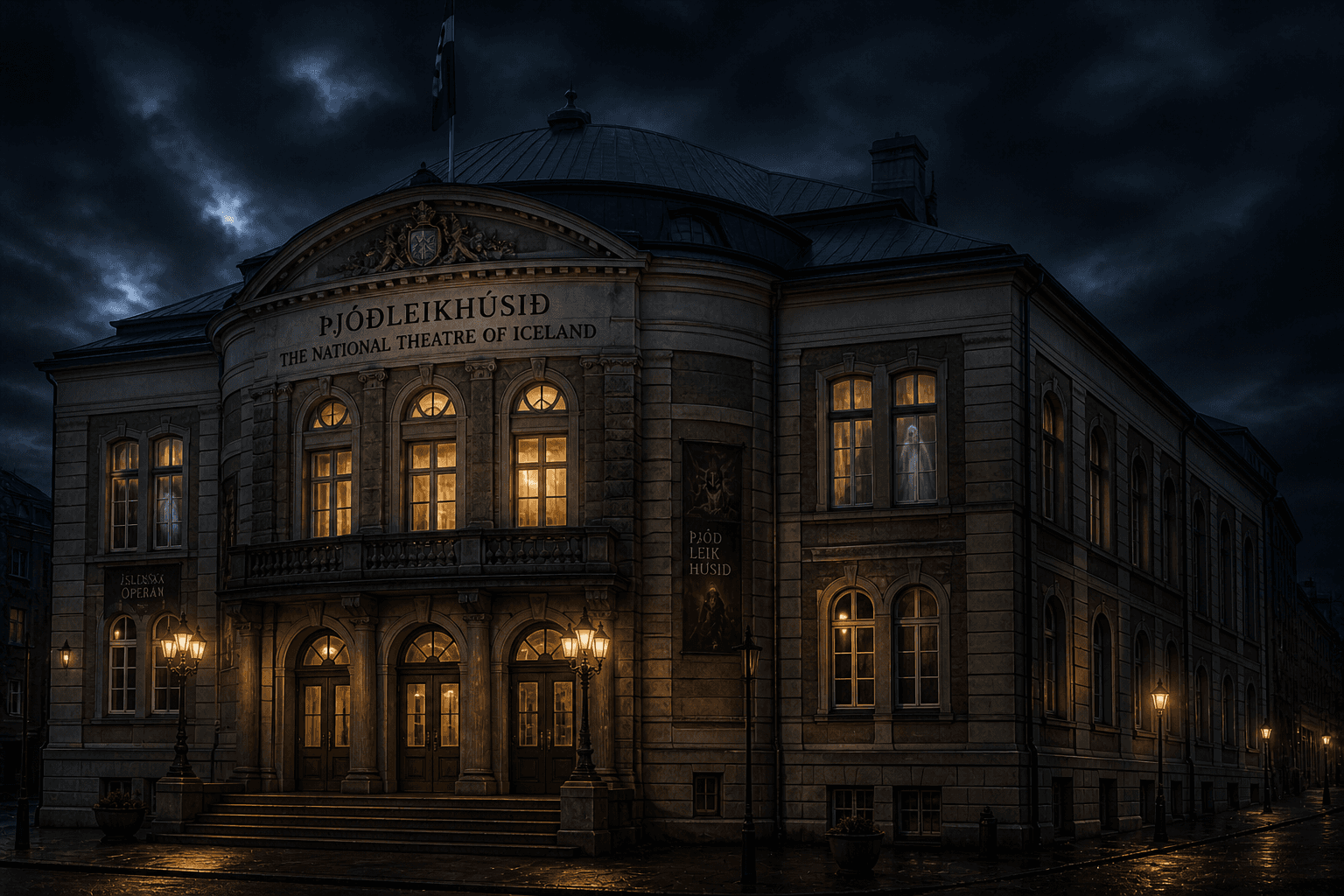
Staff and performers have reported unexplained sounds, flickering lights and ghostly presences in the backstage areas and upper floors of this early 20th century building.
Staff and performers have reported unexplained sounds, flickering lights and ghostly presences in the backstage areas and upper floors of this early 20th century building. The haunting is said to concentrate in the older dressing rooms and the fly tower above the stage.
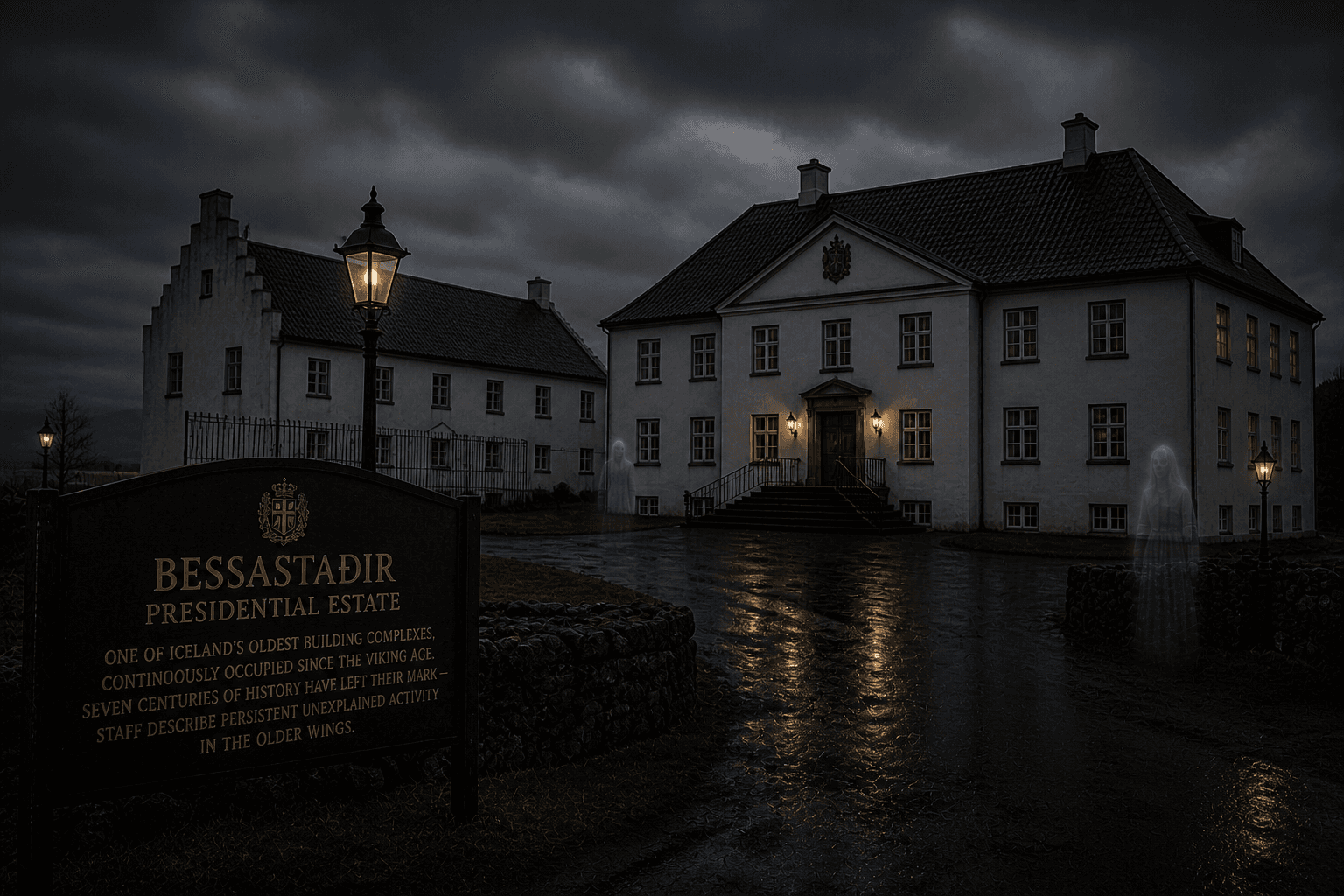
One of Iceland's oldest building complexes, continuously occupied since the Viking Age. Seven centuries of history have left their mark — staff describe persistent unexplained activity in the older wings.
One of Iceland's oldest building complexes, continuously occupied since the Viking Age. Seven centuries of history have left their mark — staff describe persistent unexplained activity in the older wings. The estate has been the official residence of Iceland's president since 1944.
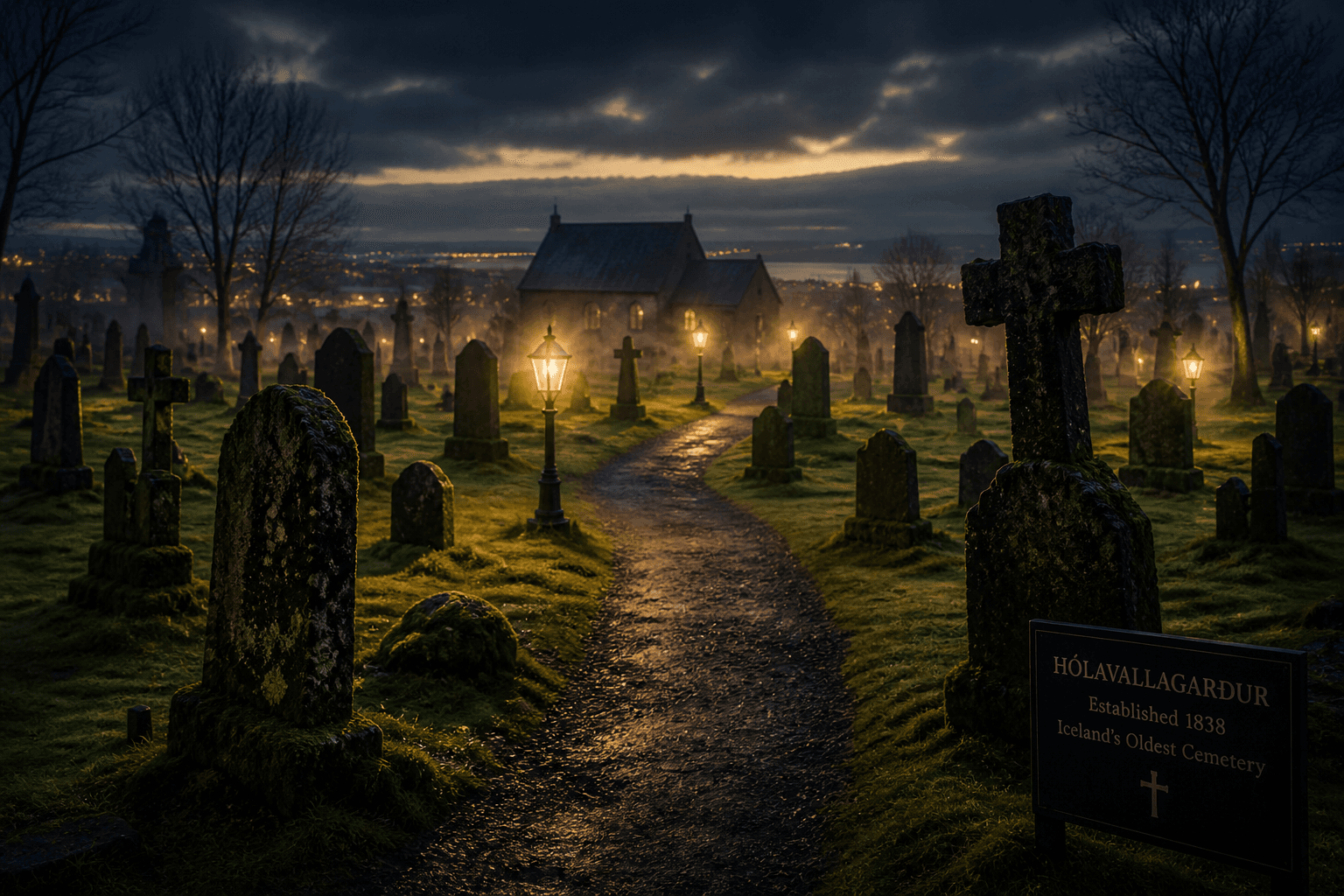
Iceland's oldest cemetery (established 1838), where spirits are said to walk between mossy headstones at night. Many of Iceland's most prominent historical figures are buried here.
Iceland's oldest cemetery (established 1838), where spirits are said to walk between mossy headstones at night. Many of Iceland's most prominent historical figures are buried here.
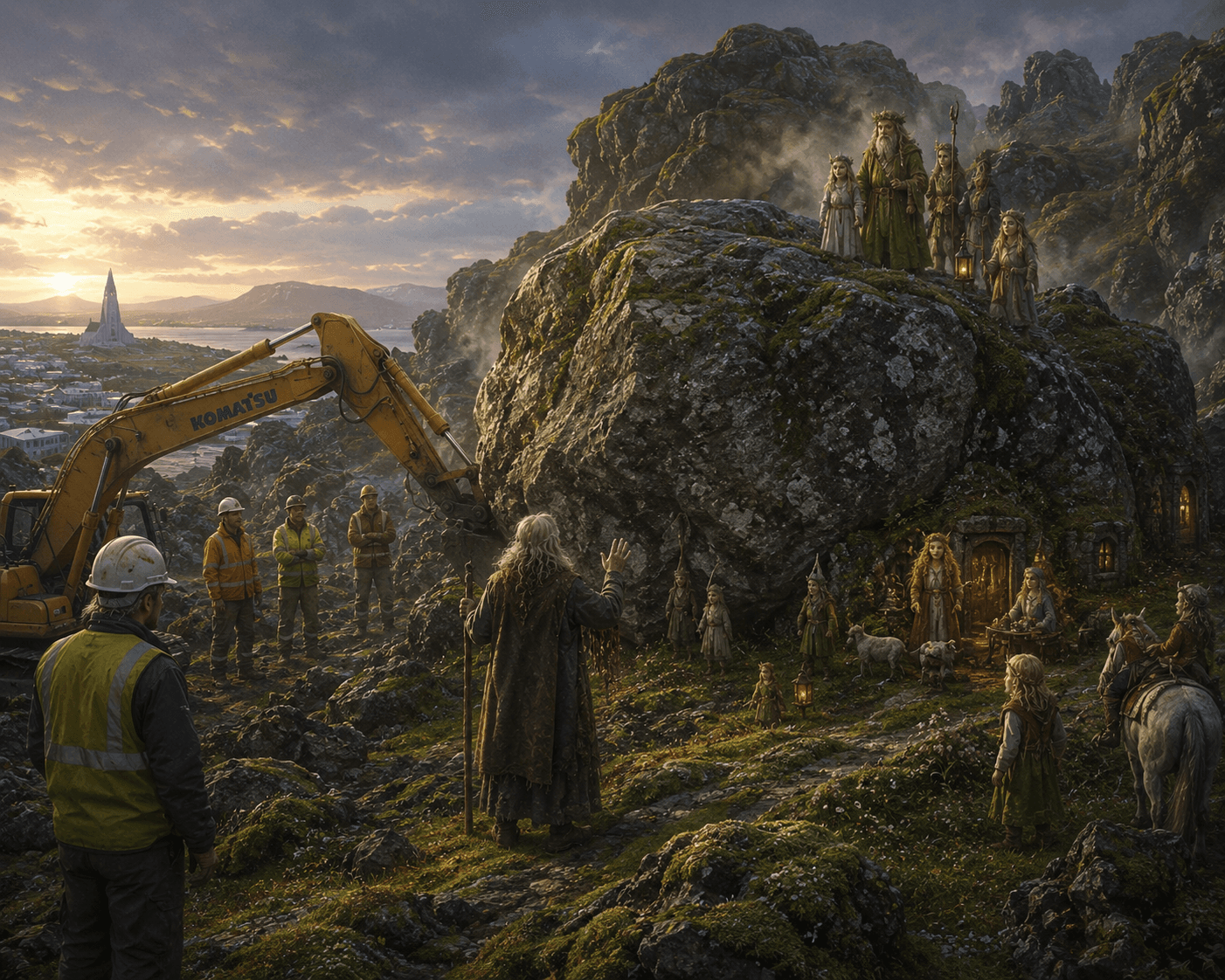
Reykjavík's hidden folk: Elves are said to reside in and around the capital.
Even in the heart of Reykjavík, the whispers of the Huldufólk persist. While many associate them with remote lava fields and rocky outcrops, stories abound of elves and hidden people living unseen amongst us, even within the bustling city. Some believe that certain areas, particularly older, less developed parts of the city, are still considered sacred ground by these beings.
There are tales of construction projects being halted or rerouted due to the presence of hidden folk dwellings. While often dismissed as superstition, these stories highlight a deep-seated respect for nature and the unknown that is woven into the fabric of Icelandic culture. Keep an open mind, and you might just feel the presence of the unseen in the capital.
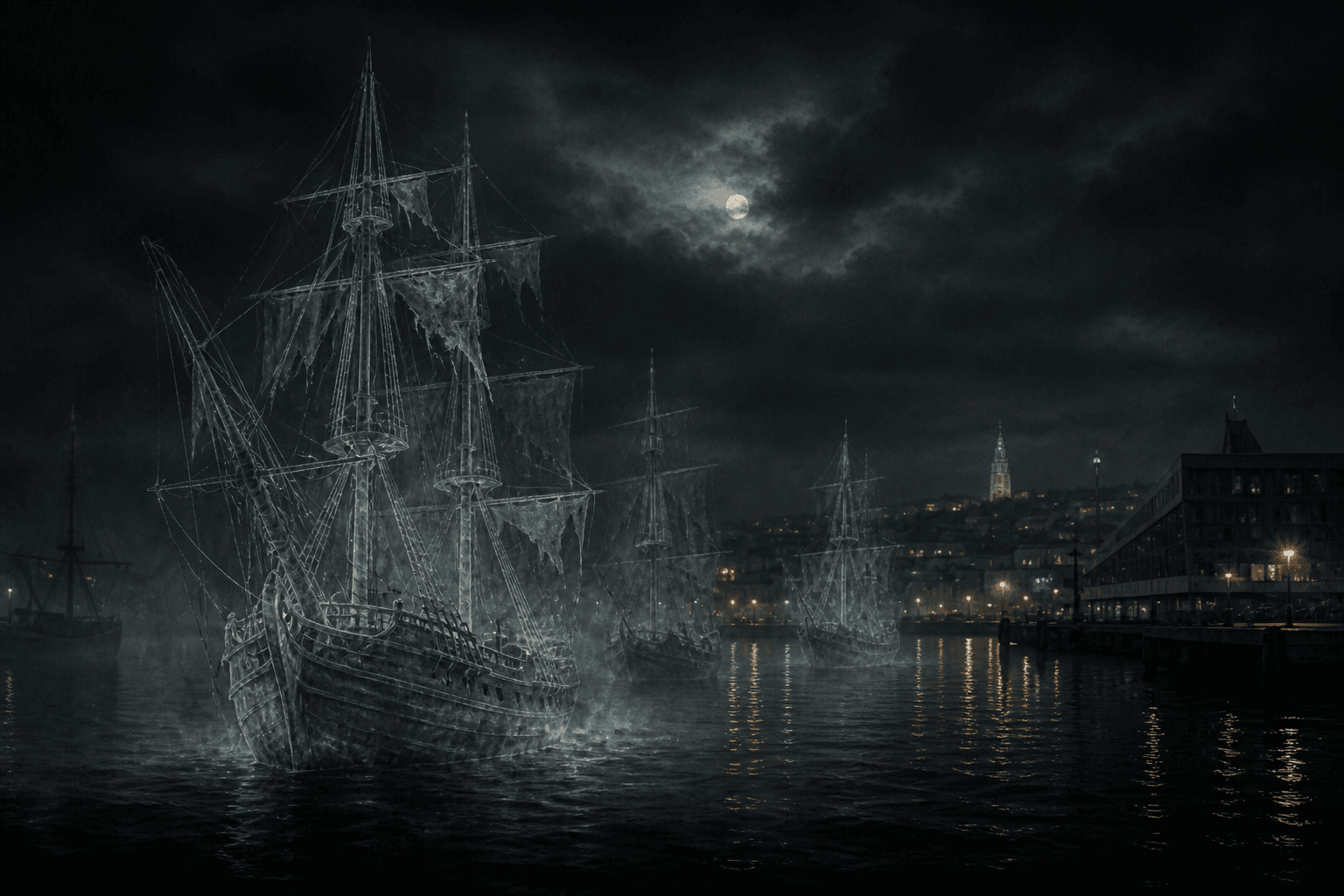
Ghost Ships of Reykjavík Harbor: Phantom vessels sail the capital's waters.
Reykjavík's harbor, a bustling hub of modern life, is also said to be haunted by spectral ships from bygone eras.
Sailors and those who live by the sea have reported seeing phantom vessels, often shrouded in mist, gliding silently through the waters. These ghost ships are believed to be the echoes of vessels lost to the harsh Atlantic or perhaps carrying the souls of those who perished at sea.
Their appearances are often fleeting, leaving behind only a chilling sense of mystery and a reminder of the deep, often tragic, connection between Iceland and the unforgiving ocean.
Arnarnes is a historic location in Iceland mentioned in "Reykdæla saga og Víga-Skútu", one of the ancient Íslendingasögur (Sagas of Icelanders). These medieval narratives preserve the history of Iceland's Viking Age settlement.
Arnarnes is a location that appears in **Reykdæla saga og Víga-Skútu**, one of the Íslendingasögur — the Sagas of Icelanders. These remarkable medieval texts were written in Iceland during the 13th and 14th centuries, preserving oral histories and stories from the Viking Age settlement of Iceland (9th–11th centuries).
The sagas describe real people, places, and events, making locations like Arnarnes living connections to Iceland's deep past. Many of these saga sites can still be visited today, standing as silent witnesses to the dramatic events recorded in the ancient texts.
From the saga:
"Vémundur ríður nú og þræll hans út á Galmaströnd í Arnarnes og spurði að þeim Steini og Helga mágum Steingríms. (13) Og nú er svo að segja að Þorvaldur son Galta úr Arnarnesi féll í naustdyrunum fyrir Steini."
The historic seat of power, a witness to centuries of Icelandic governance.
Bessastaðir, the official residence of the President of Iceland, is a site steeped in history, dating back to the Viking age. It served as the home of prominent figures and a center of power throughout Icelandic history, from the era of the Icelandic Commonwealth to Norwegian and Danish rule, and finally to modern independence.
This location has witnessed pivotal moments, including the signing of the treaty that ceded Iceland to Norway in the 13th century. Walking the grounds of Bessastaðir, you are treading on land that has been central to the governance and political landscape of Iceland for over a millennium. It's a place where history is not just remembered, but felt, connecting you to the enduring legacy of Icelandic statehood.
The supernatural beings behind Reykjavík's ghost stories, drawn from Old Norse tradition and Icelandic folk legend. These are cultural beliefs and stories, not documented history.
💀
Draugar (Undead)
In Old Norse tradition the draugur is not a gentle ghost but a physical revenant — the restless dead who rise from the grave with their bodies intact. Icelandic sagas describe them as dangerous, requiring ritual or force to lay to rest.
🧝
Huldufólk (Hidden People)
Elves who live inside rocks and lava, parallel to human Iceland. Surveys have long suggested many Icelanders will not rule out their existence, and roadworks have occasionally been rerouted around 'elf rocks'.
⛪
Ghost Priests
Folklore tells of clergymen with the power to bind and banish the restless dead. Many Icelandic haunting tales end with a priest 'walking down' a ghost — a ritual said to force a spirit back into its grave.
⛵
Sea Ghosts
Drowned sailors were believed to return with the tides. Harbour towns kept stories of phantom crews and ghost ships — an echo of a nation whose history is bound to a dangerous North Atlantic.
🛡️
Guardian Spirits (Landvættir)
Protective land-wights believed to watch over Iceland itself. Four of them — the dragon, eagle, bull and giant — still appear on the Icelandic coat of arms.
🧌
Trolls
Giant mountain beings who turn to stone in daylight. Icelandic rock formations are traditionally explained as trolls caught by the sunrise.
📜
Curses & Magic
Medieval Iceland preserved a tradition of galdur (magic) and rúnir (runes). Staves and spells feature heavily in folklore, and the Museum of Icelandic Sorcery keeps this history alive today.
🌑
Old Icelandic Beliefs
Isolation, near-total winter darkness and a small, storytelling society kept these beliefs alive far longer than in most of Europe — as living folklore rather than distant myth.
Tales of the City
Reykjavík Ghost Stories
Legends tied to the capital's streets, harbour and hidden corners.
A self-guided evening route linking the old town's most haunted spots. Best walked at dusk; eerier still on a dark winter night.
~3.5 km
距離
60–90 min
徒歩時間
40
停留所
Dusk / night
最適な時間帯
1
National Theatre of Iceland
Staff and performers have reported unexplained sounds, flickering lights and ghostly presences in the backstage areas and upper floors of this early 20th century building.
One of Iceland's oldest building complexes, continuously occupied since the Viking Age. Seven centuries of history have left their mark — staff describe persistent unexplained activity in the older wings.
Iceland's oldest cemetery (established 1838), where spirits are said to walk between mossy headstones at night. Many of Iceland's most prominent historical figures are buried here.
Arnarnes is a historic location in Iceland mentioned in "Reykdæla saga og Víga-Skútu", one of the ancient Íslendingasögur (Sagas of Icelanders). These medieval narratives preserve the history of Iceland's Viking Age settlement.
Drangahraun is a historic location in Iceland mentioned in "Bárðar saga Snæfellsáss", one of the ancient Íslendingasögur (Sagas of Icelanders). These medieval narratives preserve the history of Iceland's Viking Age settlement.
Einarsnes is a historic location in Iceland mentioned in "Egils saga", one of the ancient Íslendingasögur (Sagas of Icelanders). These medieval narratives preserve the history of Iceland's Viking Age settlement.
Elliðavatn is a historic location in Iceland mentioned in "Kjalnesinga saga", one of the ancient Íslendingasögur (Sagas of Icelanders). These medieval narratives preserve the history of Iceland's Viking Age settlement.
Engey is a historic location in Iceland mentioned in "Njáls saga", one of the ancient Íslendingasögur (Sagas of Icelanders). These medieval narratives preserve the history of Iceland's Viking Age settlement.
Engihlíð is a historic location in Iceland mentioned in "Vatnsdæla saga", one of the ancient Íslendingasögur (Sagas of Icelanders). These medieval narratives preserve the history of Iceland's Viking Age settlement.
Eyri is a historic location in Iceland mentioned in "Gísla saga Súrssonar", one of the ancient Íslendingasögur (Sagas of Icelanders). These medieval narratives preserve the history of Iceland's Viking Age settlement.
Fornhagi is a historic location in Iceland mentioned in "Víga-Glúms saga", one of the ancient Íslendingasögur (Sagas of Icelanders). These medieval narratives preserve the history of Iceland's Viking Age settlement.
Gotalækur (síðar Sveinsstaðir) [ágiskun] is a historic location in Iceland mentioned in "Víglundar saga", one of the ancient Íslendingasögur (Sagas of Icelanders). These medieval narratives preserve the history of Iceland's Viking Age settlement.
Grunnafjörður is a historic location in Iceland mentioned in "Fóstbræðra saga", one of the ancient Íslendingasögur (Sagas of Icelanders). These medieval narratives preserve the history of Iceland's Viking Age settlement.
Hagi is a historic location in Iceland mentioned in "Njáls saga, Króka-Refs saga, Laxdæla saga", one of the ancient Íslendingasögur (Sagas of Icelanders). These medieval narratives preserve the history of Iceland's Viking Age settlement.
Hjarðarhagi is a historic location in Iceland mentioned in "Droplaugarsona saga", one of the ancient Íslendingasögur (Sagas of Icelanders). These medieval narratives preserve the history of Iceland's Viking Age settlement.
Kollafjörður is a historic location in Iceland mentioned in "Laxdæla saga", one of the ancient Íslendingasögur (Sagas of Icelanders). These medieval narratives preserve the history of Iceland's Viking Age settlement.
Korpúlfsstaðir is a historic location in Iceland mentioned in "Kjalnesinga saga", one of the ancient Íslendingasögur (Sagas of Icelanders). These medieval narratives preserve the history of Iceland's Viking Age settlement.
Langafit is a historic location in Iceland mentioned in "Grettis saga", one of the ancient Íslendingasögur (Sagas of Icelanders). These medieval narratives preserve the history of Iceland's Viking Age settlement.
Reykjavík is a historic location in Iceland mentioned in "Harðar saga og Hólmverja", one of the ancient Íslendingasögur (Sagas of Icelanders). These medieval narratives preserve the history of Iceland's Viking Age settlement.
Skeljabrekka is a historic location in Iceland mentioned in "Fóstbræðra saga", one of the ancient Íslendingasögur (Sagas of Icelanders). These medieval narratives preserve the history of Iceland's Viking Age settlement.
Stangarholt is a historic location in Iceland mentioned in "Egils saga", one of the ancient Íslendingasögur (Sagas of Icelanders). These medieval narratives preserve the history of Iceland's Viking Age settlement.
Þerneyjarsund is a historic location in Iceland mentioned in "Kjalnesinga saga", one of the ancient Íslendingasögur (Sagas of Icelanders). These medieval narratives preserve the history of Iceland's Viking Age settlement.
Þingnes is a historic location in Iceland mentioned in "Grettis saga, Hænsna-Þóris saga", one of the ancient Íslendingasögur (Sagas of Icelanders). These medieval narratives preserve the history of Iceland's Viking Age settlement.
Tjaldanes is a historic location in Iceland mentioned in "Egils saga", one of the ancient Íslendingasögur (Sagas of Icelanders). These medieval narratives preserve the history of Iceland's Viking Age settlement.
Víðivellir fremri (áður syðri) is a historic location in Iceland mentioned in "Droplaugarsona saga, Fljótsdæla saga", one of the ancient Íslendingasögur (Sagas of Icelanders). These medieval narratives preserve the history of Iceland's Viking Age settlement.
Vorsabær is a historic location in Iceland mentioned in "Flóamanna saga", one of the ancient Íslendingasögur (Sagas of Icelanders). These medieval narratives preserve the history of Iceland's Viking Age settlement.
夜間バージョン: In winter, Reykjavík is dark by mid-afternoon. Stick to lit streets, bring warm layers and non-slip shoes, and treat Hólavallagarður Cemetery with respect — it is a resting place, not an attraction.
Gallery
Images of Haunted Reykjavík
History
How the Folklore Evolved
From Viking settlement to modern ghost walks — the long life of Icelandic ghost stories.
Settlement Era (9th–10th c.)
Norse settlers bring belief in draugar, land-wights and fate. The first ghost and revenant stories enter the oral tradition that will later fill the sagas.
Medieval Iceland (11th–14th c.)
The Sagas of Icelanders are written down, preserving haunting tales as part of documented family history — grounding ghosts in real places and named people.
18th Century
Reykjavík grows from farmland into a town. Hólavallagarður would soon replace the old churchyards; folklore collectors begin recording Iceland's ghost stories.
19th Century
Jón Árnason publishes his great collection of Icelandic folk legends (1862–64). Hólavallagarður Cemetery is consecrated in 1838, quickly gathering its own legends.
20th Century
Höfði House and the National Theatre are built and gather modern hauntings. Ghost stories move from turf farms into the city's stone and timber buildings.
Modern Reykjavík
Ghost walks, museums and open-air heritage sites keep the folklore alive for new generations and visitors — retold, but rarely forgotten.
Know Before You Go
Travel Tips
Best time to visit
Autumn and winter suit the mood best — long darkness and empty streets. Summer's midnight sun makes for a very different, brighter walk.
Winter evenings
Reykjavík is dark by mid-afternoon in December–January. Perfect atmosphere, but dress warmly and expect ice underfoot.
Weather & safety
Icelandic weather turns fast. Waterproofs, warm layers and non-slip shoes make a night walk far more pleasant.
Photography
Höfði House at dusk and Hólavallagarður's mossy headstones are the standout shots. Use a tripod for low light and keep flash off in the cemetery.
Respect cemeteries
Hólavallagarður is an active heritage cemetery. Keep to the paths, keep voices low, and never move or touch graves.
Guided ghost tours
For the stories told properly, join a local ghost walk. Evening departures run year-round from the old town.
Reykjavík has a rich tradition of ghost stories tied to specific buildings — Höfði House, the National Theatre and Hólavallagarður Cemetery among them. These are folklore and reported experiences rather than documented fact, but they are a genuine and well-loved part of the city's cultural heritage.
Can you visit Höfði House?+
Höfði House is a historic city-owned building used for official receptions, so the interior is not generally open to the public. You can freely walk around the exterior and its seafront setting, which is where most of the folklore is set.
Where are the most haunted places in Reykjavík?+
The most storied locations are Höfði House, Hólavallagarður Cemetery (Iceland's oldest, from 1838), the National Theatre of Iceland, and the old harbour with its ghost-ship legends. All are walkable within central Reykjavík.
What are Draugar?+
Draugar (singular draugur) are the physical undead of Old Norse and Icelandic folklore — revenants who rise from the grave with their bodies, unlike the transparent ghosts of other traditions. In the sagas they are dangerous and must be subdued by ritual or force.
Do Icelanders believe in ghosts and elves?+
Belief varies, but Iceland is famous for taking its folklore seriously. Surveys have repeatedly found that many Icelanders are unwilling to firmly deny the existence of Huldufólk (hidden people), and the stories remain a living part of the culture.
Can children visit these haunted places?+
Yes — the sites are ordinary public buildings, streets and a cemetery, all safe to visit by day. Use the same respect you would in any cemetery or historic site. The stories are folklore, not horror.
Is there a ghost walking tour in Reykjavík?+
Yes, several operators run evening ghost and folklore walks through the old town. You can also follow the self-guided ghost walk in this guide, which links the main haunted locations on foot.
What is Iceland's most famous ghost?+
Nationally, the ghost of Gunna from the Reykjanes peninsula is among the most famous. Within Reykjavík itself, the legends of Höfði House — including the 'White Lady' said to have influenced a British ambassador to leave — are the best known.


 Haunted House