Útskálakirkja
Útskálakirkja, a serene white church by the sea, holds centuries of Icelandic maritime history.
At a Glance
Visit time
30-45 minutes to explore the church exterior and cemetery.
Best season
Late spring to early autumn (May-September) for milder weather, though the church is striking in all seasons. Visit in the morning or late afternoon for softer light.
Access
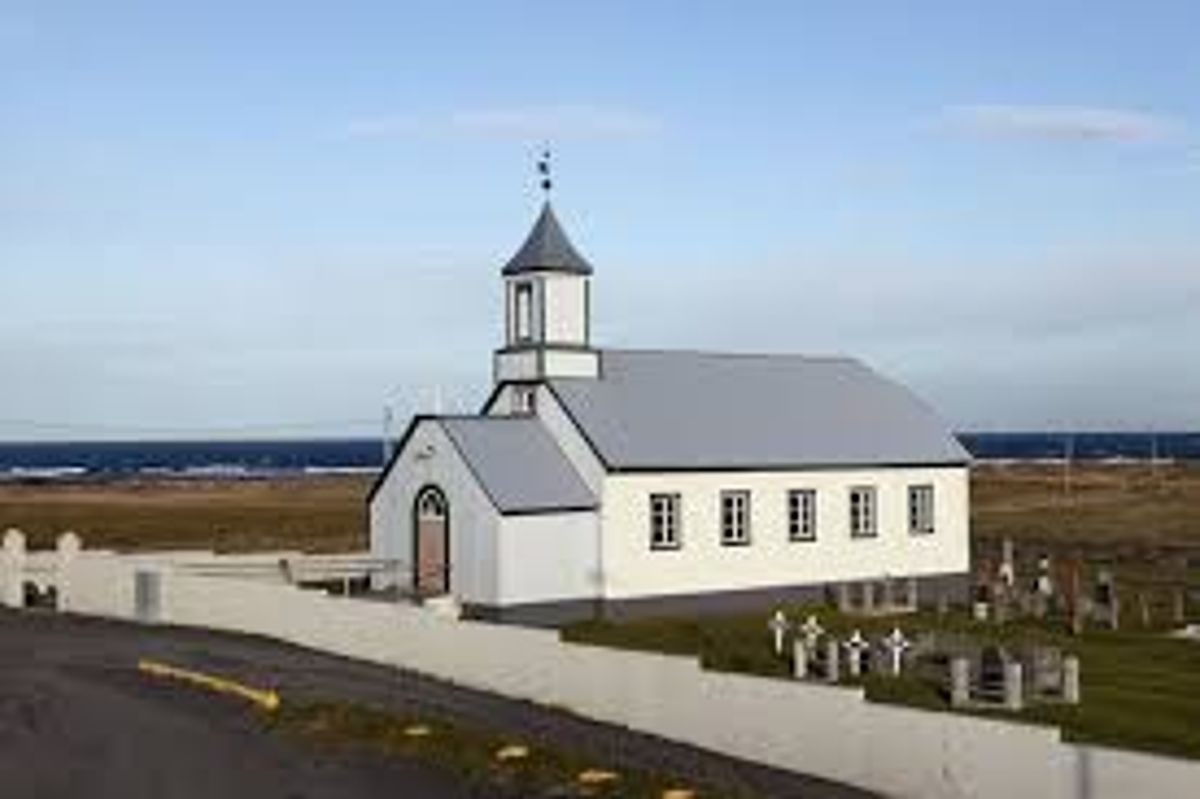
Accessible via a paved road (Route 45) off the main Reykjanesbraut (Route 41). There is a small parking area directly by the churchyard, as seen in the image. No 4WD required.
GPS
64.0770, -22.6672
About
About Útskálakirkja
Útskálakirkja, a serene white church by the sea, holds centuries of Icelandic maritime history.
Discover a historic Icelandic church with a poignant connection to one of the nation's saddest maritime tragedies.
Photos
Photo Gallery
Background
History & Background
Útskálakirkja has a long and storied past, with evidence suggesting a church has stood on this site since the earliest days of Iceland's settlement. The first official mention of a church at Útskálar dates back to Bishop Páll's church register from around 1200 AD, highlighting its deep roots in the community's spiritual life. The current timber church, characterized by its distinctive white facade and grey roof seen in the image, was constructed between 1861 and 1863. This rebuilding effort was spearheaded by the local parish priest, Sigurður B. Sívertsen (1808-1887), ensuring the continuation of the church's vital role for generations to come. However, Útskálakirkja's history is also marked by profound tragedy. It is intimately linked to one of the most devastating maritime disasters in Icelandic history. On March 8, 1685, 136 people, predominantly from the Suðurnes region, were lost at sea. In the aftermath, 47 bodies were recovered on the shores of Garður, and a remarkable 42 of these were laid to rest in a single, communal grave within Útskálakirkja's churchyard. This event remains unparalleled in Icelandic history, as it's believed to be the largest number of individuals buried from the same church on a single day, forever embedding the church in the collective memory of the nation's seafaring struggles.
Útskálar was an important church site, parsonage and estate in Garður. The present timber church was built in 1861–1863 on a stone foundation and includes a choir loft, porch and tower. It seats about 200 people and was built under master builder Einar Jónsson of Brúarhraun. The church has been altered and restored over time and is protected for its cultural value. The site is also closely connected with the long maritime history of the coastal communities of Suðurnes.
Folklore
Story & Folklore
For generations Útskálar served both as a religious centre and a major estate on Suðurnes. The surviving 19th-century church remains one of the clearest architectural links to that history.
💡 Did You Know?
Útskálakirkja's cemetery holds a mass grave for 42 of the 136 sailors lost in a devastating maritime disaster off the coast on March 8, 1685, marking one of Iceland's saddest sea tragedies.
Explore
Hidden Gems Nearby
✦ The Historic Cemetery
Wander through the gravestones, including the unique mass grave from the 1685 tragedy. It offers a poignant connection to Iceland's maritime past and the resilience of its people.
Offers a poignant connection to Iceland's maritime past and the resilience of its people.
✦ Coastal Views
Step outside the churchyard for panoramic views of the rugged Reykjanes coastline and the expansive Atlantic Ocean. The dramatic scenery provides a stunning backdrop for reflection and photography.
Provides a stunning backdrop for reflection and photography, connecting the church to its natural environment.
✦ The Church Interior (if open)
While simple, the interior often features historical artifacts and offers a peaceful atmosphere for quiet contemplation. Check for opening hours or local information.
Experience the quiet reverence and traditional charm of a historical Icelandic church from within.
Help
Frequently Asked Questions
Location
📍 Location
Discover
Explore Nearby
Places from our database within 1.0 km — all data from Sanity
Loading nearby places…
0 places found within 1.0 km
Plan full itinerary →Explore More