Patterson Airfield
A preserved Second World War airfield near Njarðvík, built in 1942 for fighter defence and North Atlantic aircraft ferrying.
At a Glance
Visit time
Allow roughly 45–90 minutes for a short walk and time to understand the former airfield landscape.
Best season
May–September offers the easiest walking conditions, although the site can be visited year-round in suitable weather.
Access
Visit Reykjanes places access at Road 44 by the Patterson fence and directs visitors to walk north from the old ammunition-supply area. Stay on legal public access and outside fenced or restricted land.
GPS
63.9689, -22.5509
About
About Patterson Airfield
A preserved Second World War airfield near Njarðvík, built in 1942 for fighter defence and North Atlantic aircraft ferrying.
Explore one of Reykjanes' most important surviving Second World War aviation landscapes, where fighter-base history meets 20,000-year-old marine geology.
Photos
Photo Gallery
Background
History & Background
Patterson Field formed part of the American wartime air-base complex built near Keflavík after the United States took responsibility for much of Iceland's defence during the Second World War. Work began in 1942, with Patterson developed as the smaller fighter airfield and nearby Meeks Field designed for heavier transport and ferry traffic. Patterson was operational before Meeks. In July 1942, when two of its runways were already usable, aircraft of the U.S. Eighth Air Force passed through Iceland on their way toward Britain. After Meeks became operational, Patterson was used primarily by fighter units connected with Iceland Base Command. The 342nd Composite Group operated aircraft from Patterson, including P-38 Lightning and P-40 Warhawk fighters, with missions that included air defence, convoy cover and anti-submarine patrols. Air Transport Command also used the field as an overflow stop for single-engine aircraft on the North Atlantic ferry route. The airfield was named in memory of a young American pilot who died while serving in Iceland. Patterson's wartime role effectively ended in 1945 and the site fell out of regular use, unlike Meeks Field, which continued to evolve into the present Keflavík International Airport and later the NATO-era military base.
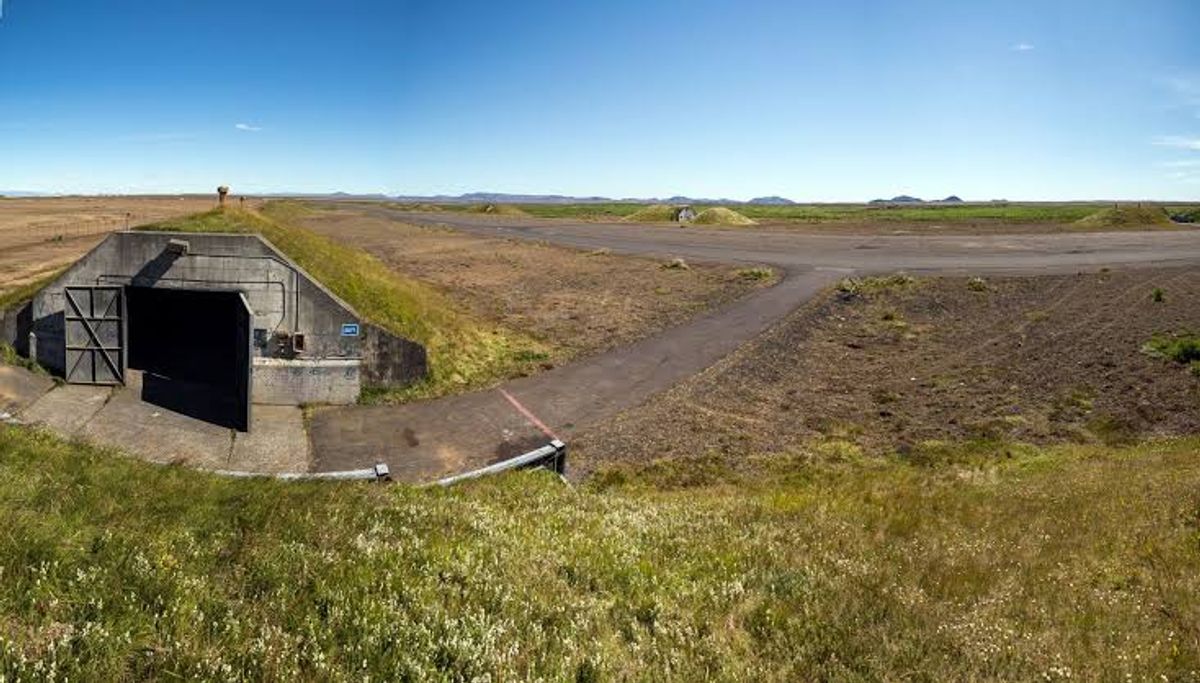
Patterson Airfield is one of the most tangible surviving reminders of the enormous military construction programme that transformed the Reykjanes Peninsula during the Second World War. The former airfield lies near Road 44, a few kilometres from Njarðvík and south-east of the present Keflavík International Airport. U.S. military engineers began developing the Keflavík airfield complex during 1942. Two separate airfields were built only a few kilometres apart: Patterson Field and Meeks Field. Patterson came into use first; by early July 1942, two of its runways were already handling aircraft of the U.S. Eighth Air Force travelling onward toward Britain. Once Meeks Field opened, Patterson's main role was fighter defence. Aircraft operating with the 342nd Composite Group used the field to defend Icelandic airspace, support convoy protection and conduct anti-submarine patrols. Patterson also remained useful to Air Transport Command as an overflow field for single-engine aircraft moving along the North Atlantic ferry route. The airfield fell out of use after the war, while Meeks Field continued to develop and ultimately became part of the modern Keflavík airport complex. Patterson therefore offers an unusual contrast: one wartime airfield became Iceland's main international gateway, while the other survives as a quiet historical landscape. The geology beneath the site adds a second layer of interest. Reykjanes tourism and geopark material describes consolidated marine sediments around Patterson containing subfossil molluscs, especially Mya truncata, dated to approximately 20,000–22,000 years ago. These remains come from the closing stages of the last Ice Age and show that the relationship between land, ice and sea around Reykjanes has changed dramatically. There is no conventional visitor centre at the site. Visit Reykjanes directs visitors to Road 44 at the Patterson fence and to continue on foot north from the old ammunition-supply area. Use only legal public access, park only where safe and permitted, and never enter fenced, signed or restricted land.
Folklore
Story & Folklore
In 1942, the windswept ground south-east of today's Keflavík Airport became part of one of the most important Allied aviation links in the North Atlantic. Patterson Field was built alongside the larger Meeks Field as the United States expanded Iceland's wartime air-defence and aircraft-ferry infrastructure. While Meeks was intended for heavier transport traffic, Patterson became the fighter field. Aircraft of the 342nd Composite Group operated here, including P-38 Lightnings and P-40 Warhawks, protecting Iceland, escorting traffic and supporting anti-submarine patrols. Patterson also handled overflow from the North Atlantic ferry route when Meeks was congested. By 1945 its wartime role was ending, and the airfield soon fell out of use while Meeks evolved into the airport complex used today. The abandoned runways now sit quietly in the Reykjanes landscape. Beneath them lies an even older story: marine sediments containing shells about 20,000–22,000 years old, evidence that the coastline and sea level looked very different near the end of the last Ice Age.
💡 Did You Know?
Patterson was already handling Eighth Air Force aircraft in July 1942, before nearby Meeks Field — the precursor of today's Keflavík International Airport — became operational.
Help
Frequently Asked Questions
Location
📍 Location
Discover
Explore Nearby
Places from our database within 1.0 km — all data from Sanity
Loading nearby places…
0 places found within 1.0 km
Plan full itinerary →Explore More