Krýs og Herdís
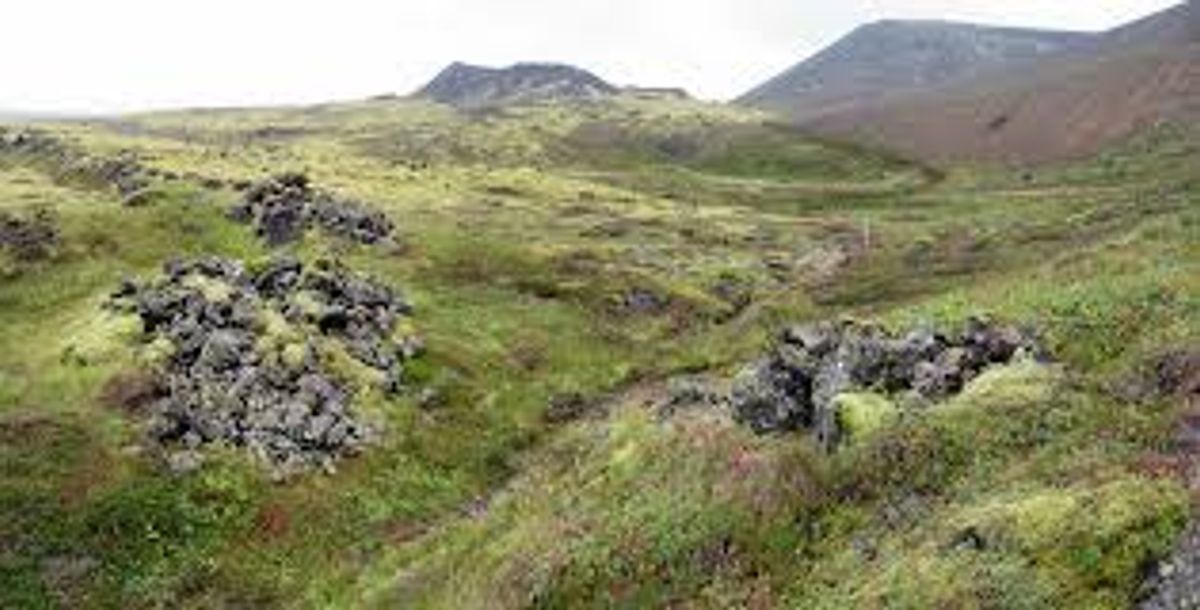
Ancient cairns Krýs and Herdís mark a historic boundary, whispering tales of rival Viking-age women.
About
About Krýs og Herdís
Ancient cairns Krýs and Herdís mark a historic boundary, whispering tales of rival Viking-age women.
Discover a unique blend of historical boundary markers and a captivating Icelandic folktale rooted in the Viking age.
Photos
Photo Gallery
Background
History & Background
Krýs og Herdís represents a fascinating blend of historical land demarcation and ancient folklore. These two cairns, or burial mounds ('dysjar tvær eða vörður' in Icelandic), were formally protected as ancient monuments in 1964, recognizing their significance in Iceland's heritage. Their primary historical role was to serve as crucial boundary markers. They delineated the historical administrative borders between Gullbringusýsla and Árnessýsla, two traditional counties of Iceland, and also marked the land boundaries between the estates of Krýsuvík and Herdísarvík. This highlights the importance of such natural and man-made markers in a time before detailed maps. The site's connection to the Viking Age is profound, reflecting the early settlement patterns and land claims of Norse settlers around 870 AD. While the exact age of the cairns isn't specified, their function as long-standing boundary markers suggests an ancient origin, possibly dating back to or shortly after the settlement era. The accompanying folktale further embeds them in the cultural fabric of the region, offering a glimpse into the local narratives and rivalries that shaped communities in early Iceland. These 'dysjar' are not just stones; they are tangible links to the sagas and the everyday lives of those who first tamed this rugged land.
Krýs og Herdís are two old stone monuments in the border landscape between Krýsuvík and Herdísarvík. They have served as landmarks near the historical boundary between Gullbringusýsla and Árnessýsla and were protected as antiquities in 1964. Local folklore links the monuments with two women, Krýs and Herdís, whose dispute over land became part of the oral tradition of the area. The folklore should be understood as legend rather than documented biography.
Folklore
Story & Folklore
Local tradition tells of Krýs and Herdís as neighbouring women whose disagreement became attached to the boundary landscape between Krýsuvík and Herdísarvík. The stone monuments preserve the place-name and story even though the details belong to folklore.
💡 Did You Know?
Did you know the names Krýs and Herdís not only refer to these ancient cairns but also to the nearby bays, Krýsuvík and Herdísarvík, forever linking the landscape to the legend?
Explore
Hidden Gems Nearby
✦ Krýsuvík Geothermal Area
Just a short drive away, this vibrant geothermal field offers bubbling mud pots, fumaroles, and colorful mineral deposits, showcasing the raw power of Iceland's volcanic activity.
It's a stunning display of geothermal energy and a stark contrast to the historical cairns.
✦ Lake Kleifarvatn
The largest lake on the Reykjanes Peninsula, Kleifarvatn is shrouded in mystery, with deep blue waters and dramatic surrounding landscapes. Its depth is said to hide a mythical monster.
Offers breathtaking photographic opportunities and a sense of serene, otherworldly beauty.
✦ Sýslusteinn (District Stone)
Mentioned in the historical description as being about a 'half-hour walk' east, this stone is another historic boundary marker, reinforcing the region's ancient land divisions.
It provides additional historical context to the Krýs og Herdís cairns and the practice of marking boundaries.
Help
Frequently Asked Questions
Location
📍 Location
Discover
Explore Nearby
Places from our database within 1.0 km — all data from Sanity
Loading nearby places…
0 places found within 1.0 km
Plan full itinerary →Explore More