Kirkjuvogskirkja
Experience Kirkjuvogskirkja, the oldest church in Suðurnes, with its striking black timber, red roof, and rich 19th-century history.
About
About Kirkjuvogskirkja
Experience Kirkjuvogskirkja, the oldest church in Suðurnes, with its striking black timber, red roof, and rich 19th-century history.
Discover the unique architecture and rich history of the oldest church in the Suðurnes region, beautifully restored to its original 19th-century charm.
Photos
Photo Gallery
Background
History & Background
The history of Kirkjuvogskirkja dates back to the late 14th century, when a church was first mentioned at this location. However, the current structure, a beautiful timber church, was built much later, between 1860 and 1861. It was a significant undertaking, financed entirely by Vilhjálmur Kr. Hákonarson, and famously valued at the cost of 300 cows. Initially, the church featured a striking appearance with its exterior 'tarred' (bikuð) to a dark finish, contrasting sharply with its white-framed windows, as seen in its present form. For a period, the church's original character was altered when it was plastered and painted a lighter hue. This change, common for many older Icelandic buildings, aimed to protect the structure but masked its unique timber aesthetic. Fortunately, a comprehensive and historically sensitive restoration project was undertaken from 1970 to 1972. Under the careful supervision of the National Museum of Iceland, Kirkjuvogskirkja was rebuilt from its foundations, meticulously restoring it to its original 19th-century design and materials. This makes it the oldest church in the Suðurnes region to retain such a faithful historical representation. Beyond its architectural journey, Kirkjuvogskirkja holds cultural significance. It is part of the Grindavík deanery within the Kjalarnes arch-deanery. The altarpiece, a reproduction of the Reykjavík Cathedral's Resurrection scene, was painted by Sigurður Guðmundsson in 1865, adding artistic value to its historical fabric. The church stands as a proud symbol of Iceland's enduring Christian heritage, established democratically at Alþingi in 1000 AD, and continues to serve as a beacon of local history and faith.
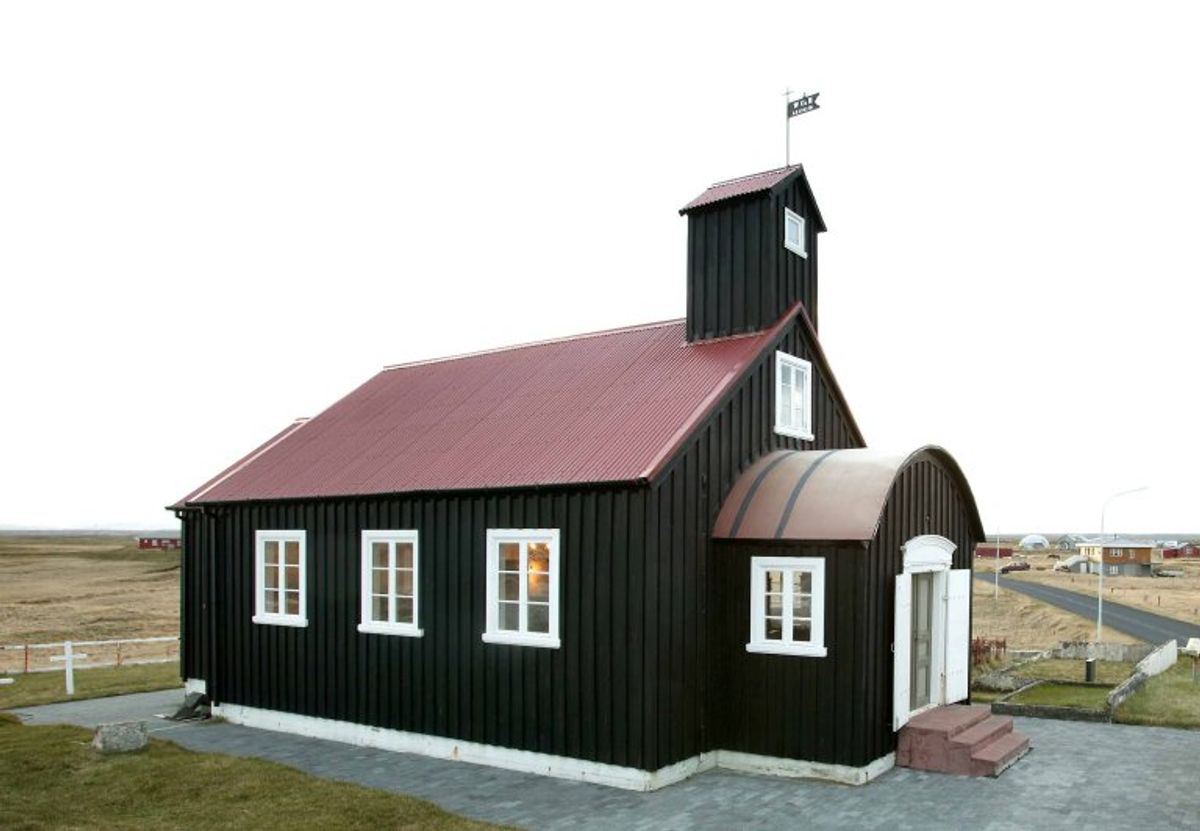
Kirkjuvogskirkja, located in the scenic Reykjanes region, is a captivating historical landmark and the oldest church in Suðurnes. Constructed between 1860 and 1861 by Vilhjálmur Kr. Hákonarson at his own expense – a cost famously equivalent to 300 cows – this timber church boasts a distinctive appearance. Originally, its exterior was treated with tar, giving it its characteristic dark, almost black, color, beautifully complemented by bright white-framed windows and a vibrant red corrugated iron roof. A charming small tower, crowned with a weather vane, rises from its roofline. Over the years, the church underwent changes, including being plastered and painted a lighter color. However, a significant restoration project from 1970 to 1972, overseen by the National Museum of Iceland, meticulously returned Kirkjuvogskirkja to its original 19th-century form. This dedication ensures that visitors today can experience the church much as it appeared when first built. Inside, the altar piece, painted by Sigurður Guðmundsson in 1865, is a reproduction of the Reykjavík Cathedral altarpiece, depicting the Resurrection. Visiting Kirkjuvogskirkja offers a profound connection to Iceland's religious and architectural past. The church's setting, surrounded by the open, often windswept landscapes of Reykjanes, adds to its serene and timeless appeal. It's a testament to the enduring faith and craftsmanship of past generations. Allow about 30-45 minutes to appreciate its exterior, step inside if open, and reflect on its long history. The site is easily accessible and provides a quiet retreat for contemplation.
Folklore
Story & Folklore
Imagine the rugged Reykjanes landscape in the mid-19th century as Vilhjálmur Kr. Hákonarson embarked on a grand project: building Kirkjuvogskirkja. Completed in 1861, this timber church was a beacon for the community, its exterior originally tarred black with crisp white windows, much like its striking appearance today. For decades, it served its congregation, even undergoing a period where it was plastered and light-painted, losing some of its original character. But the spirit of its origins was not forgotten. Between 1970 and 1972, under the meticulous care of the National Museum, Kirkjuvogskirkja was painstakingly rebuilt from its foundations, meticulously returned to its initial design. Stepping onto the paved path towards its arched entrance, beneath the iconic red roof and the small tower with its weather vane, you're not just entering a building; you're stepping into a living testament to Icelandic resilience, faith, and a commitment to preserving history. The golden light reflecting in its white windows hints at the stories held within its dark timber walls.
💡 Did You Know?
Kirkjuvogskirkja, built in 1860-61, was originally said to have cost the equivalent of 300 cows, making it a significant investment and the oldest church in Suðurnes.
Explore
Hidden Gems Nearby
✦ The Altar Piece
Inside, discover the beautiful altar piece painted by Sigurður Guðmundsson in 1865, a reproduction of the Reykjavík Cathedral's depiction of the Resurrection.
It's a significant artistic and religious artifact, connecting the local church to national ecclesiastical art.
✦ Original Timber Exterior
Admire the meticulously restored black tarred timber exterior and crisp white windows, reflecting the church's original 19th-century appearance after a 1970s reconstruction.
This striking aesthetic is a faithful recreation of its historical design, offering a unique visual contrast against the Icelandic landscape.
✦ Weather Vane
Look up at the small tower that crowns the red roof to spot the intricate weather vane, a classic detail of Icelandic church architecture.
It adds a charming, traditional touch and an interesting focal point to the church's silhouette.
Help
Frequently Asked Questions
Location
📍 Location
Discover
Explore Nearby
Places from our database within 1.0 km — all data from Sanity
Loading nearby places…
0 places found within 1.0 km
Plan full itinerary →Explore More