
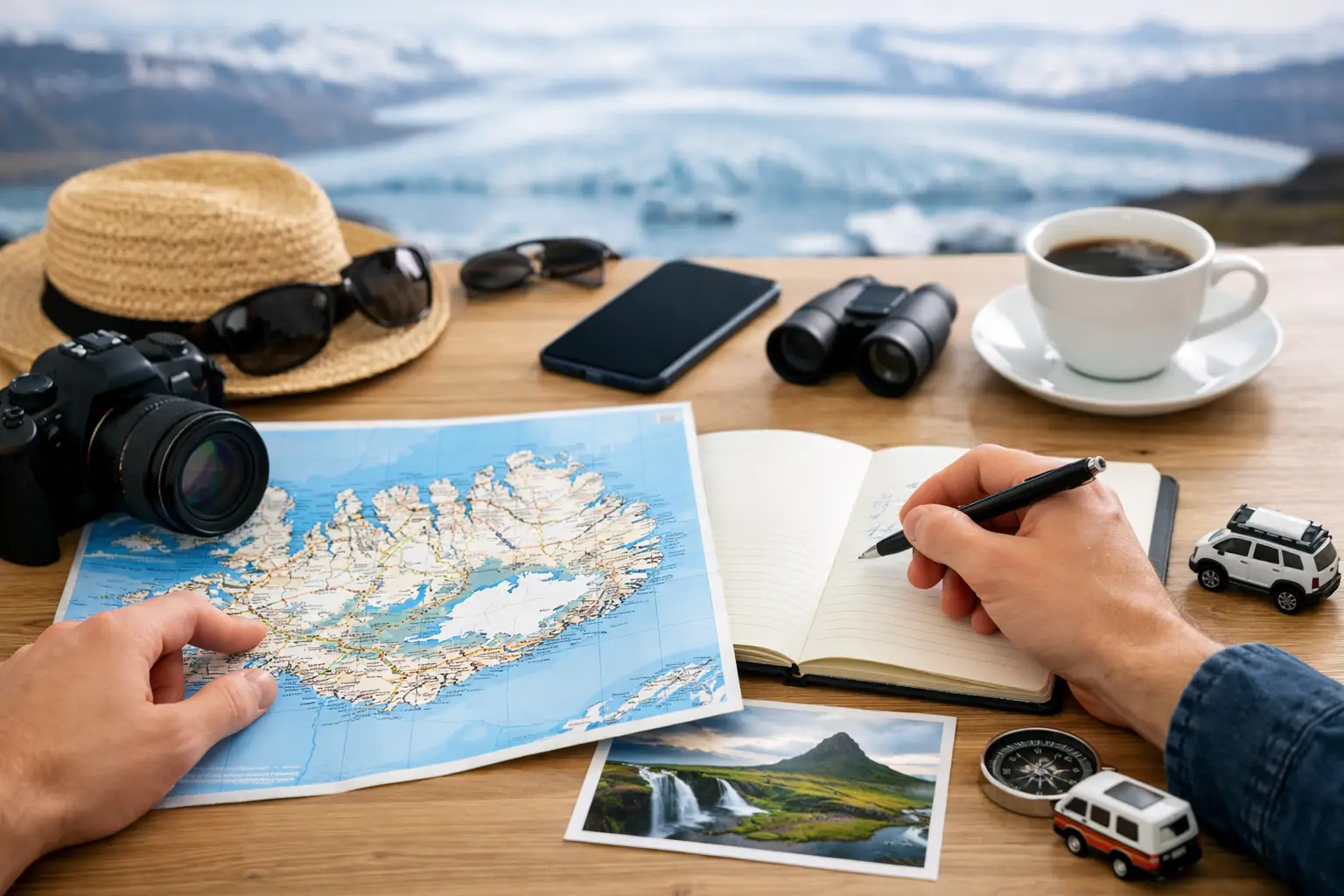
How to Plan Iceland Trip Without Stress
Learn how to plan Iceland trip with smart timing, budgeting, routes, tours, and weather tips so you book confidently and travel with less stress.
A lot of Iceland trip mistakes happen before the flight is even booked. Travelers try to fit the Ring Road, the Highlands, glacier hikes, hot springs, Reykjavik, and the Northern Lights into six days, then wonder why the trip feels rushed. If you are figuring out how to plan Iceland trip details the right way, the biggest win is simple: match your route to your season, budget, and energy level.
Iceland is easy to dream about and surprisingly easy to overplan. Distances look short on a map, but weather, road conditions, and daylight can change what is realistic fast. The best trips are not built around doing everything. They are built around doing the right things, in the right region, at the right pace.
How to plan Iceland trip around your travel style
Start with the kind of trip you actually want, not the one social media says you should take. Iceland works beautifully for road-trippers, couples, small groups, and travelers who prefer guided day tours from Reykjavik. The mistake is assuming one format is automatically better than another.
If you like flexibility and want waterfalls, black sand beaches, small towns, and spontaneous stops, a rental car is usually the strongest fit. If you would rather skip winter driving, parking, and route logistics, staying in Reykjavik and booking guided tours can be the smoother option. There is no prize for self-driving in a storm.
Your travel style also affects how much ground you should cover. First-time visitors often do best with one of three approaches: a Reykjavik-based trip with day tours, a South Coast focus, or a full Ring Road circuit if they have enough time. In practice, enough time usually means at least 8 to 10 days in summer and a bit more caution in winter.
Pick the season before you pick the itinerary
This is where Iceland planning gets real. Summer gives you long daylight hours, easier driving, and more route freedom. It is the best season for the Ring Road, multi-region itineraries, and travelers who want to pack a lot into one trip. The trade-off is higher prices and more competition for popular hotels, rental cars, and tours.
Winter is excellent for Northern Lights trips, ice caves, snowy landscapes, and fewer crowds in some areas. It also brings road risk, shorter days, and more itinerary uncertainty. That does not mean winter is a bad choice. It means winter rewards travelers who plan lighter, stay flexible, and avoid trying to cover the entire country too fast.
Shoulder seasons can be a sweet spot. Spring and fall often bring lower prices and fewer visitors, but conditions can still shift quickly. Some highland roads and remote routes will not be realistic. If your dream trip depends on one specific region or activity, check seasonality before you lock anything in.
Choose the right route, not the biggest route
One of the smartest ways to plan an Iceland trip is to build around regions instead of trying to check off the whole map. Iceland may look compact, but driving times add up, especially when you stop every twenty minutes for photos.
For a short first trip, Reykjavik, the Golden Circle, and the South Coast are usually the best return on time. You get geysers, waterfalls, glaciers, black sand beaches, and easy access to tours without spending half the trip in the car. This route works well in both summer and winter, although winter travelers should give themselves more buffer time.
For 7 to 10 days in summer, the Ring Road starts to make sense. You can experience South Iceland, East Iceland, North Iceland, and the Snaefellsnes Peninsula or Reykjavik area without turning the trip into a nonstop drive. For travelers interested in hiking, remote landscapes, or less-visited regions, adding extra days makes a big difference.
The Highlands are different. They are not a casual add-on. They require the right season, the right vehicle, and comfort with more remote travel. If this is your first Iceland visit, it is usually better to save the Highlands for a second trip unless they are the main reason you are going.
Budget for the parts of Iceland that surprise people
Iceland is not a budget destination by accident. Food, accommodations, activities, and transportation can add up quickly, especially in peak season. A solid budget is not just about your total spend. It is about knowing where Iceland can get expensive fast.
Car rentals and accommodations are two of the biggest planning pressure points. If you are traveling in summer, booking both early matters. Last-minute flexibility sounds nice until hotel options shrink and rates spike. The same goes for popular experiences like glacier hikes, blue ice caves in winter, premium lagoon visits, and small-group tours.
Gas is another line item road-trippers often underestimate. So are parking fees at some major sites, meals in tourist-heavy areas, and optional extras like upgraded insurance. On the other hand, you can balance costs by mixing restaurant meals with grocery runs, choosing standard guesthouses over premium stays in some areas, and being selective about paid experiences.
Spend where convenience changes the trip. That might mean a better-located hotel, an airport transfer after a red-eye flight, or a guided tour for an activity that is harder to do independently. Travelers using one Iceland-focused platform like GoIce Travel often find it easier to compare those trade-offs without bouncing between ten different tabs.
Book in the order that protects your trip
There is a smarter booking sequence for Iceland, and it starts with the pieces that are hardest to replace. First, lock in your travel dates and flights. Next, decide whether you are self-driving or using guided transport. After that, book accommodations or your base, then the rental car if needed, then your top-priority tours.
Why that order? Because Iceland inventory can tighten fast in peak periods, and your route depends on where you can sleep and how you will move around. It is much easier to add a hot spring or whale watching tour later than to fix a broken route caused by sold-out lodging.
Keep some white space in the schedule. Iceland rewards flexibility. You may want extra time at a glacier lagoon, a weather swap between days, or an unplanned stop at a geothermal pool. If every hour is spoken for, the trip can feel like logistics instead of travel.
Weather changes the plan, so build for that
The weather in Iceland is not a side note. It shapes driving safety, activity availability, and even how much you enjoy each day. That is why smart planning is less about rigid perfection and more about building resilience into the trip.
In winter, avoid long same-day drives tied to fixed bookings if bad weather would create a problem. In any season, give yourself room between regions instead of scheduling every day at maximum capacity. If you are self-driving, understand what kind of roads you will be using and choose a vehicle that fits the route and season.
Pack for changing conditions, not the temperature listed in your weather app. Waterproof layers, good shoes, and practical outerwear matter more than trying to dress for a perfect forecast. Iceland can give you sun, rain, wind, and mist in a single afternoon.
Decide what needs a tour
Not every Iceland experience needs a guide, but some absolutely do. Ice caves, glacier hikes, many highland routes, some volcano and snowmobile experiences, and certain remote adventures are better and safer with a professional operator. Even independent travelers usually mix self-drive sightseeing with a few guided experiences.
That balance works well because it saves your energy for the parts of the trip that benefit from flexibility, like scenic driving and town stops, while letting experts handle technical activities. It also helps if you want access to places or conditions that are difficult to judge on your own.
For first-time visitors, the strongest paid experiences are usually the ones that add access, safety, or insight, not just transportation. If a tour gives you specialized gear, local guiding, or takes planning pressure off a complicated day, it often earns its place in the budget.
Don’t overbook Reykjavik or underestimate it
Reykjavik is often treated like a one-night arrival point, but that sells it short. It is a practical base for day tours, a good place to recover from a flight, and an easy way to add restaurants, culture, and a little breathing room between bigger adventure days.
At the same time, not every trip needs multiple city days. If your priority is landscapes and road travel, one or two nights may be enough. If you are not renting a car, a longer Reykjavik stay makes more sense because it simplifies logistics while still giving you access to major highlights.
The right amount of Reykjavik depends on whether you want a basecamp trip or a countrywide route. Neither is more authentic. They are just different ways to experience Iceland well.
How to plan Iceland trip without losing the fun
The best Iceland plan is not the most packed one. It is the one that leaves room for weather, wonder, and the reality that this country looks better in person than it does in any itinerary spreadsheet.
Pick fewer regions, book the essentials early, and stay honest about your pace. Iceland does not need to be conquered to feel unforgettable. It just needs enough structure that you can relax and enjoy what is right in front of you.