
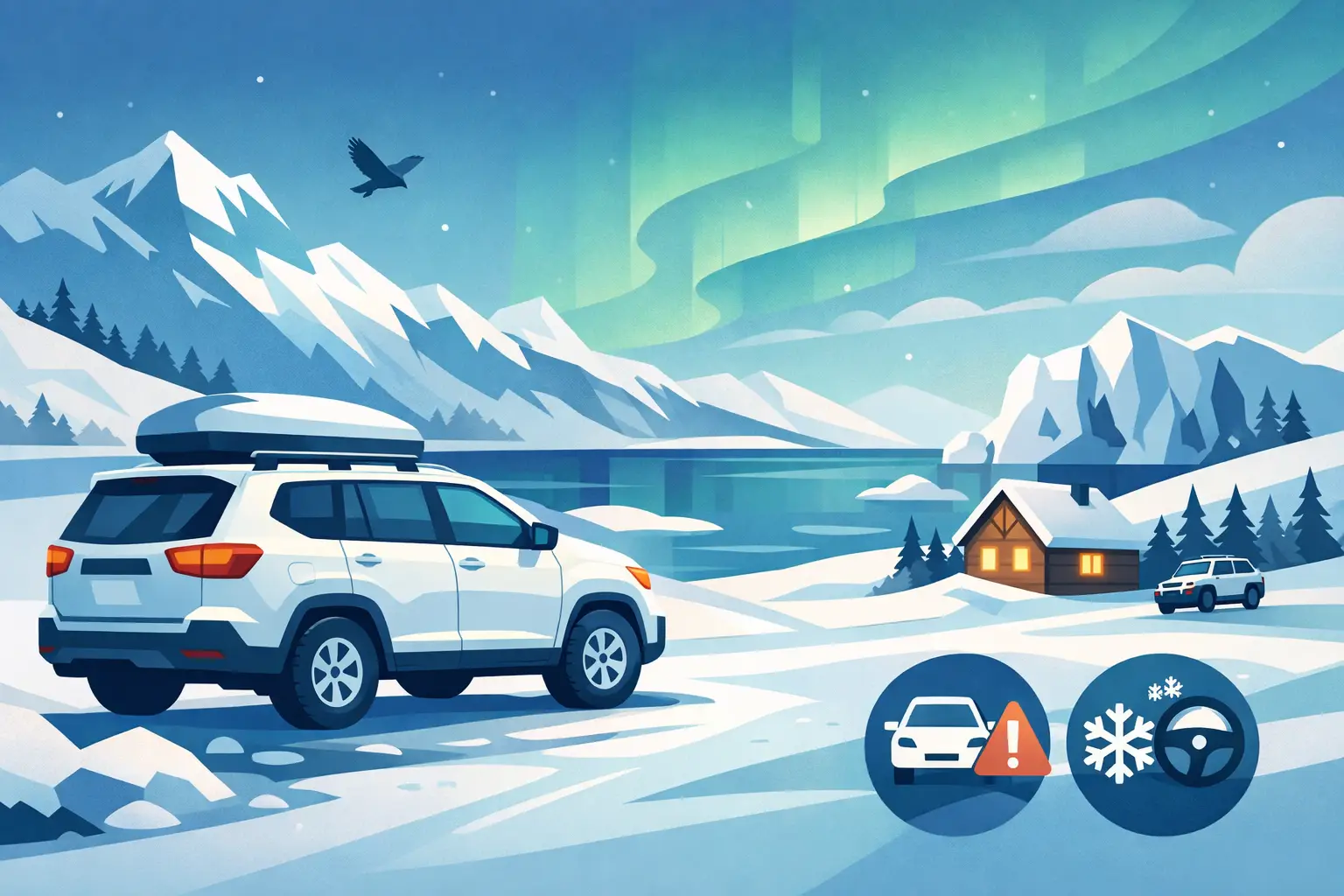
Car Rental in Iceland Winter: What to Book
Planning car rental in Iceland winter? Learn which vehicle to book, what insurance matters, and when driving yourself is actually worth it.
The moment you leave Keflavik in January, Iceland makes the decision for you. This is not a destination where the cheapest car always wins. With car rental in Iceland winter, the right vehicle can mean the difference between an easy road trip to waterfalls and a stressful day spent second-guessing every patch of snow.
Winter road trips here can be incredible. You get frozen lava fields, low golden light, quieter landmarks, and real flexibility to chase a clear forecast. But Icelandic winter also comes with fast weather shifts, wind that can feel stronger than the temperature suggests, and road conditions that change by region and by hour. Renting smart matters more than renting cheap.
Car rental in Iceland winter starts with route, not price
A lot of travelers start by comparing daily rates. That makes sense on a city trip, but Iceland is different. Your route should decide your rental category first.
If you are sticking to Reykjavik, the Golden Circle, and the South Coast as far as Vik or maybe Jokulsarlon in stable conditions, a compact SUV is often the sweet spot. It gives you better clearance, a more planted feel on snowy roads, and enough room for luggage without jumping straight into the highest price tier. For most first-time winter visitors, this is the category that feels worth the upgrade.
If your plan is very conservative - think airport transfer, Reykjavik base, and short day trips only when the weather is calm - a small 2WD can work. The trade-off is confidence. On icy parking lots, slushy shoulders, and windy stretches, that lower price can stop feeling like a bargain pretty quickly.
If you are heading farther into North Iceland, dealing with more remote winter driving, or traveling with a group plus bags, a larger 4x4 is the safer call. Not because it makes you invincible - it does not - but because traction, stability, and tire setup matter when conditions are less forgiving.
What kind of vehicle is best?
For most US travelers, the best answer is simple: book a 4x4 or AWD SUV unless your itinerary is extremely light and urban. In winter, that extra capability is usually money well spent.
That does not mean you need the biggest vehicle on the lot. Bigger can help, but it also brings higher fuel costs, a larger parking footprint, and sometimes a less relaxed driving experience on narrow or slick roads. A mid-size SUV is often the practical middle ground.
Manual versus automatic also matters more than some people expect. If you are fully comfortable driving manual in snow, you may find a better rate. If not, book an automatic and remove one variable from an already demanding environment. Winter in Iceland is not the place to save a little money and spend the trip stressed.
When a small car still makes sense
There are cases where a basic car is enough. If you are visiting for a short winter city break, planning guided tours for the longer days out, and only want a rental for airport runs or local errands, a small hatchback can be reasonable. The key is matching the car to a low-risk plan, not hoping the weather will cooperate with an ambitious one.
Why SUVs are so often the default
Most winter visitors are not just driving to dinner. They want the freedom to reach waterfalls, black sand beaches, glacier lagoons, and scenic pull-offs across changing conditions. That is where an SUV earns its place. It is not about off-roading - which is strictly illegal in Iceland - but about handling winter roads with more confidence.
Insurance matters more in Iceland than many travelers expect
If there is one area where travelers regret cutting corners, it is coverage. Iceland has some very specific risk factors, and winter adds a few more.
Gravel protection can still matter even in winter, especially on shoulders, rural lots, and roads that are not perfectly clear. Sand and ash coverage is more situational, but in certain regions and weather patterns it is worth considering. Collision coverage is the obvious baseline, yet many renters get caught out by the smaller details: windshield chips, door damage from extreme wind, and exclusions buried in the terms.
Wind is a bigger issue than many first-time visitors realize. A parked car door can be yanked hard if you open it carelessly on a stormy day. That kind of damage is common enough that it should change how you think at every stop. Hold the door firmly, park facing the wind when possible, and never let kids swing a door open without help.
Before you book, check the deductible, what the premium protection actually reduces, and whether roadside assistance is included or extra. The cheapest headline rate can become expensive once winter-specific add-ons appear at pickup.
The real cost of car rental in Iceland winter
Winter can look cheaper than summer at first glance, but the final price depends on timing, vehicle type, insurance, and where you plan to go. A small car with basic coverage may seem attractive online, yet once you add the protection most travelers should carry, the gap between that and a better-equipped SUV often narrows.
Fuel is another factor. Larger 4x4 vehicles cost more to run, so there is a balance to strike. If your route is limited and conditions look mild, a compact SUV may deliver better overall value than a full-size model. If your trip involves long stretches and a lot of gear, the bigger vehicle may still be the better buy simply because it fits your trip without compromises.
Booking early helps more than many people think, especially around the holidays, February northern lights season, and school breaks. Winter inventory is smaller than summer, and the most practical vehicle categories go first.
Driving in Iceland in winter is doable, but not casual
This is where expectations matter. Yes, many travelers safely self-drive Iceland in winter every year. No, it is not a road trip you should treat like a scenic weekend at home.
Daylight is limited. In December and early January, your useful driving window is much shorter than most visitors expect. Roads may be clear near Reykjavik and much rougher farther east or north. Wind can make an otherwise manageable route tiring. Even experienced drivers need to build in extra time and keep plans flexible.
That is why shorter driving days work best. Rather than trying to cover huge distances, focus on one region well. The South Coast is popular for a reason. It is dramatic, relatively straightforward compared with more remote areas, and full of high-reward stops.
When not to rent a car
Sometimes the smartest winter travel decision is skipping the rental entirely. If you are nervous about snow driving, arriving after a long overnight flight, or planning a short stay centered on Reykjavik and a few top sights, guided tours may be the better fit. You trade some flexibility for less stress and more certainty.
This is especially true when the weather turns. A tour operator can adjust logistics quickly, while independent drivers are left checking road updates, reworking plans, and deciding whether to risk a route at all. There is no shame in choosing convenience over control.
Booking tips that actually help
First, match the car to your worst likely day, not your best one. A route that looks easy on a blue-sky photo can feel very different in sleet and crosswind.
Second, book with clear pickup terms and read the fuel policy, mileage policy, tire information, and cancellation rules before you commit. Winter arrivals are tiring, and surprises at the counter are the last thing you want.
Third, keep your itinerary realistic. If you want the freedom of a self-drive trip without too much pressure, build your plan around the Southwest or South Coast and leave the deeper regional loops for another season. Iceland rewards restraint in winter.
If you want one practical rule of thumb, it is this: for most first-time visitors, car rental in Iceland winter makes sense when you book an SUV, carry solid insurance, and keep your route flexible. That combination gives you the best shot at enjoying the country instead of negotiating with it every mile.
GoIce Travel helps travelers compare the parts of an Iceland trip that usually get scattered across five different tabs. That is useful in winter, when convenience is nice but confidence matters even more.
Book the car that lets you breathe a little easier when the forecast shifts. You will enjoy Iceland more when your trip is built for the season it is actually in.