
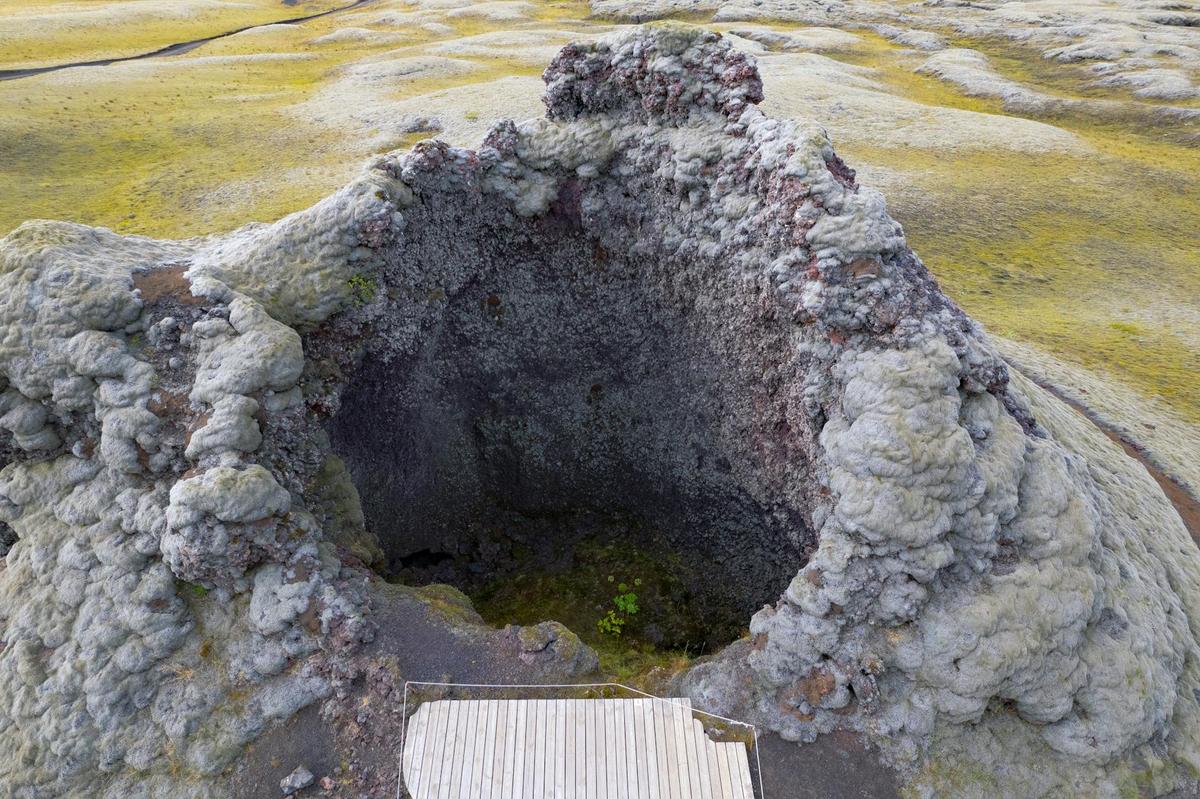
Lakagígar (Laki Craters)
Laki is a volcanic fissure system in the central Highlands that produced one of the most catastrophic volcanic events in recorded history — an eruption in 1783–…
Stuttlega
Heimsóknartími
Allow at least half a day for the Lakagígar circuit and stops; a full day is better if hiking Laki or additional marked trails.
Besta árstíð
Summer only, after F206 and F207 have officially opened and river and weather conditions are suitable.
Leiðarvísir
Four-wheel drive is required. The road includes four unbridged river crossings that can rise rapidly after rain. Check official road conditions and ask rangers or Skaftárstofa for current advice before entering the route.
GPS
64.0667, -18.2333
Um
Um Lakagígar (Laki Craters)
Laki is a volcanic fissure system in the central Highlands that produced one of the most catastrophic volcanic events in recorded history — an eruption in 1783–84 that changed global climate and caused mass death across Europe.
Myndir
Myndavefur
Bakgrunnur
Saga og bakgrunnur
The Laki eruption of June 1783 – February 1784 was one of the most consequential volcanic events in human history. The eruption produced 14 km³ of lava — the largest lava flow in historical times — and released enormous amounts of sulfur dioxide into the atmosphere. The resulting 'Laki Haze' killed crops across Europe, caused famine that may have contributed to the French Revolution, and the resulting famine in Iceland killed approximately 25% of Iceland's entire population. It also caused an unusually cold winter in North America, disrupting military operations during the American Revolutionary War.
Lakagígar are a crater row extending for more than 29 kilometres in Vatnajökull National Park. More than 130 craters formed during the Skaftáreldar eruptions of 1783–1784. Today the crater landscape is covered by extensive moss and can be explored from designated stops and marked hiking trails. Access is via roads F206 and F207; the national park states that the route requires four-wheel drive and includes four unbridged river crossings, so current road and weather conditions should always be checked before departure.
Þjóðsögur
Saga og þjóðsögur
The Skaftáreldar eruptions began in 1783 and created the long Lakagígar crater row and vast lava fields. The resulting Móðuharðindi, or Mist Hardships, became one of the most severe natural disasters in Iceland’s settled history and affected climate, crops and livelihoods far beyond Iceland. The quiet moss-covered landscape seen today preserves clear evidence of that event.
Staðbundin þjóðsaga
The Skaftá Fires and the Mist Hardships
The defining human story of Lakagígar is documented history rather than invented folklore. The Skaftáreldar eruptions began in 1783 and released enormous lava flows, ash and volcanic gases. The resulting Móðuharðindi — the Mist Hardships — devastated livestock and food production in Iceland and contributed to famine and disease. The atmospheric effects extended far beyond Iceland. Today the quiet moss-covered crater row preserves the landscape of an eruption that profoundly affected both Icelandic society and the wider Northern Hemisphere.
Staðsetning
Staðsetning
Discover
Explore Nearby
Places within 5.0 km
Loading nearby places…
0 places found within 5.0 km
Plan full itinerary →Kanna meira