Krafla
Krafla is an active volcanic caldera in the Mývatn region — a landscape of steaming lava fields, boiling mud pools and vivid green crater lakes shaped by a seri…
About
About Krafla
Krafla is an active volcanic caldera in the Mývatn region — a landscape of steaming lava fields, boiling mud pools and vivid green crater lakes shaped by a series of eruptions between 1975 and 1984.
Walk through one of Iceland's best places to see recent rifting, lava flows and volcanic geology at close range.
Photos
Photo Gallery
Background
History & Background
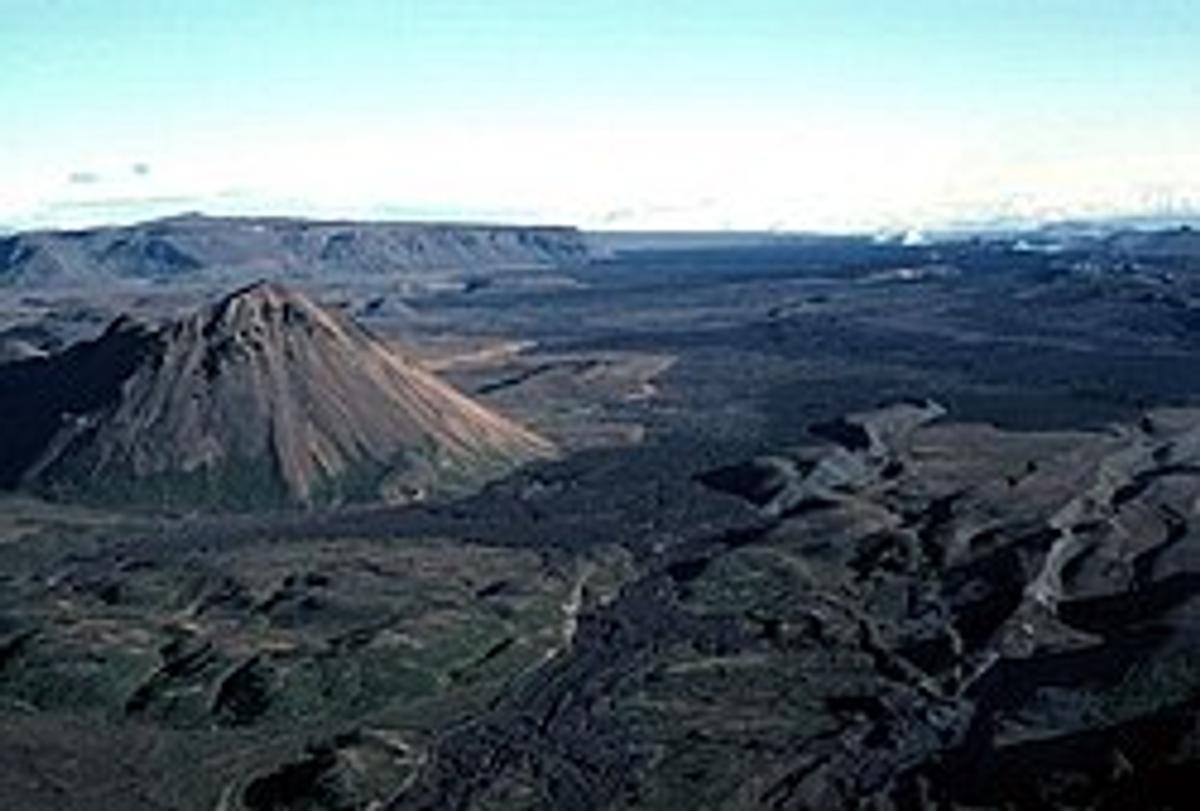
The 'Krafla Fires' (1975–1984) were a series of volcanic eruptions that disrupted a geothermal drilling project that was underway at the time — drilling rigs had to be abandoned as lava flowed toward them. The eruptions produced spectacular lava lakes in the Víti crater. The most recent activity produced the Leirhnjúkur lava field, which still steams and remains warm to walk across today.
Krafla is one of Iceland's best-known volcanic systems and a key geological stop in the Lake Mývatn area. The system lies on the active rift zone where the North American and Eurasian plates are pulling apart, and its landscape includes fissures, lava fields, geothermal areas and the broad Krafla caldera. The most famous modern episode was the Krafla Fires of 1975–1984. During that period repeated magma intrusions opened and reactivated fissures across the system, with nine intrusions ending in eruptions. The young black lava around Leirhnjúkur remains one of the clearest places for visitors to see the results of that activity. Another major landmark is Víti, a roughly 300-metre-wide explosion crater formed at the beginning of the Mývatn Fires in 1724. A paved road leads toward the crater from Route 1. Krafla is therefore not one single viewpoint but a broader volcanic landscape, best understood by combining Víti, Leirhnjúkur and nearby geothermal features. Visitors should stay on established routes and remember that conditions can change quickly in this exposed highland-edge environment.
Folklore
Story & Folklore
Krafla is a volcanic system in North Iceland that experienced its most dramatic modern activity in the 'Krafla Fires' of 1975–1984 — nine eruptions over nine years that created rifting, lava flows and forced evacuation of the area around Mývatn. The geothermal power plant built at Krafla in the 1970s accidentally triggered the eruptions by drilling into the magma system. Today the caldera is accessible for hiking, with vivid blue crater lake Víti at the summit and the steaming, sulphurous landscape of Leirhnjúkur on the caldera floor. The geological drama of Krafla is ongoing — seismic activity continues. New magma intrusion was detected in 2024.
💡 Did You Know?
During the Krafla Fires from 1975 to 1984, repeated magma intrusions produced nine eruptions in the Krafla system.
Local Legend
Legends of Krafla
Krafla has been part of Icelandic folklore for generations. Local tales speak of hidden people (huldufólk) and other supernatural beings who inhabit the area. According to tradition, this place deserves respect and visitors should be mindful of the ancient spirits who call it home.
Explore
Hidden Gems Nearby
✦ Lava Formations Close-Up
Look carefully at the lava formations near Krafla — each tells a story of how it cooled.
Rope lava, pillow lava, and columnar basalt each formed under different conditions, creating a geological textbook in stone.
✦ Moss & Lichens
The moss and lichen growing on the volcanic rock are some of the first life to colonize new lava fields.
Some of these organisms grow less than 1cm per year, meaning the patches you see may be decades or centuries old.
✦ Sunset Colors
The volcanic rock takes on incredible red and gold hues during sunset.
The iron-rich minerals in the lava glow in warm light, creating a photographer's paradise.
Help
Frequently Asked Questions
Location
📍 Location
Discover
Explore Nearby
Places from our database within 1.0 km — all data from Sanity
Loading nearby places…
0 places found within 1.0 km
Plan full itinerary →Explore More