







Natural Hot Spring
Austurengjahver
reykjanes
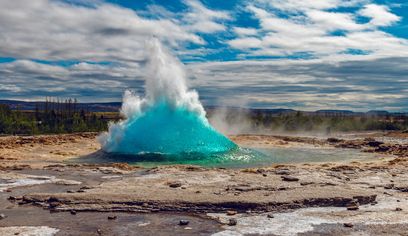
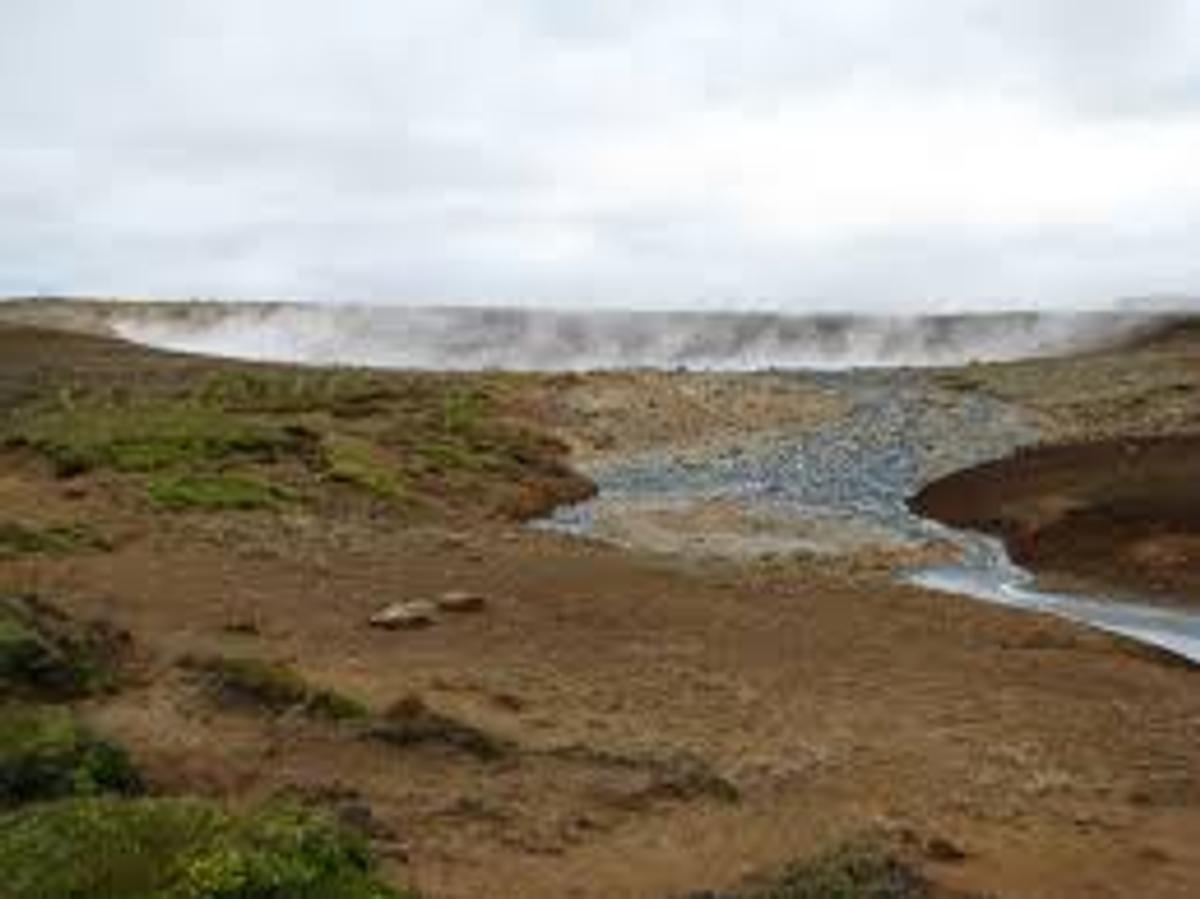
Austurengjahver is an active geothermal mud spring in Austurengjar, south of Kleifarvatn on the Reykjanes Peninsula. Austurengjar is one of the principal geothermal areas within the wider Krýsuvík system, where steam, hot ground and mineral-rich mud reveal heat rising through the active volcanic landscape. This is a natural geothermal feature, not a bathing spring. Visitors should keep away from boiling mud, steam vents and thin crusts and avoid stepping off established safe ground.
See an active mud spring in a quieter part of the Krýsuvík geothermal system and understand how heat, groundwater and volcanic rock interact beneath Reykjanes.
Story
Austurengjahver is part of a landscape where the surface gives only small clues to the heat below. Steam escapes through cracks, mineral-rich water alters the ground and mud bubbles where groundwater meets volcanic heat. Across Krýsuvík, these features shift over time as earthquakes and changes in underground water pathways alter where pressure reaches the surface. The mud spring is therefore not a static landmark. It belongs to an active geothermal system that also feeds nearby hot ground and springs around Kleifarvatn and Seltún. Visiting it offers a quieter look at the same processes that shape the peninsula's better-known geothermal sites.
About Austurengjahver
Austurengjahver lies in the Austurengjar geothermal area south of Kleifarvatn, within the broad volcanic and geothermal landscape of Krýsuvík. Visit Reykjanes lists Austurengjar among the main high-temperature geothermal areas of Krýsuvík, together with Seltún, Hverahvammur, Hverahlíð and geothermal ground along the southern part of Kleifarvatn. The feature is an active mud spring where hot groundwater, gases and fine volcanic material interact close to the surface. Bubbling mud and rising steam are visible evidence that the Reykjanes Peninsula remains geologically active along the plate boundary. The surrounding area also contains explosion craters, lakes, old farm remains and other geothermal features, making Austurengjahver part of a much larger geological story rather than an isolated hot spring. The ground around geothermal features can be unstable and much hotter than it appears. Visitors should never test the surface with hands or feet, should avoid walking on pale or steaming ground outside established routes and must respect any barriers or closures. Austurengjahver is best suited to travellers already exploring Krýsuvík and the quieter landscapes south of Kleifarvatn rather than those looking for developed visitor facilities.
History
Austurengjar has long been recognised as one of the principal geothermal areas in the Krýsuvík district. The wider Krýsuvík landscape was historically a farming and travel area, while modern geological study has focused on its high-temperature system, earthquake activity and changing geothermal surface features.
Did You Know?
- Austurengjahver is part of the Austurengjar geothermal area south of Kleifarvatn.
- Austurengjar is one of the main geothermal areas within Krýsuvík.
- The feature is a natural mud spring, not a bathing hot spring.
- The surrounding geothermal ground can be thin, unstable and dangerously hot.
- Krýsuvík also contains explosion craters, lakes and historical farm remains.
Did You Know?
Visit Reykjanes identifies Austurengjar as one of the principal geothermal areas of Krýsuvík, alongside Seltún and several other high-temperature zones.