
Aguas termales naturales
Valbjargagjá
Reykjanes Peninsula
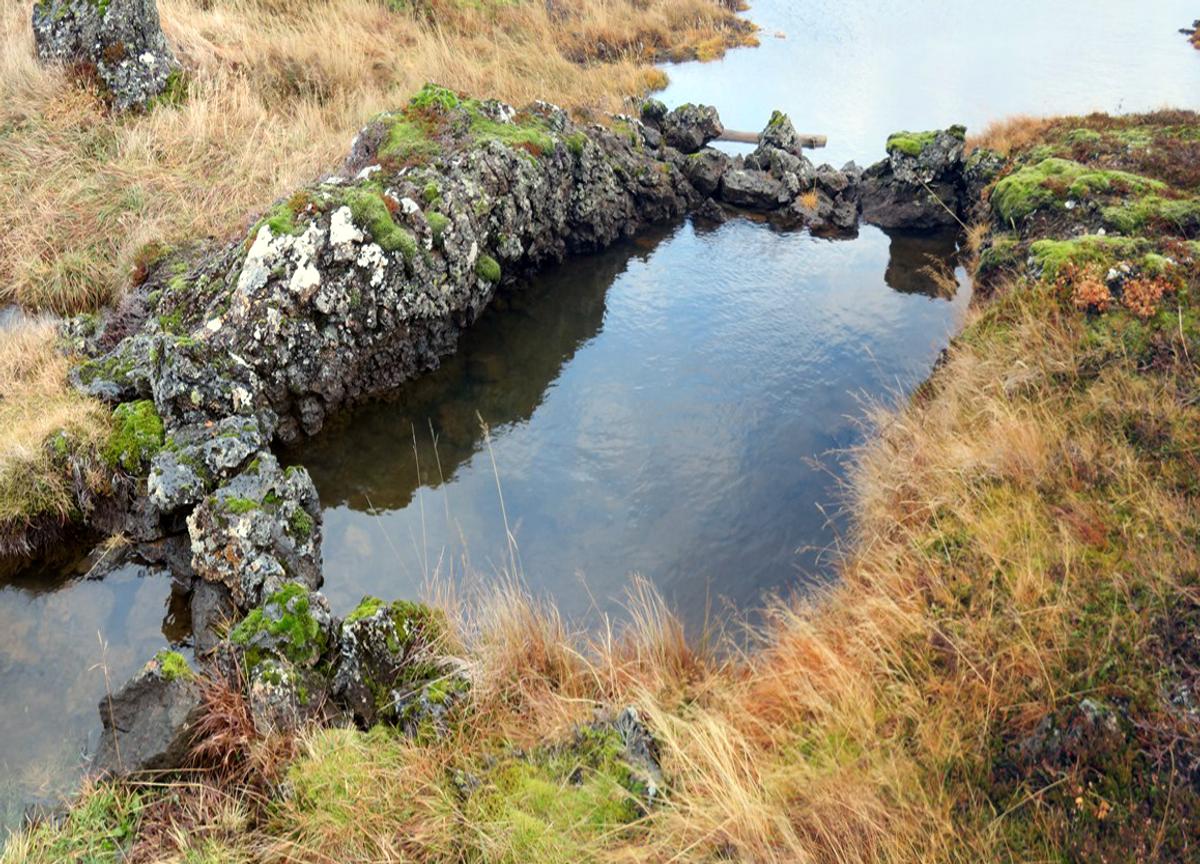
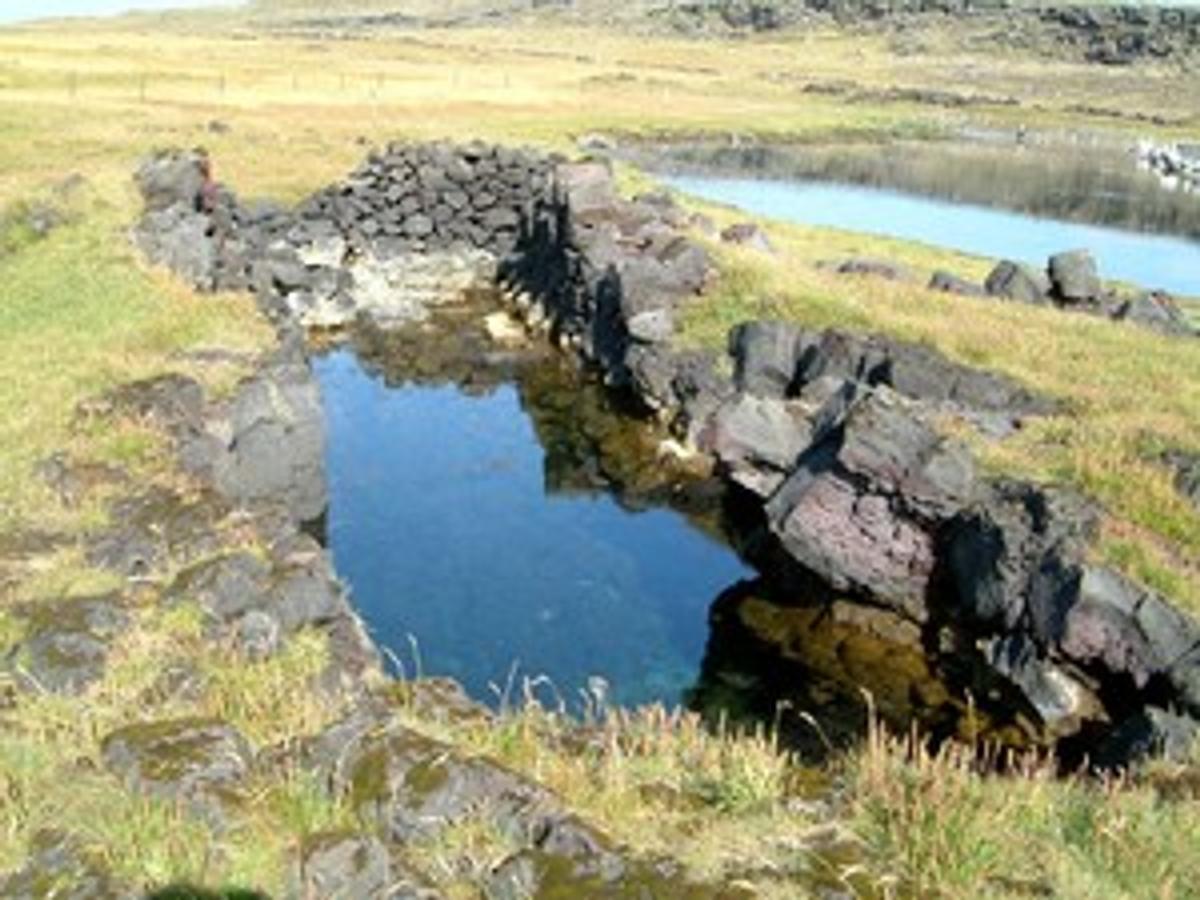
Nestled within the rugged Reykjanes landscape, Valbjargagjá is a unique geothermal fissure transformed into a small, secluded pool. Once a community swimming spot, its moss-covered lava rock edges reflect the serene sky, hinting at a rich local history and ongoing restoration efforts.
Stand at one of Iceland's oldest bathing pools, a geothermally warmed sea fissure blasted into the lava by a Reykjanes lighthouse keeper in the late 1920s.
Historia
At the very tip of Reykjanes, near Iceland's oldest lighthouse site, a narrow lava fissure holds one of the country's oldest bathing pools. Between 1925 and 1930, Reykjanes lighthouse keeper Ólafur P. Sveinsson blasted through the surrounding lava to let naturally warmed seawater — fed by geothermal springs seeping out near the sea-stack ridge of Valahnúkamöl — flow into the gorge, then built a roofed bathing house over it with steps down into the water so locals could bathe regardless of the weather. Long before organized swimming pools reached the settlements of outer Reykjanes, generations of local children learned to swim in Valbjargagjá's geothermally warmed water. The pool still sits in its dramatic setting today, moss-dark lava walls framing the sky, though it is no longer an actively maintained bathing facility — most visitors now come for the history and the wild coastal scenery around Valahnúkur rather than a guaranteed warm swim.
Historia
Valbjargagjá (also recorded historically as Valbjargargjá) is considered one of the oldest known bathing pools in Iceland. Between 1925 and 1930, Reykjanes lighthouse keeper Ólafur P. Sveinsson blasted open the lava fissure to let in naturally warmed seawater from geothermal springs seeping out near Valahnúkamöl, then built a roof and steps over the pool. Historic measurements recorded water temperatures of roughly 17–20°C in the main pool and around 28°C inside the sheltered bathing structure, with colder seawater further from the springs. Before formal swimming pools existed in the settlements of outer Reykjanes, this was where local children learned to swim. The name itself is debated — some believe it is a corruption of 'Valabjargagjá,' linking it to Valahnúkur, which is also known as Valabjörg.
¿Sabías que?
Valbjargagjá was warmed not by a freshwater spring but by geothermal seawater seeping out of the lava near Valahnúkamöl — lighthouse keeper Ólafur P. Sveinsson blasted open the fissure between 1925 and 1930 so locals could bathe in it, and historic records show the sheltered part of the pool reached around 28°C.
Entrada
Free — no admission fee (unstaffed historic site; current bathing conditions unverified).
Información práctica
Mejor época
Calm, dry weather — the Reykjanes tip is exposed to strong coastal winds and sea spray, so check conditions before visiting, especially outside summer.
Duración
15–30 minutes as a stop, often combined with nearby Reykjanesviti lighthouse and Valahnúkamöl.
Cómo llegar
On the outermost tip of Reykjanes, near Valahnúkur and the historic lighthouse area at Reykjanesviti. Reachable by car via road 425 (Nesvegur), roughly 45–60 minutes from Keflavík International Airport or Reykjavík. There is no formal path or facilities; footing on the lava and gorge edges is uneven, so sturdy shoes and caution are recommended.
Transporte
Self-drive is the only practical option; there is no public transport to this part of Reykjanes.
Presupuesto
Free — no admission fee.
Preguntas frecuentes
Is Valbjargagjá safe to swim in today?+
It is not an actively maintained bathing facility. Historically the pool was geothermally warmed, but current water temperature, depth, and safety have not been independently verified for this listing — treat it as a historic site to view, use caution on the uneven lava terrain, and do not expect a maintained warm pool.
Who built Valbjargagjá and when?+
Reykjanes lighthouse keeper Ólafur P. Sveinsson blasted open the lava fissure between 1925 and 1930, letting in naturally warmed seawater from nearby geothermal springs, and built a roofed bathing structure with steps down into the pool.
Is there an entrance fee?+
No — it's a historic, unstaffed site on the Reykjanes coast with no admission charge.
Where is it in relation to Reykjanesviti lighthouse?+
Valbjargagjá is close to Valahnúkur and Valahnúkamöl, near the historic lighthouse site at the western tip of Reykjanes.
Galería