GoIceTravel
Explorar IslandiaAtracciones🌌 Pronóstico de auroras en vivo
Photo via Unsplash

🏚️Iceland Supernatural

Haunted Places in Iceland

Ghost stories · Legends · Mysterious locations · Trolls turned to stone

Gunnuhver GhostHöfði HouseDeacon of MyrkáDimmuborgirReynisdrangar

Iceland's Ghost Stories and Haunted Locations

Iceland is famous for its dramatic landscapes of volcanoes, glaciers and lava fields, but the island is also rich with ghost stories and supernatural legends. For centuries, travelers and locals have shared tales about haunted houses, restless spirits, trolls turned to stone and mysterious creatures hidden in the Icelandic wilderness.

Many of these stories come from Icelandic folklore and were passed down through generations during the long dark winters. Some locations are connected to tragic events, others to myths involving trolls, elves and the mysterious hidden people known as Huldufólk.

If you are exploring Iceland and enjoy mysterious places, this guide will show you some of the most famous haunted locations across the country — many of which you can visit today.

🌌 Northern Lights

See the Northern Lights Tonight

Check the real-time aurora forecast and best viewing locations across Iceland — updated every hour.

Famous Haunted Places in Iceland

Eight of Iceland's most famous supernatural locations — all real places you can visit.

Gunnuhver – The Angry Ghost of Reykjanes
📍 Reykjanes Peninsula
Photo via Unsplash
♨️

Gunnuhver – The Angry Ghost of Reykjanes

A boiling geothermal field named after a vengeful ghost trapped in the earth for eternity.

Gunnuhver is one of the most famous haunted places in Iceland. The geothermal area on the Reykjanes Peninsula is named after a ghost called Gunna — a woman who died after a bitter dispute with her landlord centuries ago.

According to Icelandic folklore, Gunna's spirit began haunting the Reykjanes peninsula after her death, terrorizing locals and refusing to rest. The priest Eiríkur of Vogsósar eventually trapped her spirit in the boiling geothermal springs through a series of rituals and exorcisms. The springs were named Gunnuhver — Gunna's pool — in her memory.

Today Gunnuhver is known for its massive mud pools, steaming vents and sulfur-scented air. The unearthly atmosphere that surrounds the area feels almost supernatural — the ground trembles beneath your feet, clouds of white steam obscure visibility, and the sounds of the boiling earth echo like something alive beneath the surface.

Visitors to Gunnuhver often report a strange feeling of unease, as if something is watching from within the steam. Whether that is Gunna's spirit still restless beneath the surface, or simply the volcanic power of Iceland at work, is a matter of belief.

#ghost#geothermal#reykjanes#folklore#priest-exorcism
The Deacon of Myrká – Iceland's Scariest Ghost Story
📍 Eyjafjörður, North Iceland
Photo via Unsplash
🪦

The Deacon of Myrká – Iceland's Scariest Ghost Story

A drowned deacon returns from the grave on Christmas Eve to drag his girlfriend into the earth.

The story of the Deacon of Myrká is one of the most famous and terrifying ghost stories in Icelandic folklore. A deacon who worked at the church at Myrká in the north of Iceland fell in love with a young woman named Guðrún, who lived across the Hörgá river.

One winter, the deacon set out on horseback to fetch Guðrún and bring her to a Christmas dance. While crossing the frozen river, the ice broke. Both the deacon and his horse drowned in the freezing water. His body was not recovered until spring, and he was buried quietly.

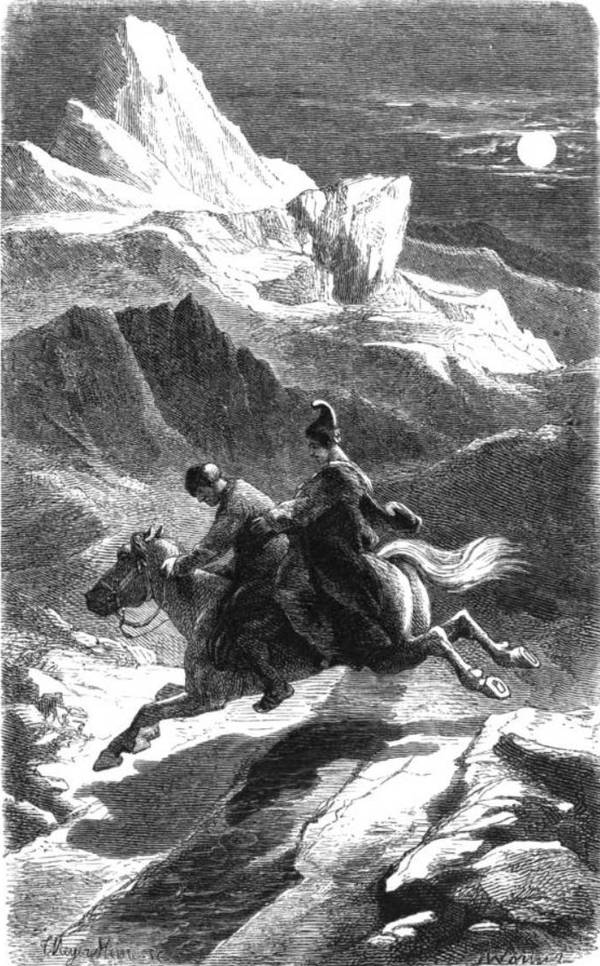
But on Christmas Eve, a rider appeared at Guðrún's door. She could not clearly see his face in the darkness, but she recognized his voice and his horse. She climbed up behind him and they rode into the cold night. As they passed the churchyard, the rider turned slightly and Guðrún glimpsed a moonlit skull beneath his hat. He whispered: 'The moon hides. Death rides. Do you not see the white spot on my skull, Garún, Garún?'

Guðrún managed to escape before being dragged into the deacon's grave. The haunting continued for weeks until a sorcerer was called to perform rituals that finally trapped the ghost beneath a large stone. That stone is said to still exist near the church at Myrká, holding the deacon down for eternity.

#ghost#north-iceland#christmas#draugar#saga#myrká
Skálholt Cathedral – Iceland's Place of Execution
📍 Biskupstungur, South Iceland
Photo via Unsplash

Skálholt Cathedral – Iceland's Place of Execution

Iceland's most powerful religious site for 700 years — where bishops were buried, the Reformation was violently enforced, and a rebel bishop was beheaded.

Skálholt was the episcopal seat of Iceland from 1056 to 1798 — for over seven centuries, the most important religious and political centre in the entire country. Bishops who ruled from Skálholt held power over the souls and fates of all Icelanders, and the cathedral grounds became a burial place for dozens of bishops, priests and condemned individuals.

The most famous ghost of Skálholt is connected to Jón Arason, the last Catholic bishop of Iceland. When the Lutheran Reformation was forced on Iceland in 1550, Jón Arason refused to submit. He was captured and brought to Skálholt, where he and his two sons were beheaded without trial on November 7, 1550 — an act so politically shocking that even the executioners reportedly hesitated.

There are persistent accounts of Jón Arason's spirit being seen near the older parts of the cathedral grounds. Some describe a tall figure in bishop's robes walking slowly along the outer wall at dusk, pausing at the place where the execution reportedly occurred. The church was rebuilt multiple times after his death, and each rebuilding reportedly stirred unusual activity.

Skálholt today is a serene and beautiful place — a white church on green hills, mountains visible in every direction. But standing in the crypt below the church, reading the names of the buried bishops on ancient stones, the weight of its history is unmistakable.

#church#bishop#execution#south-iceland#historic#reformation
Hjörleifshöfði – The First Viking Murder
📍 Mýrdalssandur, South Iceland
Photo via Unsplash
🏔️

Hjörleifshöfði – The First Viking Murder

A lonely volcanic headland rising from Iceland's black glacial plains — site of the first recorded murder in Iceland's settlement era.

Hjörleifshöfði is a volcanic headland rising abruptly from the flat glacial outwash plain of Iceland's south coast. Surrounded on three sides by black sand stretching to the horizon, it is an isolated and atmospheric place long before you know its history.

According to the Landnámabók — Iceland's Book of Settlements — Hjörleifr Hróðmarsson arrived here in approximately 874 AD and built a farm at the base of the headland. He is recorded as one of Iceland's earliest settlers, though his stay was short. His Irish slaves, chafing under brutal treatment, murdered him and fled by boat to the islands later named Vestmannaeyjar (the Westman Islands, literally 'Islands of the Irish Slaves').

Hjörleifr is buried in a burial mound on top of the headland. His sworn brother, Ingólfr Arnarson — the man traditionally credited as Iceland's very first settler — found the body and named the headland after him. Standing at the burial mound on a grey day, the black plains stretching in every direction, it is easy to feel the isolation that surrounded those first settlers.

Locals have long described unusual phenomena on the headland after dark — sounds without obvious source, lights that cannot be explained by lighthouse or vehicle, and an oppressive atmosphere that keeps most people away. The mound is never disturbed, and even archaeologists have historically been reluctant to excavate it.

#viking#burial-mound#settlement#south-iceland#murder#saga#landnámabók
Höfði House – Reykjavík's Haunted Mansion
📍 Reykjavík
Photo via Unsplash
🏛️

Höfði House – Reykjavík's Haunted Mansion

The most famous haunted building in Iceland — site of the 1986 Reagan-Gorbachev Summit and home to a well-documented ghost.

Höfði House in Reykjavík is one of the most famous haunted buildings in Iceland. The elegant white mansion was built in 1909 near the harbour and became internationally famous when it hosted the 1986 Reykjavík Summit between Ronald Reagan and Mikhail Gorbachev — a meeting that helped end the Cold War.

Long before the political summit, Höfði House had earned a dark reputation. People working in the building reported strange noises in empty rooms, unexplained movements of objects, and an oppressive presence that made overnight stays unbearable. The British ambassador who resided there in the mid-20th century reportedly found the haunting so disturbing that he formally requested to be moved to different accommodation.

The ghost is said to be a young woman, sometimes called the White Lady, who appears in the upper floors of the building. Her identity has been a matter of local debate for generations, with some connecting her to the original owner's family and others believing she predates the house itself.

Today Höfði House is used as an official reception venue by the City of Reykjavík. It is not open to regular visitors, but it can be viewed from outside — a striking white building overlooking the grey ocean, elegant and slightly strange, as if it knows something about the city it refuses to share.

#ghost#reykjavik#mansion#historic#white-lady
Snæfellsjökull – The Mystical Glacier
📍 Snæfellsnes Peninsula, West Iceland
Photo via Unsplash
🌋

Snæfellsjökull – The Mystical Glacier

Jules Verne's gateway to the center of the Earth — a glacier-capped volcano surrounded by elf hills and sacred since the age of the sagas.

Snæfellsjökull glacier sits at the tip of the Snæfellsnes Peninsula in West Iceland, visible from Reykjavík on clear days across the bay. The glacier caps an extinct volcano that has been considered a place of supernatural power since the age of the Icelandic sagas.

Jules Verne famously chose Snæfellsjökull as the entrance to the center of the Earth in his 1864 novel. But this was not an arbitrary choice — the glacier had long been associated with passage between worlds. Locals had told stories about its otherworldly atmosphere for centuries before Verne wrote his book.

The slopes of the glacier are surrounded by elf hills — rounded lava formations traditionally believed to be inhabited by the Hidden People or Huldufólk. The number and concentration of these formations around Snæfellsjökull is higher than almost anywhere else in Iceland. Construction projects in the vicinity have historically consulted mediums to ensure no elf dwellings would be disturbed.

Many visitors report an unusual experience standing near the glacier — a deep quiet, a sense of presence, and sometimes profound emotional states that arrive unbidden. Whether this is mysticism or simply the effect of standing on an active volcanic glacier at the edge of the world, it is real enough that guides have learned to expect it.

#glacier#volcano#elves#huldufólk#west-iceland#snæfellsnes#jules-verne

Other Haunted Places in Iceland

These locations have been connected to ghost stories, paranormal events and supernatural encounters over the centuries.

🏝️

Drangey Island – Ghosts of the Sagas

📍 Drangey Island, North Iceland

A sheer sea cliff in Skagafjörður where the outlaw Grettir the Strong made his final stand — and where his ghost is said to walk still.

💧

Þingvellir – The Drowning Pool

📍 Þingvellir National Park

Iceland's ancient parliament site hides a dark history. The Drekkingarhylur pool here was the execution site where women accused of witchcraft and infanticide were drowned for centuries.

🎭

National Theatre of Iceland

📍 Reykjavík

Staff and performers have reported unexplained sounds, flickering lights and ghostly presences in the backstage areas and upper floors of this early 20th century building.

🏫

Laugar Junior College

📍 Laugar, North Iceland

A boarding school with a long local reputation for hauntings, particularly in the oldest stone wing. Former students describe unexplained cold drafts, footsteps and doors that open and close on their own.

🏰

Bessastaðir Presidential Estate

📍 Álftanes, Reykjanes

One of Iceland's oldest building complexes, continuously occupied since the Viking Age. Seven centuries of history have left their mark — staff describe persistent unexplained activity in the older wings.

Skriðuklaustur Monastery

📍 Fljótsdalur, East Iceland

A 16th century Catholic monastery dissolved during Iceland's Reformation. Archaeological excavations found human remains beneath the foundations, and workers have reported unexplained presences.

🕍

Skálholt – Ghosts of Iceland's Ancient Cathedral

📍 Skálholt, South Iceland

For over 700 years Skálholt was Iceland's most powerful religious and political centre. Bishops were murdered here, executed here, and several are said to have never left.

🏚️

Möðruvellir – The Haunted Farm

📍 Hörgárdalur, North Iceland

One of Iceland's oldest continuously occupied farms, with a ghost legend involving a drowned farmhand whose spirit returned every night for years until ritually exorcised.

🪦

Hólavallagarður Cemetery

📍 Reykjavík

Iceland's oldest cemetery (established 1838), where spirits are said to walk between mossy headstones at night. Many of Iceland's most prominent historical figures are buried here.

👻

Draugasetrid – Ghost Center

📍 Stokkseyri, South Coast

Iceland's dedicated ghost story museum and haunted house experience on the South Coast. Themed rooms recreate famous Icelandic ghost legends, including the Deacon of Myrká.

♨️

Seljavallalaug – The Mysterious Pool

📍 Near Skógar, South Iceland

An isolated geothermal pool in a narrow valley. Hikers have reported hearing voices with no visible source in the valley, particularly at dusk in autumn when the light fades early.

🏔️

Hvítárnes Hut

📍 Iceland Highlands

A remote highland hut accessible only in summer where travelers have reported strange sounds, moving objects and apparitions that appear and vanish during overnight stays.

🧙

Hólmavík – Museum of Sorcery & Witchcraft

📍 Strandir, Westfjords

The Museum of Icelandic Sorcery and Witchcraft in the Westfjords — Iceland's centre of 17th century witch trials, with displays including stave magic and the notorious Nábrók (necropants).

📚

Þórbergsstofa – Childhood Home of the Supernatural Writer

📍 Hali, Southeast Iceland

The childhood home of writer Þórbergur Þórðarson, who documented encounters with elves, ghosts and supernatural beings. Guides tell stories of strange events that continue to occur at the farm.

🏚️

Snæfellsnes Abandoned Farms – Haunted Ruins of the West

📍 Snæfellsnes Peninsula

The mystical Snæfellsnes Peninsula is scattered with ruined farmhouses abandoned after disasters, plagues, and unexplained terrors — and many are said to be haunted still.

🗺️ Haunted Iceland Map

All 20+ haunted places on one interactive map — filter by ghosts 👻, trolls 🗿, elves 🧝, Viking legends ⚔️, cemeteries 🪦 and attractions 🎭.

🗺️Loading haunted map…
👻 Ghosts🗿 Trolls🧝 Elves & Huldufólk⚔️ Viking Legends🪦 Cemeteries🎭 Attractions

Most Haunted Places in Iceland

These locations are among the most famous haunted sites in Icelandic folklore. Many are real places you can visit today — each with stories passed down for centuries.

♨️

Gunnuhver Geothermal Area

Most Famous Ghost
📍 Reykjanes Peninsula

One of Iceland's most famous ghost stories is connected to Gunnuhver. According to legend, a woman named Gunna died after a dispute with a local official. After her burial, she returned as a powerful restless spirit and began haunting the region. A priest eventually trapped her ghost inside the boiling geothermal vents where she is believed to remain today.

🗺️ Open in Google Maps
🏚️

Möðruvellir Farm

Revenant Story
📍 North Iceland

The farm of Möðruvellir is associated with one of Iceland's most persistent revenant stories. A drowned worker named Þórólfur returned after death and walked through the farm every night until a priest performed a ritual to stop the haunting.

🗺️ Open in Google Maps
🏝️

Drangey Island

Outlaw Legend
📍 North Iceland

This isolated sea stack in Skagafjörður is connected to the death of the outlaw Grettir the Strong. Climbers have reported hearing footsteps and voices on the island for centuries.

🗺️ Open in Google Maps
🐉

Lagarfljót Lake

Lake Monster
📍 East Iceland

The mysterious creature known as Lagarfljótsormurinn has been reported in this lake since medieval times. Some consider it Iceland's version of the Loch Ness Monster — sightings continue to this day.

🗺️ Open in Google Maps
🗿

Reynisdrangar Sea Stacks

Trolls Turned Stone
📍 South Coast

According to legend, these sea stacks were trolls dragging a ship to shore before sunrise turned them to stone. The beach of Reynisfjara remains one of the most dramatic and folklore-rich sites on the South Coast.

🗺️ Open in Google Maps
🌋

Dimmuborgir Lava Formations

Home of Yule Lads
📍 North Iceland

These dramatic lava towers near Lake Mývatn are said to be the home of Iceland's Yule Lads and their terrifying mother Grýla. Local legends describe the caves as entrances to the underworld.

🗺️ Open in Google Maps
🧊

Snæfellsjökull Glacier

Mystical Energy
📍 Snæfellsnes

This glacier is believed by many to be one of the world's great energy centres. Jules Verne used it as the entrance to the centre of the Earth in his novel. Locals describe unusual feelings of calm and strangeness near the summit.

🗺️ Open in Google Maps
🌋

Hekla Volcano

Gateway to Hell
📍 South Iceland

In medieval Europe, Hekla was believed to be one of the entrances to Hell. Birds flying near the volcano were thought to be the souls of the damned. Icelandic farmers still treat eruptions with deep respect.

🗺️ Open in Google Maps

Types of Ghost Encounters Reported in Iceland

Travelers across Iceland have reported strange experiences in remote valleys, abandoned farms and coastal cliffs. These experiences are part of Iceland's living folklore tradition.

👣

Footsteps in empty farmhouses

Old turf farms are the most commonly reported sites of unexplained sounds.

🌫️

Figures crossing lava fields at night

Travelers on Iceland's highland roads have reported silhouettes moving across the lava.

🔊

Voices heard near waterfalls

The roar of Iceland's waterfalls has long been associated with spirits calling out.

🏚️

Moving objects in old turf houses

Historical farmhouses across Iceland have stories of objects shifting without explanation.

💡

Unexplained lights in the Highlands

Ball lightning, will-o'-the-wisps and aurora reflections all feed Highland ghost traditions.

🌊

Shapes beneath lake surfaces

Lagarfljót and other lakes have centuries of sighting reports of shapes moving underwater.

These experiences are part of Iceland's living folklore tradition and remain an important part of cultural storytelling today.

Where to Experience Icelandic Ghost Stories Today

Visitors interested in Iceland's supernatural folklore can explore haunted locations across the country. Many are accessible as part of day trips from Reykjavík or along the Ring Road.

Icelandic Folklore: Ghosts, Trolls and Hidden People

Icelandic folklore includes a wide range of supernatural beings — ghosts known as draugar, trolls that roam the mountains at night, and elves known as the hidden people or Huldufólk. These are not simply fairy tales: surveys consistently show that a significant portion of Icelanders believe in the possible existence of hidden people, and road construction projects have been rerouted to avoid disturbing rocks believed to be inhabited by elves.

The draugar of old Norse tradition are particularly frightening — not gentle ghosts but physical undead who rise from their graves to haunt and harm the living. Many of Iceland's ghost stories follow this older tradition, where the restless dead are genuinely dangerous and must be stopped through ritual or force.

Trolls occupy a different category — enormous, slow-moving mountain creatures who turn to stone in sunlight. You can see the results of this transformation all across Iceland: in the sea stacks off Reynisfjara, in the monolithic rocks that dot Icelandic hillsides, in the strange formations of Dimmuborgir. Every rock with a particularly human shape has a story.

Many Icelanders respect these legends and stories are still told about specific rocks, lava fields and mountains where supernatural beings are believed to live. Whether you believe them or not, they give Iceland's landscape an atmosphere unlike anywhere else on earth.

👻

Draugar

Physical undead who rise from graves. Unlike gentle ghosts, draugar are dangerous and must be stopped by ritual or force.

🧝

Huldufólk

The Hidden People — elves living in rocks and lava. Road construction in Iceland has been rerouted to avoid disturbing their homes.

🗿

Trolls

Giant mountain creatures who turn to stone in sunlight. Evidence of their petrification can be seen in rock formations across the country.

⚠️

Visiting Haunted Places in Iceland

Respect private property. Many haunted farms and buildings are on private land. Do not trespass.

Safety first. Abandoned structures are dangerous — collapsing roofs, unstable floors, and harsh weather make these places genuinely hazardous.

Reynisfjara warning. The beach at Reynisdrangar generates massive unpredictable sneaker waves. Never turn your back on the ocean here.

Preserve the sites. Do not vandalize, remove items, or disturb these locations. They are part of Iceland's cultural heritage.

Iceland Ghost Stories and Folklore

Ghost stories have long been part of Icelandic folklore. Many legends tell of restless spirits, trolls turned to stone and mysterious hidden people living inside lava fields and mountains. These stories were not invented for tourists — they were passed down through generations during Iceland's long winter nights, when darkness lasted nearly all day and isolated farms felt cut off from the world.

Visitors exploring Iceland today can discover many places connected to these stories, from haunted houses in Reykjavík to mysterious lava formations in the north. The draugar — Iceland's physical undead — are particularly ancient: they appear in medieval sagas as dangerous creatures who must be physically fought or ritually bound. Many of the places on this map are connected to these saga-age events.

Iceland's troll legends explain the country's most dramatic rock formations. The sea stacks at Reynisdrangar, the lava maze of Dimmuborgir, the monoliths scattered across Snæfellsnes — all were once giants or trolls who miscalculated the sunrise. Even today, locals point to specific rocks and tell you their names.

The Huldufólk, Iceland's hidden people, occupy a category of their own. Unlike ghosts and trolls, they are not considered dangerous. They are simply there — living in rocks, lava formations and hills, parallel to human Iceland. An estimated 54% of Icelanders say they believe in the possible existence of hidden people, and road construction has been rerouted to protect their homes.

Whether you come to Iceland for the Northern Lights, the volcanoes or the ghost stories, the folklore is inescapable. Every landscape has a legend. Every farm has a name that remembers someone who died there. Every rock formation has a story about what it used to be before the sun rose.


Why Iceland Has So Many Ghost Stories

For centuries Icelanders lived on isolated farms surrounded by darkness, volcanic landscapes and extreme winters. Ghost stories became part of everyday life and helped explain events that could not otherwise be understood.

Long winters with only 4–5 hours of daylight meant that strange sounds, flickering lights and unusual shapes were a constant presence. Without electricity, the darkness inside turf houses was total — and outside, the lava fields and mountains were full of shadows that moved.

The sagas gave Icelanders a literary tradition for preserving these stories. Unlike in many cultures where ghost stories faded into fairy tales, Iceland's stories stayed grounded in specific places, specific names and specific events — turning them into a kind of folklore geography that locals still navigate today.

Even today, many Icelanders treat supernatural locations with respect — especially elf rocks, haunted valleys and abandoned farms connected to tragic histories. Road construction projects have been rerouted to protect elf homes. Ancient burial mounds are left undisturbed. The stories are still alive.

Northern Lights & Night Tours

People who explore Iceland's haunted places often chase the aurora too — here are the best night tours.