Dimmuborgir
Dimmuborgir, que significa "Castillos Oscuros" o "Ciudades Oscuras" en islandés, es una impresionante zona de formaciones de lava de formas inusuales, situada a…
About
About Dimmuborgir
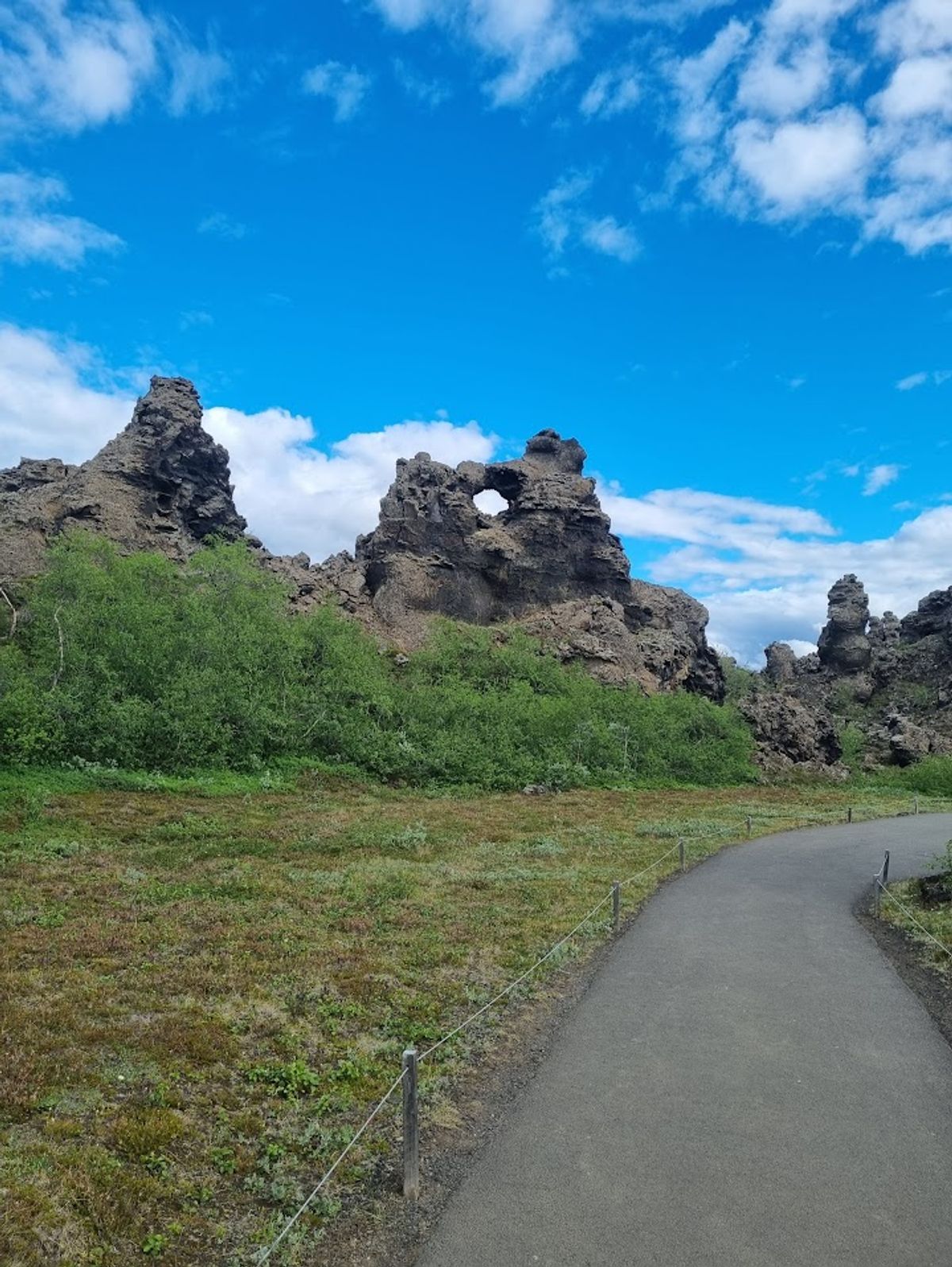
Dimmuborgir, que significa "Castillos Oscuros" o "Ciudades Oscuras" en islandés, es una impresionante zona de formaciones de lava de formas inusuales, situada al este del lago Mývatn. Explore este dramático campo de lava antigua, que se asemeja a una ciudadela oscura derrumbada bajo un cielo vibrante.
Witness the otherworldly, intricate lava sculptures of Dimmuborgir, a geological marvel unlike any other.
Photos
Photo Gallery
Background
History & Background
La historia de Dimmuborgir es una profunda narrativa geológica, nacida de las ardientes profundidades de la antigua actividad volcánica. Estas espectaculares formaciones son los remanentes de una erupción masiva que ocurrió hace aproximadamente 2.300 años, originándose de una hilera de cráteres conocida como Lúdentarborgir. Durante este poderoso evento, se formó un gran lago de lava en la zona. Las formas únicas de Dimmuborgir surgieron cuando este vasto lago de lava se enfrió. A medida que la roca fundida fluía sobre un humedal, el agua atrapada bajo la lava hirvió, creando bolsas de vapor. Los respiraderos de vapor resultantes hicieron que la lava se solidificara a su alrededor, formando pilares y cámaras huecas. Cuando la corteza superficial del lago de lava finalmente colapsó, dejó atrás estas dramáticas y elevadas estructuras, los "Castillos Oscuros" o "Ciudades Oscuras" que cautivan a los visitantes hoy en día. Este proceso natural creó una intrincada red de pilares, cuevas y arcos, que se erige como un testimonio del dinámico pasado geológico de Islandia.
Dimmuborgir, acertadamente llamado "Castillos Oscuros" o "Ciudades Oscuras" en islandés, presenta uno de los paisajes más singulares y dramáticos de Islandia. Situada majestuosamente al este del sereno lago Mývatn en el norte de Islandia, esta impactante zona es famosa por sus formaciones de lava de formas inusuales. Estas antiguas estructuras geológicas crean un ambiente verdaderamente de otro mundo, a menudo descrito como una ciudadela oscura derrumbada bajo el vasto y siempre cambiante cielo islandés. Los visitantes de Dimmuborgir pueden emprender varias rutas bien señalizadas que serpentean a través de este laberinto natural. A medida que explore, encontrará una fascinante variedad de pilares de lava, arcos y cuevas, cada uno esculpido por las fuerzas de una poderosa erupción volcánica hace milenios. Las formaciones son el resultado de un lago de lava que se enfrió de manera desigual, dejando estas estructuras huecas cuando la corteza superficial colapsó. Este proceso creó los "castillos" y "ciudades" únicos que dan a Dimmuborgir su evocador nombre. Es un lugar donde la imaginación vuela, mientras identifica formas y figuras dentro de la roca natural. Más allá de sus maravillas geológicas, Dimmuborgir invita a la contemplación sobre el inmenso poder de la naturaleza. Es un paraíso para los fotógrafos, ofreciendo contrastes impresionantes entre la lava oscura, el musgo verde y el cielo. Vístase en capas y use calzado resistente, ya que los senderos pueden ser irregulares. Tómese un tiempo suficiente para pasear y absorber la profunda belleza y el significado geológico de este notable tesoro islandés.
Folklore
Story & Folklore
Bajo el vasto cielo islandés, Dimmuborgir susurra historias de fuego antiguo y tierra. Al adentrarse en este laberinto, imponentes pilares de lava y grutas se elevan a su alrededor, formando una ciudad intrincada y silenciosa de piedra. El aire zumba con historia geológica, cada formación retorcida un testimonio del poder crudo y creativo de la naturaleza. Se siente como si una fortaleza colosal, forjada desde el corazón fundido de la tierra, se hubiera derrumbado aquí, dejando atrás ruinas majestuosas y oscuras. Los 'Castillos Oscuros' se alzan desafiantes, sus sombras se alargan al ponerse el sol, pintando el paisaje único con tonos de misterio y asombro. Los visitantes deambulan por este reino petrificado, explorando pasajes ocultos y arcos dramáticos, asombrados por la escala y el arte de estas esculturas naturales. Es un viaje profundo al alma volcánica de Islandia, donde la propia tierra cuenta su historia épica.
💡 Did You Know?
Dimmuborgir translates to "Dark Castles" or "Dark Cities" in Icelandic, perfectly capturing its imposing, ancient appearance.
Local Legend
The Evocative Name of Dimmuborgir
While specific local legends are not detailed in the provided research, the striking appearance of Dimmuborgir, with its towering formations resembling "Dark Castles" or "Dark Cities," has naturally inspired awe and imagination through the ages. Its name alone conjures images of ancient, mysterious realms.
Culture
Stories & Legends
Icelandic sagas and folklore from this area
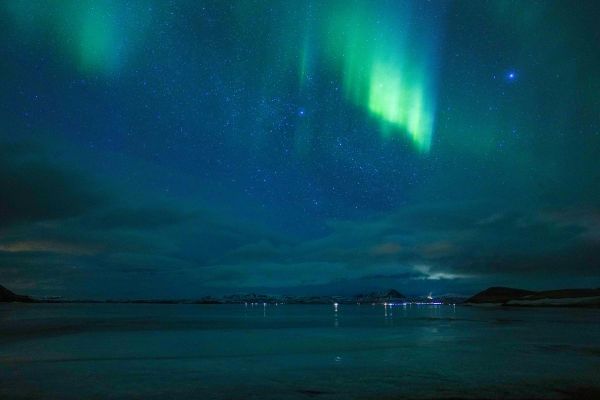
Mývatn
Mývatn: A lake of fire, ice, and mythical beings.
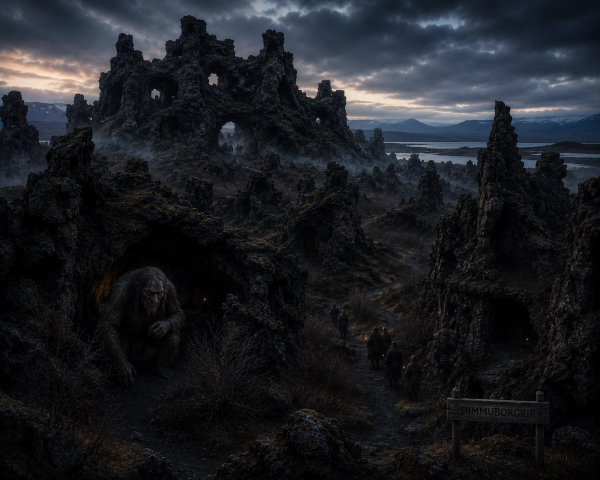
Dimmuborgir – The Dark Fortress of North Iceland
Discover Dimmuborgir, a volcanic wonderland where legends of trolls and the devil still echo.

Grýla, the Yule Lads & the Yule Cat
Beware Grýla! The Yule Lads & their terrifying feline nemesis.
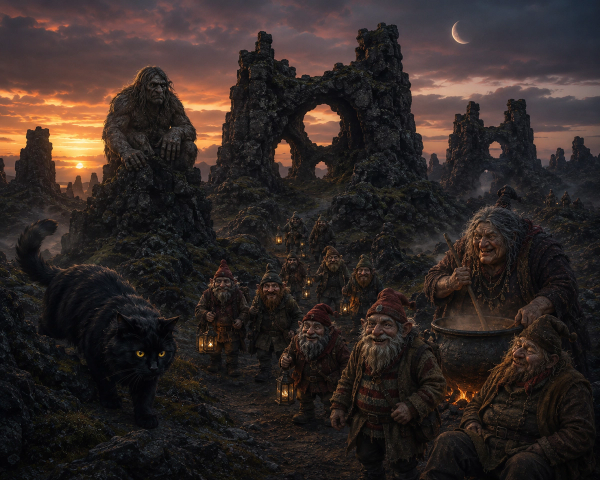
Dimmuborgir – City of Trolls
Explore Dimmuborgir, where volcanic rock formations become a mystical city for trolls.
Explore
Hidden Gems Nearby
✦ Lava Formations Close-Up
Look carefully at the lava formations near Dimmuborgir — each tells a story of how it cooled.
Rope lava, pillow lava, and columnar basalt each formed under different conditions, creating a geological textbook in stone.
✦ Moss & Lichens
The moss and lichen growing on the volcanic rock are some of the first life to colonize new lava fields.
Some of these organisms grow less than 1cm per year, meaning the patches you see may be decades or centuries old.
✦ Sunset Colors
The volcanic rock takes on incredible red and gold hues during sunset.
The iron-rich minerals in the lava glow in warm light, creating a photographer's paradise.
Help
Frequently Asked Questions
Location
📍 Location
Discover
Explore Nearby
Places from our database within 1.0 km — all data from Sanity
Loading nearby places…
0 places found within 1.0 km
Plan full itinerary →Explore More