
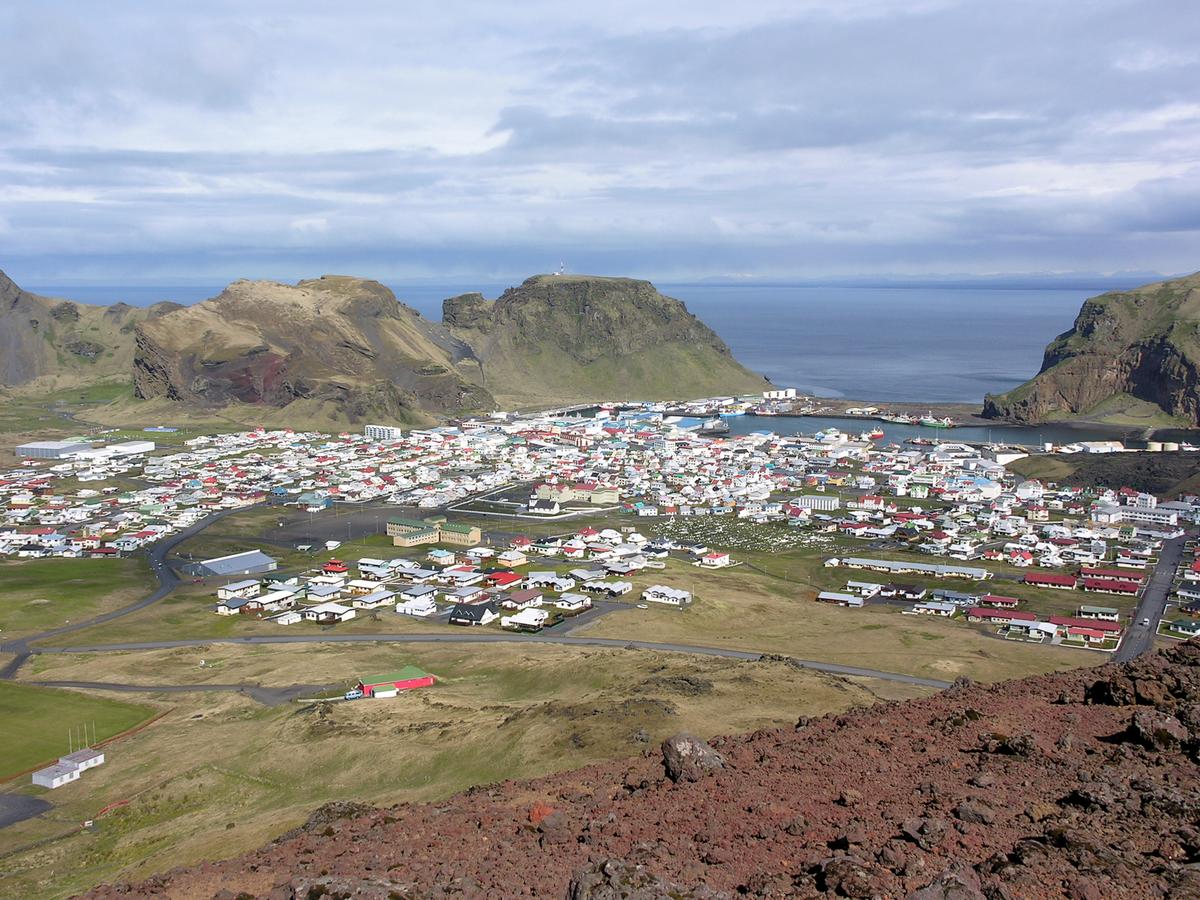
Vestmannaeyjar — Westman Islands
Volcanic archipelago off South Iceland, with Heimaey as the inhabited visitor hub.
About
About Vestmannaeyjar — Westman Islands
Volcanic archipelago off South Iceland, with Heimaey as the inhabited visitor hub.
Experience Icelandic island life, recent volcanic history, sea cliffs and major seabird habitat on Heimaey.
Photos
Gallery
Background
History & Background
The Vestmannaeyjar archipelago is geologically young, formed by submarine volcanic eruptions over the past 10,000–12,000 years as an active part of the South Iceland volcanic zone. This continuous geological activity has sculpted the islands into their dramatic and unique landscapes. A significant recent event was the emergence of Surtsey between 1963 and 1967, a new island formed entirely by volcanic eruption, which gives rare insight into the birth of landmasses. According to the ancient Icelandic saga, Landnámabók, the islands received their intriguing name, Vestmannaeyjar (Islands of the Westmen), after Irish slaves ("Westmen") of Ingólfur Arnarson's foster brother, Hjörleifur Hróðmarsson, were killed there following their murder of Hjörleifur. The first recorded settler on Heimaey, the largest and only inhabited island, was Herjólfur Bárðarson, who established his home in Herjólfsdalur, marking the beginning of human habitation on these remote islands. The most impactful event in recent history was the 1973 Eldfell eruption on Heimaey. This sudden volcanic outburst threatened to bury the entire town, leading to a dramatic evacuation and an extraordinary effort by the islanders to cool the advancing lava flows with seawater, saving much of their community. This event profoundly shaped the island's landscape and its people, becoming a testament to their resilience and deep connection to their volatile home.
Vestmannaeyjar combines steep sea cliffs, young volcanic landscapes and important seabird habitat. Heimaey is the main inhabited island and was dramatically reshaped by the 1973 Eldfell eruption. The archipelago also includes Surtsey, which formed during the 1963–1967 eruption and is protected for scientific research. The map point is placed in Vestmannaeyjar town on Heimaey as the useful visitor destination rather than at an abstract archipelago centroid.
Did You Know?
Did you know Surtsey, one of the Vestmannaeyjar islands, is among the world's youngest landmasses, formed by a volcanic eruption between 1963 and 1967?
Explore
Hidden Gems Nearby
Best Time of Day
Visit this attraction during golden hour (the hour after sunrise or before sunset) for the most beautiful light.
Iceland's low-angle sunlight creates long shadows and warm colors that transform ordinary scenes into extraordinary ones.
Local Knowledge
Ask locals for their favorite nearby spots — Icelanders are friendly and love sharing recommendations.
The best experiences often come from local tips about lesser-known viewpoints, cafés, or hidden natural features.
Weather Changes
Don't leave if the weather is bad — wait 15 minutes and it often changes dramatically.
Iceland's rapidly changing weather can transform a gray scene into a spectacular display of light and clouds in minutes.
Help
Frequently Asked Questions
Location
Location
Discover
Explore Nearby
Places within 5.0 km
Loading nearby places…
0 places found within 5.0 km
Plan full itinerary →Plan Your Visit
South Coast Tours Iceland →Explore More