
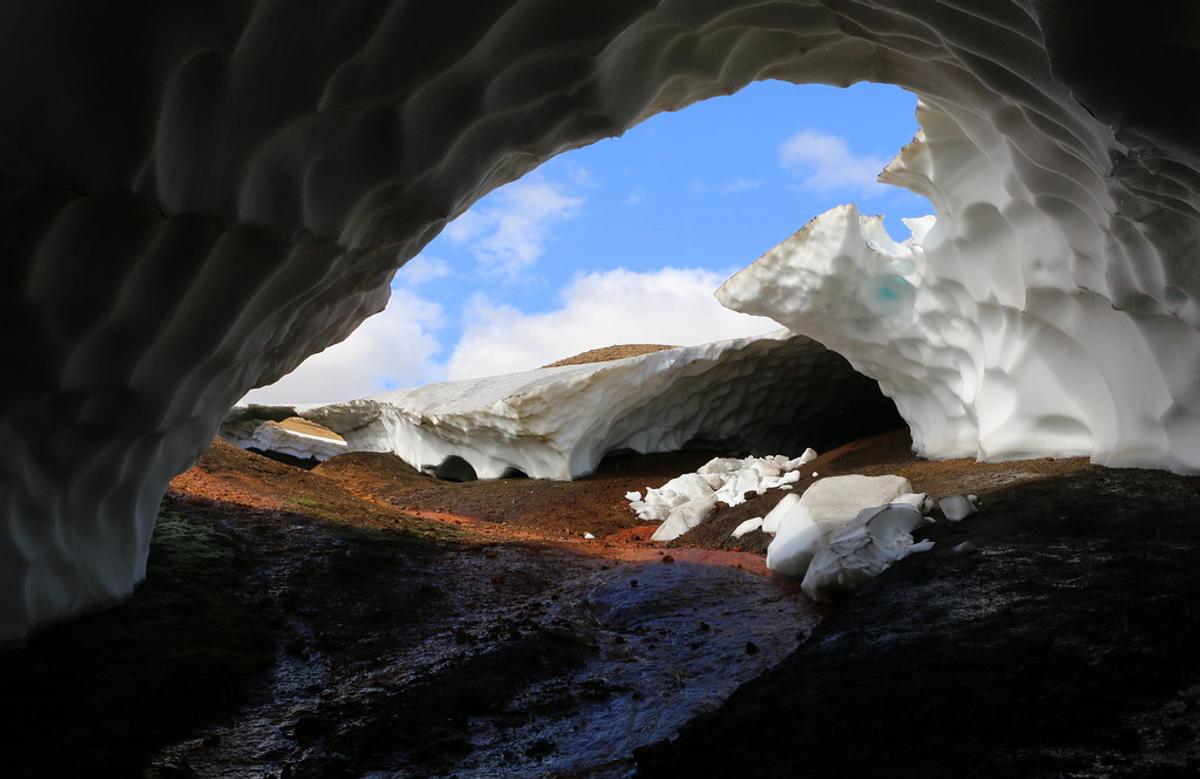
Ice cave at Hrafntinnusker
Seasonal geothermal ice formations in the remote Hrafntinnusker highlands.
At a Glance
Visit time
1–2 hours (for the cave visit itself, not including travel)
Best Season
Late morning to early afternoon (for best light), July–September (for access to the highlands)
Getting There
4WD required to access the Hrafntinnusker area via mountain roads (F-roads), often only open in summer. Guided tours are highly recommended due to the challenging terrain and remote location.
GPS
63.9333, -19.1803
About
About Ice cave at Hrafntinnusker
Seasonal geothermal ice formations in the remote Hrafntinnusker highlands.
See the unusual meeting of geothermal heat, snow and obsidian in one of Fjallabak’s most distinctive landscapes.
Photos
Gallery
Background
History & Background
The geological history of Hrafntinnusker is deeply intertwined with Iceland's volcanic past. The cave itself is an ancient lava tube, formed thousands of years ago during intense volcanic eruptions. As molten lava flowed across the surface, its outer layers cooled and hardened, while the fiery core continued to flow beneath, eventually draining away to leave behind hollow tubes and vast caverns like this one. Over millennia, these volcanic structures have become canvases for glacial artistry. In the cold climate of the Icelandic highlands, persistent snow and meltwater seep into these lava tubes, freezing and thawing to sculpt the incredible ice formations seen today. The name Hrafntinnusker, meaning "Obsidian Skerry," further emphasizes the area's volcanic origins, with abundant black volcanic glass found nearby. This dynamic interplay of ancient volcanic bedrock and ever-changing ice makes the Ice Cave at Hrafntinnusker a unique and living testament to Iceland's powerful geological forces.
Hrafntinnusker is a geothermal area of obsidian, steaming ground and lingering snowfields. In places, geothermal heat melts cavities beneath snow and ice and can create striking ice-cave formations. Conditions change from season to season and unstable snow, hot ground and remote terrain make close exploration potentially hazardous. Visitors should follow current local guidance and never assume an ice opening is safe to enter.
Did You Know?
Formed by volcanic lava tube activity
Explore
Hidden Gems Nearby
Obsidian Fields
The surrounding area of Hrafntinnusker is rich in obsidian, a striking black volcanic glass. You can find scattered pieces glistening under the sun, a testament to the area's fiery past.
It offers a tangible connection to the powerful volcanic forces that created this landscape.
Geothermal Hot Springs
While not directly inside the cave, the Hrafntinnusker area is dotted with small, naturally heated hot springs and steaming vents. These create unique microclimates amidst the cold.
They provide a fascinating contrast to the cold ice and highlight the region's intense geothermal activity.
Laugavegur Trail Views
The ice cave is located near the famous Laugavegur hiking trail. Even a short walk nearby offers panoramic views of the colorful rhyolite mountains and vast volcanic plains.
Experience the broader, stunning landscape that frames this unique ice formation and its volcanic origins.
Help
Frequently Asked Questions
Location
Location
Discover
Explore Nearby
Places from our database within 5.0 km — all data from Sanity
Loading nearby places…
0 places found within 5.0 km
Plan full itinerary →Explore More