
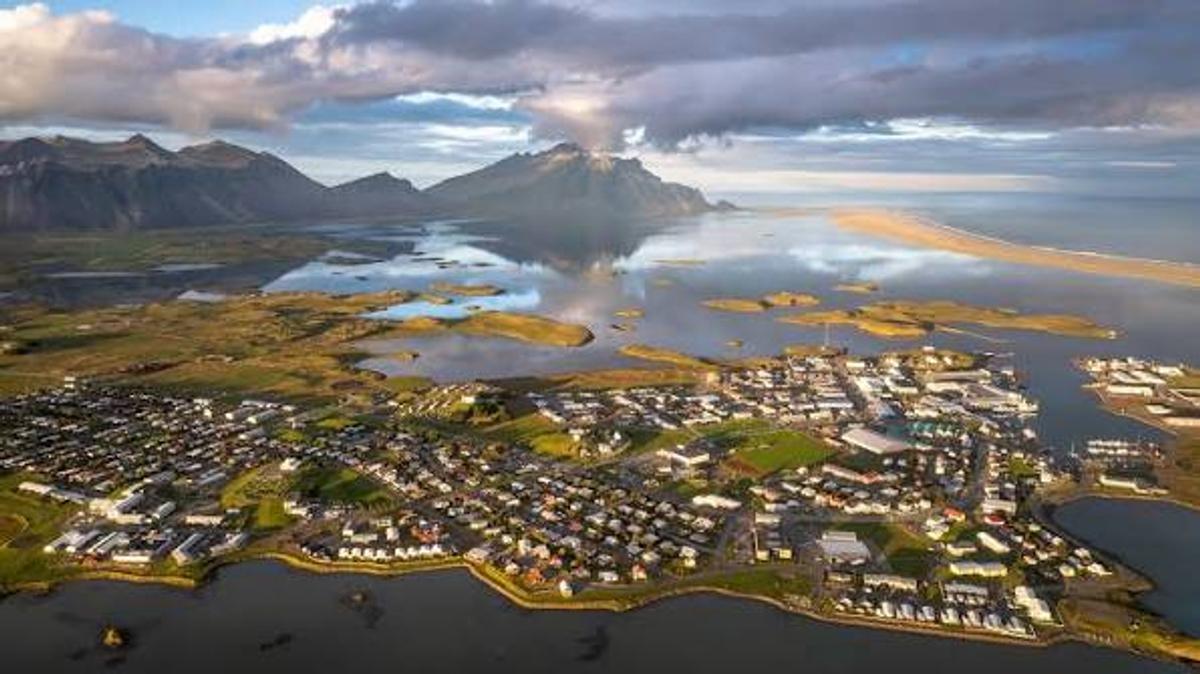
Hornafjörður
A broad coastal fjord and harbour landscape around Höfn, shaped by glacial rivers, sandbars, fishing history and views toward Vatnajökull.
At a Glance
Visit time
Allow around 45–90 minutes for a waterfront walk, harbour views and photography, or longer if combining the fjord with Höfn's museums, restaurants and nearby nature sites.
Best Season
Daylight and calmer weather give the clearest views across the water. Spring and summer are particularly rewarding for coastal birdlife; winter can provide crisp views of snow-covered mountains when weather allows.
Getting There
Experience Hornafjörður from public roads, waterfront paths and viewpoints around Höfn. Hornafjarðarhöfn is a working port, so remain outside restricted or operational harbour areas.
GPS
64.2612, -15.3569
About
About Hornafjörður
A broad coastal fjord and harbour landscape around Höfn, shaped by glacial rivers, sandbars, fishing history and views toward Vatnajökull.
See how glacial landscapes, a working fishing harbour, settlement history and rich coastal birdlife come together in the waters and shoreline around Höfn.
Photos
Gallery
Background
History & Background
The name Hornafjörður is rooted in the settlement history of southeast Iceland. The farm Horn, beneath Vestrahorn, is recorded as one of the area's early settlement farms and is associated with Hrollaugur Rögnvaldsson, son of Rognvald, Earl of Møre in Norway. Hornafjörður and several nearby geographic names were later derived from Horn. The modern harbour community developed centuries later. Merchant ships began calling at Hornafjörður in 1880, but permanent settlement at Höfn began in 1897 when Otto Tulinius and Valgerður Friðriksdóttir relocated from Papós. Höfn grew slowly at first because employment was limited mainly to cargo handling, slaughtering and trade. Fishing then strengthened the settlement, and the expansion of lobster fishing in the 1960s helped establish Höfn as one of Iceland's important fishing centres. Höfn separated from Nesjahreppur as its own municipality in 1946 and received town rights at the end of 1988. Municipal mergers in 1994 and 1998 eventually created today's Sveitarfélagið Hornafjörður. Throughout this development, the harbour remained crucial. The entrance through Hornafjarðarós was historically hazardous because of surf, sand and currents, prompting later construction of breakwaters and other harbour improvements.
Hornafjörður is the fjord, tidal coastal landscape and harbour setting that surrounds the town of Höfn in southeast Iceland. The name is also used for the wider municipality, but as a visitor attraction the focus here is the water, shoreline, harbour and the history that grew around them. The landscape is shaped by the meeting of glacial rivers, shallow coastal waters, sand and the North Atlantic. Höfn developed where vessels could find shelter behind the coastal barriers, although the entrance through Hornafjarðarós has long been considered difficult. Strong currents, shifting sand and exposed sea conditions made navigation demanding, and fatal accidents occurred there in the past. Breakwaters and harbour improvements have made access safer, but Hornafjarðarhöfn remains a working port rather than a recreational marina. The area's modern commercial history began before the town itself. According to the Municipality of Hornafjörður, merchant ships began calling at Hornafjörður in 1880. Permanent settlement at Höfn began in the summer of 1897 when merchant Otto Tulinius and his wife Valgerður Friðriksdóttir moved there from the trading site at Papós in Lón. Höfn gradually became the principal trading and fishing centre of Austur-Skaftafellssýsla. Fishing later became the foundation of the local economy, with lobster fishing expanding strongly from the 1960s alongside cod, herring and capelin fisheries. The name Hornafjörður reaches much further back. Visit Vatnajökull records Horn beneath Vestrahorn as one of Iceland's early settlement farms, associated with Hrollaugur Rögnvaldsson, son of Rognvald, Earl of Møre in Norway. Hornafjörður and several nearby place names take their name from this historic farm. For visitors, the easiest way to experience Hornafjörður is from public waterfront areas and viewpoints around Höfn. The combination of a working fishing harbour, tidal flats, broad skies and mountain-and-glacier backdrops makes the area especially rewarding for photography and birdwatching. The municipality identifies Hornafjörður and neighbouring coastal wetlands as important bird habitats. Visitors should remain on public routes, respect harbour operations and avoid disturbing birds, tidal flats or fragile shoreline habitats.
Folklore
Story & Folklore
Hornafjörður tells the story of a community that learned to live between glacier-fed water and the open sea. Long before Höfn existed as a town, the name reached back to Horn beneath Vestrahorn, an early settlement farm associated with Hrollaugur Rögnvaldsson. Centuries later, ships began testing the difficult waters of Hornafjarðarós as trade shifted toward the sheltered coastline. In 1880 merchant ships began calling at Hornafjörður. Seventeen years later, Otto Tulinius and Valgerður Friðriksdóttir moved from Papós and established themselves at Höfn. A settlement grew around the harbour, first through trade and cargo work and later through fishing. The same shallow waters and sandbars that offered shelter could also make the entrance dangerous, and navigating Hornafjarðarós demanded local knowledge. Today the harbour is safer and more developed, but the relationship remains visible everywhere: fishing vessels at the quays, birds feeding across tidal areas and the mountains and glacier country rising beyond the water. Hornafjörður is therefore less a single sightseeing stop than a landscape that explains why Höfn grew where it did.
Did You Know?
Hornafjörður takes its name from the early settlement farm Horn beneath Vestrahorn, associated with Hrollaugur Rögnvaldsson.
Help
Frequently Asked Questions
Location
Location
Discover
Explore Nearby
Places within 5.0 km
Loading nearby places…
0 places found within 5.0 km
Plan full itinerary →Explore More