
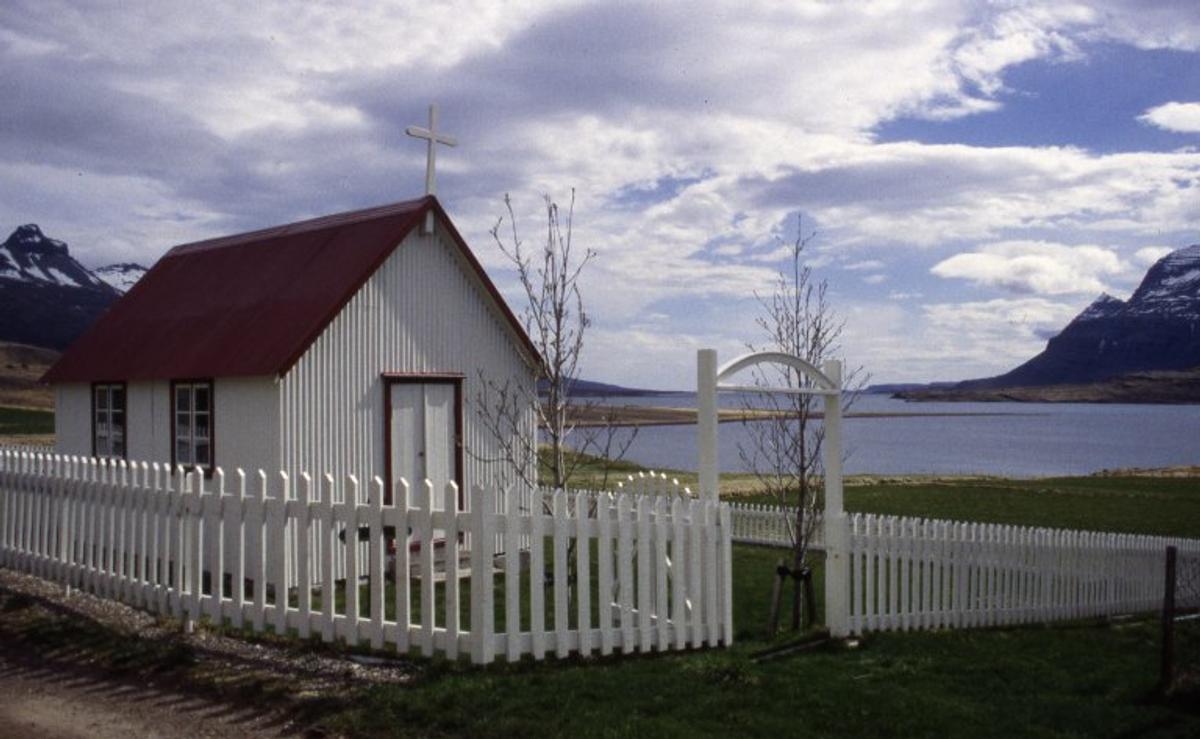
Berufjarðarkirkja
Berufjarðarkirkja is a small historic rural church in East Iceland overlooking Berufjörður near Djúpivogur, set within a scenic fjord landscape.
About
About Berufjarðarkirkja
Berufjarðarkirkja is a small historic rural church in East Iceland overlooking Berufjörður near Djúpivogur, set within a scenic fjord landscape.
A historic church reflecting Iceland's cultural and religious heritage.
Photos
Gallery
Background
History & Background
Like many parish churches in the Eastfjords, Berufjarðarkirkja developed as part of a network of small rural churches that supported isolated farms along the fjord. These churches played a central role in both religious life and local social connections across the region. Over time, despite changes in transportation and settlement patterns, Berufjarðarkirkja has remained a recognizable cultural landmark along the Berufjörður coastline and continues to reflect the long-standing relationship between Icelandic communities and their fjord landscapes.
Berufjarðarkirkja is a small rural church located along the shores of Berufjörður in East Iceland, near Djúpivogur. Surrounded by open farmland and dramatic fjord scenery, the church forms part of the traditional parish landscape that supported scattered farming communities across the Eastfjords for generations. Like many countryside churches in Iceland, Berufjarðarkirkja served as an important gathering place for local residents who often traveled long distances across valleys and along the fjord to attend services and community events. These churches played a central role not only in religious life but also in maintaining social connections between isolated farms in remote regions of the country. The church’s simple architectural style reflects the practical building traditions of rural Iceland, where churches were designed to suit small communities and harsh coastal environments. Today, Berufjarðarkirkja remains an important cultural landmark along the Berufjörður route and offers visitors a quiet stop within one of the most scenic fjord landscapes in East Iceland.
Folklore
Story & Folklore
Set along the quiet shores of Berufjörður, Berufjarðarkirkja reflects the long tradition of rural parish churches that once served widely scattered farms across the fjord landscapes of East Iceland. For generations, families traveled across valleys and coastal routes to gather here for worship, seasonal ceremonies, and community events that shaped everyday life in remote settlements. The church’s modest scale and peaceful surroundings mirror the character of the farming communities that depended on the fjord for travel, fishing, and connection with neighboring districts. Today, Berufjarðarkirkja remains part of the cultural landscape of the Eastfjords, offering visitors a quiet place to experience the historic relationship between local communities, the church, and the dramatic natural environment surrounding Berufjörður.
Did You Know?
Many rural churches like Berufjarðarkirkja were historically built to serve widely scattered farming communities along Iceland’s fjords, where parishioners often traveled long distances across valleys and coastal routes to attend services. Even today, these small countryside churches remain important cultural landmarks that reflect the settlement history of the Eastfjords.
Location
Location
Discover
Explore Nearby
Places within 5.0 km
Loading nearby places…
0 places found within 5.0 km
Plan full itinerary →Explore More