
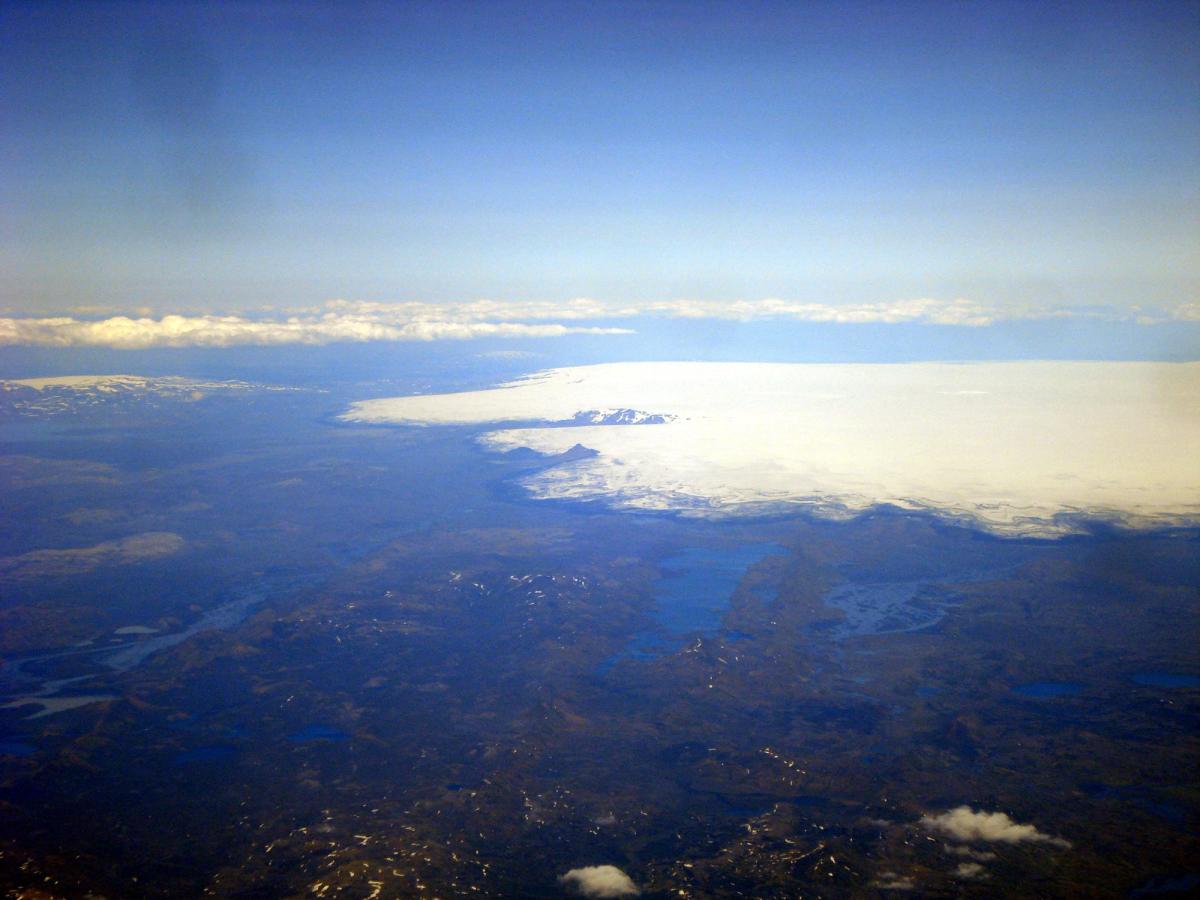
Bárðarbunga
Bárðarbunga, a powerful subglacial volcano, lies hidden beneath the vast, icy expanse of Vatnajökull.
At a Glance
Visit time
Aerial tours typically last 1-3 hours. Exploring the broader Vatnajökull National Park area can take 1-2 days or more.
Best Season
Summer (June to August) for best access to surrounding highlands and tours.
Getting There
Direct access to Bárðarbunga is restricted and dangerous. It is primarily viewed via specialized aerial tours (flights, helicopters) or from distant highland viewpoints (requiring 4x4 vehicles and experienced guides, especially in winter).
GPS
64.6410, -17.5280
About
About Bárðarbunga
Bárðarbunga, a powerful subglacial volcano, lies hidden beneath the vast, icy expanse of Vatnajökull.
Witness the raw, hidden power of Earth's forces beneath Europe's largest glacier.
Photos
Gallery
Background
History & Background
Bárðarbunga's history is deeply intertwined with the formation of Iceland itself, a land perpetually shaped by its position on the Mid-Atlantic Ridge where the North American and Eurasian tectonic plates diverge. This massive stratovolcano, reaching an elevation of 2009 meters, has been active for at least the past 10,000 years, with numerous eruptions both subglacial and effusive. Its caldera, approximately 70 square kilometers in area, lies beneath hundreds of meters of ice, making its eruptions particularly complex and often leading to significant meltwater floods. One of its most notable recent events was the 2014-2015 eruption, which began with intense seismic activity and resulted in a sustained effusive eruption in the Holuhraun lava field, just north of the Vatnajökull glacier. This eruption produced a vast new lava field, covering over 85 square kilometers, and released significant amounts of sulfur dioxide, impacting air quality across parts of Europe. This event provided scientists with an unprecedented opportunity to study a large-scale basaltic eruption in real-time, offering invaluable insights into volcanic processes and their environmental effects.
Bárðarbunga is a major subglacial volcanic system beneath the Vatnajökull ice cap. Its activity is monitored closely because eruptions can interact with glacial ice and generate meltwater floods. The central caldera is not a normal visitor destination; travellers experience the wider volcanic and glacial landscape from permitted highland routes and areas around Vatnajökull.
Did You Know?
Bárðarbunga is part of a large volcanic system, and its last major eruption in 2014-2015 created Iceland's largest basaltic lava flow since 1783.
Explore
Hidden Gems Nearby
Askja Caldera
Located north of Vatnajökull, Askja is a dramatic caldera with a stunning lake, Víti, known for its warm geothermal waters. It offers a stark, otherworldly landscape shaped by powerful eruptions.
It's a prime example of Iceland's active volcanic landscape and offers unique bathing opportunities.
Kverkfjöll Mountains
Situated on the northeastern edge of Vatnajökull, Kverkfjöll features geothermal hot springs and ice caves at the glacier's edge, where fire and ice meet in spectacular fashion.
This area provides a direct visual of the interaction between glacial ice and volcanic heat.
Jökulsárlón Glacier Lagoon
While a bit further south, this iconic lagoon showcases icebergs calved from a Vatnajökull outlet glacier, giving a tangible sense of the glacier's scale and movement.
It offers a beautiful and accessible way to experience the glacial environment linked to Vatnajökull.
Help
Frequently Asked Questions
Location
Location
Discover
Explore Nearby
Places from our database within 5.0 km — all data from Sanity
Loading nearby places…
0 places found within 5.0 km
Plan full itinerary →Explore More