
Ásbyrgi
Ásbyrgi is a horseshoe-shaped glacial canyon about 3.5 km long and up to 100 meters deep, surrounded by sheer cliff walls — one of Iceland's most dramatic and m…
About
About Ásbyrgi
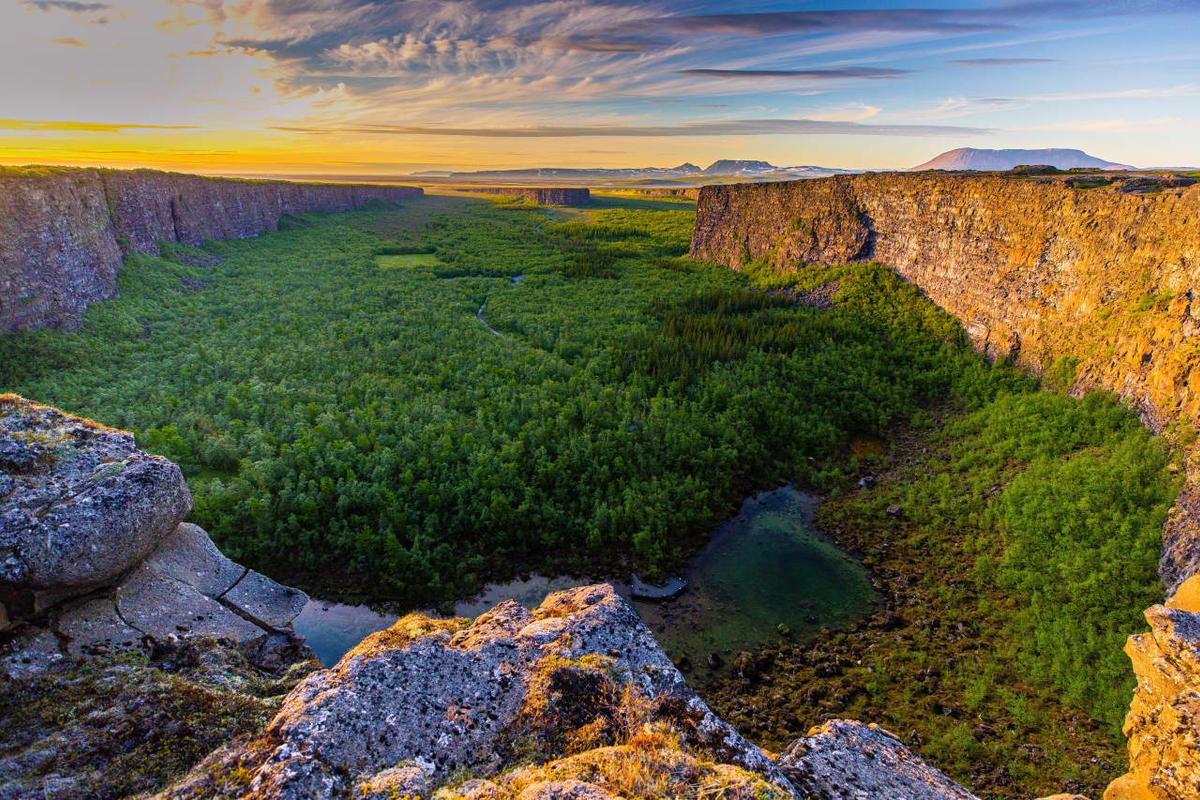
Ásbyrgi is a horseshoe-shaped glacial canyon about 3.5 km long and up to 100 meters deep, surrounded by sheer cliff walls — one of Iceland's most dramatic and mysterious landscapes.
Explore one of North Iceland's most distinctive canyons, with forest walks, cliff views and several marked trails.
Tours Near Ásbyrgi
Lake Myvatn and Godafoss Waterfall Day Tour from Akureyri
Imagine Iceland Travel · 8 hours

Northern Lights Photography tour from Akureyri
Iceland Horizon - Saga Travel - GeoIceland · 3 hours
Dettifoss Waterfall, Ásbyrgi and Lake Mývatn - Shore Excursion from Húsavík
BusTravel Iceland · 5 hours 30 minutes
Akureyri Northern Light Tour
The Traveling Viking · 2 hours 30 minutes
Photos
Gallery
Background
History & Background
In Norse mythology, Ásbyrgi was formed when Sleipnir — Odin's eight-legged horse — touched one of its hooves to the earth here. In geological reality, the canyon was carved by a catastrophic glacial flood outburst from the Vatnajökull glacier thousands of years ago. The canyon is located within Vatnajökull National Park and is one of the key stops on the Diamond Circle tourist route in North Iceland. The sheltered canyon interior hosts a rich birch forest and small lake.
Ásbyrgi is one of the signature landscapes of North Iceland and the northern gateway to Jökulsárgljúfur in Vatnajökull National Park. The broad horseshoe-shaped canyon is enclosed by steep cliffs and divided by the prominent rock formation Eyjan. Sheltered from harsher weather outside, the canyon supports birch woodland and varied birdlife, while Botnstjörn lies beneath the innermost cliffs. The area is particularly good for walking because visitors can choose between short, accessible routes and longer hikes. The Botnstjörn loop is about 1 km, while the route onto Eyjan is about 4.5 km return. The Áshöfðahringur is another strong option: a roughly 7.5 km loop taking about 2–3 hours from Gljúfrastofa. It crosses woodland, wetlands, gullies and varied terrain around Áshöfði, passes Ástjörn with rich birdlife, and offers views across the northern part of Jökulsárgljúfur. Longer trails continue toward Vesturdalur, Hljóðaklettar, Hólmatungur and ultimately Dettifoss. Ásbyrgi is also tied to one of Iceland's best-known landscape legends: the canyon was said to have been formed by a hoofprint from Sleipnir, Óðinn's eight-legged horse. Geologically, the canyon is associated with enormous glacial outburst floods that repeatedly swept through the Jökulsá á Fjöllum system. Today the combination of geology, woodland, mythology and accessible hiking makes Ásbyrgi one of the most rewarding stops on the Diamond Circle.
Folklore
Story & Folklore
Ásbyrgi is a horseshoe-shaped canyon in North Iceland — 3.5 kilometres long, 1 kilometre wide, with vertical basalt walls 100 metres high — that looks exactly like a giant hoof-print pressed into the earth. Norse mythology explains it as the hoofprint of Óðinn's eight-legged horse Sleipnir. Geologists explain it differently: a catastrophic glacial outburst flood from the Vatnajökull ice cap, thousands of years ago, eroded this canyon in perhaps hours. A forested island (Eyjan) sits at the centre of the horseshoe, accessible by a short walk. Ásbyrgi is part of Vatnajökull National Park and connects to the Jökulsárgljúfur canyon system, along which you can hike to Dettifoss and Selfoss waterfalls.
Did You Know?
The sheltered canyon supports one of Iceland's largest forests
Explore
Hidden Gems Nearby
Off-Peak Visit
Visit Asbyrgi during shoulder season (May or September) for a perfect balance of access and solitude.
You'll experience the site without summer crowds while still having good weather and daylight.
Local Flora
Look for the native Icelandic plants growing in the area — Arctic thyme, moss campion, and various lichens.
These resilient plants have adapted to survive harsh conditions and add subtle beauty to the landscape.
Changing Light
Asbyrgi looks dramatically different depending on the time of day and weather conditions.
Cloud shadows, rain showers, and low-angle sunlight can transform the landscape within minutes — Iceland's famous "four seasons in one day."
Help
Frequently Asked Questions
Location
Location
Discover
Explore Nearby
Places from our database within 5.0 km — all data from Sanity
Loading nearby places…
0 places found within 5.0 km
Plan full itinerary →Explore More