
Solar Eclipsein Iceland
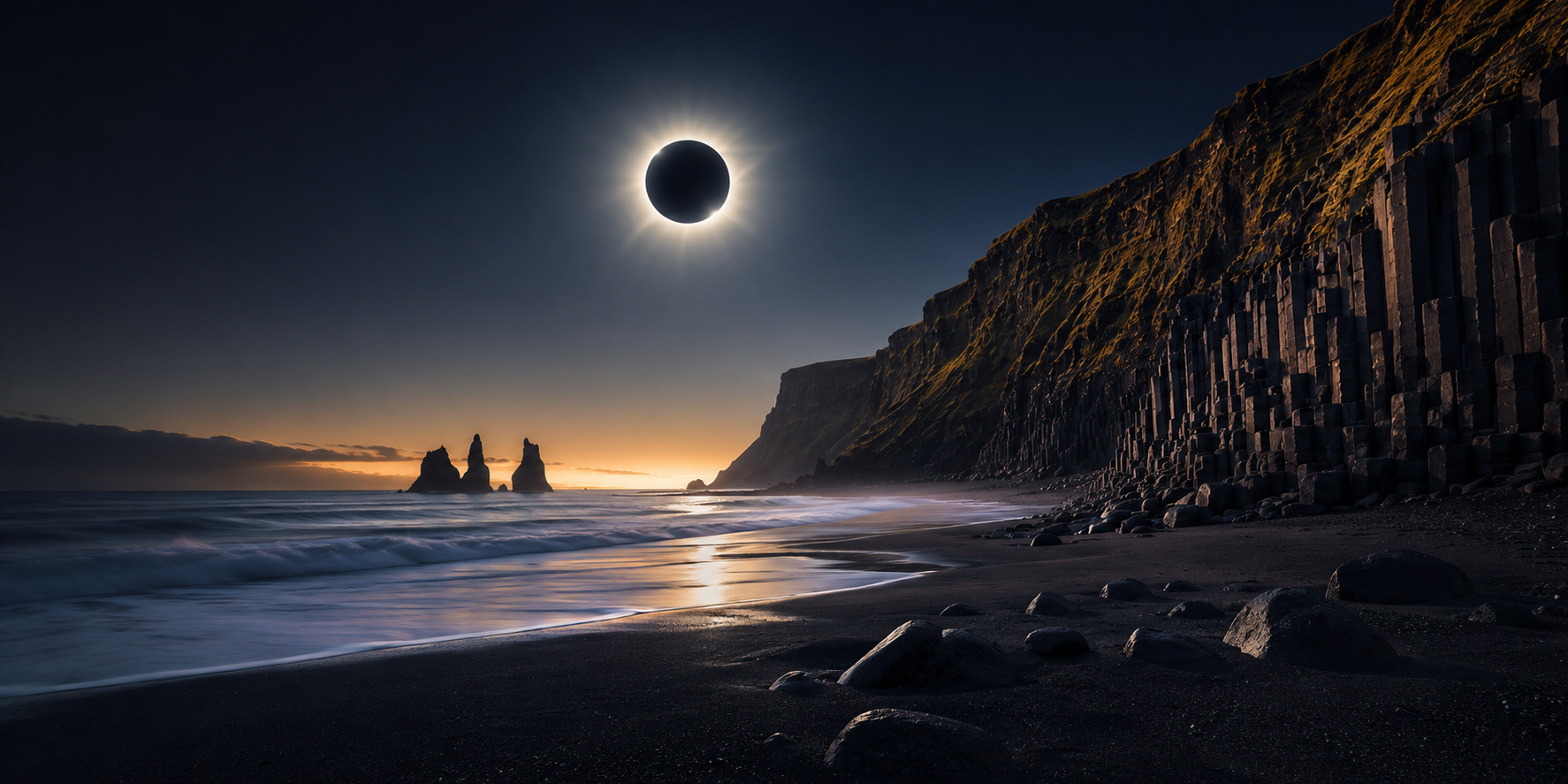
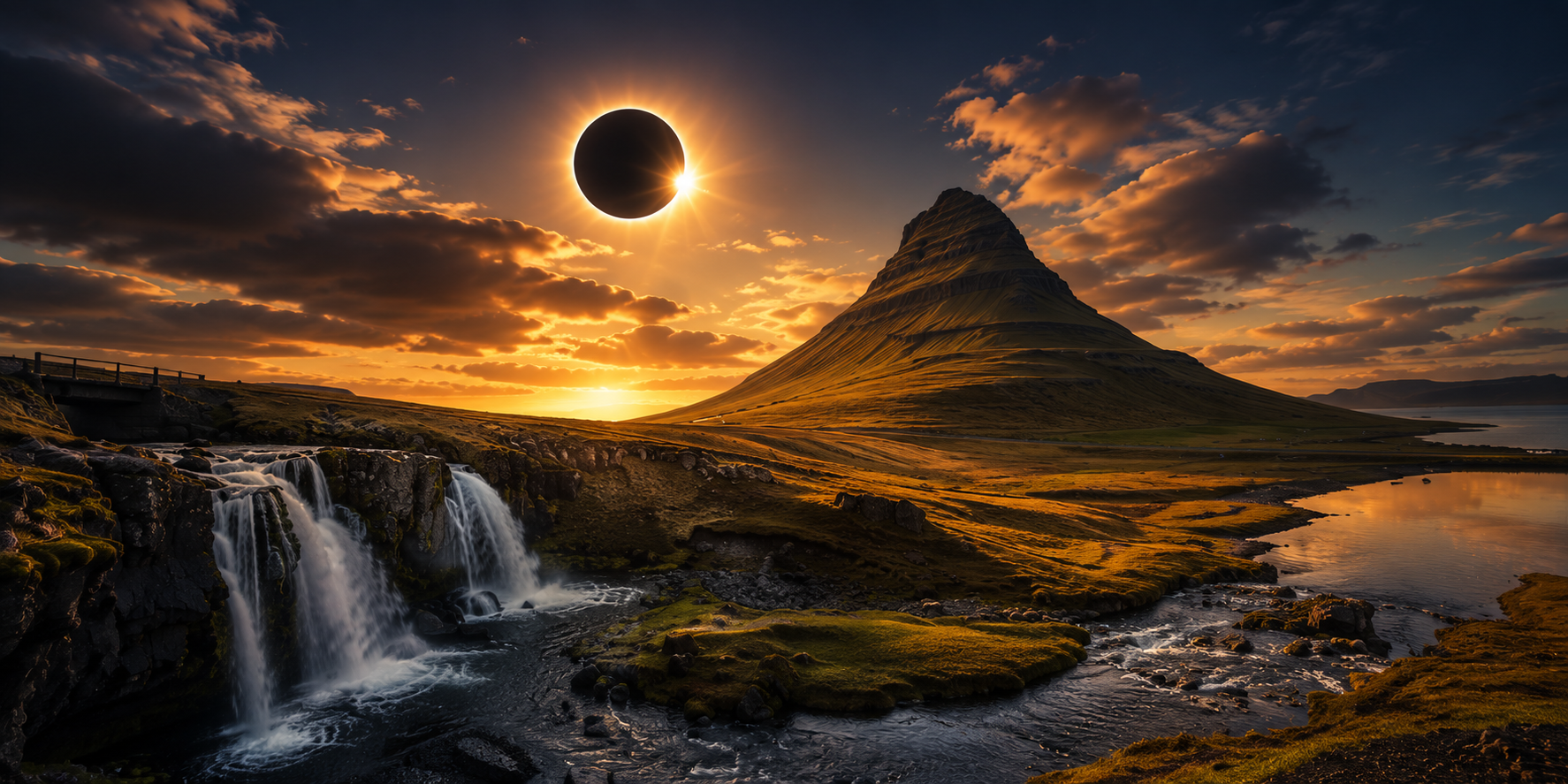
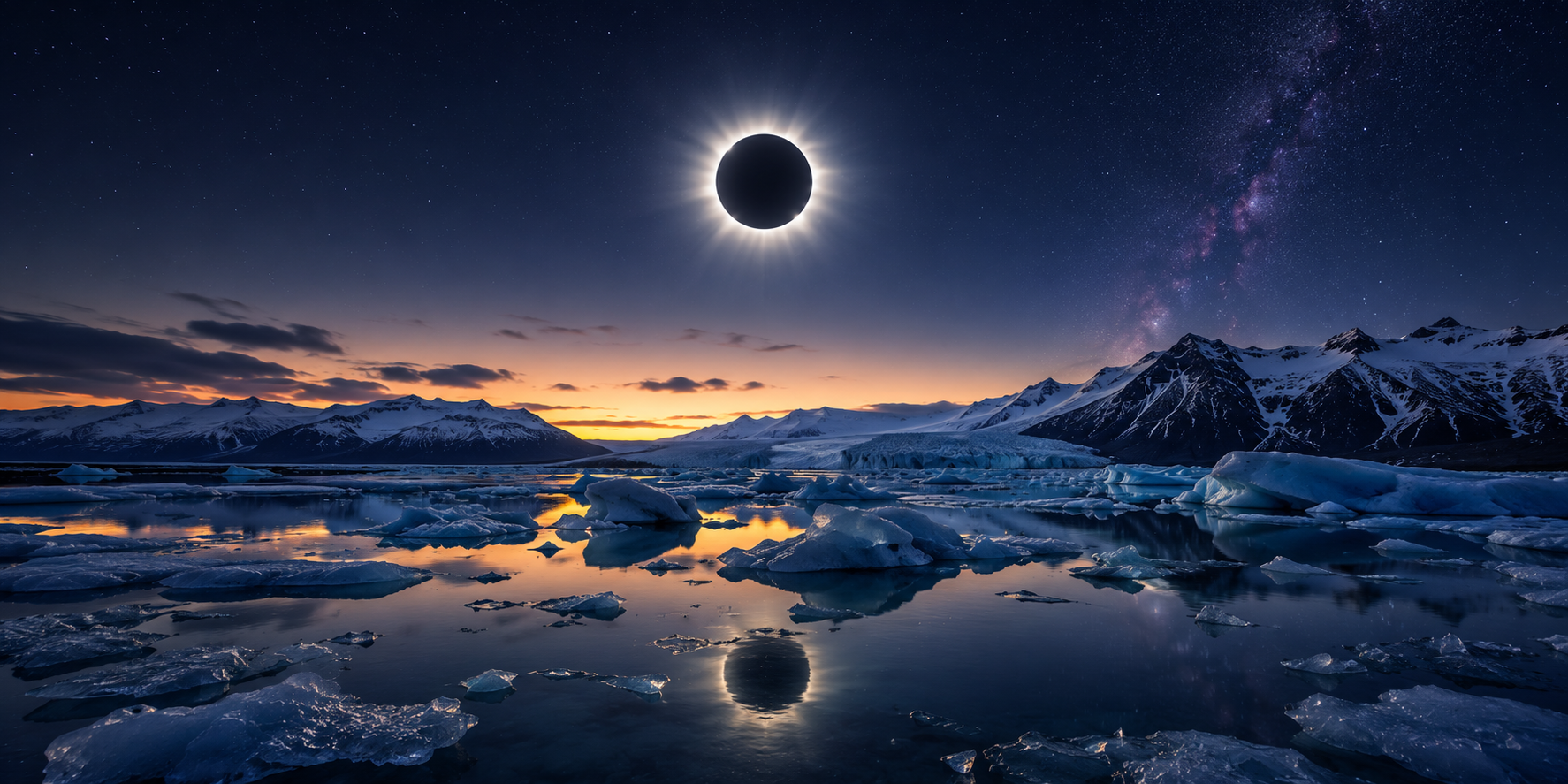
Experience one of nature's most spectacular events against Iceland's volcanic landscapes and Arctic skies.
Eclipse day weather forecast available 14 days before the event
What is a Solar Eclipse?
A solar eclipse occurs when the Moon passes between Earth and the Sun, partially or completely blocking sunlight.
Total Eclipse
Moon completely covers the Sun. Day turns to night. The corona becomes visible. Iceland witnessed totality in March 2015.
Partial Eclipse
Moon covers part of the Sun. The most common type visible from Iceland. Eclipse glasses required at all times.
Annular Eclipse
Moon appears smaller — a glowing ring of fire surrounds it. Iceland is positioned for several annular events this decade.
Best Eclipse Viewing Conditions
Iceland's weather is dynamic and changeable. Cloud cover is the main challenge. The key strategy: have multiple viewing locations planned and be prepared to drive.
Snæfellsnes Day Tours
Best eclipse viewing spot — dramatic peninsula, dark skies, 2.5h from Reykjavík.
Browse on Viator →South Coast Day Tours
Open horizons, black sand beaches — ideal for eclipse photography and year-round access.
Browse on Viator →Photography Tours
Expert-guided photography day trips — expert advice on capturing the eclipse and Iceland's landscapes.
Browse on Viator →Small Group Day Trips
Maximum flexibility — small groups can relocate quickly to find clear skies on eclipse day.
Browse on Viator →Highland Adventures
360° horizons, darkest skies — the Highlands offer unmatched eclipse viewing for adventurous travellers.
Browse on Viator →Self-Drive Tours & Car Rental
Most flexibility on eclipse day — drive to wherever the skies are clear. Iceland's Ring Road is made for this.
Browse on Viator →Guided Experiences
Tours & Day Trips in Iceland
Golden Circle, Northern Lights hunts, whale watching, glacier hikes, lava cave tours and more. Explore Iceland your way.
Best Eclipse Viewing Conditions
☀️ Actual forecast for August 12, 2026 eclipse day
North Iceland (Akureyri)
Mostly cloudy 🌥️
North Iceland (Akureyri)
Mostly cloudy 🌥️
Eclipse Viewing Locations — Iceland
Click markers for weather conditions and driving distance
Weather & Visibility
Iceland's weather is dynamic and changeable. Cloud cover is the main challenge. The key strategy: have multiple viewing locations planned and be prepared to drive.
Photography & Safety
📷 Photography Tips
- › ISO 12312-2 certified solar filter for your lens
- › 200–600mm telephoto for eclipse detail shots
- › Sturdy tripod — any shake ruins the shot
- › Shoot in RAW for maximum flexibility
- › Include Iceland landscape as foreground
- › Use PhotoPills app to plan sun position
⚠️ Eclipse Safety
- › Always use ISO-certified eclipse glasses
- › Never look through an unfiltered camera
- › Only remove glasses during totality (seconds)
- › Protect children — supervise at all times
- › Cheap eclipse glasses can be dangerous
- › Camera sensors can be permanently damaged
FAQ
Can you see solar eclipses in Iceland?
Yes. Iceland's northerly latitude places it within the track of several major eclipses. The 2015 total solar eclipse was fully visible from northern Iceland. The next significant event is August 12, 2026, when Iceland will experience 60–80% partial coverage.
Do I need eclipse glasses?
Yes — always. ISO 12312-2 certified solar eclipse glasses are essential for the entire duration of a partial eclipse. Only during the brief totality phase of a total eclipse is it safe to look with the naked eye — and only for the seconds of complete coverage.
When is the next solar eclipse visible from Iceland?
August 12, 2026: a total solar eclipse tracks across Spain, with Iceland experiencing a significant partial eclipse (60–80% coverage depending on location). This is the nearest major solar eclipse event for Iceland watchers.
What is the best weather for eclipse viewing in Iceland?
Clear skies with minimal cloud cover. Iceland's weather is dynamic — the strategy is flexibility. Book accommodation in Reykjavík or Akureyri and be prepared to drive 1–2 hours to find a clear sky window. The Highlands and North Iceland statistically have better visibility.
Where is the single best spot?
Snæfellsnes Peninsula offers the best combination of dark skies, dramatic scenery and accessibility. However, if maximum darkness and immersion is your priority, the Westfjords or Highlands are unmatched — with proper logistics.
Can I photograph the eclipse?
Absolutely — Iceland's landscapes make for incredible eclipse photography. You need a solar filter for your lens (never point an unfiltered camera at the sun), a sturdy tripod, and ideally a remote shutter release. A 200–600mm zoom lens captures stunning detail.
Plan Your Eclipse Journey
Explore Iceland and experience extraordinary landscapes beneath some of the world's most dramatic skies.